Cucurbita moschata, the butternut squash
Cucurbita moschata
- Exposure
- Sun
- Hardiness (USDA)
- 9a (-6.7°C ≤ T° < -3.9°C)
- Lifecycle
- Perennial
- Foliage
- Evergreen
- Family
- Cucurbitaceae
- Genus
- Cucurbita
- Species
- Butternut squash Cucurbita moschata
Other names:Cucurbita pepo var. moschata, Pepo moschatus
Butternut squash, in Latin Cucurbita moschata, is one of the 5 most widely cultivated squash varieties in the world. This cultigen native to Mexico, Guatemala and Belize seduces with its sweet, nutty-tasting fruit.
How to recognize butternut squash(Cucurbita moschata)?
Butternut squash(Cucurbita moschata) is an annual herbaceous plant. It grows to no more than 50 cm in height.
The stems, which can be creeping or climbing, measure up to 5 meters. Hairy, they have aerial roots at each node and tendrils. The latter enable them to cling to a support.
The 50 cm leaves are green, sometimes mottled with white. Whole, they have 5 lobes.
Butternut squash is a monoecious plant. It bears both male and female flowers on the same plant, facilitating pollination. The funnel- or trumpet-shaped flowers are yellow to orange. The female flowers have a bulge at their base, giving rise to the fruit.
The fruit, also known as squash, can weigh up to 20 kg. Its thick flesh is dark orange or red. Cucurbita moschata can be :
- Spherical, slightly flattened, elongated, club-shaped or bottle-shaped;
- Cream, orange or green.
When ripe, its rind is covered with a glaucous dust.
The fruit contains flattened, oval, gray-brown seeds.
Which varieties of butternut squash to grow?
Butternut squash comes in several varieties, including butternut. Depending on your tastes and the size of your garden, you can grow Cucurbita moschata:
- Waltham or doubeurre: butternut Waltham is a runner squash, which gives bludgeon-shaped fruits with a nutty taste ;
- Honeynut: a highly productive butternut variety with small fruits, suitable for pot cultivation;
- Longue de Nice: late butternut squash with long-lasting curved fruit;
- Courge musquée de Provence: old French variety, produces large, spherical, ribbed fruits;
- Havana: disease-resistant, with regular, beige, flared fruit and sweet flesh;
- Hunter F1: an early butternut squash whose 1 kg fruits can be harvested as early as August.
Is butternut squash toxic?
On the contrary, butternut squash is not toxic. The fruit is edible, and can be eaten in soups, purées, pies or roasted. The flowers can be made into fritters and the seeds roasted.
However, some squashes may have abnormally high levels of cucurbitacin, making them unfit for consumption. Before cooking, pick and taste some of your squash. If the taste is bitter, the fruit is inedible.
Our care tips
Butternuts hybridize easily when planted in close proximity. Grow only one variety of Cucurbita moschata per location, to be sure of harvesting the expected fruit.
 Watering
Butternuts like to keep their base moist, especially during the flowering and fruiting period.
Water your Butternut squash at the base, taking care not to wet the leaves. Preferably use rainwater at room temperature.
 Fertilization
Butternuts are greedy plants. You need to fertilize them throughout their growth, adapting the type of fertilizer to their development:
- After planting: apply a nitrogen-rich fertilizer (special vegetable fertilizer or nettle manure);
- When flowers appear: fertilize with a potassium-rich fertilizer (tomato fertilizer or comfrey purin).
 Harvest
You can harvest when :
- Stems and leaves are yellow ;
- Fruit has hard skin and makes a hollow sound when tapped.
- The stalk is dry.
Using clean, sharp pruning shears, cut off the stalk, leaving 5 to 10 cm of stem. This length improves preservation.
Don't grasp the fruit by the stalk, as this could break and damage it. Carry with one or two hands.
Don't grasp the fruit by the stalk, as this could break and damage it. Carry with one or two hands.
Harvesting begins in summer and lasts until the first frosts.
Using clean, sharp pruning shears, cut off the stalk, leaving 5 to 10 cm of stem. This length improves preservation.
Don't grasp the fruit by the stalk, as this could break and damage it. Carry with one or two hands.
Don't grasp the fruit by the stalk, as this could break and damage it. Carry with one or two hands.
 Planting
Once the last spring frosts have passed, you can plant.
To enable your Butternut squash to thrive, leave 1.5 m between plants and 2 m between rows.
Butternuts plants like rich soil. Before planting, work the soil to a depth of at least 45 cm. Spade, remove weeds, roots and stones. Amend with compost or manure.
Dig a hole slightly larger than the root ball. Add a nitrogen-rich fertilizer (ground horn or dried blood, for example) to the bottom. Plant your Cucurbita moschata without burying the leaves. If you want the stems to climb, place the first ones on the stake to guide them.
Tamp the soil gently and water generously. You can mulch the soil to conserve water, enrich the substrate and protect against slugs.
 Sowing
Once the risk of frost has passed, you can sow your Cucurbita moschata seeds.
Butternuts need space to grow. Separate seedlings by at least 1.5 m and rows by at least 2 m.
Loosen the soil to a depth of 20-30 cm. Incorporate well-decomposed manure or compost to enrich it. Remove weeds, stones and roots.
Butternuts can be sown in stacks. Dig holes 1.5 to 2 meters apart and place 2 to 3 seeds per hole. Bury them under 2 cm of soil.
Water lightly after planting, then regularly. Keep the soil moist, but not soggy. Emergence takes about ten days.
Frequently asked questions
What to plant butternut and butternut squash with?
The best companion plants for butternut squash and butternuts are corn and beans. On the other hand, avoid planting butternut squash close to potatoes or other cucurbits (cucumbers, zucchinis), to limit competition and the spread of disease.
What's the difference between butternut squash and butternut?
Butternut is a variety of butternut squash(Cucurbita moschata), a term that covers several types of squash with similar characteristics.
When to harvest butternut squash?
Harvesting generally takes place between September and October, before the first frosts. Here are the signs of readiness:
- The skin is a uniform, hard color;
- The stem is dry and cracked;
- The squash sounds hollow when tapped.
Cut the squash with pruning shears, leaving a few centimetres of stalk to improve preservation.
Diseases / Threats
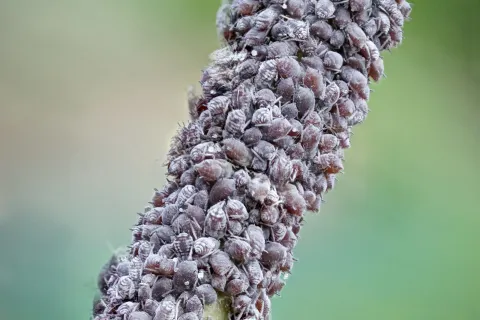
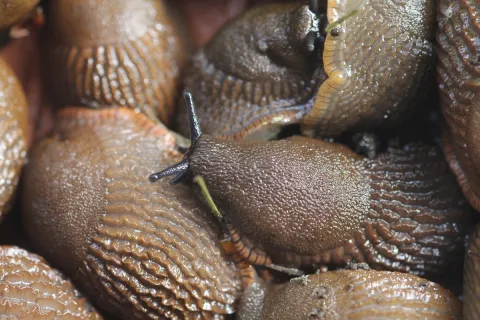
Information
- Lifecycle
- Perennial
- Foliage
- Evergreen
- Exposure
- Sun
- Substrate
- Humus soil
- Planting method
- Open ground
- Categories
- VegetableHerbaceous
- Tags
- BeginnerEdible flowerEdible vegetable
- Origins
- Central AmericaSouth America
- Hardiness (USDA)
- 9a (-6.7°C ≤ T° < -3.9°C)
- Leaf colors
- Light greenWhite
- Flower colors
- YellowOrange
- Fruit colors
- Light greenRedYellowOrange
Discover plants from the same family
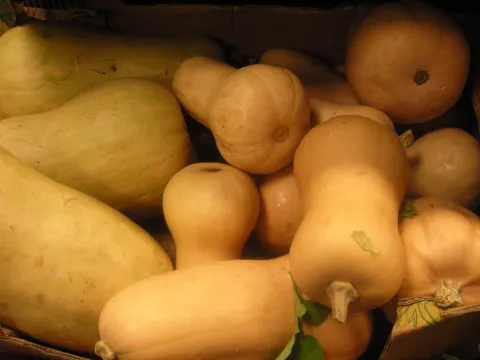
Butternut Waltham
Cucurbita moschata 'Waltham'
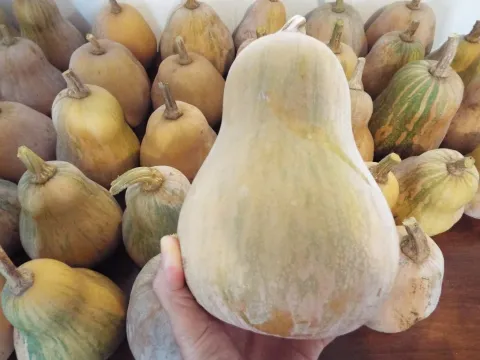
Butternut
Cucurbita moschata butternut
Zucchini
Cucurbita pepo
Non-running zucchini
Cucurbita pepo
Find out more
Find all our tips in the Monstera application