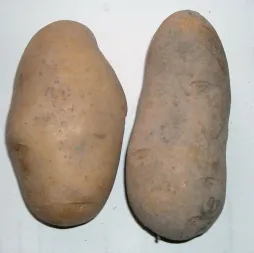
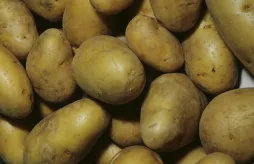
Early potato tubers

Early potato

Early potatoes pink skin

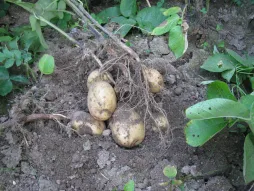
Early potato plants

Early potato leaves Solanum tuberosum
Contents
Find all our tips in the Monstera application


Early potatoes, Solanum tuberosum for gardeners in a hurry
Contents
Find all our tips in the Monstera application
Scientific classification
Family
Solanaceae
Type
Solanum
Species
Potato - Solanum tuberosum
Early potato refers to a tuber harvested before full physiological maturity. It is not a single botanical variety, but a specific state of development of potato (Solanum tuberosum).
How to recognize the early potato?
The early potato has the same physical characteristics as other potatoes. It is a perennial plant, grown as an annual, with an upright habit. It can grow to over a metre in height.
Its stems, glabrous or hairy, are green, purple or bicolored. They support medium-green foliage. The deciduous, pinnate leaves have 7 to 9 lobes.
The flowers, white or blue with a yellow heart, appear in a cyme at the tip of the leaves. They then give rise to a round, yellow-green berry.
To obtain early potatoes, the tuber (part of the root) must be harvested before maturity. Its shape and color depend on the variety. It can be elongated, cylindrical, oblong, yellow, green... But early harvesting induces :
- A very thin, translucent skin that's easy to remove;
- Highly hydrated flesh and low starch content;
- Barely formed vegetative buds.
Which early potato varieties should I grow?
In theory, you can grow all varieties of early potatoes and harvest them as soon as they bloom. But certain varieties, known as early varieties because they ripen more quickly, are particularly suitable. For example, you can plant :
- Belle de Fontenay' ;
- Celtiane' ;
- Linzer Delikatess' ;
- Rosabelle';
- potato Amandine'.
Are early potatoes toxic?
No, the early potato is not toxic. They are grown for their edible tubers.
However, potatoes do contain solanins. Concentrations are high in flowers and berries, which should not be eaten.
Furthermore, a green tuber indicates a high presence of solanins. In this case, you must not eat it.
Our maintenance tips
The winter before planting, work the soil to a depth of 20 cm to loosen it. Add a potassium-rich fertilizer to enrich it.
 Watering
Water without wetting the foliage, either at the base of your Early potato, or between the rows.
Adapt the amount of water to the development of the plant. Your watering should be more copious during the flowering period, without soaking the soil. Reduce the volume when the foliage starts to turn yellow.
 Plantation
Work the soil to a depth of 20 centimetres. Add a potassium-rich fertilizer.
Dig furrows 8 to 10 centimetres deep. If you're planting several rows, space them at least 50 centimetres apart.
Plant your tubers, sprout side up. Leave 30 centimetres between plants. Cover with soil and form a mound about 15 cm high to prevent the tuber from catching the light.
Cover your plants with a tunnel, wintering or forcing sheet to protect them from the cold.
 Buttage
Plug your plants regularly to encourage production.
Weed around the base of your Solanum tuberosum. After that, it will be too late: ridging will bury weeds under the soil.
Scrape the soil between the rows to loosen it. Using your hoe or ridger, pull the soil from each side of the row towards the stem. Form a mound about 15 to 20 cm high. Only the top 5 to 10 cm of foliage should remain visible.
Frequently asked questions
Potatoes benefit from association with garlic, onions, beans, peas, cabbage and corn.
Avoid proximity to tomatoes and eggplants. They belong to the same family. They consume the same nutrients and suffer from the same diseases.
Don't forget to rotate your crops. After your harvest, wait four years before planting potatoes again in the same spot.
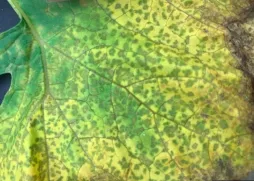
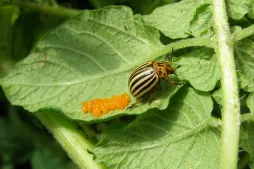
Diseases / Threats
Information
| Lifecycle | Annual |
| Foliage | Deciduous |
| Exposure | |
| Substrats | |
| Planting methods |
Open ground In pots In tubs |
| Category |
Vegetable |
| Tags |
Beginner Large pot |
| Origin |
South America |
| Hardiness (USDA) | 10b (1.7°C ≤ T° < 4.4°C) |
| Leaf color |
|
| Flower colors |
|
| Fruit colors |
|
Discover plants from the same family
Find out more