The Charlotte potato, a semi-early potato
Solanum tuberosum 'Charlotte'
- Exposure
- Sun
- Hardiness (USDA)
- 10b (1.7°C ≤ T° < 4.4°C)
- Lifecycle
- Annual
- Foliage
- Deciduous
- Family
- Solanaceae
- Genus
- Solanum
- Species
- Potato Solanum tuberosum
Charlotte is a semi-early, productive, firm-fleshed potato created in 1981 by crossing the Hansa and Danaé varieties. Versatile in the kitchen, it is one of the most widely grown Solanum tuberosum cultivars for its versatility in the kitchen.
How to recognize the Charlotte potato?
The Charlotte potato is a herbaceous perennial grown as an annual. It grows to a height of 60 cm with a spread of 30 cm, and has an upright growth habit.
The Charlotte is considered a semi-leafy variety of Potato. Its green, fleshy stems are upright and its foliage is dense. The deciduous leaves are deep green. Pennate, they are composed of 7 to 9 leaflets.
Charlotte produces white or violet star-shaped flowers with yellow hearts. They appear in cymes at the tips of the leaves.
After flowering, a yellow-green berry appears. But it's not this fruit you need to harvest!
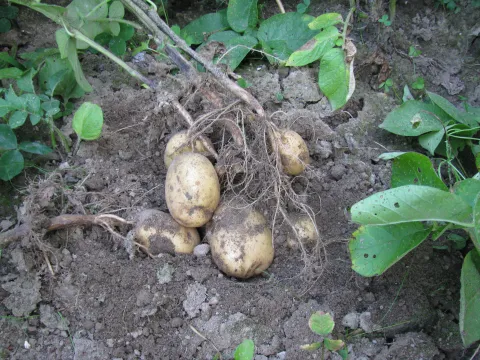
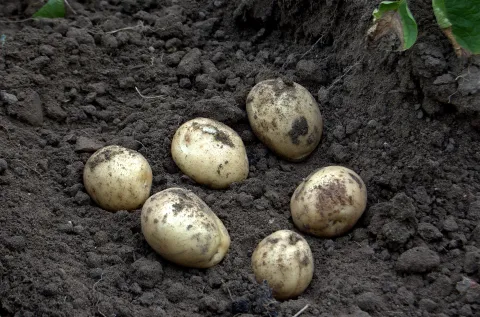
The potato we eat is a tuber, part of the root. In Charlotte :
- It is oblong and regular in shape;
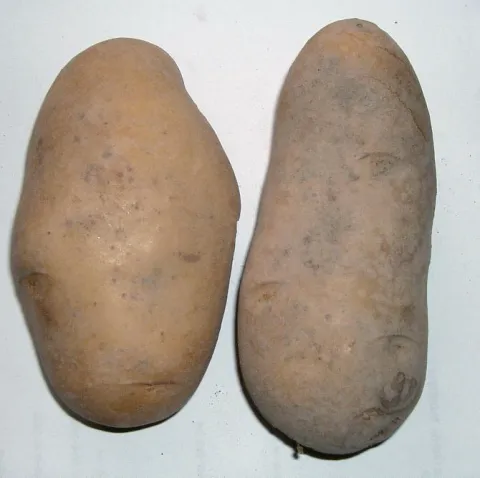
- Its skin is light yellow, thin and smooth;
- It has superficial buds;
- It measures between 3.5 and 5.5 cm.
The pale yellow flesh is firm and fine.
Is the Charlotte potato toxic?
Like all Solanum tuberosum varieties, the aerial parts (stems, leaves, flowers) and berries contain solanine, a toxic substance. However, the concentration is very low in the tuber, which you can harvest and eat.
But be careful! If your tubers turn green from exposure to light, don't eat them: the color indicates a solanine content too high for our bodies.
Our care tips
The winter before planting, work the soil to a depth of 20 cm to loosen it. Add a potassium-rich fertilizer to enrich it.
 Watering
Water without wetting the foliage, either at the base of your Charlotte potato, or between the rows.
Adapt the amount of water to the development of the plant. Your watering should be more copious during the flowering period, without soaking the soil. Reduce the volume when the foliage starts to turn yellow.
 Planting
Once the last spring frosts have passed, you can plant.
Work the soil to a depth of 20 centimetres. Add a potassium-rich fertilizer.
Dig furrows 8 to 10 centimetres deep. If you're planting several rows, space them at least 50 centimetres apart.
Plant your tubers, sprout side up. Leave 30 centimetres between plants. Cover with soil and form a mound about 15 cm high to prevent the tuber from catching the light.
 Hilling
Plug your plants regularly to encourage production.
Weed around the base of your Solanum tuberosum 'Charlotte'. After that, it will be too late: ridging will bury weeds under the soil.
Scrape the soil between the rows to loosen it. Using your hoe or ridger, pull the soil from each side of the row towards the stem. Form a mound about 15 to 20 cm high. Only the top 5 to 10 cm of foliage should remain visible.
Frequently asked questions
Is the Charlotte potato early?
Charlotte is a semi-early variety. It is generally harvested between 90 and 110 days after planting. There are even shorter-cycle varieties, such as potato Amandine, Jeannette or Belle de Fontenay, which can be harvested less than 3 months after planting.
Is the Charlotte potato good for fries?
Charlotte is not the best for fries. Its firm flesh contains less starch than floury varieties, which makes for less crisp fries. Longer varieties such as bintje potato, Gold Rush or Monalisa are better for crisp, golden fries.
What use for the Charlotte potato?
The Charlotte is a firm-fleshed potato, which makes it versatile in the kitchen. It is ideal for :
- Salads;
- Steaming;
- Gratins;
- Fried potatoes.
It cooks well, doesn't fall apart and doesn't blacken.
What should I use to plant potatoes?
Potatoes benefit from association with garlic, onions, beans, peas, cabbage and corn.
Avoid proximity to tomatoes and eggplants. They belong to the same family. They consume the same nutrients and suffer from the same diseases.
Don't forget to rotate your crops. After your harvest, wait four years before planting potatoes again in the same spot.
Diseases / Threats
Information
- Lifecycle
- Annual
- Foliage
- Deciduous
- Exposure
- Sun
- Substrates
- Loamy soilSandy soil
- Planting methods
- Open groundIn potsIn tubs
- Category
- Vegetable
- Tags
- BeginnerLarge pot
- Origin
- South America
- Hardiness (USDA)
- 10b (1.7°C ≤ T° < 4.4°C)
- Leaf color
- Light green
- Flower colors
- WhiteViolet
- Fruit colors
- YellowPale green
Discover plants from the same family
Potato
Solanum tuberosum
Bintje potato
Solanum tuberosum 'Bintje'
Early potato
Solanum tuberosum
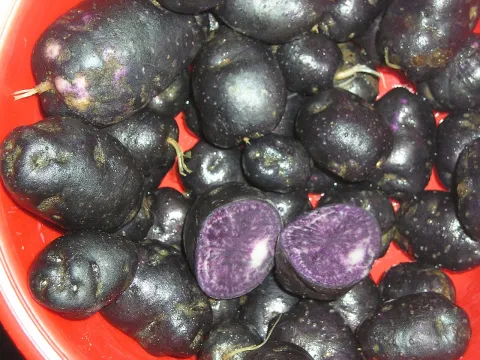
Vitelotte potato
Solanum tuberosum 'Vitelotte'
Find out more
Find all our tips in the Monstera application