Vegetable garden on a balcony: how to create a productive vegetable garden in the city?
Article for :Beginner and plant killerExperienced plant lover

Key points to remember
- Light, watering and fertilization are key to creating a productive vegetable garden on a balcony.
- Radishes, cherry tomatoes, herbs and strawberries are the simplest plants to grow on a balcony.
- Choose compact, fast-growing varieties to optimize space.
Article summary
- Is it possible to grow a vegetable garden on a balcony?
- Which containers to choose for a balcony vegetable garden
- What fruit and vegetables can I grow in a balcony vegetable garden?
- How do you maintain a balcony vegetable garden (watering, soil, fertilization)?
- Our tips for a productive, carefree urban vegetable garden
- Mistakes to avoid with a balcony vegetable garden
- Frequently asked questions about urban vegetable gardens
Apartment gardening isn't just about growing houseplants. If you have a balcony, even if it's only 2 or 3 m², you can turn it into a vegetable garden and harvest your own tomatoes, salads or herbs, right in your own home. In fact, with the right methods, a little organization and the right varieties, your balcony can quickly become a veritable mini pantry.
Is it possible to grow a vegetable garden on a balcony?
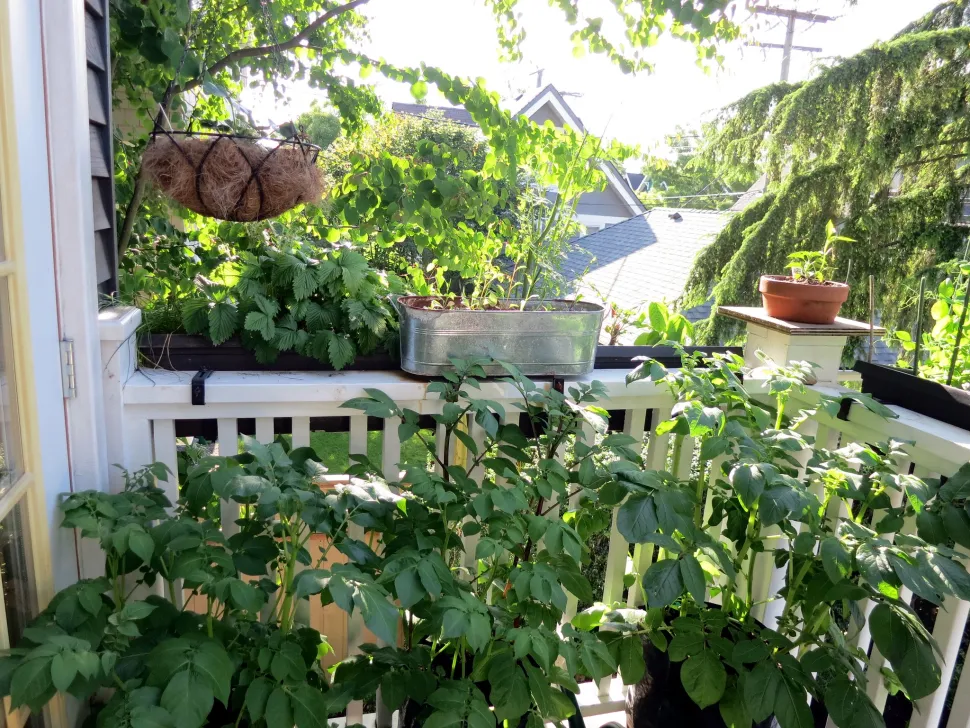
Even in a small space, it's possible to plant fruit and vegetables – Photo by Ruth Hartnup / Flickr
Even a beginner gardener can create a vegetable garden on his or her balcony or terrace. However, before you get started, check :
- How much weight your terrace or balcony can bear: once filled, containers weigh a lot. You mustn't overload the structure to prevent any risk of accident. The norm is generally 350 kg/m². But it may be lower, depending on the configuration of your outdoor space.
- Yourcondominium by-lawsmay impose certain constraints or prohibit certain practices.
However, surface area is not a problem. You can plant and harvest vegetables even in two or three square meters, thanks to techniques such as vertical cultivation. Some even grow tomatoes (Solanum lycopersicum) and herbs on a simple windowsill! All you need to do is organize the space to allow good circulation and avoid plants getting in each other's way.
Essential conditions for a successful vegetable garden on a balcony
Light is the most important factor for vegetable gardening, whether in a small space or elsewhere. Most plants need at least 4 to 6 hours of sunlight a day to thrive. A south- or west-facing balcony will be ideal, while a northern exposure will limit the choice of crops.
Access to water mustbe easy. A pot garden requires regular watering, especially in hot weather. If you can't harvest rainwater, use mains water. Unlike houseplants, vegetable crops tolerate it quite well.
Finally, wind can become a constraint at height. It dries out the substrate, weakens the stems and can slow growth. Installing protection such as a windscreen significantly improves the situation.
Need help getting started? Download a gardening app like Monstera: it guides you step by step (what to plant, when to water, which varieties to choose) according to your balcony.
Which containers to choose for a balcony vegetable garden
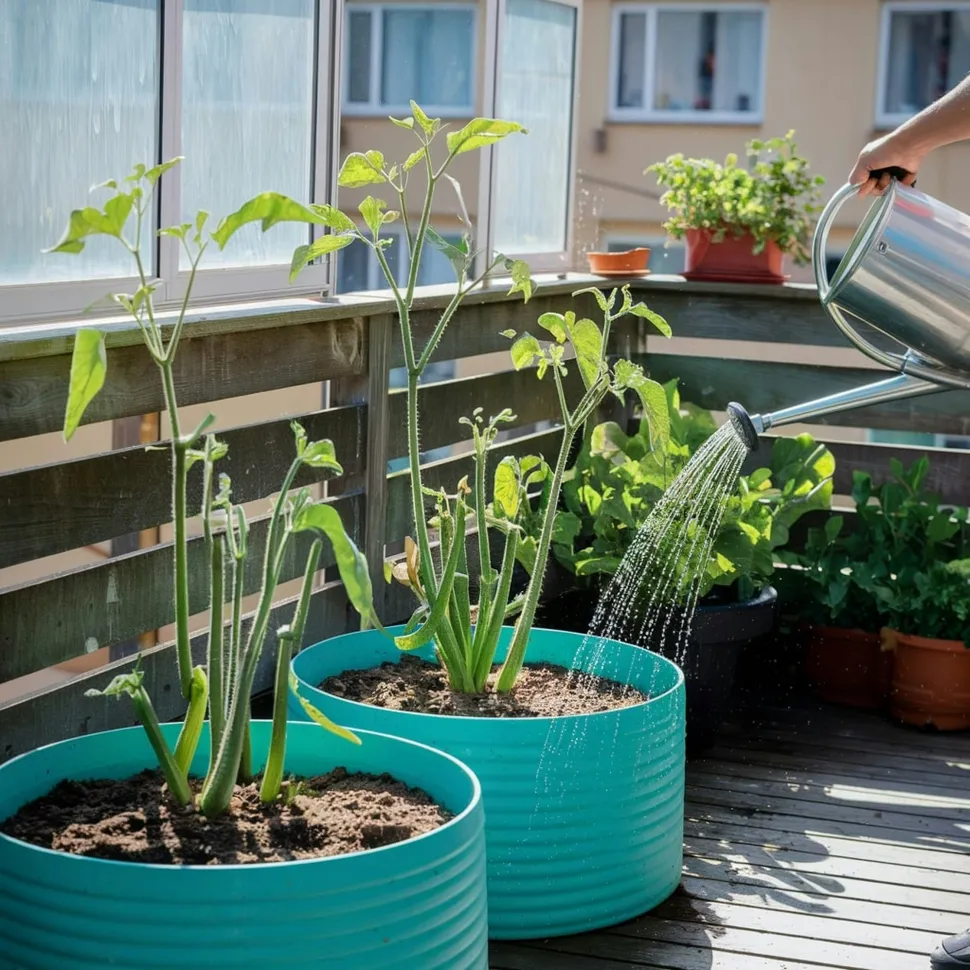
Plastic pots retain water and heat better. Terracotta pots dry the substrate evenly and keep the soil cool – Photo by Waleed Baloch / Unsplash
You have to use pots to plant a vegetable garden on your balcony. It may seem obvious, but anyone who has never thought of filling their terrace with soil to turn it into a garden should throw the first clay marble at us..
There are all kinds of containers on the market. Make your choice according to :
- The space you have available;
- The needs of your plants.
Planters and pots: the solution for all plants
Classic pots, whether cylindrical, square or rectangular, are suitable for all plants. Planters are ideal for row crops and plants with shallow roots, such as radishes and salad greens (lettuce, rocket, lamb's lettuce). Two conditions must be met, however: the container must be perforated and sufficiently deep.
A hole is essential for drainage, to prevent excess water from stagnating and rotting the roots.
As for size, this varies from plant to plant. Tomatoes zucchinis (Cucurbita pepo) or peppers (Capsicum annuum) will need a container at least 40 centimetres deep, while herbs or lettuces will be happy with a 20 cm-high planter.
You should also consider the weight of the plant when choosing your pot. The container needs to be heavy enough to prevent your plant from toppling over when it reaches maturity.
The raised vegetable plot: comfort and practicality
The raised bed offers many advantages. It lets you ;
- Cultivate, monitor and harvest without bending down;
- Isolate your crops from the cold or hot soil of your balcony.
Once again, check the depth of the planter to ensure it's suited to your plants' needs.
The vertical vegetable garden: the ultimate trick for small spaces
The vertical vegetable garden is the solution for a productive garden in a limited space. By taking advantage of height, you can multiply your growing surface without losing a single square centimetre of floor space.
You can use plant-holder ladders, shelves or hanging modules of geotextile felt to exploit every available centimetre.
But beware: high up, wind and sun dry out the soil. Regular watering is imperative.
In any case, containers should always be perforated to facilitate water drainage.
What fruit and vegetables can I grow in a balcony vegetable garden?
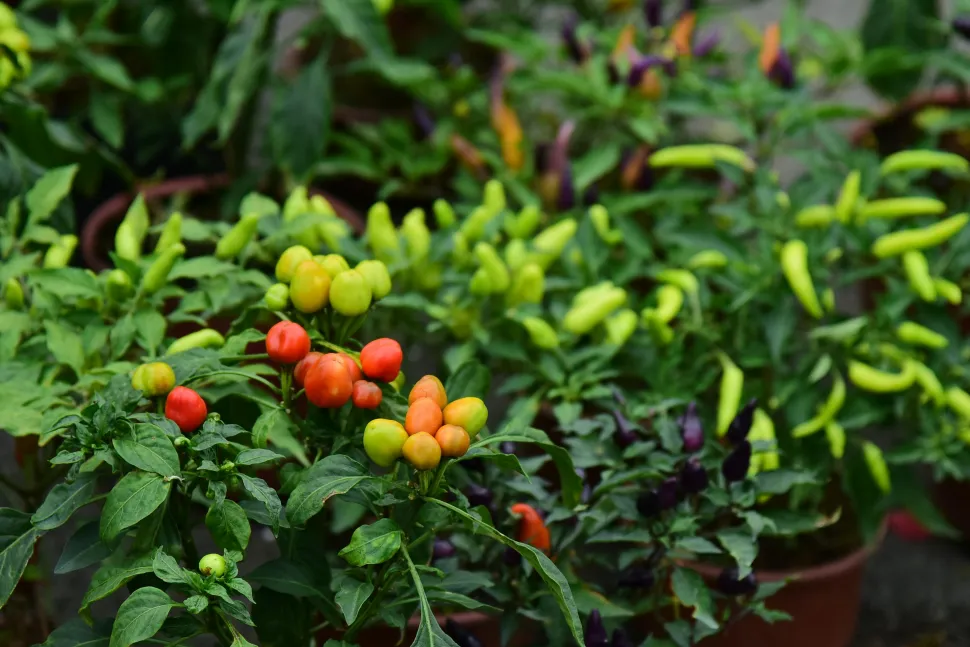
Compact, productive and colorful, peppers are an excellent choice for your balcony – Photo by Soc Nang Dong / Pexels
To turn your balcony into a pantry, opt for :
- Short cycles:fast-growing vegetables free up space quickly and allow you to rotate crops through the seasons;
- Compact cultivars or dwarf varieties:specifically created for pot cultivation, they remain stocky, resist wind and produce generously without taking up all the space.
Easy vegetables for beginners
Whether you're a beginner or not, an urban vegetable garden wouldn't be much of a garden without these three invaluable plants:
- Cherry tomatoes: more productive than large tomatoes, they thrive in large pots and produce all summer long if the sun is shining;
- Radishes (Raphanus sativus): in 18 to 30 days, they're ready to eat. You can then start a new crop or plant something else;
- Lettuces (Lactuca sativa): choose lettuces for cutting. You harvest the leaves as you need them, and the plant continues to grow.
Herbs
Herbs fit into small containers and are useful for everyday use. What's more, they require little maintenance. For example, plant :
- Ocimum basilicum(Ocimum basilicum) : for those who love pesto and have a sunny balcony;
- spearmint(Mentha spicata): very invasive, it should be grown on its own to prevent it from colonizing its neighbors. But it needs little or nothing from you to thrive;
- chives (Allium schoenoprasum): hardy and perennial, they regrow every year, even after a harsh winter.
Fruit for the balcony
Who says you need an orchard to harvest fruit? You can plant the following on your balcony:
- Strawberries: the remontant strawberry (Fragaria x ananassa) will provide fruit from June until the first frosts;
- Small fruits: raspberry and currant bushes are now available in compact versions. They require deep containers, but are very generous;
- Citrus: a young Lemon tree (Citrus x limon) or mandarin tree (Citrus reticulata) won't take up much space, but will give you a few fruits every summer.
Vegetables that also do well in pots
We don't always think about it, but these classics of the traditional vegetable garden can be adapted to the balcony:
- Peppers and chilli pepper: they love the heat that accumulates on terrace walls;
- Non-running zucchinis: unlike creeping varieties, non-running zucchini grow as compact bushes. A single plant is sufficient for several harvests;
- White onion (Allium cepa): with its low space and maintenance requirements, it slips easily between two other crops.
Examples of vegetable gardening on a 2, 5 or 10m² balcony
Here's what you can actually grow, depending on the size of your balcony.
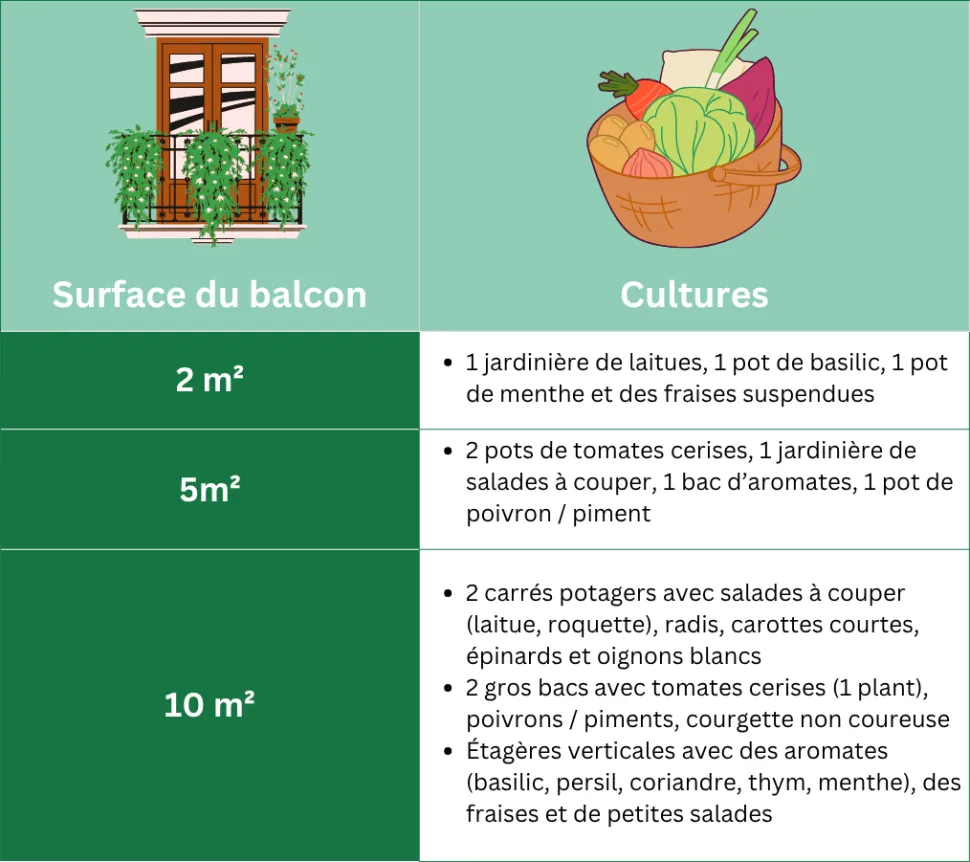
Examples of what you can grow on a 2.5 or 10 m² balcony
How do you maintain a balcony vegetable garden (watering, soil, fertilization)?
Growing vegetables on a balcony requires a little more effort and care than in a garden. In fact, in the open ground, plants have access to more nutrients, water and space than in pots.
The secret of container gardening: potting soil
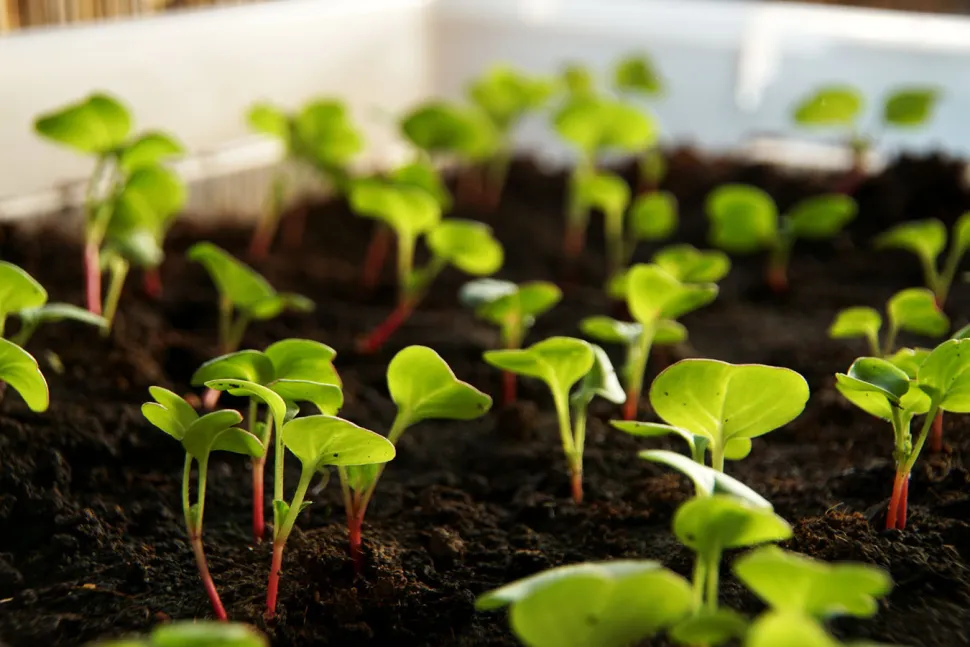
Rich potting soil promotes growth – Photo by Gartengoere / Pixabay
It all starts with the soil. Don't make the mistake of using garden soil, which is too heavy for pots. Provide your crops with a suitable substrate:
- Potting soil for seedlings: very fine and light, it's ideal for starting seeds in pots;
- Special potting soil: rich and draining, it's perfect for your tubs, window boxes and vegetable squares. It retains moisture better while allowing roots to breathe.
Watering in pots: timing is everything
Substrate dries out much faster in pots than in the ground, especially in midsummer or in windy conditions. You need to water regularly to prevent the soil from drying out. Indeed, most of the species we grow in the vegetable garden require fresh, but never soggy, potting soil.
In hot weather, water early in the morning or late in the evening to avoid immediate evaporation. You can also water twice, 10 minutes apart, to make sure the soil has drunk enough.
Fertilization: the key to abundant harvests
Unlike growing in the ground, where nutrients are renewed by the activity of micro-organisms, growing in pots quickly depletes the substrate's resources. After a month or two, your plants will have used up all the nutrients available in their potting soil.
You therefore need to fertilize toprovide the nutrients required for fruit and vegetable production. The needs of plants vary according to their stage of development:
- At start-up, use a nitrogen-rich fertilizer to promote foliage growth;
- During flowering and fruiting, opt for a fertilizer richer in potassium to support fruit formation.
You can use homemade solutions, such as compost or nettle purin, or commercial fertilizers. One application every two weeks is generally sufficient.
Our tips for a productive, carefree urban vegetable garden
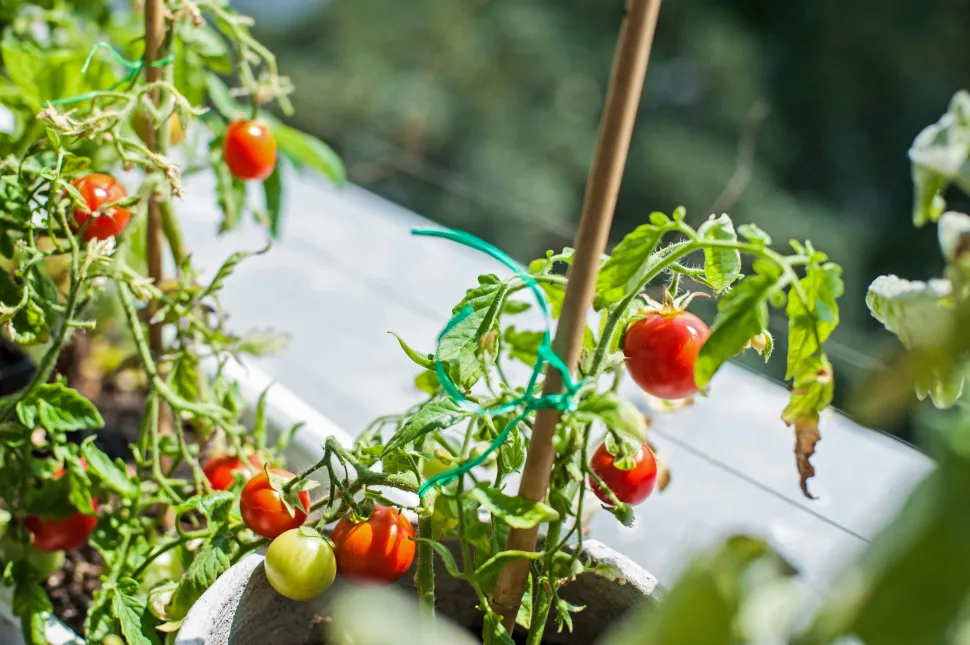
With plants already formed, you increase your chances of success – Photo by Tom Jur / Unsplash
Here are a few professional tips to turn your balcony into a veritable Garden of Eden:
- Prefer seedlings to seedlings: the chances of success are greater with an already-formed plant, and harvesting is quicker;
- Optimize drainage: pour a layer of clay balls into the bottom of your containers. Add a drainage or geothermal felt to prevent the potting soil from running off with excess water;
- Download a gardening app: tools like Monstera give you all the information you need to make a success of your urban vegetable garden (exposure, preferred varieties, sowing techniques) and remind you when to water or fertilize;
- Practice companionship: planting certain species side by side helps avoid disease, enrich the soil and save space. Conversely, certain combinations deplete the substrate and encourage the development of pests and fungi;
- Sow and plant continuously: never leave a pot or row empty. As soon as a harvest is finished, plant again;
- Harvest regularly: the more you harvest your herbs or Bell pepper, the more the plant is stimulated to produce new ones.
Mistakes to avoid with a balcony vegetable garden
Vegetable garden cycles are shorter than those for ornamental gardens or houseplants. Certain mistakes can jeopardize your harvest. Here are the main mistakes to avoid, to put the odds in your favor:
Plant without thinking
Before buying planters, seedlings and vegetable patches, think about your layout. The location of each one counts, especially in a small space, to facilitate access to water and crops.
Think about light too. Make sure that the most imposing plants don't shade the others. Place taller plants (such as tomatoes or bean stakes) at the back and smaller crops (radishes, lettuces) in the foreground.
Choosing pots that are too small
Most vegetable plants are grown as annuals. You won't be repotting them as they grow. That's why you need to anticipate the size of the pot and the spacing between crops. Think big from the start! That tiny five-leaf zucchini plant will grow into a metre-high bush in just a few weeks!
Forget the flowers
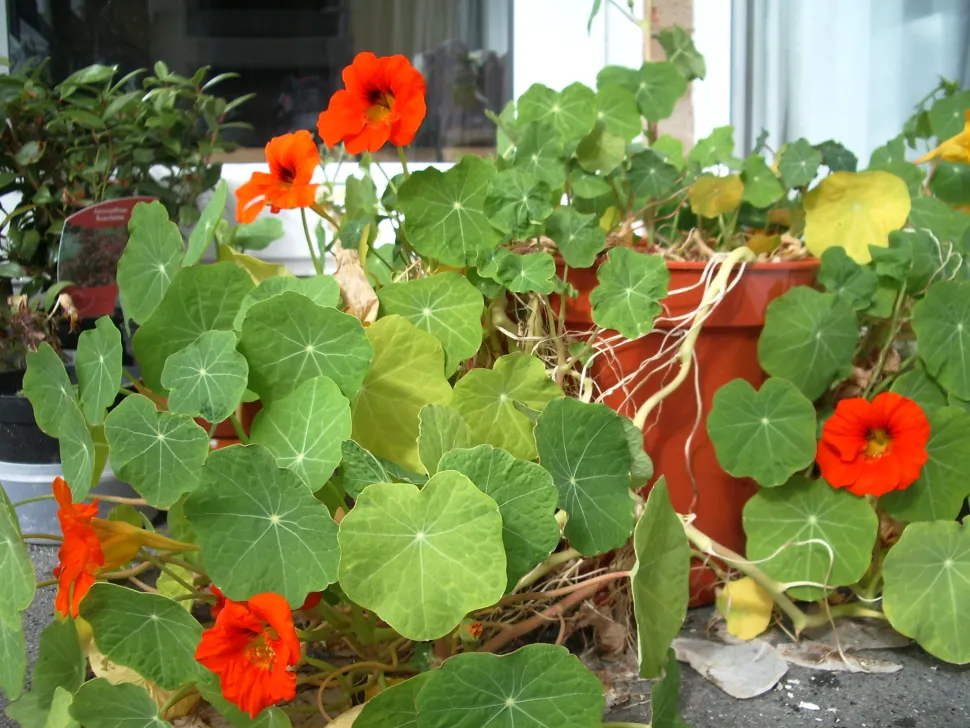
Attracted by nasturtiums, aphids will leave your crops alone – Photo by Aimee Rivers / Flickr
The vegetable garden isn't just about vegetables! Flowers, like marigolds and marigolds, are your allies. They attract insects and contribute to better pollination (and therefore a better harvest).
Some flowers, like nasturtiums, can also act as martyrs, attracting pests to leave your vegetable crops alone.
Ignore the wind
Wind can be a formidable enemy on a balcony. It dries out leaves and breaks even the most fragile stems. If your terrace is exposed, install a windbreak (canisse) and provide sturdy stakes for your tall plants.
Frequently asked questions about urban vegetable gardens
When is the best time to plant a vegetable garden on my balcony?
You can plant vegetables all year round, adapting the varieties to the season. But the best time to start a vegetable garden on a balcony is in spring, between March and May. This is when temperatures rise and light conditions become favorable for plant growth. Certain early crops (radishes, lettuces) can be sown as early as the end of winter, while vegetables that are more sensitive to the cold, such as tomatoes or zucchinis, should wait until April or May, once the risk of frost has passed.
What pot size should I choose for planting vegetables on my balcony?
Pot size depends on the variety you're planting. Consider :
- Small pots (3 to 5 liters) for herbs (basil, chives, mint);
- Medium-sized pots (5 to 10 liters) for salads or radishes;
- Large pots (20 liters or more) for tomatoes, zucchinis and eggplants.
Are you hesitating between two sizes? Choose the larger size. A container that's too small limits growth, dries out the substrate more quickly and reduces harvests.
Which vegetables grow best on a balcony or terrace?
The vegetables best suited to a balcony are those that grow fast, take up little space and can be grown in pots. Among the easiest to grow :
- Cherry tomatoes, very productive;
- Radishes, quick to harvest;
- Salads, ideal for beginners;
- Aromatic herbs such as basil, mint and chives;
- Strawberries, perfect for window boxes.
The choice also depends on exposure: sun-hungry plants are best planted on a well-exposed balcony, while others tolerate half-shade better.
By Servane Nemetz
on 25-05-2026 at 9:24 AM
on 25-05-2026 at 9:24 AM
Vegetable garden
 Seaside garden: which spray-resistant plants to plant?
 Vegetable gardening: 10 mistakes that ruin your harvests
 Profitable vegetable gardening: 11 highly productive vegetables for abundant harvests all year round