Orchid: secrets for making it bloom again (and mistakes to avoid)
Article for :Beginner and plant killerExperienced plant lover
Key points to remember
* Orchids need light, humidity and fertilizer to bloom again.
* Some varieties require a temperature difference between day and night.
* Potatoes , ice cubes and coffeewill not make your orchid bloom again.
Article summary
Can an orchid bloom again?
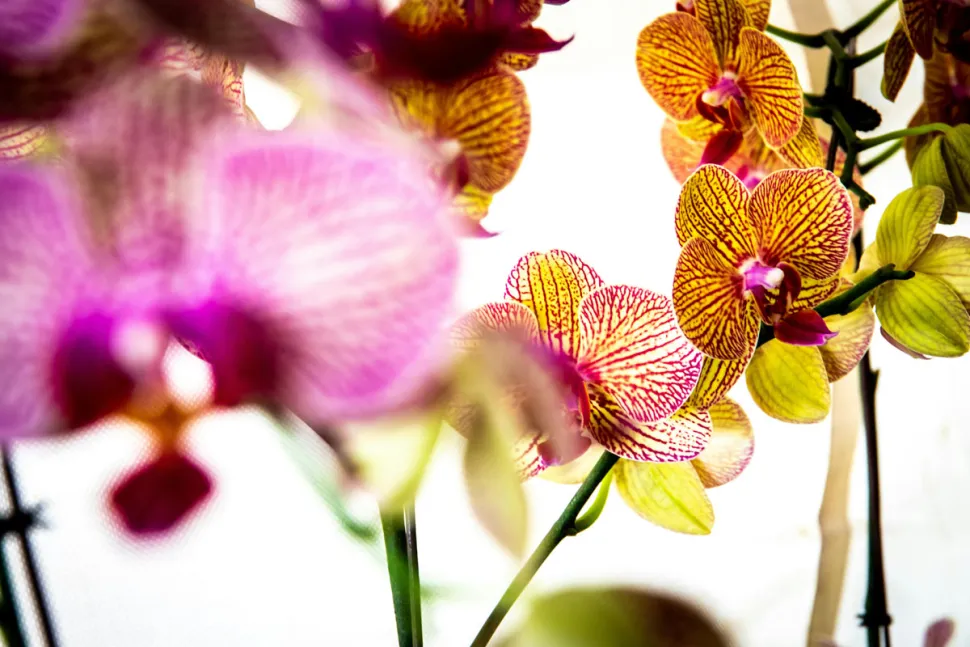
Commercially available orchids can all bloom again – Photo by Magda Ehlers / Pexels
Good news for all lovers of delicate flowers: orchids can bloom again. The vast majority of plants in the Orchidaceae family are :
- Perennial: they live for several years;
- Polycarpic: they flower several times in their life.
Your plant doesn't die when it finishes flowering. It goes into a state of rest to prepare new flowers.
Worth noting
Monocarpic orchids (which die after flowering) are thought to exist in nature. This is the case for a few species in the Corymborkis genus, which are not sold commercially.
How long does it take for an orchid to flower again?
Most orchids flower only once a year. But :
- Some cultivars of butterfly orchids (Phalaenopsis) can flower 2 or 3 times a year;
- Dendrobium and Cattleya sometimes require a resting period of more than a year.
What's more, some nurseries "force" orchids to flower in order to be able to offer them for sale. In this case, it's not unusual for the plant to need more time. You'll probably have to wait more than a year for the next bloom.
What does an orchid need to bloom again?
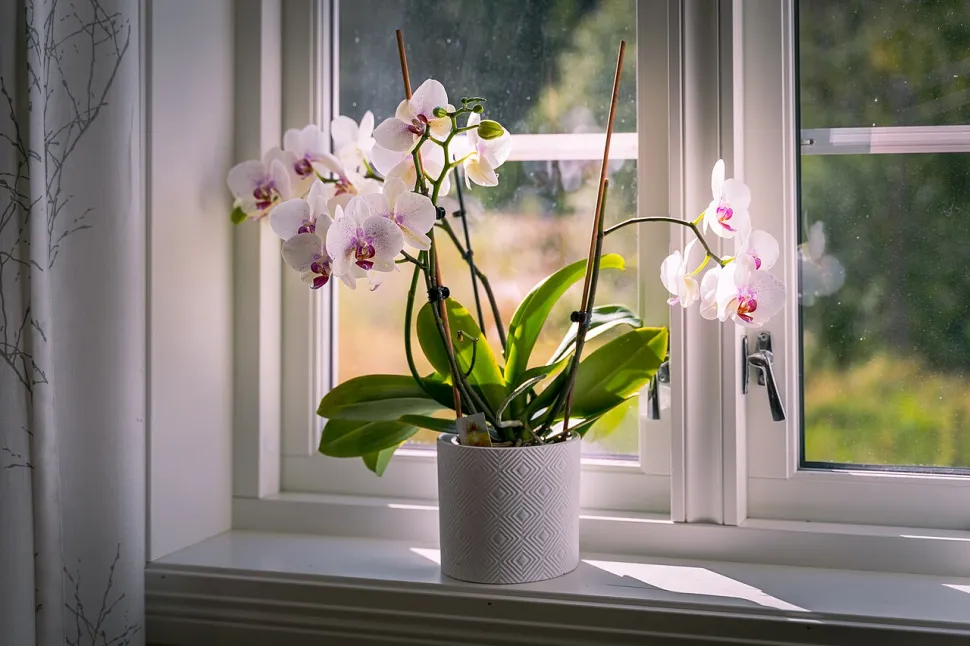
Light levels are always lower indoors than outdoors. For orchids requiring sunny exposure, a spot behind a window is the minimum requirement – Photo by Øyvind Holmstad / Wikipedia
Orchids need to live in conditions close to their natural environment if they are to bloom again. So you need to keep an eye on these parameters:
- Exposure: light is one of the most important factors in flowering. Most orchids like a spot of half-shade or full sun. If yours doesn't get enough light, it will produce leaves but no flowers.
- Watering: too little or too much water will cause your plant to suffer and prevent it from flowering. The frequency and method of watering depend on the variety of orchid you're growing.
- Nutrients: flowering requires a lot of energy. Your plant will therefore need to be fed with a suitable fertilizer. This is all the more essential for epiphytic varieties, which cannot draw nutrients from their substrate.
- A difference between night and day temperatures: some species also need to experience more or less marked seasons, with a few degrees of difference between day and night, or between the growing and vegetative periods.
Want to see your orchid bloom again without making a mistake?
With the Monstera app, you can benefit from personalized advice according to the variety you're growing (Phalaenopsis, Cymbidium, Dendrobium...), watering reminders adapted to its rhythm and precise recommendations at the right time.
Don't let doubts hold back the next bloom: download the app and guide your orchid step by step to new blooms.
Can a banana peel or a potato be used to make an orchid bloom again?
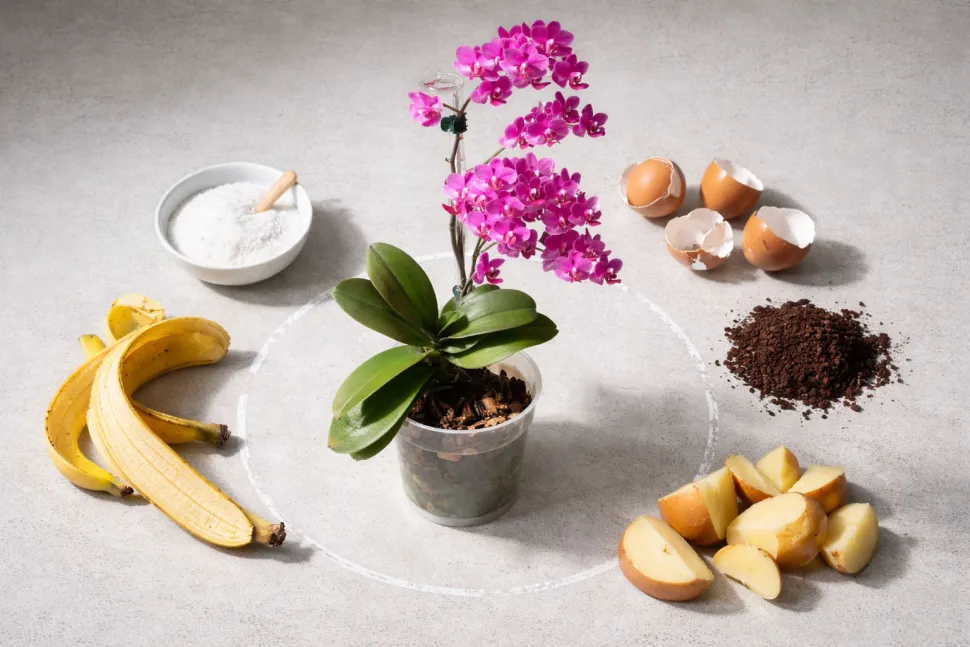
Orchids don't like bananas or coffee – Photo by Maja Dumat / Flickr
Have you found a miracle remedy online based on potato, banana, coffee or baking soda to make your orchid bloom again? Your plant doesn't need that. Nobody crushes eggshells or lays coffee grounds at the foot of plants in the wild, and they go right back.
At best, these tricks are ineffective. But they can also be harmful. They can compromise the delicate balance in which your orchid is evolving and weaken it. It will then take even longer to bloom again.
How to make an orchid bloom again: the method for each species
All orchids need light, water and nutrients to re-flower. Depending on the species, additional steps are required.
How to reflower a butterfly orchid (Phalaenopsis) ?
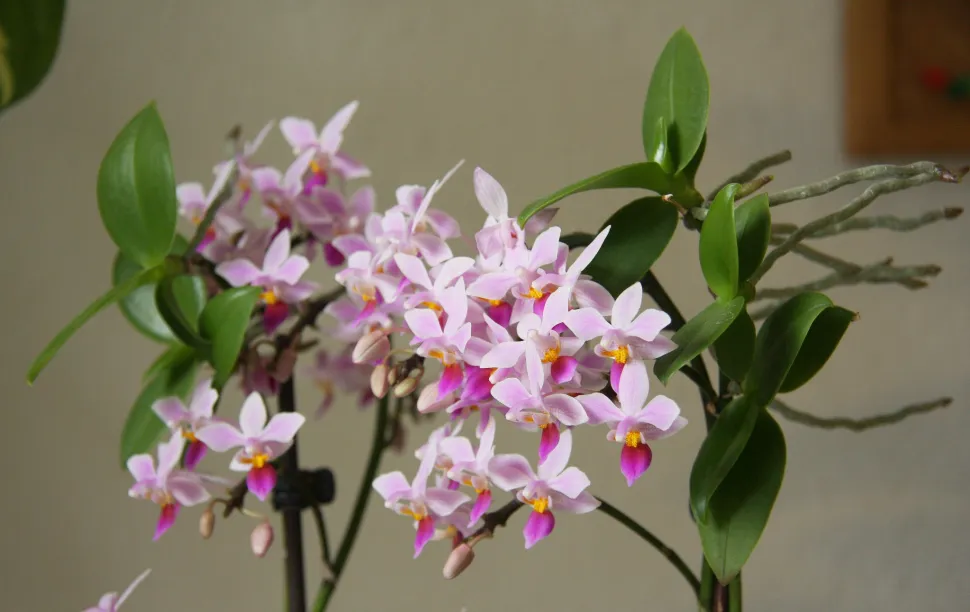
Getting a butterfly orchid to bloom again is easy, even for beginners – Photo by Maja Dumat / Flickr
The Phalaenopsis orchid and its various cultivars are the easiest to grow and reflower indoors. Here's how to get them blooming again.
1.if this is the first bloom on this flowering spike and it's still green, prune the deflowered stem below the first flower or just above the 2nd or 3rd eye from the base. This will force the plant to re-flower on this stem.
2.if the stem has already re-flowered, or is brown or dry, cut it back to ground level. Your plant will produce another.
Fertilize your orchid with a growth fertilizer. Switch to a special bloom fertilizer as soon as a flowering stem appears. You can mix it with the water when watering or basking.
How to make a boat orchid (Cymbidium) bloom again
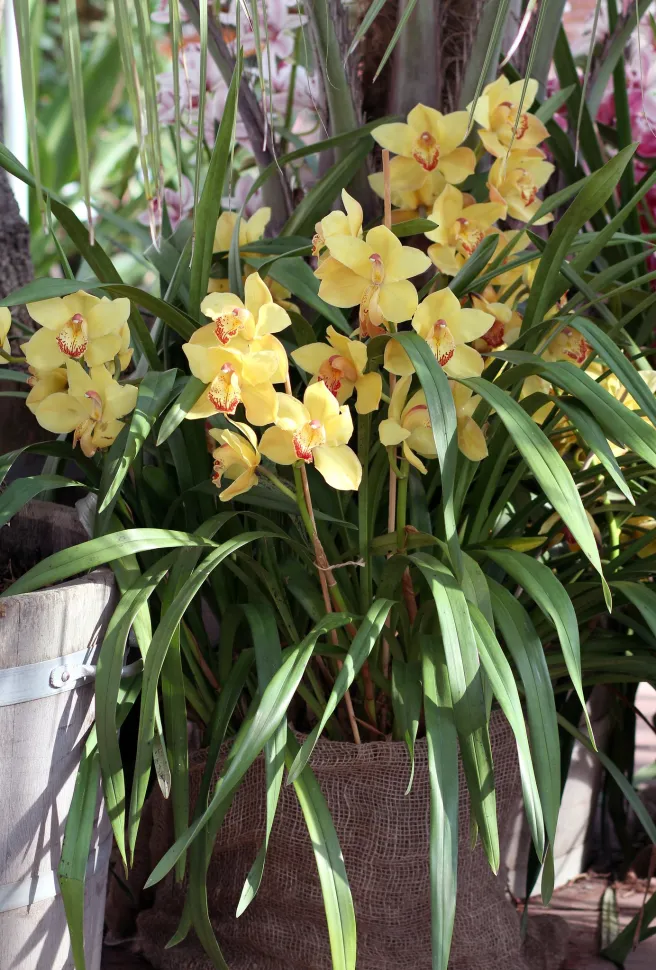
Take your Cymbidium orchid out in summer if you want it to bloom again – Photo by Maja Dumat / Flickr
The Cymbidium orchid blooms easily if you follow a few rules.
Take out your Boat orchid. This is the number 1 rule for reblooming. This variety needs to experience a thermal difference between day and night to induce new flowering. Take your plant out into the garden or onto your windowsill as soon as the mercury permits (from late spring onwards). Watch out for slugs, which love its long leaves, and frost, which can be fatal.
Cut defoliated shoots flush with the ground using clean, sharp pruning shears. This is not an essential precaution (in nature, no one prunes the stems). But it does save the plant from exhaustion, allowing it to concentrate its energy on flowering.
Fertilizing: alternate between a growth fertilizer and a bloom fertilizer, depending on your plant's cycle. You can also use a special orchid fertilizer.
How to get your bamboo orchid (Dendrobium nobile) to bloom again
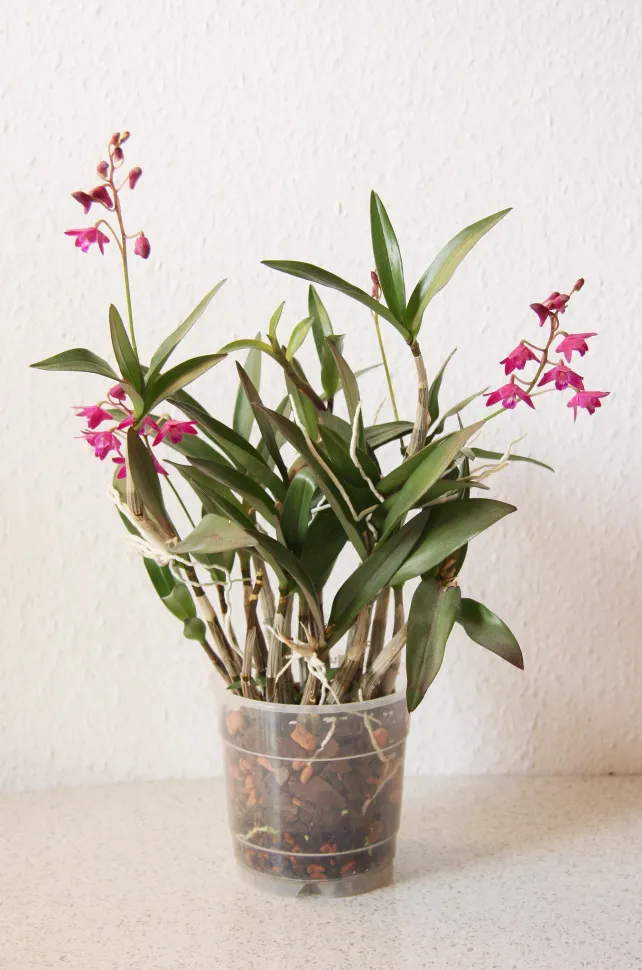
If you've already succeeded in getting a butterfly orchid to bloom again, you can take it to the next level: Dendrobium nobile – Photo by Maja Dumat / Flickr
Bring out your Bamboo orchid during September and October, when the thermometer hovers around 14°C at night. The plant will only flower if there's a difference in temperature for a month or two. Protect from direct sun and rain. Move your Dendrobium nobile into a bright spot away from the cold as soon as the buds appear.
Fertilize your Dendrobium nobile from April to October with a special orchid fertilizer to give it the nutrients it needs to flower again.
Reduce watering, but don't let the soil dry out completely between returning indoors and the appearance of the first flowers.
How to re-flower a pseudobulb orchid (Catleya or Cambria)
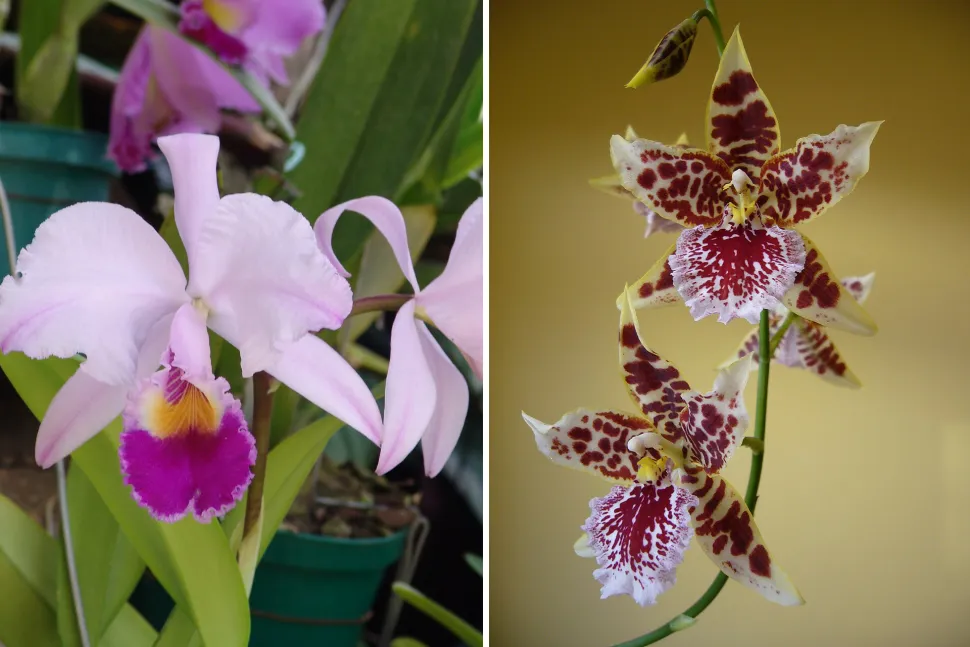
Catleya (left) and Cambria (right) orchids have the same needs – Photo by M. Olaya /Flickr and Nabokov /Wikipedia
Pseudobulb orchids, such as Catleya and cambria hybrids, do not rebloom on the same flower stalk. They produce a new pseudobulb, on which the new bloom usually appears once a year.
When the flowers have faded, cut the flower stem just above the foliage. This encourages new growth to appear. Use a sharp, clean tool to facilitate healing and prevent the spread of disease.
To help your Cambria or Catleya orchid bloom again, give it plenty of light. Place it, for example, behind an east- or west-facing bay window or in a greenhouse. When a new shoot is born, turn it towards the window so that it receives as much sunlight as possible.
Use a special orchid fertilizer during the growing season to encourage flowering.
Your plant also needs to experience a difference of around 5 degrees between day and night. You can achieve this indoors (if you heat differently depending on the time of day), in a greenhouse or an unheated conservatory.
Tips for making a Miltonia orchid bloom again
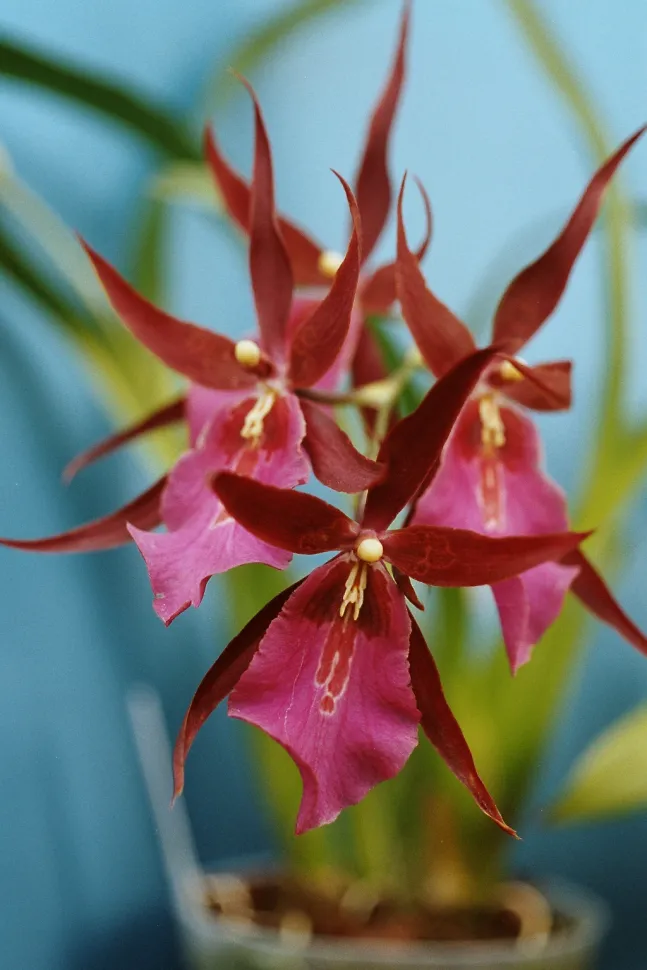
Miltonia orchid flowers require a little effort – Photo by Arne and Bent Larsen / Wikipedia
Miltonia orchid never flowers twice on the same stem. It produces a new pseudobulb that houses the flowering stem and flowers the following year.
After flowering, cut the flower stems at the base with clean, sharp secateurs.
Fertilize byalternating a growth fertilizer with a flowering fertilizer. Your new shoots will be more vigorous and more likely to bloom again.
Every year, outside flowering and summer heat, repot your Miltonia orchid in a pine bark mixture. Take the opportunity to remove the oldest pseudobulbs and their roots. They won't bloom again.
Five mistakes that prevent your orchid from flowering again
An orchid that won't bloom again is almost always sending out signals. We explain the most common errors, how to recognize them and what to do about them.
Your orchid lacks light
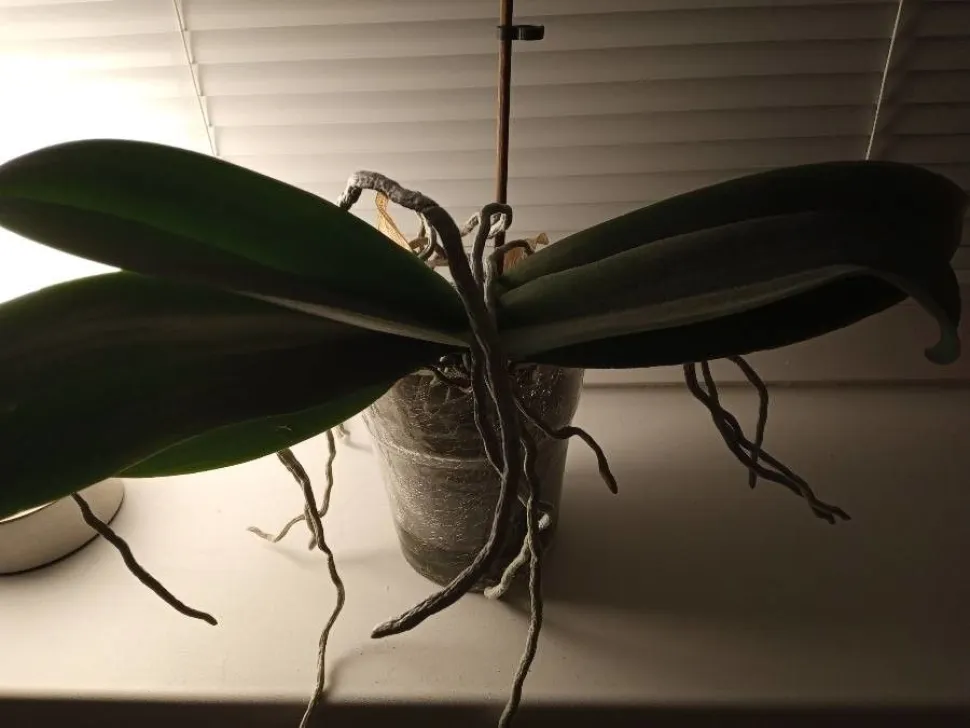
It's impossible for your orchid to flower without light – Photo by Andrea P. / Plantnet
Light is the main trigger for flowering, especially in Phalaenopsis. If your plant lacks light:
- Its foliage is darker green than normal;
- Slow growth;
- It produces leaves, but no flowering stem.
An orchid can survive with little sun, but it won't flower. Place your plant behind an east- or west-facing window, with bright indirect light.
Inadequate watering (too much or too little)
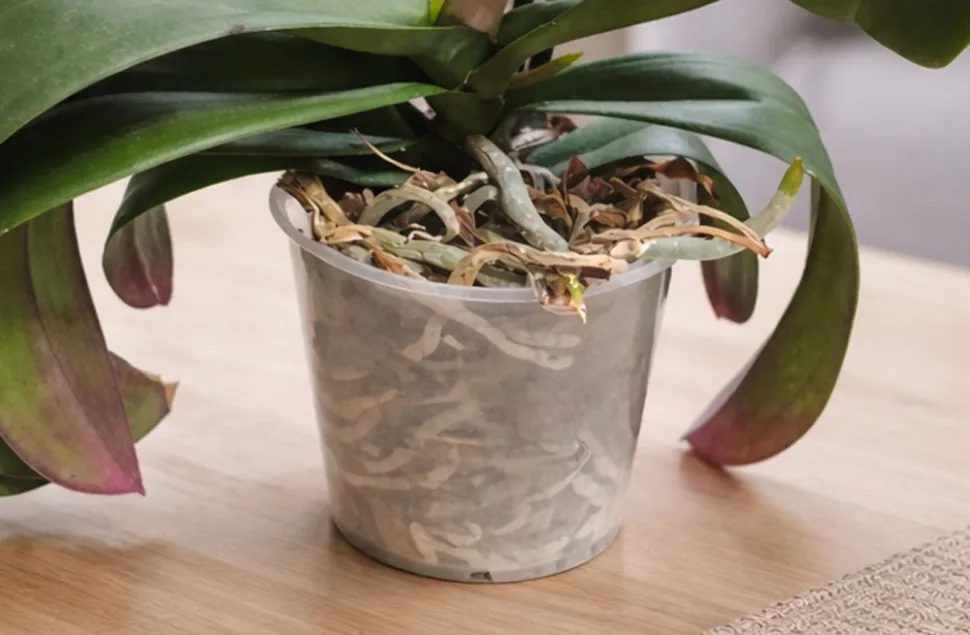
Gray, crumpled roots are the sign of inadequate watering – Photo by Peinado Lucrecia / Plantnet
This is the most common mistake when growing orchids indoors. Observe your plant. If it's been over-watered:
- Its leaves are soft and yellow;
- Its roots are brown, soft or hollow;
- The substrate smells damp or decomposing.
Conversely, a plant that suffers from a lack of water has :
- Very dry, crumpled gray roots;
- Wrinkled leaves;
- Flower buds that abort.
A stable temperature
Some orchids need a thermal signal to re-flower (Cymbidium, Dendrobium, Miltonia, Cattleya). This is probably the case for your plant if:
- It is in good health;
- Its new shoots and pseudobulbs are well formed;
- It is not producing any flowering stems.
Offer your orchid a temperature difference of 4 to 8°C for four to six weeks. You can, for example, have it spend the night outside (in summer or spring) or install it in an unheated veranda.
Your fertilizer contains too much nitrogen
A fertilizer too rich in nitrogen favors leaves to the detriment of flowers. Your plant invests all its energy in its foliage, to the detriment of its flowers. It has ;
- Large, very green leaves;
- Healthy roots;
- Rapid growth.
Change to a special orchid or flowering fertilizer. Follow the manufacturer's instructions on dosage and timing to avoid burning foliage and roots.
You haven't repotted your orchid
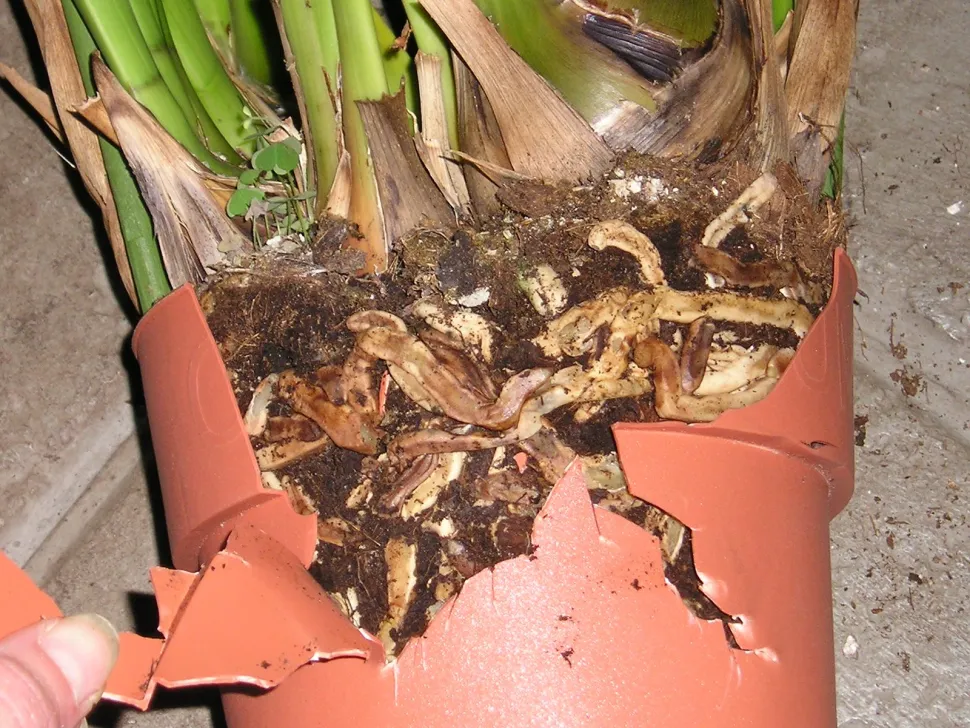
Orchids like to be cramped. But when there are more roots than substrate, there's no choice: you have to repot! Photo by Maja Dumat / Flickr
With a few exceptions, orchids do not require annual repotting. Repotting every two or three years is sufficient for most species.
However, over time, bark decomposes and retains too much moisture. The pot can also become too small for the roots, which slowly suffocate.
A degraded substrate or unsuitable pot can be recognized by :
- A thin, compact substrate resembling potting soil;
- A pot that tips under the weight of the plant;
- Roots escaping through the drainage hole.
If you observe one or more of these signs, repot your orchid in a pierced pot and a suitable substrate (most often, an aerated bark-based mix.)
Good to know:
Never repot a flowering orchid. Repotting disrupts flowering.
By Servane Nemetz
on 25-03-2026 at 10:06 PM
on 25-03-2026 at 10:06 PM
Indoor plants
 Seaside garden: which spray-resistant plants to plant?
 Vegetable gardening: 10 mistakes that ruin your harvests
 Vegetable garden on a balcony: how to create a productive vegetable garden in the city?