Vegetable gardening: 10 mistakes that ruin your harvests
Article for :Beginner and plant killerExperienced plant lover
Key points to remember
Many failures come from simple mistakes: planting too early or too late, combining crops incorrectly or not rotating.
A balanced vegetable garden relies on simple gestures: controlled watering, appropriate fertilization and regular weed control.
Biodiversity (useful flowers, good associations, crop rotation) naturally enhances the health and profitability of your crops.
What if having a profitable vegetable garden wasn't just a question of varieties and the lunar calendar? Whether you have a vegetable garden in your backyard or a few pots on your balcony, here are 10 mistakes that ruin all your efforts and are easy to avoid (once you know what they are).
Mistake No. 1: Failing to prepare the soil before planting
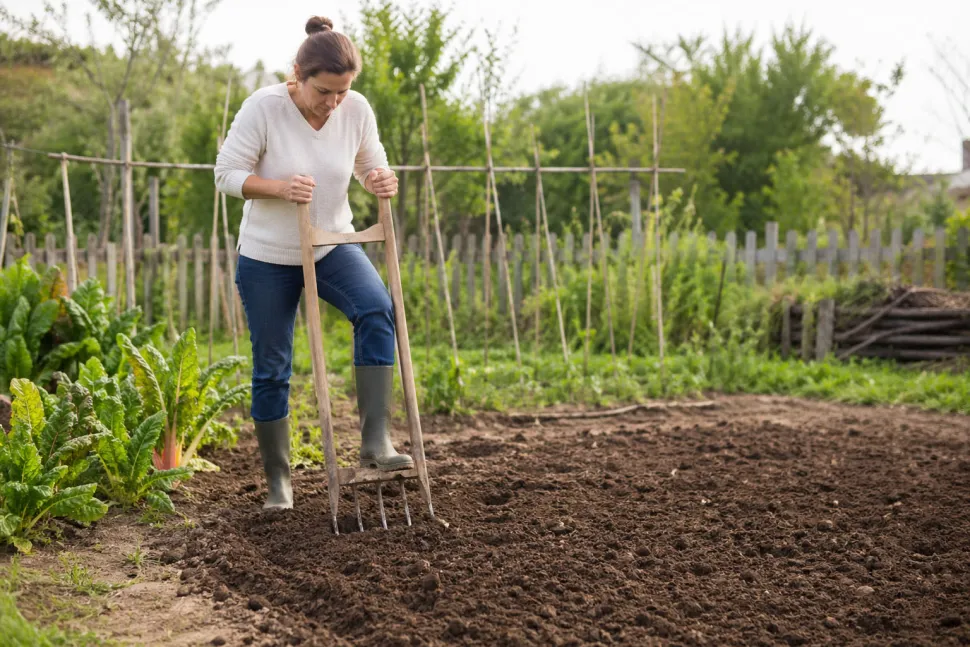
The grelinette allows you to aerate the soil without too much effort
The productivity of your vegetable garden is determined before planting. You need to prepare your soil before planting. This step allows you to :
- Improve soil structure;
- Improve water retention;
- Supply plants with the nutrients they need.
How do you prepare the soil for your vegetable garden?
Preparing the soil involves several steps:
1. Weeding: remove all weeds (or old plantings) to make room;
2. Loosen the soil: loosen the soil with a spading fork or grelinette. Take advantage of this to remove roots, stones and other elements that could get in the way of your future plantings;
3. Fertilize: enrich the soil with compost to provide the nutrients your crops need.
Soil preparation requires a little forethought. Fertilization and loosening are generally carried out in the autumn prior to planting. You may need to weed and loosen the soil again a few days before planting.
Mistake No. 2: Thinking too big
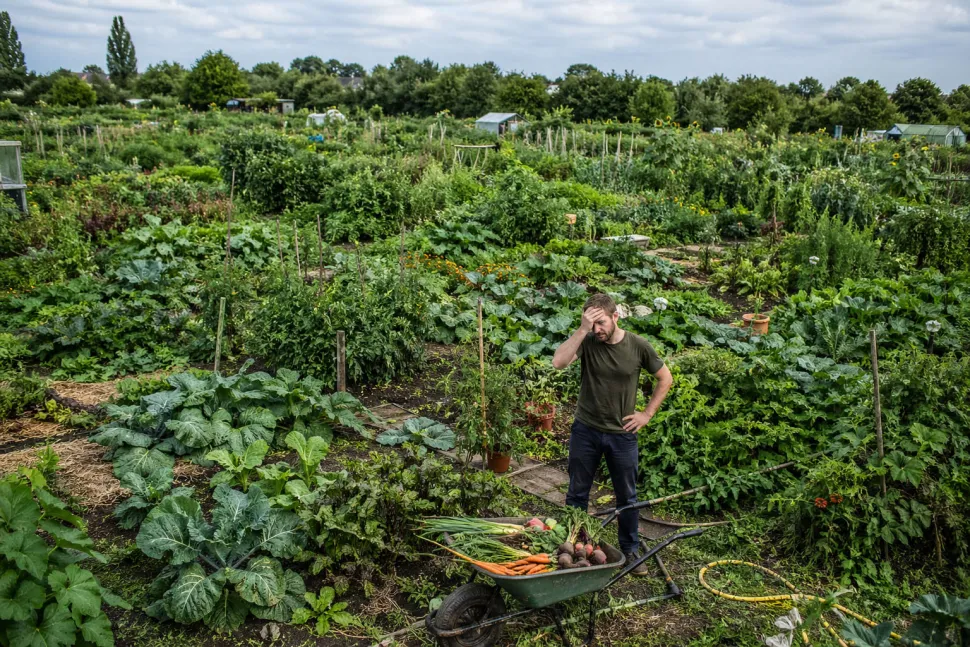
Can you drown under vegetables? Maybe not, but under the work, yes.
We often read that 50 m² is enough to cover one person's vegetable consumption. Provided you have the time to devote to it. A vegetable garden requires almost daily work in spring and summer. You'll need to water, fertilize, stake, prune, pinch, check for pests and, of course, harvest!
To start with, we advise you to aim for 20 or 30 m². This will enable you to familiarize yourself with the different growing techniques and find your feet. Choose fast-growing, high-yielding vegetables, so you can combine controlled effort with the pleasure of harvesting.
Mistake No. 3: Planting too early in spring
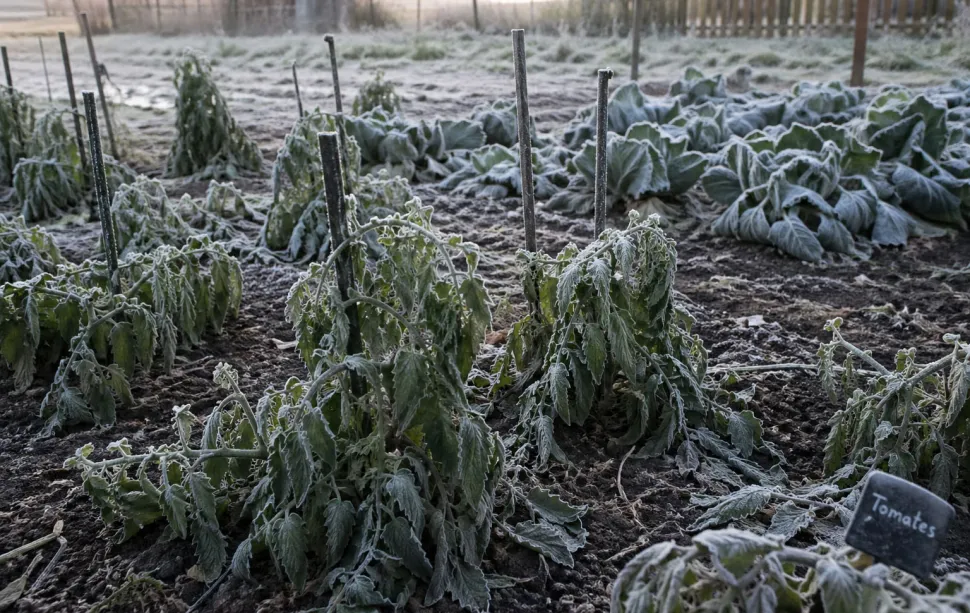
A cool night can wipe out all your efforts and your harvest
Most vegetable plants are not hardy. The slightest frost can be fatal, especially for seedlings and young plants, which are more vulnerable.
Before sowing or planting tomatoes(Solanum lycopersicum), Potato tubers(Solanum tuberosum) or Melon(Cucumis melo), you need to wait until all risk of frost has passed. We generally recommend waiting until after the Ice Saints (May 11, 12 and 13) to start planting. However, in certain regions, notably in the South of France, you can start your vegetable garden earlier.
To save time, especially if your summers are short, you can start your seedlings earlier, under cover. Once the last frosts are over, you can transplant your plants into the ground.
Mistake 4: Planting too late in the season
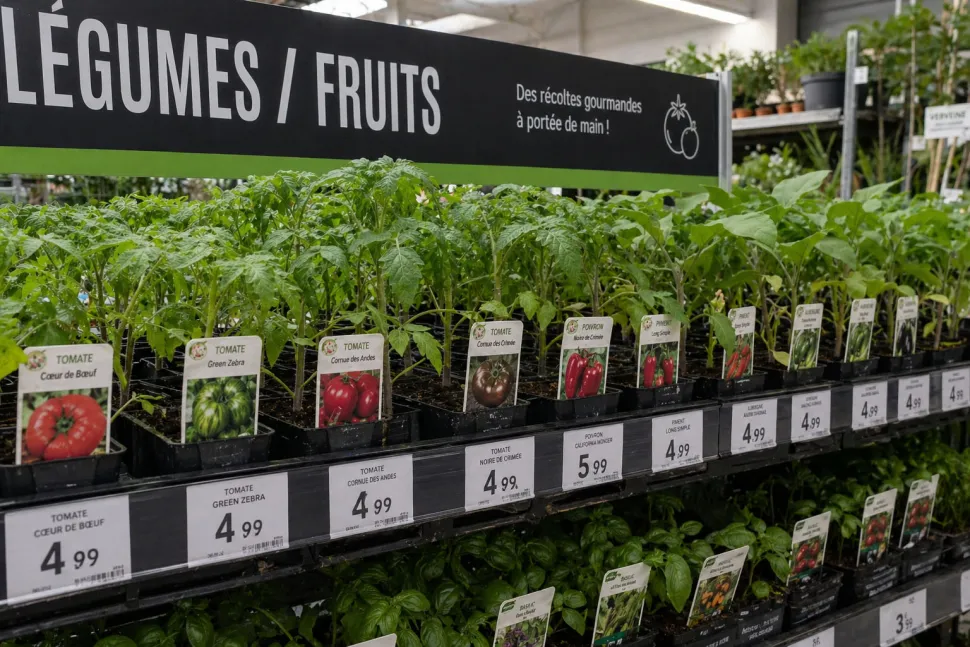
Young plants will enable you to catch up or counter a summer that's too short
Before the time, it's not the time, and after the time, it's not the time anymore, as the saying goes. The same applies to your vegetable garden.
Every vegetable has an incompressible growing cycle. To flourish, flower and bear fruit, a plant needs a precise dose of heat and light. If you plant too late, your tomatoes or peppers(Capsicum annuum) risk running into the early autumn cold before they've even ripened. As a result, you end up with green fruit that never turns red, or root vegetables that remain stunted for lack of time to store their reserves.
If you've missed the boat on spring sowing, don't panic! There are two ways to make up for a delay:
- Choose early or precocious varieties, selected for their short cycle. They ripen much faster than conventional varieties.
- Buy young plants in pots: rather than starting from seed, buy plants that have already developed. You'll gain 3 to 6 weeks of precious growth time, which can make all the difference to a successful harvest before winter.
Mistake 5: Combining incompatible plants
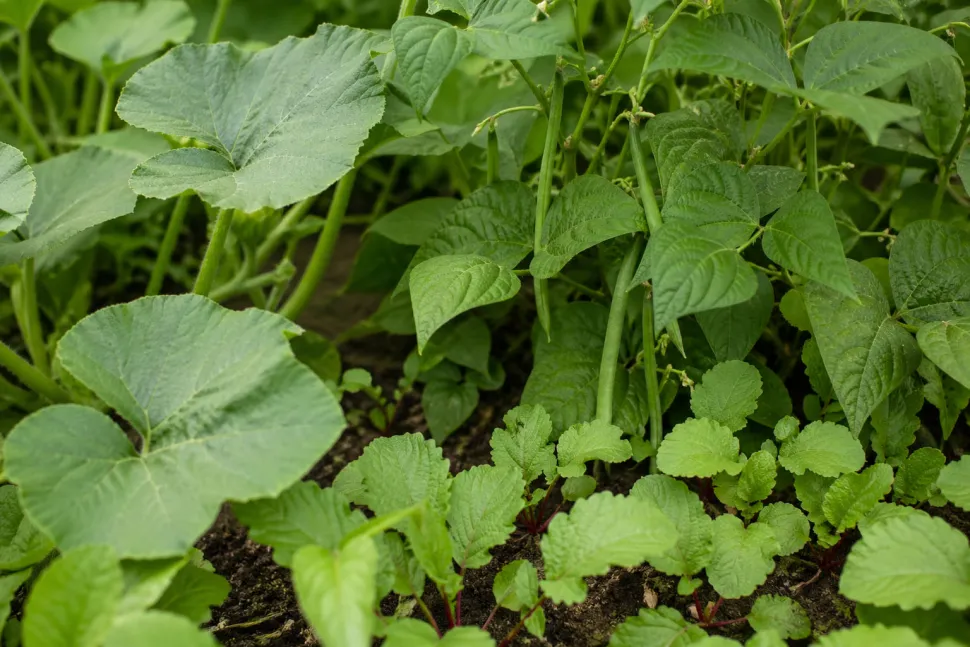
Pumpkins, beans and radishes get along just fine.
Planning your vegetable garden is a bit like planning your wedding table. Wouldn't you like to sit your vegetarian colleague opposite your hunter uncle? It's the same for your plants.
We advise against planting species belonging to the same family side by side, for example, tomatoes and potatoes. Even if they have the same needs, this association is not favorable. Two plants in the same family :
- Consume the same nutrients: they exhaust the soil;
- Share the same pests and diseases, increasing the risk of outbreaks and contagion.
You should also avoid planting together plants that have the same type of roots (deep or superficial) or the same nutrient requirements. They compete with each other and one species often takes over from the other.
Finally, you need to take chemistry into account. Some plants, because of what they reject or consume, are simply incompatible.
Conversely, certain combinations enable plants to protect and help each other, boosting the profitability of your vegetable garden.
Which combinations should be avoided and which encouraged?
Here are some examples of good companionship and associations to avoid.
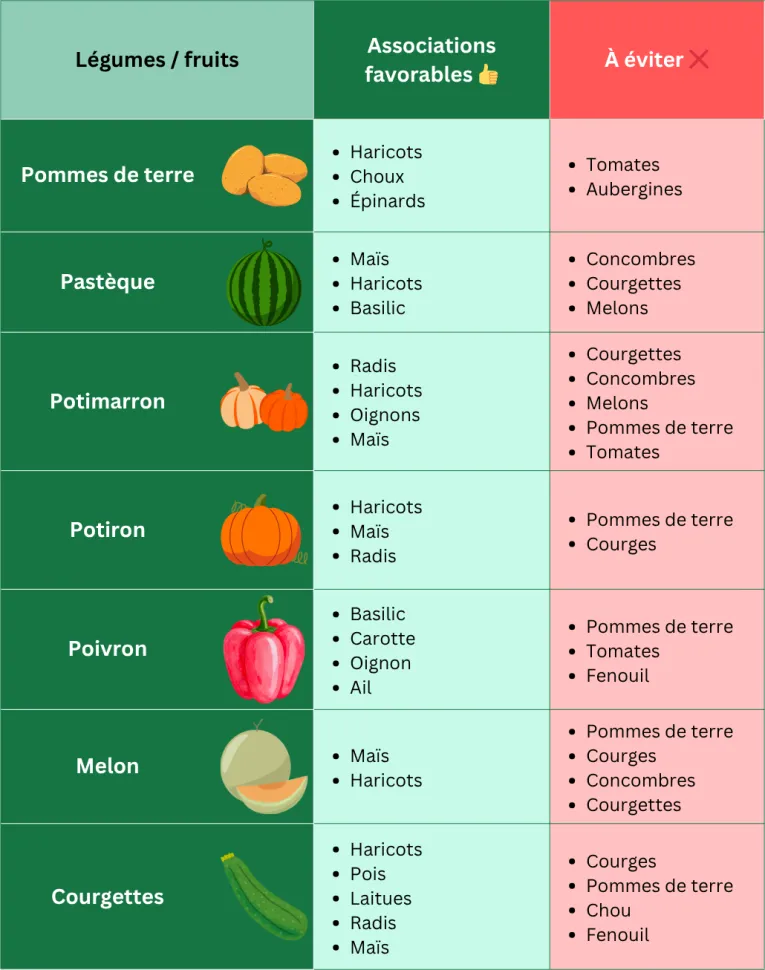
Some associations to favor or avoid
Mistake no. 6: Always plant the same vegetables in the same place
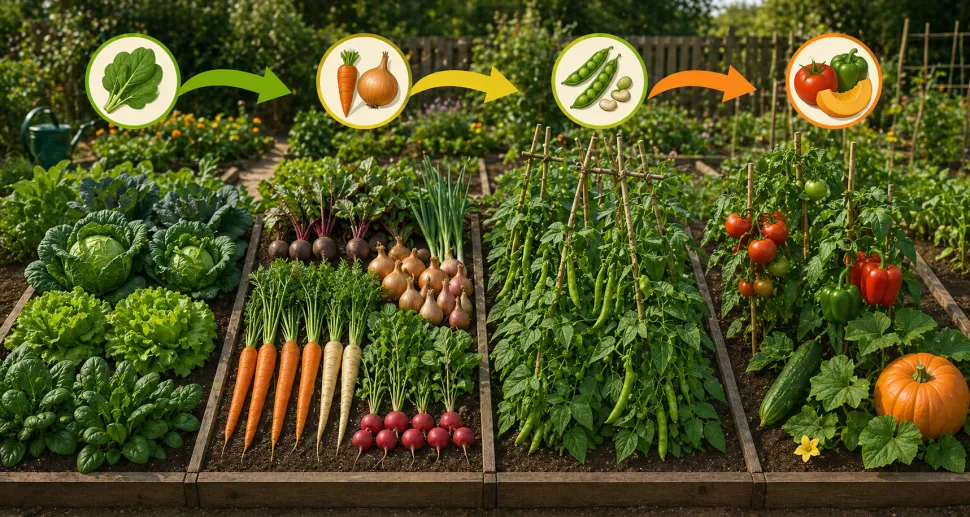
The benefits of crop rotation are worth thinking about, I promise!
Between sun exposure, available space and the right crop combinations, organizing a vegetable garden often requires a great deal of thought. Once you've found the ideal layout, it can be tempting to stick with it every year. However, this habit is detrimental to your harvests.
Growing the same vegetables in the same place gradually exhausts the soil,and encourages the appearance of diseases and parasites specific to certain plant families. The result: smaller harvests, more fragile plants and poorer soil.
Crop rotation, on the other hand, preservessoil fertility. The principle is to alternate vegetable families according to their nutritional needs and natural contributions. Some plants consume a lot of mineral elements, while others enrich or structure the soil.
How to organize crop rotation in the vegetable garden?
On a given plot, plant :
- In the first year, plant leafy vegetables (cabbage, lettuce, spinach): these are nitrogen-intensive and require rich soil to produce abundant foliage.
- The second year, root vegetables (carrots, parsnips, radishes, beets), which exploit the soil's depths, loosen the soil and require less nitrogen, as well as bulb vegetables (onions, shallots), which are not very demanding.
- In the third year, seed vegetables (legumes): their roots capture nitrogen from the air and return it to the soil. They are ideal for regenerating a tired plot.
- The fourth year of fruiting vegetables (tomatoes, peppers, cucumbers, squash): they consume mainly phosphorus and potassium, essential for flowering and fruiting.
Mistake no. 7: Forgetting to plant useful flowers
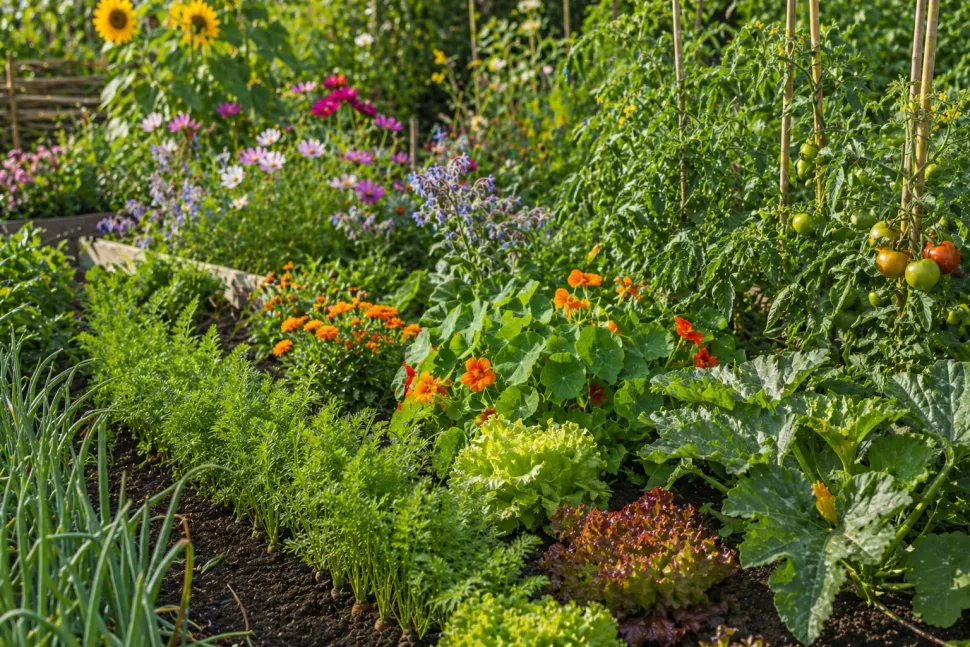
Combining the useful with the pleasurable, illustration
A productive vegetable garden is often one with flowers! Some flowers attract the pollinators needed for fruit formation, while others repel pests.
We recommend planting :
- Carnations(Tagetes patula) near carrots(Daucus carota), cucumbers(Cucumis sativus) and tomatoes to repel nematodes;
- Nasturtiums (Tropaeolum) at the edge of the vegetable garden: true martyr plants, they attract aphids that will leave your crops alone;
- Calendula next to tomatoes, lettuces(Lactuca sativa), zucchinis(Cucurbita pepo), eggplants(Solanum melongena), cabbages(Brassica) and carrots to keep aphids and flies at bay;
- Cosmos, zinnias, sunflowers (Helianthus annuus) and borage(Borago officinalis) to attract pollinating insects.
Integrating a few flowers between the rows of vegetables enhances biodiversity, boosts harvests and prevents disease.
Mistake no. 8: Watering too much or too little
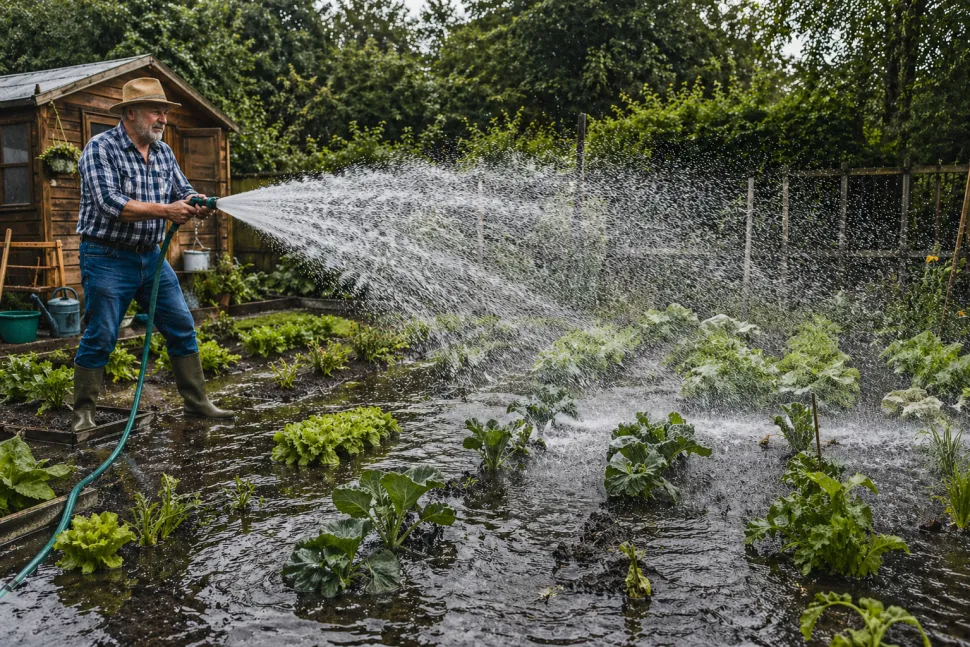
You shouldn't water too much, or too often
As always in gardening, watering is the key to healthy plants. Regularity is important, but so are frequency and quantity. Watering too often suffocates roots, encourages disease and makes plants fragile. Lack of water slows growth, stresses plants and compromises production.
Water requirements depend on the variety. In most cases, we recommend keeping the soil cool, but not soggy, with copious watering.
But that's not enough! You also need to adapt the frequency and quantity to the development of your plant. Potatoes, for example, don't need watering after the tubers have been planted. And it's advisable to stop watering just before harvesting, to obtain tastier vegetables.
Need help knowing when to water? TheMonstera app sends you personalized reminders based on your crops.
Mistake 9: Using the same fertilizer over and over again
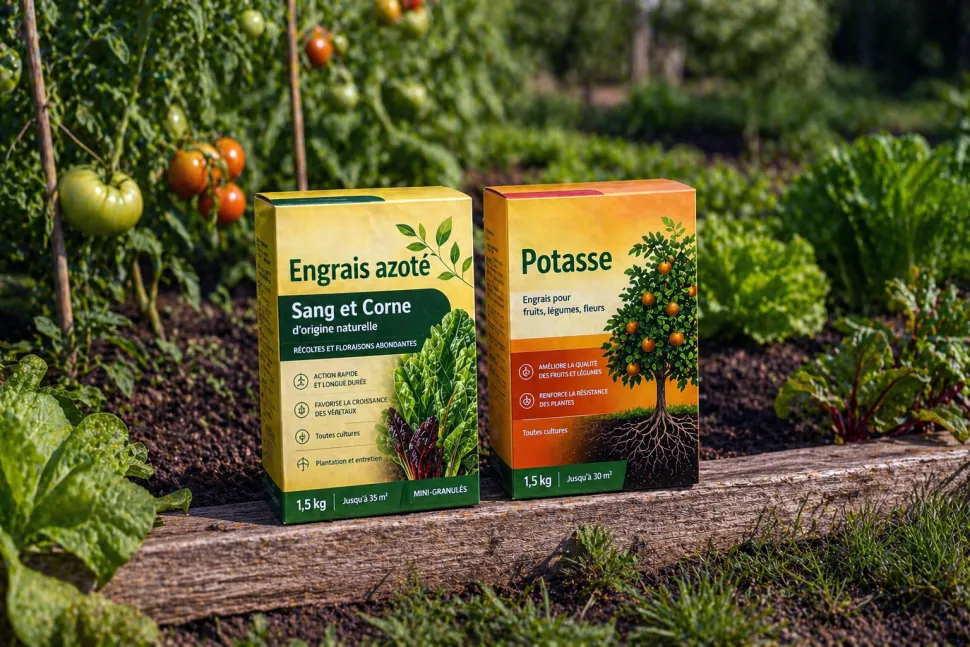
You can opt for a natural fertilizer (homemade compost, manure) or a commercial fertilizer
Before they end up on your plate, vegetables need to be fed. And they're greedy! Enriching the soil before planting is not enough. You need to fertilize them throughout their growth cycle.
Vegetables have different requirements depending on their species and stage of development. For example, they require nitrogen-rich fertilizer at the start of their growth cycle, to develop their foliage. But during flowering and fruiting, they require a product richer in potassium.
The ideal solution is to adapt to the plant's development and alternate fertilizers.
Mistake no. 10: Letting weeds take hold
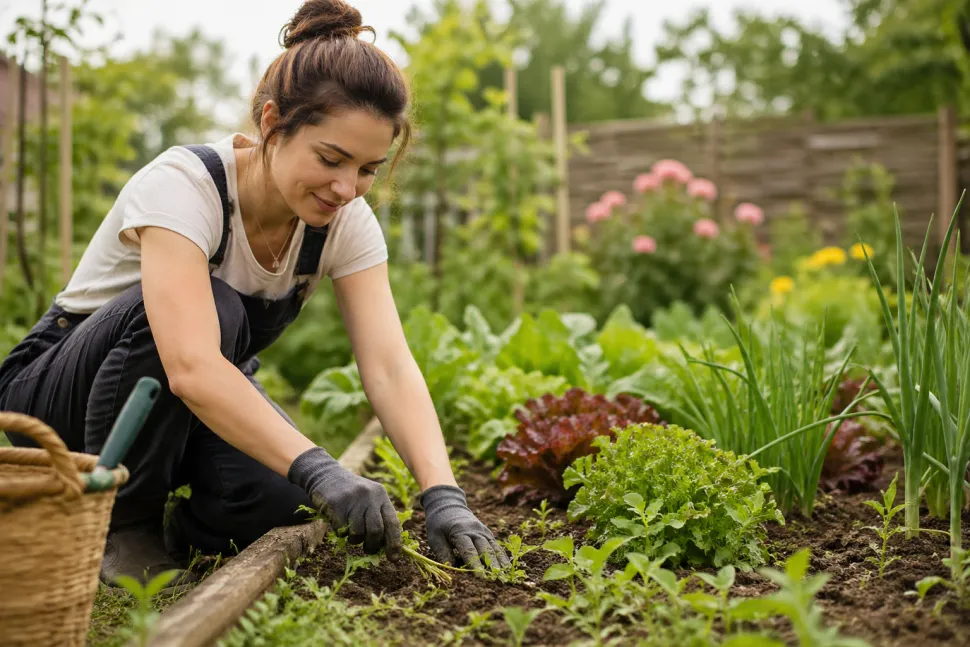
Regular weeding prevents weeds from taking hold.
Pulling out weeds is not just a question of aesthetics. Quackgrass(Elymus repens), bindweed(Convolvulus arvensis), purslane(Portulaca oleracea) or pigweed(Amaranthus) may seem harmless at first, but they can colonize beds and compete with vegetables for water, light and nutrients. Worse still, some grow faster than young seedlings and can smother them. Others harbor insect pests or promote excessive humidity.
The longer you wait, the more difficult it becomes to eliminate weeds, especially when they go to seed. The best approach is to work regularly, in short sessions. Light hoeing, manual weeding after rain or mulching can keep the soil clean without too much effort.
By Servane Nemetz
the 14-06-2026 à 18h13
the 14-06-2026 à 18h13
Article tags


 In the same category

 Newsletter
Vegetable garden
Latest articles
Seaside garden: which spray-resistant plants to plant?
Living in a house with a garden by the sea is like being on vacation all year round. But not for your plants! Between the sea spray that burns the leaves, the wind that blows r...
Living in a house with a garden by the sea is li...
Vegetable garden on a balcony: how to create a productive vegetable garden in the city?
Apartment gardening isn't just about growing houseplants. If you have a balcony, even if it's only 2 or 3 m², you can turn it into a vegetable garden and harvest your own tomat...
Apartment gardening isn't just about growing hou...
Profitable vegetable gardening: 11 highly productive vegetables for abundant harvests all year round
Growing a vegetable garden isn't just about eating five vegetables a day without having to get up at the crack of dawn to go to the market. It's also about the pleasure of seei...
Growing a vegetable garden isn't just about eati...
Vegetable garden on a balcony: how to create a productive vegetable garden in the city?
Apartment gardening isn't just about growing houseplants. If you have a balcony, even if it's only 2 or 3 m², you can turn it into a vegetable garden and harvest your own tomat...
Apartment gardening isn't just about growing hou...
How to get rid of aphids efficiently and naturally?
Gardening means having a long list of enemies. Among the most formidable and frequent are aphids. Tiny but voracious, these insects relentlessly attack your plants' sap, weaken...
Gardening means having a long list of enemies. A...
Orchid: secrets for making it bloom again (and mistakes to avoid)
Can an orchid bloom again?Commercially available orchids can all bloom again - Photo by Magda Ehlers / PexelsGood news for all lovers of delicate flowers: orchids can bloom aga...
Can an orchid bloom again?Commercially available...