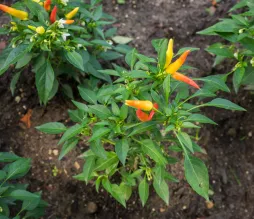
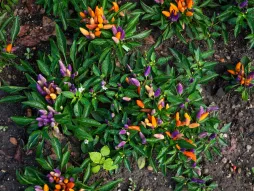
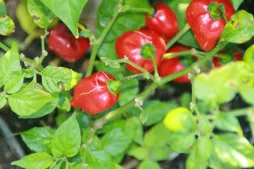
Bell pepper fruit and flower

Bell pepper plant in the ground

White bell pepper flower

Green red yellow peppers

Purple peppers
Contents
Find all our tips in the Monstera application


Sweet bell pepper: a mild Capsicum annuum
Contents
Find all our tips in the Monstera application
Scientific classification
Family
Solanaceae
Type
Capsicum
Species
Capsicum annuum
Peppers belong to the Capsicum annuum species, as do chillies. Both belong to the Solanaceae family, like tomatoes and eggplants. What's the difference? It's not the species, but the presence of capsaicin, the molecule responsible for the spiciness. Peppers, on the other hand, are almost completely devoid of capsaicin, which explains their mild, sometimes sweet taste.
How to recognize capsicum (Capsicum annuum)?
In tropical climates, capsicum annuumannuum is a herbaceous perennial. In our frost-prone regions, it is grown as an annual in the vegetable garden.
Peppers form a small, bushy shrub with many branches, reaching 60 cm to 1 m in height.
The bright-green, glossy leaves are alternate, lanceolate and pointed at the apex.
The star-shaped flowers have five to eight petals, fused at the base. White, they can be tinted green or purple. Each plant has hermaphroditic flowers, facilitating pollination and fruiting.
All fruits are green at first. It's only when they reach maturity that they take on their final color: red, yellow, orange, purple or even chocolate brown, depending onthe variety. Their shape varies considerably. They can be cubic, elongated or conical. Beneath the shiny, colorful skin lies flesh, more or less fine, and numerous seeds.
The star-shaped flowers have five to eight petals, fused at the base. White, they can be tinted green or purple. Each plant has hermaphroditic flowers, facilitating pollination and fruiting.
All fruits are green at first. It's only when they reach maturity that they take on their final color: red, yellow, orange, purple or even chocolate brown, depending onthe variety. Their shape varies considerably. They can be cubic, elongated or conical. Beneath the shiny, colorful skin lies flesh, more or less fine, and numerous seeds.
Which bell pepper varieties to choose?
The choice depends on your climate, the space available and your culinary needs. Among the most widely grown in the vegetable garden are :
- Corno di Toro (Bull's Horn): with elongated (up to 20 cm), very sweet red or yellow fruits;
- California Wonder: square fruits, robust and easy to grow, even in pots;
- Yolo Wonder: highly resistant to disease and viruses, produces square, dark-green then red fruit;
- Lipari: a variety with elongated fruit, hardy and early to plant if your summers are short;
- Le Petit Marseillais: very productive, with rectangular orange-yellow fruit;
- Mini redskin: a dwarf but edible bell pepper, ideal for pot cultivation;
- Sweet chocolate: an early variety that produces sweet brown fruit.
Are peppers toxic?
Bell pepperleaves and stems are toxic,containing several substances (solanine and alkaloids) that can be harmful if ingested.
The fruit, on the other hand, is perfectly edible, raw or cooked, and can be used in many recipes (ratatouille, piperade, grilled or stuffed vegetables). It is also an excellent source of vitamins A and C.
Unlike Capsicum annuum, it contains almost no capsaicin, so there's no burning sensation.
Our maintenance tips
Peppers are greedy plants. Don't grow them two years in a row in the same spot. Then plant bulbous or root vegetables to rebalance the soil.
They are also sensitive to frost. Wait until all risks have been eliminated before planting them in the ground.
They are also sensitive to frost. Wait until all risks have been eliminated before planting them in the ground.
 Watering
Water your plant generously during the growing season.
Keep the soil cool and moist, but not soggy.
Water, preferably with rainwater, at the foot of your Capsicum annuum.
Adapt your watering when the days get shorter.
Water the base of your Bell pepper when the substrate surface is dry. Do not wet the leaves to avoid the development of diseases and fungi. Watering is best done with rainwater at room temperature.
Water moderately to keep the soil fresh. Avoid watering if the ground is frozen to preserve the roots.
 Repotting
Obtain a pierced pot or tub 30 to 60 cm deep and 15 to 25 cm in diameter.
Pour clay balls or gravel at the bottom to make a drainage layer.
Fill your pot with a rich, light substrate. Use vegetable potting soil (80%) with a little perlite (20%).
Plant your Capsicum annuum. The crown should be level with the soil. Fruits can be large and heavy. Add a stake to prevent stem breakage. Pack gently and water.
You can mulch the base to retain moisture and cover the plant with a tunnel if the nights are still cool.
Pour clay balls or gravel at the bottom to make a drainage layer.
Fill your pot with a rich, light substrate. Use vegetable potting soil (80%) with a little perlite (20%).
Plant your Capsicum annuum. The crown should be level with the soil. Fruits can be large and heavy. Add a stake to prevent stem breakage. Pack gently and water.
You can mulch the base to retain moisture and cover the plant with a tunnel if the nights are still cool.
 Fertilization
Fertilize until the first fruits appear.
Apply a fertilizer rich in nitrogen and potassium, such as a special tomato fertilizer.
 Harvest
Harvesting begins in summer and lasts until the first frosts.
When the fruit has stopped growing and its skin is shiny, you can harvest it.
You can pick the fruit as soon as it's green, or wait until it changes color. The flavor will then be sweeter and the flesh thicker.
Slice off the stalk with a knife and remove the fruit carefully, so as not to damage your Capsicum annuum.
 Prune
Prune
Prune after the second wave of fruit appears.
When your plant has formed its first two waves of fruit, shorten the branches one leaf above the last fruit.
If you live in a region with little sunshine, deadhead your plants when they bear around ten fruits. This way, the plant will concentrate its energy on harvesting rather than growing.
 Plantation
When the risk of frost has passed, it's time to plant.
Prepare the soil by adding compost. Make a planting hole slightly larger than the root ball.
Plant your Bell pepper. The collar should be level with the ground and not buried. Add a stake to support the stems: fruit can become heavy and cause them to break. Pack and water.
If planting several specimens, space them at least 50 cm apart.
Mulch the base to retain moisture. You can also install a tunnel to protect your young plants from cool nights.
Plant your Bell pepper. The collar should be level with the ground and not buried. Add a stake to support the stems: fruit can become heavy and cause them to break. Pack and water.
If planting several specimens, space them at least 50 cm apart.
Mulch the base to retain moisture. You can also install a tunnel to protect your young plants from cool nights.
 Seedling
You can start seedlings indoors when the days get longer.
Peppers seedlings need a temperature of at least 20°C to germinate(ideally 24°C). Grow your seedlings indoors, using a heated mini-greenhouse or heat mat if necessary.
Pour a drainage layer into cups or a terrine, followed by potting soil for seedlings and plantations. Water: the substrate should be moist, but not soggy.
Plant your seeds. You can plant them in rows in your seed tray, or arrange three seeds per cup. Cover the seeds with a thin layer of potting soil (about 5 mm).
Water regularly to keep the soil fresh and aerate your mini-greenhouse to prevent rotting.
Pour a drainage layer into cups or a terrine, followed by potting soil for seedlings and plantations. Water: the substrate should be moist, but not soggy.
Plant your seeds. You can plant them in rows in your seed tray, or arrange three seeds per cup. Cover the seeds with a thin layer of potting soil (about 5 mm).
Water regularly to keep the soil fresh and aerate your mini-greenhouse to prevent rotting.
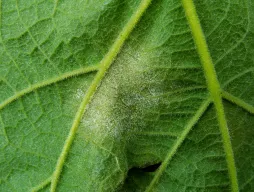
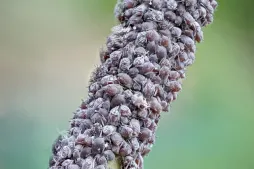
Diseases / Threats
Information
| Lifecycle | Perennial |
| Foliage | Evergreen |
| Exposure | |
| Substrat | |
| Planting methods |
Open ground In pots In tubs Planter |
| Categories |
Vegetable |
| Tags |
Beginner Fritillary Soiffarde Edible vegetable |
| Origins |
North America Central America South America |
| Hardiness (USDA) | 12a (10°C ≤ T° < 12.8°C) |
| Leaf color |
|
| Flower colors |
|
| Fruit colors |
|
Discover plants from the same family