Ornamental pepper Capsicum annuum

Ornamental pepper Capscium annuum

Black Pearl ornamental pepper

Medusa ornamental pepper

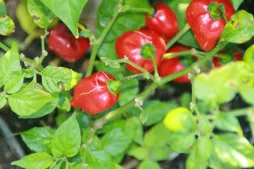
Ornamental pepper red fruits
Contents
Find all our tips in the Monstera application


The ornamental pepper, a spicy houseplant
Contents
Find all our tips in the Monstera application
Scientific classification
Family
Solanaceae
Type
Capsicum
Species
Capsicum annuum
Chilli pepper are not limited to the kitchen garden. Certain varieties of Capsicum annuum have been selected for their aesthetic value and are perfectly suited to indoor cultivation. Compact, colorful and easy to grow in pots, the ornamental chili captivates with its brightly colored fruits, which brighten up the plant for several weeks.
How to recognize an ornamental pepper?
The ornamental pepper is a perennial plant that rarely grows taller than 30 to 50 cm. It forms a bushy, compact plant. Its woody stem is highly branched.
The lanceolate to oval leaves are long-stalked. Shiny green, with lighter, more pronounced veins.
White, solitary flowers appear in spring in the leaf axils. They average five or six petals and resemble stars.
They give rise to pointed fruits. The small peppers often appear in clusters at the end of the stems. Their color varies according to variety and cultivar. Green in the first few days, they can then turn yellow, red, orange, white and even purple or black. Several hues can coexist on the same plant, creating a particularly graphic effect.
The lanceolate to oval leaves are long-stalked. Shiny green, with lighter, more pronounced veins.
White, solitary flowers appear in spring in the leaf axils. They average five or six petals and resemble stars.
They give rise to pointed fruits. The small peppers often appear in clusters at the end of the stems. Their color varies according to variety and cultivar. Green in the first few days, they can then turn yellow, red, orange, white and even purple or black. Several hues can coexist on the same plant, creating a particularly graphic effect.
What are the varieties of ornamental pepper?
Looking for an ornamental pepper? Here are the varieties cultivated for the beauty of their fruit rather than their taste:
- Black Pearl, with dark purple foliage and round, almost black fruit;
- Purple Flash, remarkable for its purple variegated leaves;
- Medusa, very compact, producing clusters of upright, colorful fruit;
- Salsa Red, appreciated for its horn-shaped red fruits.
Is the ornamental pepper toxic?
The fruits are technically edible, as they belong to the Capsicum annuum species. However, they are often very pungent and of little gustatory interest.
Like all chillies, they contain capsaicin, a substance that irritates mucous membranes. It is therefore advisable to wash hands after handling, and to prevent young children or pets from eating the fruit.
The leaves, on the other hand, contain solanine and alkaloids, and are toxic if ingested by pets.
Like all chillies, they contain capsaicin, a substance that irritates mucous membranes. It is therefore advisable to wash hands after handling, and to prevent young children or pets from eating the fruit.
The leaves, on the other hand, contain solanine and alkaloids, and are toxic if ingested by pets.
Our maintenance tips
Grow your Capsicum annuum indoors. That way, it will last for many years.
 Watering
The plant should be watered when the surface of the root ball is dry (about one centimeter deep). Water with non-calcareous room-temperature water, such as rainwater or demineralized water.
To prevent root rot, never leave standing water in the saucer or at the bottom of the planter.
To prevent root rot, never leave standing water in the saucer or at the bottom of the planter.
 Repotting
Every spring, repot your Capsicum annuum to give it more space.
Choose a pierced pot one size larger than the previous one. Pour a drainage layer (clay balls or gravel) in the bottom.
Add a layer of potting soil for green plants. Plant your Capsicum annuum in the center. Top up with substrate.
Tamp and water to encourage rooting.
 Fertilization
To promote the growth of your Capsicum annuum, apply fertilizer in spring and summer.
Apply a fertilizer rich in nitrogen and potassium, such as a special tomato fertilizer.
 Prune
Prune
To encourage the growth of your Ornamental pepper, prune regularly.
Using clean, sharp pruning shears, trim the branches of your Capsicum annuum to control its shape.
Remove ripe fruit to encourage new production.
 Plantation
When the risk of frost has passed, it's time to plant.
Prepare the soil by adding compost. Make a planting hole slightly larger than the root ball.
Plant your Ornamental pepper. The collar should be level with the ground and not buried. Add a stake to support the stems: fruit can become heavy and cause them to break. Pack and water.
If planting several specimens, space them at least 50 cm apart.
Mulch the base to retain moisture. You can also install a tunnel to protect your young plants from cool nights.
Plant your Ornamental pepper. The collar should be level with the ground and not buried. Add a stake to support the stems: fruit can become heavy and cause them to break. Pack and water.
If planting several specimens, space them at least 50 cm apart.
Mulch the base to retain moisture. You can also install a tunnel to protect your young plants from cool nights.
 Seedling
You can start seedlings indoors when the days get longer.
Ornamental peppers seedlings need a temperature of at least 20°C to germinate(ideally 24°C). Grow your seedlings indoors, using a heated mini-greenhouse or heat mat if necessary.
Pour a drainage layer into cups or a terrine, followed by potting soil for seedlings and plantations. Water: the substrate should be moist, but not soggy.
Plant your seeds. You can plant them in rows in your seed tray, or arrange three seeds per cup. Cover the seeds with a thin layer of potting soil (about 5 mm).
Water regularly to keep the soil fresh and aerate your mini-greenhouse to prevent rotting.
Pour a drainage layer into cups or a terrine, followed by potting soil for seedlings and plantations. Water: the substrate should be moist, but not soggy.
Plant your seeds. You can plant them in rows in your seed tray, or arrange three seeds per cup. Cover the seeds with a thin layer of potting soil (about 5 mm).
Water regularly to keep the soil fresh and aerate your mini-greenhouse to prevent rotting.
Diseases / Threats
Information
| Lifecycle | Perennial |
| Foliage | Evergreen |
| Exposure | |
| Substrat | |
| Planting methods |
Open ground In pots In tubs Planter |
| Categories |
Vegetable |
| Tags |
Beginner Fritillary Soiffarde Edible vegetable |
| Origins |
North America Central America South America |
| Hardiness (USDA) | 12a (10°C ≤ T° < 12.8°C) |
| Leaf color |
|
| Flower colors |
|
| Fruit colors |
|
Discover plants from the same family


Find out more