Cephalocereus senilis, the old man cactus
Cephalocereus senilis
- Exposure
- Sun
- Hardiness (USDA)
- 11a (4.4°C ≤ T° < 7.2°C)
- Lifecycle
- Perennial
- Foliage
- Deciduous
- Family
- Cactaceae
- Genus
- Cephalocereus
- Species
- Cephalocereus senilis
Other names:Cephalophorus senilis, Cereus senilis, Echinocactus senilis
There's no doubt about it: the abundant white wool covering this tall cactus certainly resembles an old man's hair or beard. Cephalocereus senilis belongs to the Cactaceae family. It is native to the steep slopes of central-eastern Mexico, in the states of Guanajuato, Veracruz, and Hidalgo.
How can you recognize Cephalocereus senilis, the “old man's head” cactus?
Cephalocereus senilis is a columnar cactus. Unlike Cereus forbesii, it is generally unbranched. In its natural habitat, it can reach heights of ten to fifteen meters and a base diameter of nearly 45 centimeters… when it's a century old! So rest assured, your little spiny old-timer won't grow to such gigantic proportions, whether it's grown indoors or outdoors in the mild climate of the French Riviera.
Its grayish-green stem bears yellowish spines—one to five per areole—and numerous white hairs, 6 to 12 centimeters long. This white “hair” is particularly abundant at the top of the stem. This characteristic stems from the cactus's adaptation to its mountainous environment. The thick down protects it from the intense heat of the sun's rays during the day, as well as from temperatures near 0 °C on winter nights.
The old man's head cactus blooms at its top, usually after 10 to 20 years. Flowering occurs at night during the summer, producing red, yellow, or white flowers with pale pink hues. In the deep Mexican barrancos (gorges), they are pollinated by nectar-feeding bats.
Cephalocereus senilis is not known to be toxic to pets or humans. But that doesn't mean you should go petting its attractive fuzz: the “old man cactus” hides sharp spines in its beard!
Our care tips
Your plant needs watering in winter only when the temperature is above 18°C. If it spends the off-season outdoors or in an unheated greenhouse, one watering every two months will be more than enough.
 Watering
Your Old Man Cactus tolerates drought better than too much water.
Water only when the substrate is dry at depth (at least 5 centimetres). Drain any stagnant water from the saucer.
 Misting
Your Cephalocereus senilis hates wet foliage. Don't mist the plant.
 Repotting
Every year in the spring, repot your Cephalocereus senilis to give it more space.
Fill the bottom of a perforated pot with potting soil for cacti and succulents.
Put on a pair of gloves to protect yourself from thorns. Plant your Old Man Cactus in the center and add potting soil. Stop filling the pot a few centimetres from the edge to form a watering basin.
Wait at least a fortnight for your plant to root before watering.
 Fertilization
To promote the growth of your Cephalocereus senilis, apply fertilizer in spring and summer.
Apply fertilizer for succulents to accelerate growth.
 Planting
When the risk of frost has passed, it's time to plant.
Select a sunny location. If possible, choose a slope or embankment: water will run off more easily and roots will be less likely to rot.
Dig a hole the size of the root ball. Plant your Cephalocereus senilis in the middle. Fill with a mixture of potting soil and sand. Pack by hand and water to eliminate air pockets.
 Taking cuttings
Propagation by cuttings is carried out during the strong growth phase, generally in spring and early summer.
After a few years, your Old Man Cactus produces shoots. You can divide them to multiply the plant.
Once the plant has been dug up, separate one of the shoots, with its roots. Beware of thorns! Remember to wear gloves when handling your Old Man Cactus.
Pour a light, well-drained substrate into a pierced pot. You can use potting soil for cacti and succulents or a mixture of ordinary potting soil and sand.
Plant your cutting, burying the first two centimetres in the soil. Place the cup in partial shade.
Wait ten to fifteen days for the cuttings to root before watering.
Diseases / Threats
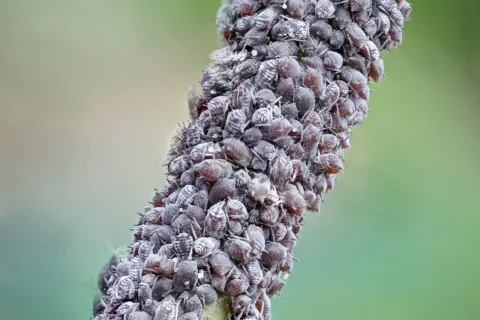
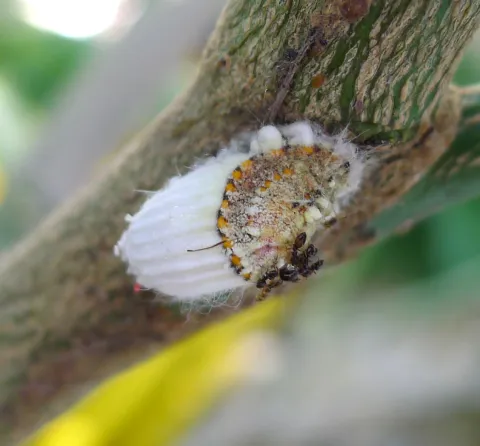
Information
- Lifecycle
- Perennial
- Foliage
- Deciduous
- Exposure
- Sun
- Substrate
- Calcareous earth
- Planting methods
- Open groundIn potsIn tubs
- Category
- Indoor
- Tags
- BeginnerCold-sensitiveHard to kill
- Origin
- Central America
- Hardiness (USDA)
- 11a (4.4°C ≤ T° < 7.2°C)
- Leaf color
- Green-gray
- Flower colors
- WhiteRedYellowPale pink
Discover plants from the same family

Christmas cactus
Schlumbergera truncata

Prickly pear
Opuntia ficus-indica

Rabbit ear cactus
Opuntia microdasys

Erect prickly pear
Opuntia stricta
Find out more
Find all our tips in the Monstera application








