Small periwinkle, a colorful ground cover plant all year round
Vinca minor
- Exposures
- Half-shade, Shade
- Hardiness (USDA)
- 5b (-26.1°C ≤ T° < -23.3°C)
- Lifecycle
- Perennial
- Foliage
- Evergreen
- Family
- Apocynaceae
- Genus
- Periwinkle Vinca
- Species
- Small periwinkle Vinca minor
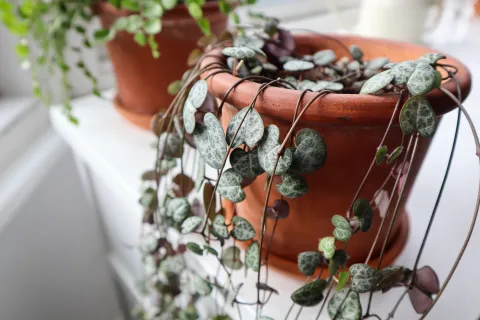
While its cousin in the Apocynaceae family, string of Hearts, loves our interiors, the little periwinkle, in Latin Vinca minor, prefers the outdoors. This herbaceous perennial thrives in forests and undergrowth throughout Europe, as far south as Russia. In the language of flowers, the little periwinkle is synonymous with melancholy. Yet, with its early flowering and evergreen foliage, it brightens up gardens all year round.
How to recognize the little periwinkle, Vinca minor?
The little periwinkle spreads its creeping vines up to two meters around, but is only fifteen centimeters high.
Its shiny, dark-green leaves cover the ground. They are lanceolate and leathery, with opposite leaflets. They stand on their short stalks, at right angles to the stem.
From February onwards, the little periwinkle is adorned with blue, sometimes violet or white flowers. They have five asymmetrical petals, shaped and arranged to resemble fan blades. Flowering lasts until May.
Little periwinkle and periwinkle are said to have numerous therapeutic virtues. But this ground-cover plant must be handled with care. It is toxic when ingested without preparation. Dogs, cats and tortoises are also sensitive to its toxicity.
Traditional medicine practitioners are not the only ones to seek out Vinca minor on their wilderness expeditions. A clump of small periwinkles indicates that man has been here before, even centuries ago. Amateur archaeologists are on the lookout for its presence to unearth forgotten treasures.
Our care tips
The small periwinkles are easy to grow. But this ground cover quickly becomes invasive. Choose your planting site carefully. In pots or in the ground, don't combine it with other perennials. It will take over and prevent them from flourishing.
 Watering
Potted plants need regular watering. However, to avoid root rot, allow the substrate to dry out between waterings.
You can use mains water. If it's hard, use reclaimed rainwater instead.
Don't forget to remove any stagnant water from the dish.
 Misting
Your Vinca minor hates wet foliage. Don't mist the plant.
 Repotting
Every year in the spring, repot your Vinca minor to give it more space.
In a perforated pot, place a bed of clay balls or gravel for drainage. Prepare a mixture of ordinary potting soil and sand. Pour it into the planter. Plant your Lesser periwinkle.
The Vinca minor variety forms long runners that you can marcot. There's no need to overcrowd the plants to achieve a full planter or ground-cover effect.
 Fertilization
Use compost to stimulate the growth and flowering of your periwinkle plants.
 Prune
Cut back the clump using clean, sharp pruning shears. This will help you control the growth of your Vinca minor.
 Pulling out
The small periwinkles quickly prove to be invasive. If your plants colonize spaces not intended for them, uproot them.
 Planting
When the risk of frost has passed, it's time to plant.
Dig a hole ten to fifteen centimetres deep. If you are transplanting several Vinca minor plants, particularly for ground cover, space the plants 30 to 40 centimetres apart to allow them to develop.
Place a drainage layer, such as pebbles or gravel, at the bottom of the hole. Cover with a mixture of soil, potting soil and compost. Plant your plant, with the root ball at ground level.
Fill in, compact and water generously.
Fill in, compact and water generously.
 Taking cuttings
Propagation by cuttings is carried out during the strong growth phase, generally in spring and early summer.
Take a branch about fifteen centimeters long. The stem should be semi-jointed, i.e. Still flexible and not yet woody. Cut below the node closest to the mother stem.
Remove the leaves at the base, keeping only the upper pairs.
Remove the leaves at the base, keeping only the upper pairs.
Line a small, perforated pot with potting soil for seedlings and cuttings. Using a pen or pick, make a pilot hole. Plant your cutting, taking care not to bury the leaves.
Place your cutting in a sunny spot and spray the substrate regularly with water to keep it moist.
Diseases / Threats
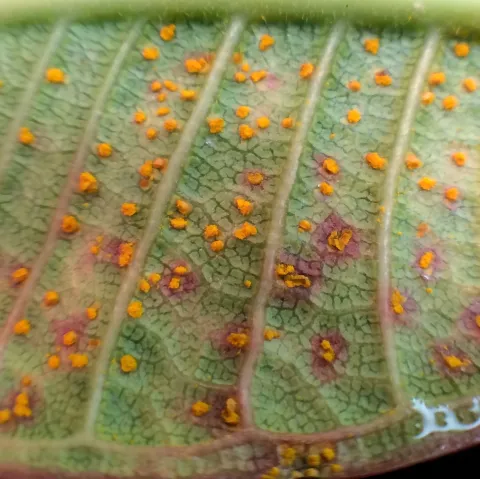
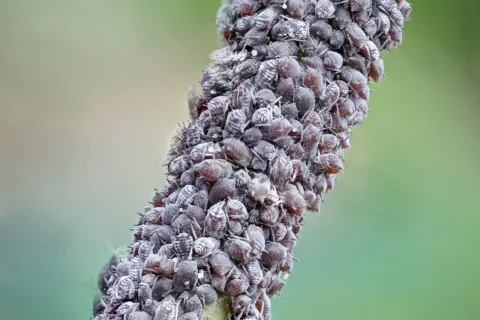
Information
- Lifecycle
- Perennial
- Foliage
- Evergreen
- Exposures
- Half-shadeShade
- Substrates
- Humus soilSandy soil
- Planting methods
- Open groundIn potsIn tubsPlanter
- Categories
- WeedFlowery
- Tags
- BeginnerInvasiveFloweryHard to killHardy
- Origins
- Northern EuropeEastern EuropeSouthern EuropeWestern Europe
- Hardiness (USDA)
- 5b (-26.1°C ≤ T° < -23.3°C)
- Leaf color
- Dark green
- Flower colors
- WhiteBlueViolet
Discover plants from the same family



Find out more
Find all our tips in the Monstera application








