Grow Lights: 5 Common Mistakes That Completely Undermine Their Effectiveness
Article for :All plant parents
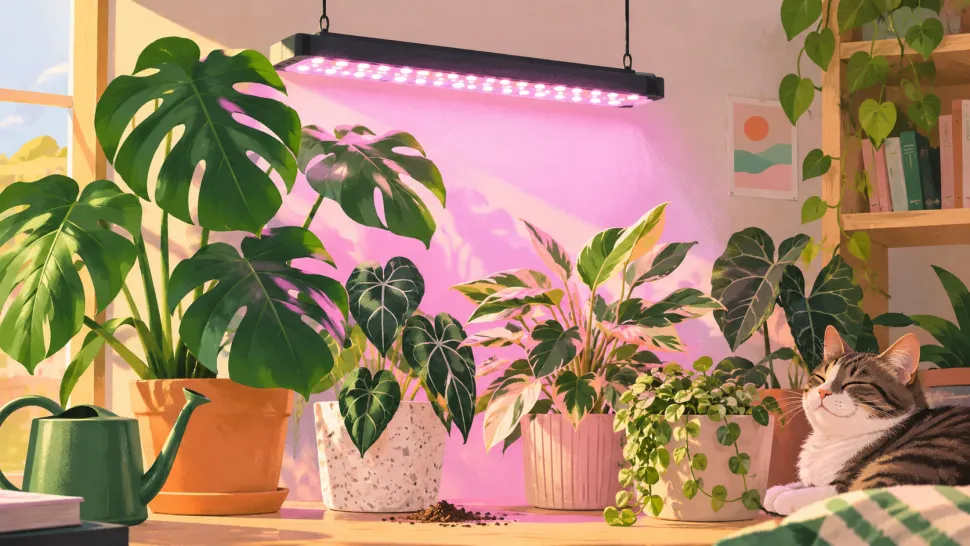
Every winter, it's the same story. After a summer that allowed them to soak up plenty of sun and double in size, plants slow down their growth. New leaves become scarce, if not nonexistent. The foliage fades, and variegation disappears. Worse yet, some plants don't survive the lack of sunlight and die. But not this year. You've decided to give your plants the light they deserve with a grow light. Here are five mistakes to avoid so your gift doesn't backfire.
- Choose a full-spectrum LED grow light and position it at the correct height;
- Never leave your grow light on 24 hours a day. An exposure time of 12 to 16 hours per day is ideal for most species;
- Remember to water more often and continue fertilizing to meet the needs of your plants under the grow light.
Mistake #1: Choosing an unsuitable light spectrum and intensity
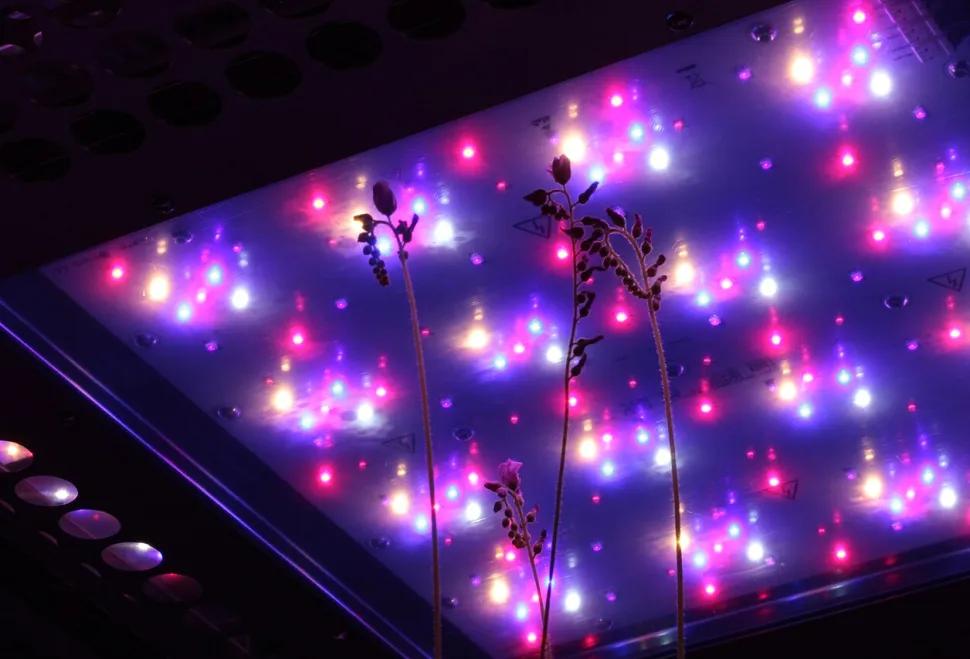
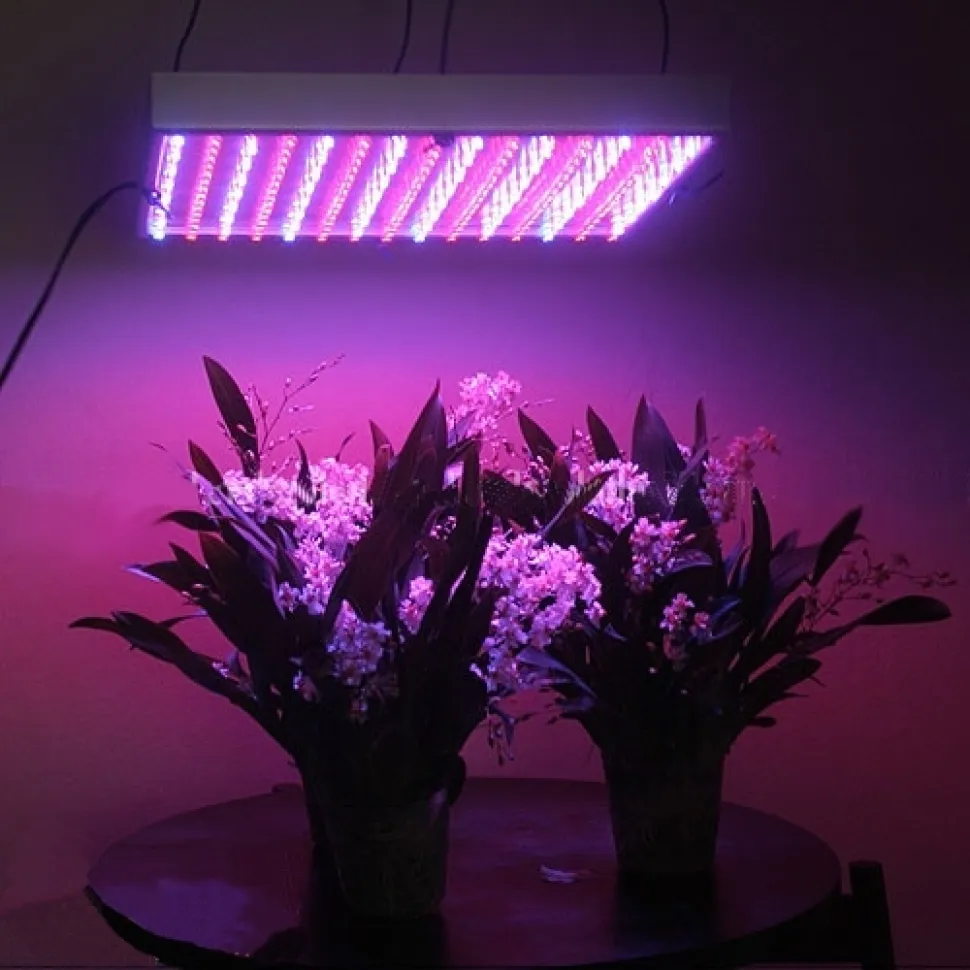
Grow lights emit blue and red light – Photo by H. Chorzewska / Wikipedia
When choosing a lamp for your living room, you focus (mostly) on the design and (somewhat) on the wattage. The most discerning buyers also consider the color of the light: warm white, cool white, or neutral white.
The criteria are different for a grow light (also called a horticultural light or plant light). While we use light to see, plants use it for photosynthesis. They therefore need specific wavelengths:
- Blue light (400 to 500 nm), which primarily contributes to foliage development and promotes compact growth;
- Red light (600 to 700 nm), which stimulates flowering and fruit set.
To meet all the plants' needs, we recommend choosing a full-spectrum grow light that emits both blue and red light.
Forget about watts!
The light spectrum isn't the only factor to consider. You should focus on the amount of light useful for photosynthesis that the plant receives. This is measured by PPFD (Photosynthetic Photon Flux Density) and expressed in micromoles per square meter per second (µmol/m²/s). Watts, on the other hand, indicate the equipment's power consumption.
PPFD requirements vary depending on the species and the plant's stage of development. The following thresholds are generally used:
- 100 to 200 µmol/m²/s for seedlings after germination;
- 50 to 150 µmol/m²/s for indoor plants suited to shade or partial shade;
- 200 to 400 µmol/m²/s for plants that require high light levels.
Some models allow you to adjust the light intensity or frequency. These features will help you adapt the light exposure as the plant grows.
Mistake #2: Choosing a grow light that uses too much energy or doesn't last long enough
There are three types of horticultural lamps on the market:
- Fluorescent lamps (T5 High Output or HO): these are generally neon tubes, sold as bulbs;
- LEDs arranged in panels, tubes, or rings, similar to a light bulb;
- HID (high-intensity discharge) lamps operate using an electric arc and a glass tube.
HID grow lights, which consume a lot of energy and generate heat, have become rare in stores and among gardeners. Fluorescent or LED lights are a better choice for your collection of houseplants. Each technology has its pros and cons.
Durable, energy-efficient, and offering a full spectrum, LED grow lights have become a staple among many plant enthusiasts. But their cost deters some gardeners, who turn to T5 HO models instead. While less expensive, fluorescent bulbs also have a shorter effective range.
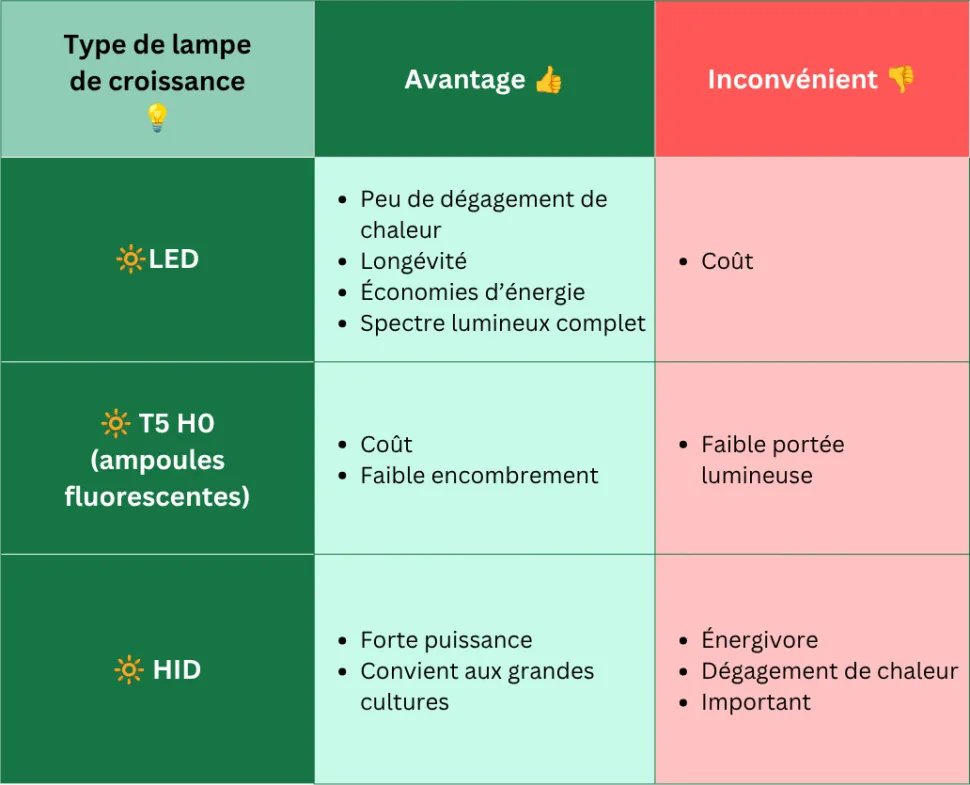
The Pros and Cons of Each Type of Light
Mistake #3: Leaving the grow light on all the time
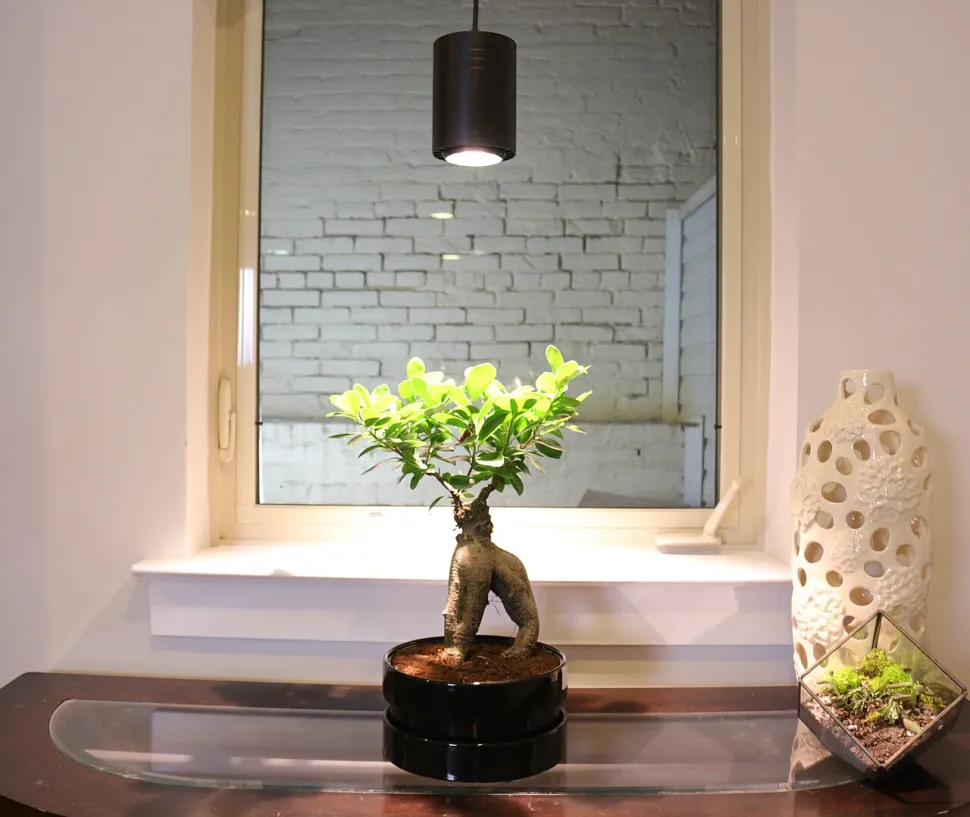
Too much light can harm your plant – Photo by Hotmilk400 / Wikipedia
Although plants don't “sleep,” they still need an alternation between light and dark periods. Nighttime allows the plant to breathe and consume the organic matter produced during the day. Furthermore, it's essential for inducing flowering in certain species.
Furthermore, too much light can cause your plant to become deformed. The leaves may turn pale, get scorched, or curl. Spots may also appear on the foliage.
When using a grow light, you must adjust the duration of exposure to your plant's specific needs. Most plants thrive on between 12 and 16 hours of light per day. But that's too much for others! For example, euphorbia pulcherrima (Euphorbia pulcherrima) and the Christmas Cactus (Schlumbergera truncata) bloom when the days get shorter and it's dark for more than 12 hours a day!
So be sure to turn off your grow light when you go to bed and turn it back on the next day. Some lights are programmable: you set the duration of exposure, and they turn on and off automatically. This is a convenient solution if you have a lot of plants or if you use artificial lighting while you're away.
Mistake #4: Positioning the grow light incorrectly
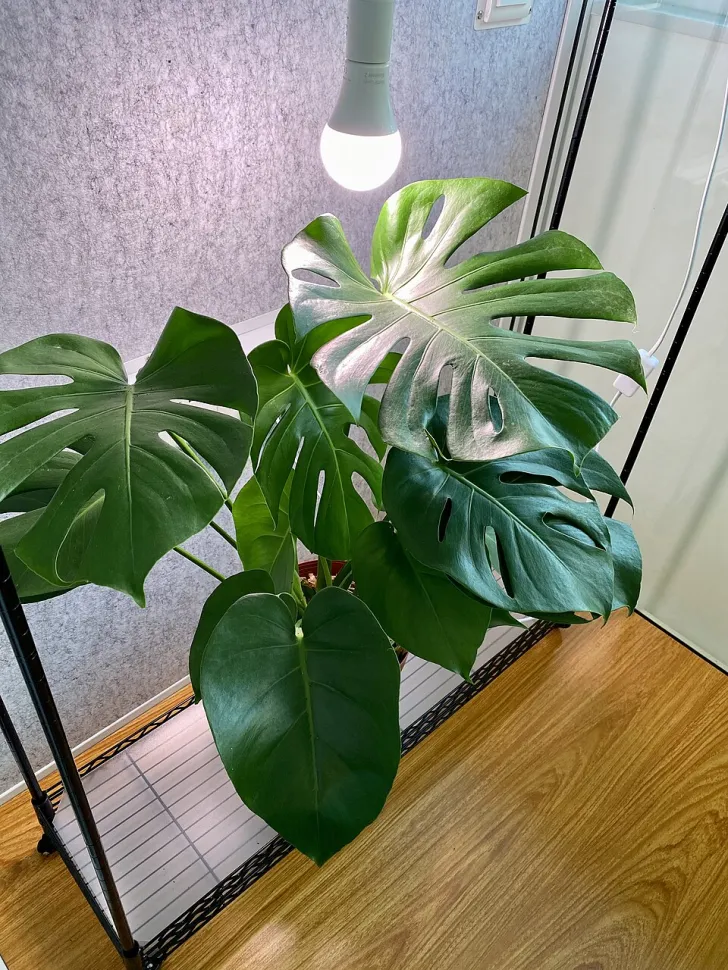
Growth will be more balanced if you place the grow light directly above your plant – Photo by Volunteertoday / Wikipedia
Now that you've brought your grow light home, one question is on your mind: How should you position it? Above the plants, to the side, or below them? And how far away? This last point is undoubtedly the most critical. If it's too close, the bulb may damage the leaves. If it's too far away, the plants won't receive enough light.
The first rule of thumb: place your grow light above the plant. This is because plants “grow” toward the light. By positioning your light source directly above your Chinese coin plant (Pilea peperomioides), you encourage it to grow straight up. This promotes balanced growth and prevents the stem from becoming twisted.
If you're using a grow light for multiple plants:
- Place delicate plants along the edges. The light is strongest directly under the grow light;
- Rotate the pots' positions regularly to distribute the light more evenly.
What is the recommended distance between the grow light and the plant?
The distance between the grow light and the plants depends primarily on the technology you choose:
- Position LED grow lights between 20 and 40 cm above the canopy. This distance prevents leaf burn and ensures sufficient light intensity;
- Fluorescent tubes (T5/T8) have a shorter effective range. They should be installed close to the plants, at a distance of 5 to 15 cm from young shoots or leaves;
- HID lamps (HPS/MH) give off intense heat that can damage foliage. They must be placed at least 40 cm away from the plants.
Mistake #5: Forgetting to adjust watering, fertilization, and crop rotation
You must adjust watering and fertilization to the plant's growth stage – Photo by Sunshine117 / Wikipedia
With the right grow light, properly adjusted and positioned, your plant's growth will accelerate. You'll therefore need to adjust your care routine.
Water more often
Potting soil dries out faster under a grow light than near a window in winter. This is because the heat emitted by the light—even at low settings—and more intense photosynthesis accelerate transpiration from the foliage and evaporation. Water more regularly so your plant doesn't get thirsty. Remember to check the soil every two or three days to make sure it's still moist.
Fertilize, even in winter
Usually, we recommend stopping fertilization in the fall and winter. But under a grow light, your plant consumes more energy. As a result, it depletes its soil's nutrient reserves more quickly.
As long as your plant is producing new leaves, continue fertilizing. Halve the manufacturer's recommended dose to ensure you don't give it more nutrients than necessary. You can return to a normal dose if new shoots continue to emerge and there are no signs of over-fertilization:
- Burnt or yellowed leaf edges;
- Wilting of the plant;
- White residue on the surface.
Monstera Tip
Under a grow light, your plant consumes more water and nutrients. Be sure to customize your watering and fertilizing reminders in the app to support its winter growth!
Frequently asked questions
Are grow lights effective for plants?
Yes, grow lights are effective for plants, provided you choose lighting suited to their needs. They compensate for the lack of natural light and promote photosynthesis, especially in winter or in dark rooms. Their effectiveness depends on the light spectrum, intensity, and proper use.
What is a grow light?
A grow light is an artificial lighting system designed to promote plant growth. It provides light suitable for photosynthesis, particularly when natural light is insufficient. Used indoors, it helps plants grow, produce new leaves, bloom, or bear fruit.
What is the best grow light for plants?
Full-spectrum LED grow lights are suitable for many houseplants because they provide light optimized for photosynthesis while consuming little energy. Before purchasing a grow light, make sure the light intensity matches the plant varieties and the area to be illuminated.
 Plants toxic to cats and dogs: varieties to avoid in the garden and indoors
 Seaside garden: which spray-resistant plants to plant?
 Vegetable gardening: 10 mistakes that ruin your harvests









