Plants toxic to cats and dogs: varieties to avoid in the garden and indoors
Article for :All parent plants

It's not just your ex or your boss who can be toxic. Your Monstera deliciosa can also pose a danger… to your cat or dog! Between leaves that cause vomiting, flowers that lead to kidney problems, and sap that irritates mucous membranes, keeping plants and pets together is no easy task. To help you keep them living together safely, we've put together a guide to toxic plants to avoid and safe varieties to choose.
What Is a Toxic Plant?
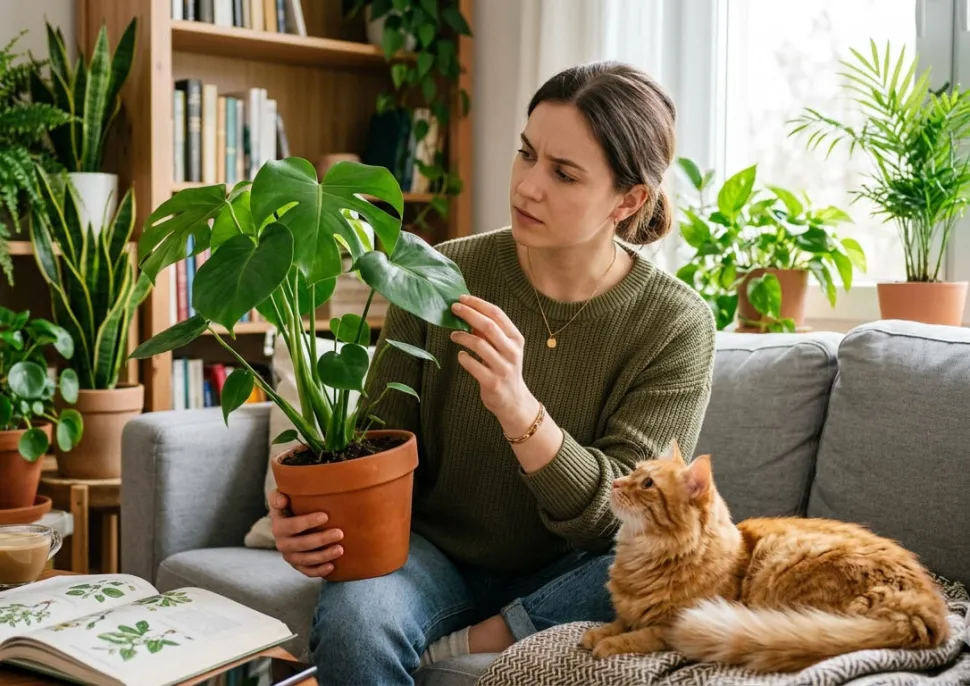
Monstera deliciosa is one of the plants that are toxic to dogs and cats—AI-generated photo
A toxic plant contains chemicals (alkaloids, saponins, cardiotoxic glycosides, calcium oxalates) that can harm an animal if ingested, touched, or inhaled.
But be careful! Non-toxic does not mean edible or risk-free. If your cat eats a plant—even if it's not toxic—it may vomit profusely. This can cause irritation to its digestive system and dehydration.
Toxic Plants: Different Levels of Danger for Pets
Not all toxic plants pose the same level of danger:
- Some plants are mildly toxic and cause only mild, temporary digestive irritation;
- Some species are moderately toxic and can lead to neurological or cardiac problems;
- Some varieties are highly toxic and can be fatal.
Because of their small size, pets are much more sensitive to toxic substances than humans. A plant considered moderately toxic to humans can therefore pose a significant risk to a cat or a small dog. Even a small amount ingested can have serious consequences for their health.
The Most Common Toxic Plants in the Garden
The following lists are not exhaustive. Always check a plant's toxicity before giving it as a gift or bringing it into your home. To make your life easier, the Monstera app includes this information directly within its tool. On each plant profile, we indicate whether the variety is toxic or pet-friendly.
Oleander (Nerium oleander)
This shrub with pink, white, or red flowersis said to have killed Napoleon's soldiers during the Spanish campaign. According to CAPAE Ouest, the toxicity of Nerium oleander is devastating: just 2 or 3 leaves are enough to kill a 10-kg dog.
- Toxic parts: all parts of the plant (leaves, flowers, stems, and even the water from the soil);
- Effects: severe heart rhythm disturbances, vomiting, and, in severe cases, death;
- Affected animals: dogs, cats, rodents, birds, and horses.
The lily (Lilium)
We love the large, fragrant flowers of the lily (Lilium), whether in flower beds or in a bouquet on the coffee table. Unless, of course, you care about your cat. In cats, ingesting even a small piece—or simply licking pollen off their fur—can lead to acute kidney failure that may be irreversible. Dogs, on the other hand, usually get off with digestive issues.
According to the AniCura network of veterinary clinics, the first symptoms usually appear 3 to 6 hours after ingestingthe plant. However, it is within the following three days that kidney function fails in cats.
Lily of the Valley (Convallaria majalis)
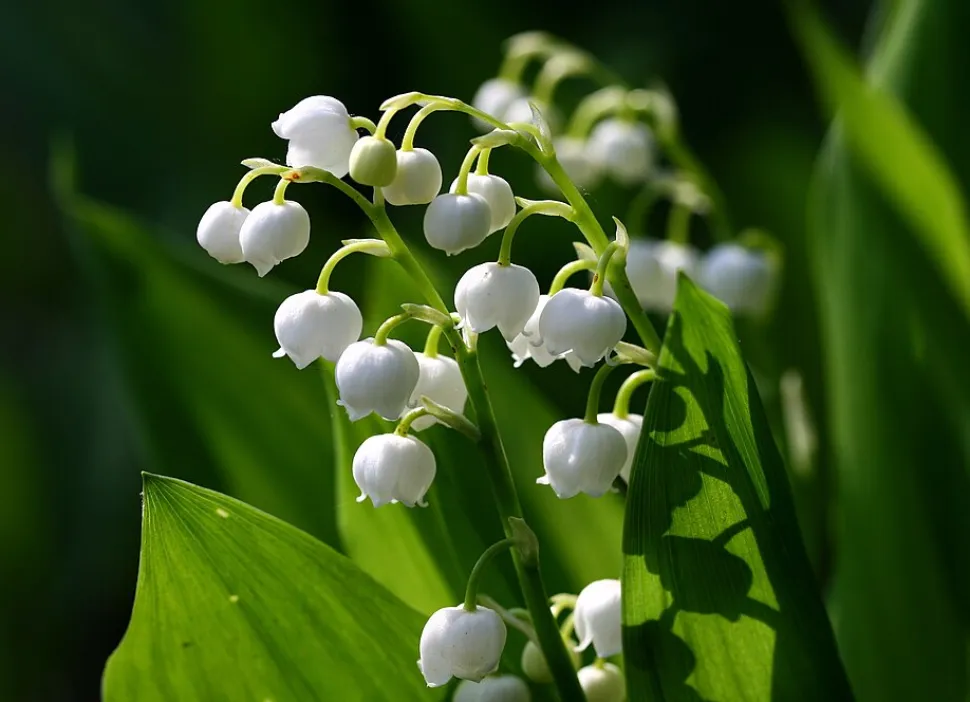
Lily of the valley is a highly toxic plant—Photo by Liz West / Wikipedia
- Toxic parts: the leaves, stems, flowers, and red berries contain, among other things, cardiotonic glycosides;
- Effects: vomiting, slowed heart rate, and seizures;
- Susceptible animals: dogs, cats, birds.
The white bell-shaped flowers of lily of the valley (Convallaria majalis) remain toxic even when cut into a bouquet. Furthermore, the plant is so highly toxic that even the water in the vase can be dangerous to our pets if they drink it.
Castor bean (Ricinus communis)
While the red flowers and purple foliage of the castor bean (Ricinus communis) have made it a popular ornamental plant in some gardens today, the plant and the oil extracted from it have a bad reputation.
- Toxic parts: The entire plant contains ricin, one of the most potent plant-based poisons in the world. The concentration is particularly high in the seeds;
- Effects: hemorrhagic gastroenteritis, acute dehydration, and death;
- Susceptible animals: Dogs (which scratch at and chew on the seeds), cats, and rodents.
Castor bean meal, sometimes used as fertilizer or to repel moles, is also toxic and has the same effects as the plant.
Lantana (Lantana camara)
With its two-toned flowers, Lantana (Lantana camara) is a feast for the eyes but a real trap for the body. According to the French Society of Emergency Medicine, the first signs of poisoning appear 2 to 6 hours after ingestion.
- Toxic parts and effects: the foliage and berries of lantana contain pentacyclic triterpenes (lantadene A and B). These substances cause severe liver damage and skin photosensitivity;
- Susceptible animals: dogs, cats, sheep, goats, cattle, and rodents.
Ivy (Hedera helix)
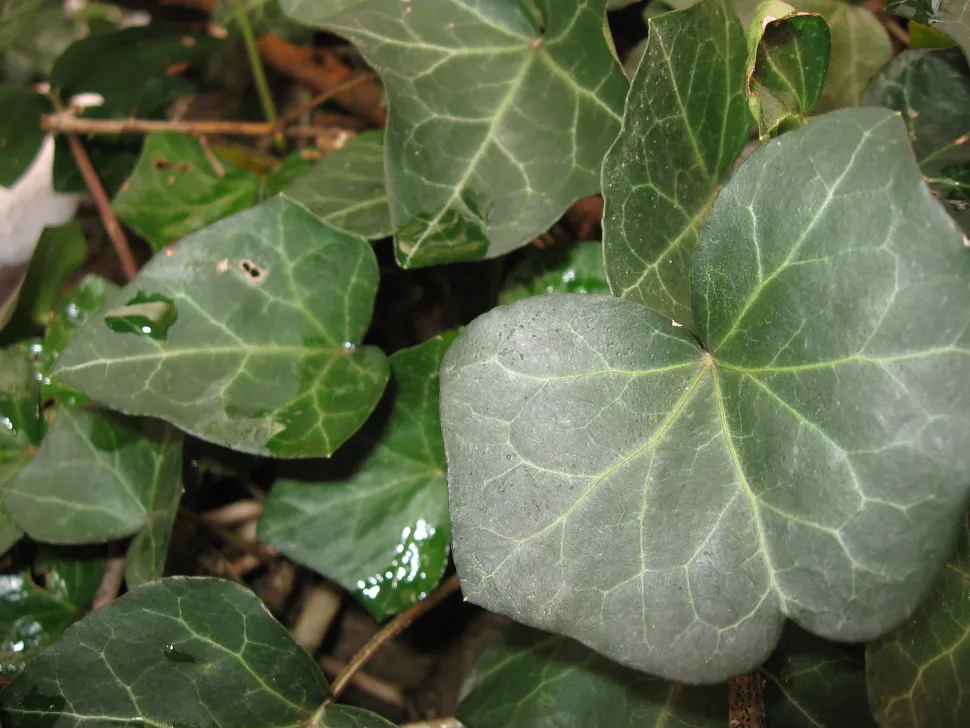
Ivy poses a danger to our pets – Photo by Malicious monkey / Flickr
While there is often debate over whether ivy damages the walls or plants it climbs on, there is unanimous agreement that it is harmful to our pets. Its leaves and berries contain saponins that cause digestive irritation and nervous system disorders in dogs and cats.
Ivy, on the other hand, is very beneficial to bees. It is one of the last plants to bloom before winter and provides a welcome source of nectar.
Azaleas and Rhododendrons (Rhododendron)
These heathland shrubs delight us with their colorful blooms, but their leaves and flowers contain grayanotoxins. If ingested by dogs or cats, they can cause:
- Intense mouth burns;
- Vomiting;
- Muscle paralysis;
- Deep comas in cases of heavy ingestion.
According to data from CAPAE Ouest, ingesting just one or two Japanese azalea (Rhododendron japonicum) or Rhododendron simsii is enough to cause serioushealth problems in a small dog.
Hydrangea (Hydrangea macrophylla)
The famous pink, white, or blue flower clusters of hydrangea macrophylla are very common in our gardens, but they hide a chemical secret: their buds, flowers, and leaves contain hydrangein.
- Symptoms to watch for: acute abdominal pain, difficulty breathing, rapid heartbeat, and muscle tremors;
- Susceptibility: dogs, cats, rabbits, and birds.
The severity will always depend on the dose ingested relative to your pet's size.
Cyclamens (Cyclamen)
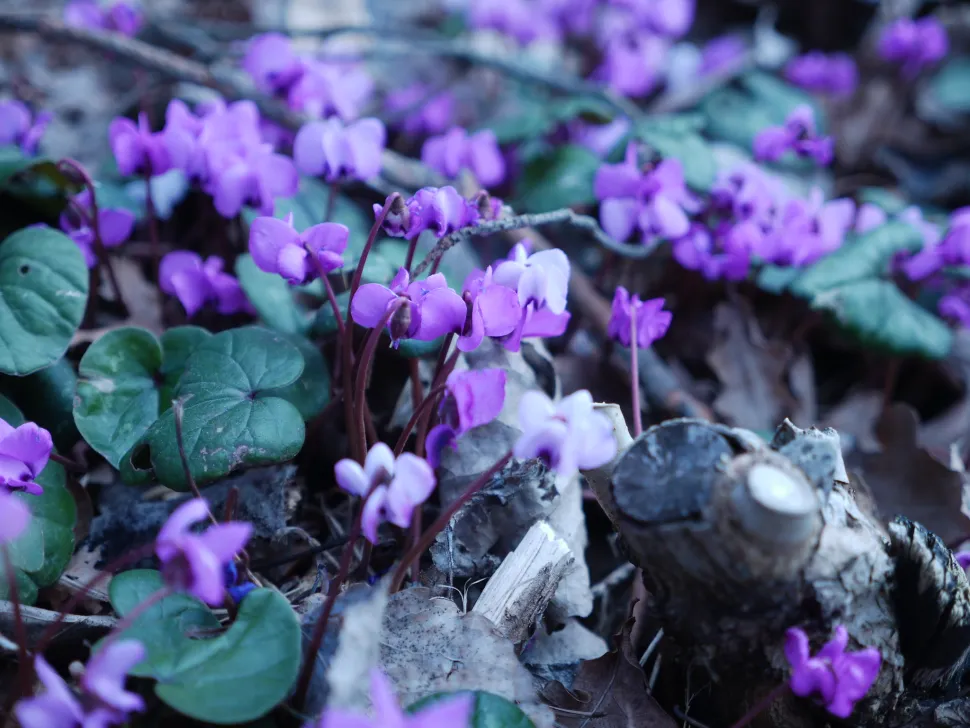
Common in gardens and green spaces, cyclamens should nevertheless be avoided if you have pets—Photo by Nils Weinander / Flickr
- Toxic parts: the entire plant, but the danger is mainly concentrated underground, in the tubers and rhizomes, which are rich in cyclamine;
- Effects: This irritant causes vomiting, excessive salivation, seizures, and heart problems;
- Affected animals: cats and dogs.
Note that the various species of cyclamen (persicum, hederifolium, coum, purpurascens) are just as toxic to humans. If you live with young children, make sure they never put these flowers in their mouths.
Spring bulbs (tulips, hyacinths)
Tulips (Tulipa gesneriana), daffodils (Narcissus), and hyacinths (Hyacinthus orientalis) herald the arrival of spring in the garden—but they can also lead to an emergency trip to the vet.
- Toxic parts and effects: The bulbs are the most toxic part. Ingesting them can cause vomiting, excessive salivation, and digestive upset;
- Affected animals:dogs and cats. Dogs are most at risk because they like to dig up freshly planted or disturbed bulbs.
Toxic Houseplants
The danger doesn't stop at the garden gate. Some plants—often very common in our homes—are also among the most dangerous.
Monstera, Pothos, Alocasia, and all other Araceae
With their oversized, graphic, or lobed foliage, Araceae plants are the undisputed stars of our living rooms. Unfortunately, their sap contains calcium oxalate crystals. These crystals cause severe mouth burns, excessive salivation, and digestive problems.
Wondering which plants belong to this family? Almost all the ones you've come across at garden centers or online:
- Monstera varieties such as Monstera deliciosa, Monstera adansonii, and Monstera 'Burle Marx Flame';
- Philodendrons, such as Philodendron erubescens, Philodendron hederaceum, and Philodendron pastazanum;
- Pothos varieties such as 'N'Joy,' 'Manjula,' 'Neon,' or 'Marble Queen' (Epipremnum aureum) and the spotted pothos (Scindapsus pictus);
- Alocasias, such asAlocasia zebrina, Alocasia 'Black Velvet' or 'Black Ninja' (Alocasia reginula), and Alocasia Jacklyn (Alocasia tandurusa);
- Syngoniums, such as Syngonium podophyllum or Syngonium 'Red Arrow' (Syngonium erythrophyllum);
- Aglaonemas, such as Aglaonema 'Silver Queen' (Aglaonema commutatum) and Aglaonema 'White Joy' (Aglaonema commutatum);
- Anthuriums, such asAnthurium andraeanum, Anthurium clarinervium, andAnthurium scherzerianum; =
- Dieffenbachias, such as the "silent cane" (Dieffenbachia seguine) and Dieffenbachia 'Green Magic' (Dieffenbachia oerstedii);
- Spathiphyllums (Spathiphyllum wallisii);
- ZZ plants (Zamioculcas zamiifolia).
Yucca (Yucca)
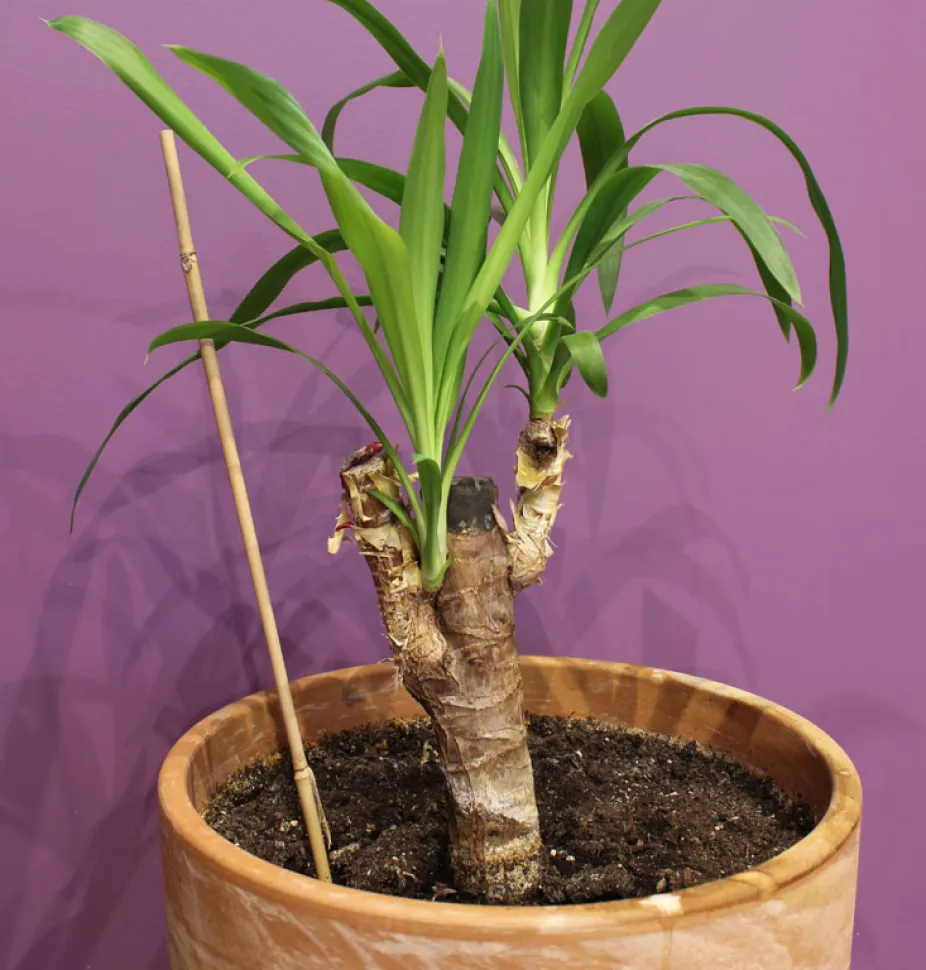
Cats enjoy Yucca leaves, which remind them of catnip. However, they are toxic—Photo: Rawpixel
Just looking at them, you can tell it's best to stay away from the sharp leaves of the yucca. But did you know you shouldn't taste them either? The bark and foliage contain irritating saponins. Ingestion can lead to excessive salivation, a drop in body temperature (hypothermia), and, specifically in cats, episodes of paralysis that can progress to a coma.
Ingesting even a very small amount can be enough, and symptoms may take up to 72 hours to appear after ingestion.
Aloe vera (Aloe vera)
Plant lovers adore its rosette of green leaves, and our skin loves its antioxidants. But our pets hate aloe vera.
- Toxic parts and effects: The outer layer of the leaf contains aloin (a yellow latex distinct from the gel). This compound has powerful laxative properties, causing severe diarrhea and vomiting;
- Sensitive animals: dogs and cats.
The Ministry of Health also warns of the dangers ofAloevera to humans. Certain substances in the plant could damage DNA and be carcinogenic.
The croton (Codiaeum variegatum)
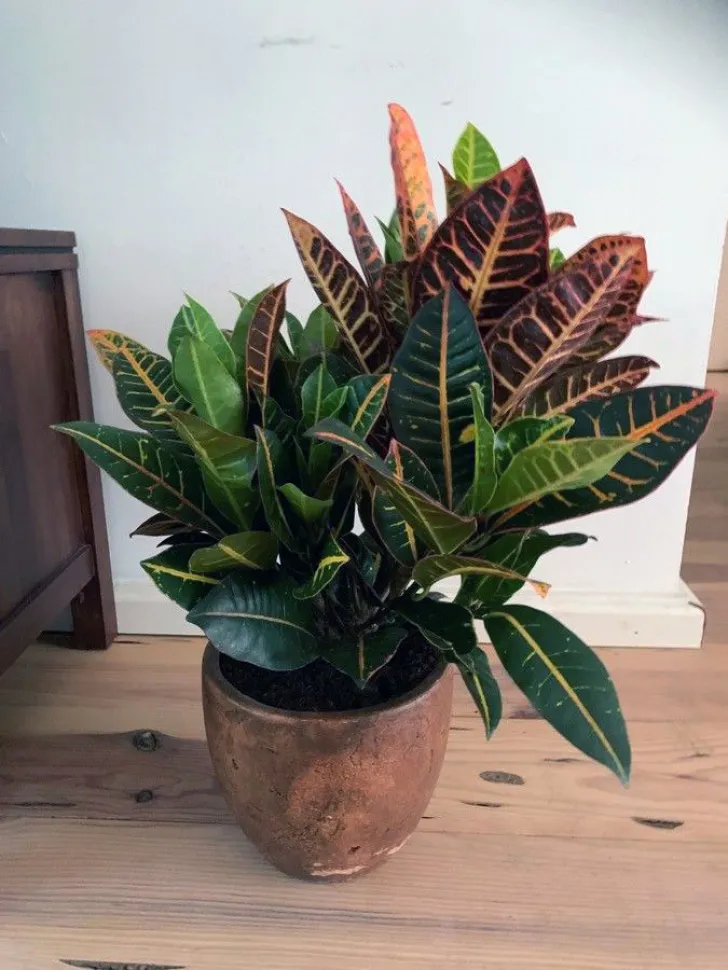
Another plant to avoid if you have a cat or dog: the croton—Photo by D. Janssen / Plantnet
The colorful patterns on the leathery leaves of the croton (Codiaeum variegatum) sometimes resemble the skin of an exotic reptile. The plant is almost as dangerous to your pets as its appearance suggests.
Its sap, which is a white latex, is highly irritating. Skin contact causes burns, while ingestion leads to diarrhea and a state of deep lethargy. Since the exact toxic dose is unknown, there is no such thing as zero risk: keep it out of reach.
Amaryllis (Hippeastrum)
The beauty of Amaryllis (Hippeastrum) flowers can prove fatal to your pets.
- Toxic parts and effects: The entire plant contains lycorine. This toxic substance causes severe gastrointestinal distress (vomiting, low blood pressure, loss of appetite) and tremors when ingested;
- Affected animals: Dogs, cats, rodents.
While the entire plant is toxic, the concentration of lycorine is particularly high in the bulb.
Fig Trees (Ficus)
Whether it's the well-known rubber tree (Ficus elastica), Ficus benjamina, Ficus retusa, or the very trendy Ficus lyrata, the verdict remains the same: the Ficus genus is toxic.
- Toxic parts and effects: The leaves and stems release a toxic white latex. Ingestion causes vomiting and diarrhea. Contact causes irritation of the mouth and eye damage if the latex comes into contact with the eyes;
- Sensitive animals: cats, dogs, rodents, and birds.
Cats are the most vulnerable to the toxicity of the ficus. In cats, the plant can also cause facial swelling and kidney damage.
The poinsettia (Euphorbia pulcherima)

Like the croton, the poinsettia belongs to the Euphorbiaceae family / Photo by Liz West / Flickr
Euphorbia pulcherrima traditionally decorates our Christmas Eve tables with its magnificent colorful bracts. But for our pets, the poinsettia is definitely not a gift. It belongs to the Euphorbiaceae family: all plants in this family contain an irritating latex that causes severe mouth inflammation, nausea, and diarrhea if ingested. Even simple contact is enough to trigger a reaction.
The love apple (Solanum pseudocapsicum)
The small, round berries of the love apple (Solanum pseudocapsicum) look quite appetizing, with their bright colors… But like Snow White's apple, they're poisonous…
- Toxic parts and effects: the entire plant, especially the berries. They contain solanine (a toxic alkaloid);
- Effects: Ingestion causes acute digestive problems, nervous system disorders (drowsiness, loss of balance), and a slowed heart rate;
- Susceptible animals: dogs, cats, and birds.
According to the CAPAE Ouest (Western Animal Poison Control Center) website, symptoms appear after massive consumption.
Dracaena
We often see its clusters of long leaves in our homes, offices, and waiting rooms. But you're unlikely to find a Dracaena fragans or a Dragonwood reflexa at your veterinarian's office. This palm-like shrub poses a danger to our furry companions.
- Toxic parts and effects: the leaves and stems contain saponins;
- Effects: Ingestion of these fibers causes excessive salivation, repeated vomiting (sometimes accompanied by blood), loss of appetite, and severe lethargy. In cats, Dracaena poisoning very often causes a dramatic dilation of the pupils (mydriasis);
- Susceptible animals: cats and dogs.
Kalanchoes (Kalanchoe)
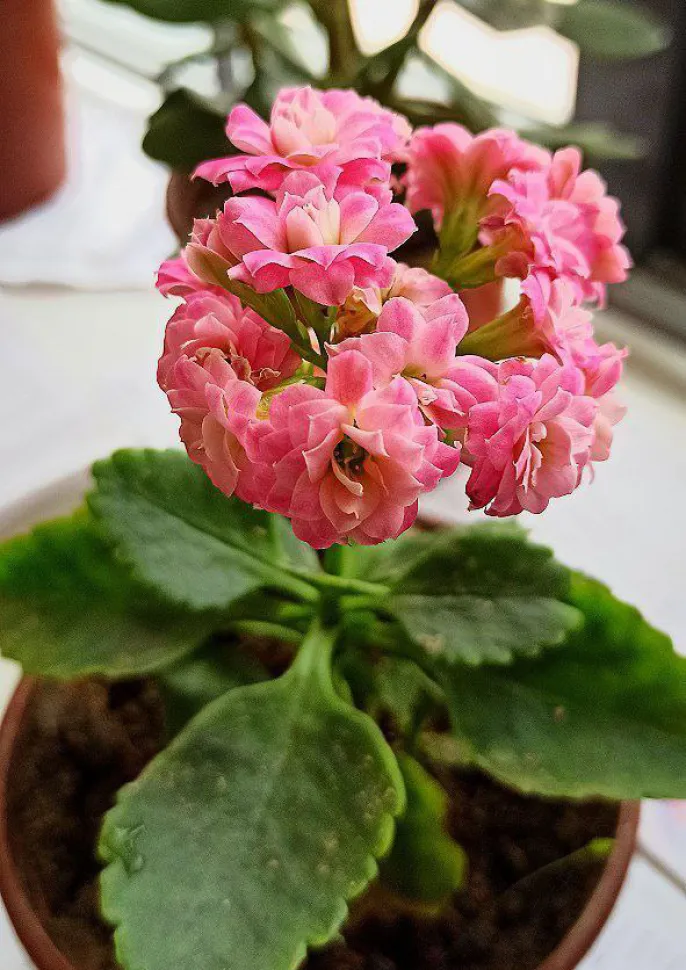
Kalanchoe is also on the list of plants toxic to animals—Photo by ImomovaM / Wikipedia
Some Kalanchoes, such as blossfeld's Kalanchoe (Kalanchoe blossfeldiana), are grown for their bright flowers, while others, such as the panda plant (Kalanchoe tomentosa), are grown for their fuzzy foliage. All pose a major risk.
In fact, the entire plant contains bufadienolides. Ingestion of these compounds initially causes digestive problems, which can progress to heart issues (arrhythmia, slowed heart rate), tremors, and, in the most severe cases, cardiac arrest.
While most succulents are harmless, be wary of the Crassulaceae family: Kalanchoes, as well as crassula ovata (Crassula ovata), are not pet-friendly.
What should you do if your pet ingests a toxic plant?
If your pet is drooling excessively, vomiting, appears lethargic, or shows any other symptom on the list, act immediately. Take action even if you don't notice any signs but know your pet has ingested a toxic plant. Symptoms may take several hours to appear.

If in doubt, call a veterinarian or a poison control center – AI-generated photo
Immediate steps to take
1. Stop further ingestion: Immediately remove the pet from the area or take the plant away. Gently remove any remaining plant material from its mouth if it allows you to do so without biting you;
2. Identify the plant: precisely identify the plant species. If in doubt, use an app like Monstera or cut a clean sample of the plant to bring with you;
3. Estimate the amount: Take a quick photo of the consumed pieces or the remains of the plant. This will help veterinarians assess the amount of toxins ingested;
4. Call for help: Immediately call your regular veterinarian or the nearest emergency clinic. They will tell you what to do while you wait for your appointment.
What You Must Absolutely Avoid
In all cases:
- Do not induce vomiting in your pet unless the veterinarian instructs you to do so. Certain sap or caustic substances can cause secondary chemical burns when regurgitated;
- Do not give your pet anything to eat or drink. This can worsen the situation and cause certain toxins to enter the bloodstream.
Numbers for veterinary poison control centers
Has your pet eaten a plant and you're not sure if it's toxic? Identify the plant and call a veterinary poison control center:
- The Western Animal and Environmental Poison Control Center (CAPAE-Ouest) at 02 40 68 77 40;
- The National Center for Veterinary Toxicological Information (CNITV) at 04 78 87 10 40.
Faculty members, veterinarians, and veterinary students will answer your questions free of charge. Don't hesitate to reach out to them—identifying and documenting cases of poisoning is part of their job.
Which plants should you choose if you have a dog or cat?
It's entirely possible to have both plants and pets in the same space. Here's a selection of pet-friendly plants you can enjoy to your heart's content.
Pet-Safe Plants for the Garden

There are many non-toxic plants for the garden—AI-generated photo
Outdoors, you can replace toxic plants with:
- Citrus trees (Citrus) such as the lemon tree (Citrus x limon), the orange tree (Citrus sinensis), or the mandarin tree (Citrus reticulata);
- Shrubs such as japanese Maple (Acer japonicum), the Japanese palm maple (Acer palmatum), the olive tree (Olea europaea), or the lilac (Syringa vulgaris);
- Flowering plants such as primroses (Primula), pansies (Viola odorata), marigolds (Calendula), sunflowers (Helianthus annuus), nasturtiums (Tropaeolum majus), and hollyhocks (Alcea rosea);
- Flowering shrubs such as japanese Camellia (Camellia japonica), the garden hibiscus (Hibiscus syriacus), and roses (Rosa);
- Climbing plants such as passionflowers (Passiflora) and climbing roses (Rosa sp.).
Pet-friendly alternatives for indoors
While Araceae plants should be avoided, other varieties are waiting for you. Here are some alternatives to consider based on your preferences
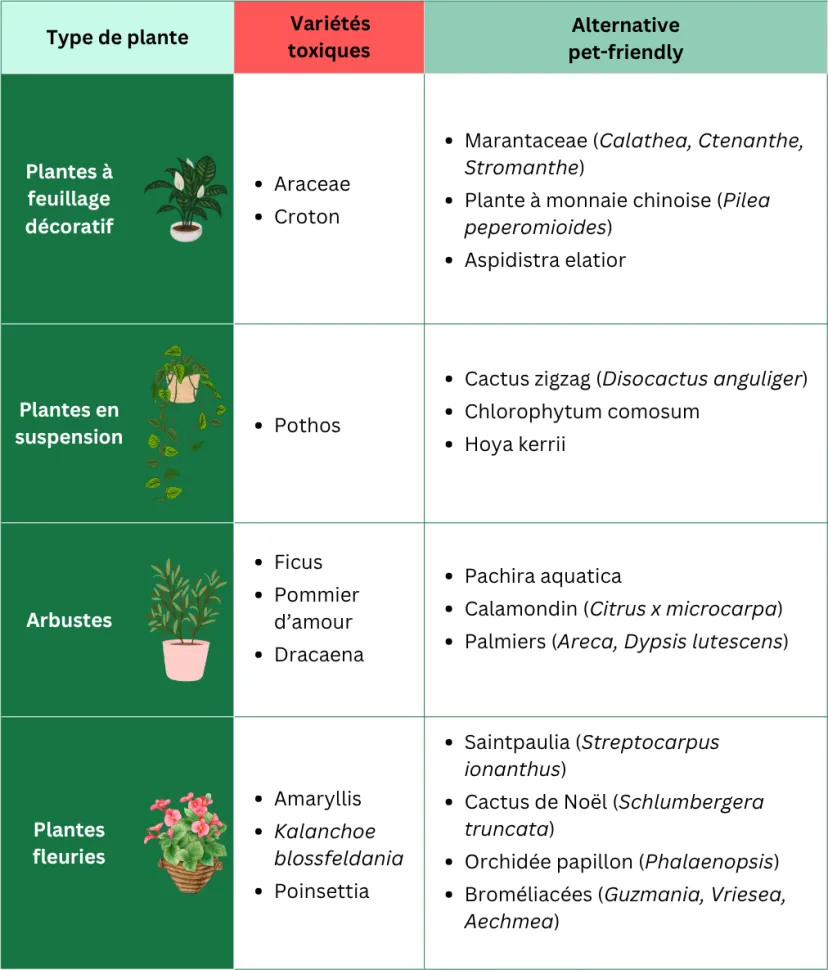
Orchids, Calatheas, citrus trees… You're spoiled for choice!
By Servane Nemetz
on 16-10-2026 at 6:40 PM
on 16-10-2026 at 6:40 PM
Indoor plantsOutdoor plants
 Seaside garden: which spray-resistant plants to plant?
 Vegetable gardening: 10 mistakes that ruin your harvests
 Vegetable garden on a balcony: how to create a productive vegetable garden in the city?