Solanum lycopersicum, the tomato
Solanum lycopersicum
- Exposure
- Sun
- Hardiness (USDA)
- 11b (7.2°C ≤ T° < 10°C)
- Lifecycle
- Perennial
- Foliage
- Evergreen
- Family
- Solanaceae
- Genus
- Solanum
- Species
- Tomato Solanum lycopersicum
Other names:Lycopersicon lycopersicum, Lycopersicon esculentum, Lycopersicon esculentum subsp. typicum, Lycopersicon solanum-lycopersicum, Lycopersicon pomum-amoris, Solanum lycopersicum var. esculentum
The undisputed queen of our summer vegetable gardens, the tomato (Solanum lycopersicum) charms us as much with its diversity as with its bounty. For the gardener, the real challenge isn't determining whether it's a fruit or a vegetable, but rather choosing the ideal variety to plant. From cherry tomatoes to determinate and indeterminate varieties… There are several thousand cultivars of this plant, which is native to Peru.
How can you identify the tomato (Solanum lycopersicum)?
The tomato (Solanum lycopersicum) is a herbaceous plant. Perennial in tropical climates, it is grown in harsher climates as an annual vegetable. The plant has an upright or bushy growth habit and can grow over two meters tall.
The angular stem branches out. It is green and covered with fine white hairs, which help reduce evapotranspiration.
The green, alternate leaves measure 10 to 25 centimeters. They consist of seven to nine leaflets with deeply lobed margins.
The flowers have five yellow petals and five green tepals. They are hermaphroditic, but pollination requires an external agent (wind, insects, etc.) to cause the anthers to vibrate and release pollen.
They then develop into a fleshy fruit, also called a tomato. Its size, shape, and color vary greatly from one variety to another. A tomato can:
- Weigh between a few grams and two kilograms;
- Be spherical, cylindrical, flattened, pear-shaped, or heart-shaped;
- Be smooth or ribbed;
- Be red, orange, pink, yellow, green, black, or blue;
- Be solid-colored or two-toned.
The fruit contains many seeds (up to several hundred per tomato), which are small and hairy.
Which tomato varieties should you grow in your garden?
There are more than 3,000 varieties of tomatoes, which are divided into two main categories based on their growth habit:
- Indeterminate tomatoes: They continue to grow and produce throughout the summer;
- Determinate tomatoes: They stop growing once they reach their final size and produce their fruit all at once.
The best indeterminate tomato varieties
Choose an Indeterminate tomato if you:
- Want to harvest tomatoes all summer long;
- Have plenty of space;
- Are willing to prune and stake the plants.
If you want to grow indeterminate tomatoes, you can choose:
- 'Black Cherry':a Cherry tomato that grows over two meters tall and can also be grown in a very large pot;
- 'Sungold': a small, orange-yellow cherry tomato that ripens very early and can be grown in the ground or in a pot;
- 'Cœur de Bœuf': a heirloom variety with very heavy fruit that absolutely requires sturdy staking;
- 'Noire de Crimée': a heirloom variety with purple tomatoes that is drought-tolerant;
- The Marmande tomato, an early-season variety with large, ribbed fruits;
- 'Green Zebra': a very productive green and yellow tomato.
The Best Determinate Tomato Varieties
The determinate tomato:
- Has a compact growth habit;
- Does not require pruning;
- Produces all its fruit at the same time.
These varieties are recommended for small spaces and gardeners looking for a bountiful, concentrated harvest—for example, for making sauces or preserves. If this sounds like you, you might want to try:
- 'Roma,' a variety with elongated fruits that's easy to grow in pots or in the ground;
- 'Hector ': a disease-resistant hybrid tomato that produces large, round, red fruits;
- 'Pendulina': red or yellow cherry tomatoes that can be grown in pots on a balcony.
Are tomatoes poisonous?
The fruit is not toxic. Tomatoes are edible and are said to be the second most widely consumed vegetable in the world, after potatoes.
However, the leaves and stems contain solanine, a substance that is toxic to humans and animals if ingested. It causes digestive problems, such as nausea and vomiting.
Our care tips
Tomatoes They are harvested when they are well-formed, firm, and have reached their final color.
 Watering
Tomatoes like to keep their base moist, especially during the flowering and fruiting period.
Water your Tomato at the base, taking care not to wet the leaves. Preferably use rainwater at room temperature.
 Fertilization
You can stimulate the growth of your plant during its growth phase, in spring and summer, with fertilizer.
Apply a nitrogen-rich fertilizer, such as a vegetable fertilizer, to encourage growth and fruiting.
You can also use a natural fertilizer (nettle or comfrey purin).
 Prune
When the first fruits appear, prune your Tomato.
Remove suckers, those shoots that appear between the main stem and the secondary stem. Cut them off at the base, using your fingers or clean pruning shears, being careful not to damage the main stem.
Remove yellowed leaves, especially at the base of the plant.
If you live in a region with little sunlight, you can remove a few leaves from the upper part of the plant when they shade the fruit. You can also remove a few leaves from the center of your plant to promote air circulation. But don't prune too much! The foliage is essential for photosynthesis and for producing flowers and fruit.
 Pulling out
Detach the stems from their stakes. If the plant is large, you can prune a few side branches to make handling and removal easier.
Then grasp the main stem at its base, as close to the ground as possible. In loose soil, pull the plant out by pulling vertically with a firm, continuous motion. If the soil is compact or dry, use a spade to slightly lift the root ball and reduce root resistance before removing the plant.
 Planting
Before planting, prepare the soil:
- Remove weeds;
- Loosen the soil;
- Enrich it with potting soil, manure, or compost.
Dig a hole twice as large as the root ball. If you're planting several Solanum lycopersicum, space the plants at least 60 cm apart. Add a handful of vegetable potting mix or compost to the bottom of the hole.
Place your stake 3 cm from the hole. Plant your Tomato and backfill the hole. When your plant begins to lean, you can tie it to the stake.
Water generously. You can mulch the soil to prevent weeds from growing and to keep the soil cool.
 Sowing
You can start seedlings indoors when the days get longer.
Sow your seeds under cover. You can use either pots, seed trays, or seedling trays.
Fill your container with potting soil for seeds and seedlings. Moisten the soil by spraying water or watering with a fine mist.
Make a hole 0.5 mm deep. Plant your seed and cover with soil. You can sow two seeds per cell or per pot to increase your chances of success.
Keep your seedlings in a sunny spot where the temperature does not drop below 18°C. Mist the soil regularly to keep it moist.
Frequently asked questions
What should you plant tomatoes with?
Tomatoes grow best alongside companion plants such as basil, marigolds, garlic, corn, and onions. However, they should not be planted near potatoes or other nightshade plants that are susceptible to the same diseases.
When should tomato plants be planted?
Tomato seedlings are transplanted into the ground after the last frosts, when the soil has warmed sufficiently, to around 12 to 15 °C. Planting under cover can begin a little earlier.
Is a tomato a fruit or a vegetable?
Botanically speaking, the tomato is a fruit, as it grows from a flower and contains seeds. In cooking, however, it is considered a vegetable because of its use in savory dishes, salads, and sauces. It therefore belongs to both categories depending on the context.
Diseases / Threats
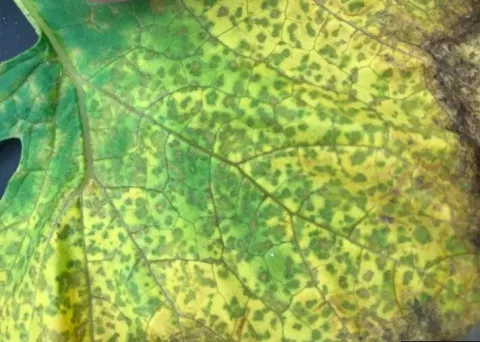
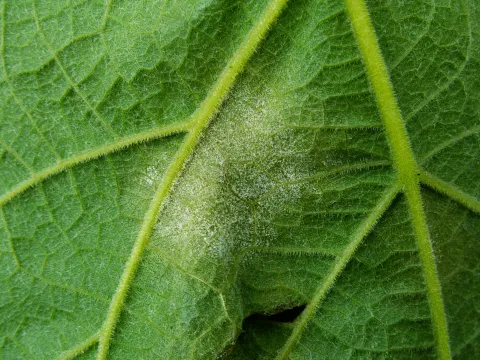
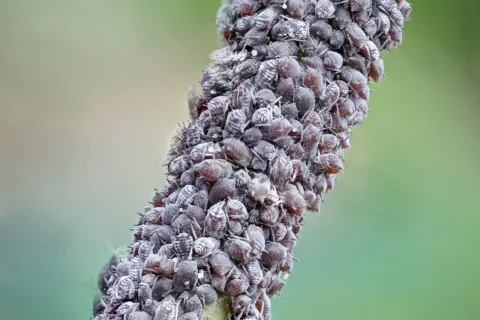
Information
- Lifecycle
- Perennial
- Foliage
- Evergreen
- Exposure
- Sun
- Substrates
- Calcareous earthHumus soilSandy soil
- Planting methods
- Open groundIn potsIn tubs
- Categories
- VegetableHerbaceous
- Tags
- BeginnerCold-sensitiveLarge potEdible vegetable
- Origin
- South America
- Hardiness (USDA)
- 11b (7.2°C ≤ T° < 10°C)
- Leaf color
- Dark green
- Flower color
- Yellow
- Fruit colors
- Light greenRedYellowOrangePurple
Discover plants from the same family
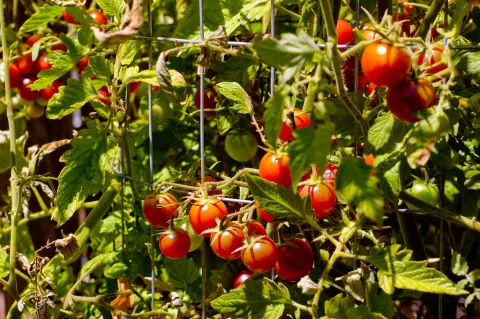
Cherry tomato
Solanum lycopersicum
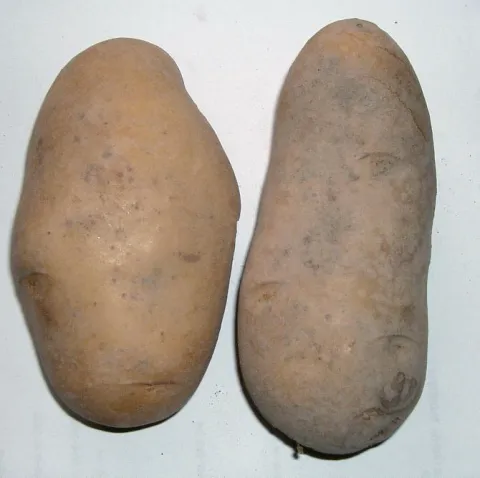
Potato
Solanum tuberosum
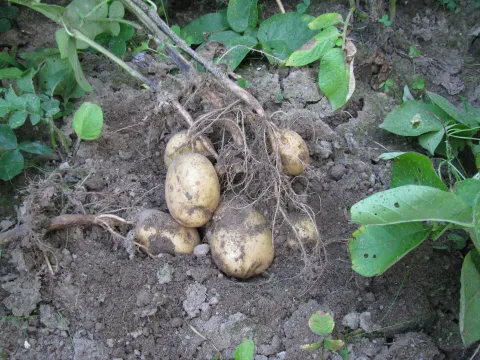
Bintje potato
Solanum tuberosum 'Bintje'
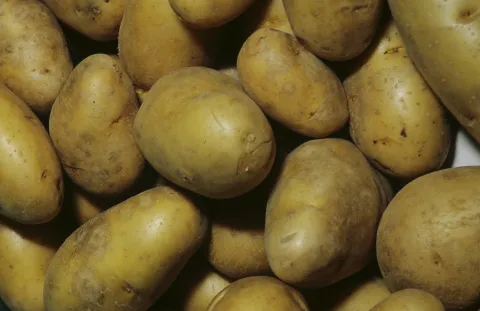
Charlotte potato
Solanum tuberosum 'Charlotte'
Find out more
Find all our tips in the Monstera application








