Summer Leeks: Early-Maturing Varieties for Gardeners in a Hurry
Allium porrum
- Exposure
- Sun
- Hardiness (USDA)
- 7b (-15°C ≤ T° < -12.2°C)
- Lifecycle
- Biennial
- Foliage
- Evergreen
- Family
- Amaryllidaceae
- Genus
- Allium
- Species
- Leek Allium porrum
Other names:Allium ampeloprasum var. porrum, Allium porrum var. viviparum, Porrum sativum, Allium laetum, Allium porrum var. breve, Allium ampeloprasum subsp. porrum, Allium porrum var. latum, Porrum commune
Don't want to wait nearly a year between planting and harvesting your vegetables? Go for summer leeks! These early-maturing varieties are ready to eat 6 to 8 months after sowing. Ideal for gardeners in a hurry and those who need to free up space in the garden quickly!
How can you identify the summer leek (Allium porrum)?
A biennial plant, the summer leek (Allium porrum) is grown as an annual in the vegetable garden. It has an upright growth habit and reaches up to 50 cm in height with a spread of 30 cm.
The sheathing leaves form a white pseudostem underground called the shaft. The above-ground foliage is light green, a detail that helps distinguish the summer leek from Allium porrum and Allium porrum, whose leaves are darker. The flat, elongated leaf blades are folded in half, forming a groove.
The summer leek flowers only if it is not harvested. Greenish-white flowers, arranged in a perfect sphere, bloom at the top of a flower stalk.
Which varieties of summer leeks should you grow?
Summer leeks are sown under cover during the winter (January or February). As early-maturing varieties, they are harvested during the summer (July through October). But some mature earlier than others! When choosing summer leeks for your vegetable garden, consider the quality of the shaft and the growth rate.
- Gros Long d'Été: a very old variety with a medium-length shaft and tender foliage that is harvested 6 months after sowing;
- Large Yellow Poitou: a leek with a short shaft and blond-green leaves. It can be sown in February for a harvest as early as May;
- Albos: This summer leek produces a 30–35 cm shaft with a flavor considered exceptional. An early variety, it is harvested 3 to 4 months after sowing;
- Hannibal: a long-stemmed variety that can be planted year-round but is well-suited to summer cultivation. It is harvested in late summer;
- Kulaures: Its rapid growth means you can enjoy its sweet-flavored stalks just 6 months after sowing;
- Early Giant: Vigorous and fast-growing, this leek produces large stalks measuring 25 to 30 cm. Sow as early as January for a harvest in early summer;
- Malabare: a variety with a broad, short pseudo-stem that is sown in the spring and ready to eat by late summer.
Is the summer leek toxic?
Summer leeks are not toxic to humans. The plant is grown and eaten—raw or cooked—in salads, fondue, quiche, soup, and more… While the shaft is the part we usually eat, the leaves are also edible. And the leaves of the summer leek are less tough and easier to cook than those of other leeks!
However, leek can cause digestive problems and even anemia in animals. Cats are particularly sensitive to them. Do not feed leeks to your pets, and make sure they do not nibble on the plant in the vegetable garden.
Our care tips
Summer Leeks They are ready to harvest when their leaves are firm, bright green, and upright. If the heart swells, hurry to harvest! This is a sign that the plant is about to bolt. It will then be too tough to eat.
 Watering
Water the base of your Summer leek when the substrate surface is dry. Do not wet the leaves to avoid the development of diseases and fungi. Watering is best done with rainwater at room temperature.
 Fertilization
Use a fertilizer rich in potassium and nitrogen, such as a vegetable fertilizer.
 Planting
Prepare your soil:
- Weed, remove roots and stones;
- Loosen and aerate the soil using a broadfork, a pitchfork, or a spade;
- Add compost or fertilizer if your soil is poor.
You can make a planting hole at least 15 cm deep using a planting trowel or dig a furrow. In both cases, rows should be spaced at least 20 cm apart from your other crops, and plants should be spaced at least 15 cm apart from each other so they have room to grow.
Plant your Allium porrum. Bury the stem (the white part) and, if necessary, a little of the foliage.
Water generously to help the plants establish themselves.
 Sowing
Sow your seeds in a container at least 15 cm deep, such as a pot or a bowl, to allow enough space for the roots to grow.
Fill the pot with rich potting soil, such as a sowing mix or all-purpose potting soil enriched with compost.
Space the seeds 2 cm apart, then cover them with 5 mm of soil. You can make furrows to make sowing easier.
Place your sowing in a bright spot at a stable temperature between 18 and 20. These conditions promote germination and the growth of young plants.
Keep the substrate slightly moist throughout the germination period.
 Buttage
Plug your plants regularly to encourage production.
Start by weeding around the plant, then loosen the soil surface using a rake.
Using a hoe or a ridging tool, bring a few centimeters of soil up around the base of the plant. You can also add potting soil to complete the ridging. This step promotes the development of the underground parts of the plant.
Frequently asked questions
What should I plant after leeks?
Crop rotation prevents soil depletion and limits the occurrence of pests and diseases. After leeks, plant carrots, cucumbers, cilantro, squash, turnips, radishes, or tomatoes.
What should I plant with leeks?
Leeks benefit from being planted alongside carrots and celery. This companion planting helps repel pests and benefits both species. However, avoid planting leeks with beans, Swiss chard, cabbage, and peas. These vegetables have similar needs and compete for nutrients, which weakens the crops.
How long does it take for leeks to grow?
The growth period depends on the variety. It generally takes 5 to 7 months from sowing to planting. Summer leeks, which mature earlier, reach maturity 3 to 4 months after sowing.
Diseases / Threats
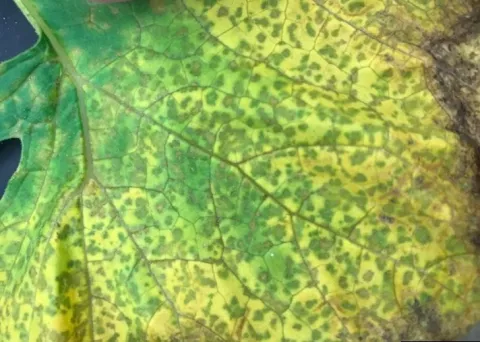
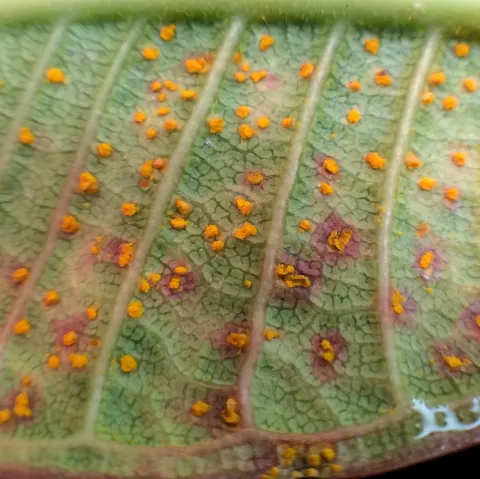
Information
- Lifecycle
- Biennial
- Foliage
- Evergreen
- Exposure
- Sun
- Substrate
- Humus soil
- Planting methods
- Open groundIn potsIn tubs
- Categories
- VegetableHerbaceous
- Tags
- SoiffardeEdible vegetable
- Origin
- Central Asia
- Hardiness (USDA)
- 7b (-15°C ≤ T° < -12.2°C)
- Leaf colors
- Light greenWhite
- Flower colors
- WhitePale green
Discover plants from the same family

Chives
Allium schoenoprasum
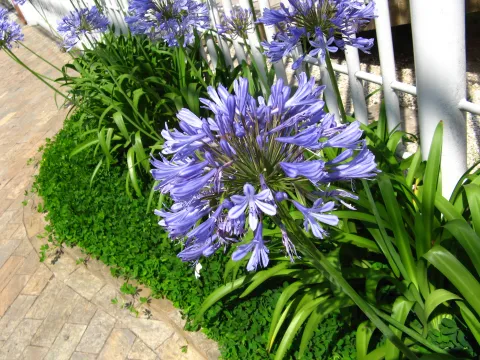
Early Agapanthus
Agapanthus praecox
Find all our tips in the Monstera application