Which pot should I use to repot my plant?
Article for :Beginner and plant killer

Article summary
Repotting your plant helps it grow, just like watering, fertilizing, or exposing it to the right amount of sunlight. Just as you need to choose potting soil suited to its needs, the same applies to the container. To select the right pot, consider three criteria: size, material, and shape. It's a bit like when you buy a piece of clothing.
The Difference Between a Pot and a Planter
Before we go any further, a quick explanation is in order. If you're a plant enthusiast and this isn't your first orchid, you can skip this section. If you're a beginner wondering how not to kill your first Pilea, you might want to know the difference between a pot and a planter.
The pot is the container into which you pour the potting soil and plant your new friend. It must have drainage holes to allow water to drain out. If you don't want to flood your furniture, hardwood floors, or carpet, place a saucer under the pot.
A planter is a decorative accessory. They come in ceramic, metal, wicker, and other materials. It's used to hide the pot. Planters don't have drainage holes. Therefore, you cannot plant your plants directly in them, as excess water cannot drain out. The planter should be three centimeters wider in diameter than the pot.
About 30 minutes after watering, empty any water that has accumulated in the saucer or planter to prevent it from causing the plant's roots to rot.
What size pot should you choose when repotting your plant?
Plants are sold in stores in their original growing pots. These pots have often become too small, and roots are poking out of the drainage holes at the bottom. That's why we at Monstera almost always recommend repotting after purchase.
Your plant will stay in its pot for at least a year before the next repotting. The pot should therefore be large enough to allow it to continue growing. On average, roots grow between half a centimeter and one centimeter per year. Some varieties, such as chlorophytum comosum or Philodendron, grow faster and will need more room.
- What should the pot's dimensions be?
Rather than getting bogged down in complicated calculations, use the original pot as a guide. Choose a new one that's one-third larger than the old one. Your plant will have room to thrive and will benefit from the nutrients in the potting mix. If you received a plant without a pot—a cutting, for example—choose one that's two to three times the size of the root ball.
The depth of your pot depends on the plant's height. For plants with an upright or erect growth habit and climbers, such monstera deliciosa or ficus elastica, the depth should be one-third of the plant's height. The general recommendation is:
- less than 20 centimeters for bulb plants, dwarf plants, herbs, and flowering annuals;
- up to 30 centimeters for herbaceous plants less than 60 centimeters tall;
- more than 30 centimeters for other perennials.
- Pot Too Small or Too Large: What Are the Risks?
We know what you're thinking, you busy or lazy gardeners. You're tempted to choose a very large pot that will save you the trouble of repotting in the spring. Bad idea. Your Peperomia will have plenty of room to reach its full size. But there's little chance your cutting will survive to adulthood, lost in the middle of its 10 liters of potting mix. Every time you water it, the substrate will become waterlogged. The amount of water will exceed the plant's needs, and the substrate will never be able to dry out. The roots will end up in an environment that's too damp and will rot.
Unless you want to grow a bonsai, don't choose a pot that's too small either. Not only will your plant fail to grow, but the potting mix will dry out very quickly. You'll spend your life with a watering can in hand, but your plant will never get enough water. Its leaves will wilt, and it will eventually develop aerial roots to try to find water elsewhere.
There is one exception, however: pothos, mother-in-law's tongue, cacti, and certain other varieties actually prefer to be cramped. These plants thrive in a pot that's the same size as their root ball or slightly larger. When this is the case, we'll let you know in the care tips we share on the Monstera app.
What's the best material for a flower pot?
There's no such thing as the perfect material. Each has its pros and cons. To find the pot that best suits your plant, consider its needs, as well as your own constraints and habits.
- Clay or terracotta

Clay pots by Anna Fox
Clay is porous. It allows water to evaporate easily. If you've been a bit too generous with watering, the roots are less likely to rot.
However, clay or terracotta pots are fragile and not frost-resistant. When you place them on your balcony or in your garden, you'll need to bring them inside during the winter to prevent them from cracking. Another drawback is that, since water evaporates more quickly, you'll need to water more frequently.
Terracotta and clay pots are suitable for almost all indoor and outdoor plants. They're the best choice for beginners and anyone who tends to overwater.
- Plastic
Lightweight, affordable, easy to maintain, and available in almost any size and color, plastic pots are fantastic. They can be used for both indoor and outdoor plants.
Their only drawback is that they're completely airtight. Water evaporates only through the surface. If overwatered, the plastic traps moisture. Even if you've added a drainage layer at the bottom, your plant may rot.
If you're growing water-loving varieties, such as Alocasia, bamboo, banana plants, or hydrangeas, plastic will help you space out your watering schedule.
- Wood

Wooden pot by Fructibus
An excellent natural insulator, wood protects the root ball from cold, frost, or snow in winter. In summer, it keeps the potting mix cool.
However, if placed outdoors, you'll need to maintain it and apply wood stain regularly to preserve its original appearance. Be careful not to use toxic products that could harm the plants!
Wood is most often chosen for planters that hold trees. If you're growing a Japanese maple, a fig tree, or an olive tree on your patio or in your garden, this is the ideal material.
- Concrete

Concrete Pot
With their industrial design, concrete pots blend seamlessly into a modern decor without needing a planter cover. Heavy and durable, they ensure the stability of shrubs and small trees planted outdoors. With a concrete planter, your oleander won't topple over at the first gusts of the mistral!
However, because of their weight, concrete planters are difficult to move. If you place several on your patio or balcony, be sure to check that their weight, combined with that of the potting soil and the tree, does not exceed the weight limit.
- Geotextile Pots
The latest trend from the United States, geotextile pots are made from recycled materials.
Also known as “root pouches, ” they promote root system development. When a root reaches the wall of a plastic or terracotta pot, it continues to grow and wraps around it. With a geotextile pot, it stops growing. The plant then focuses on producing a new root. Additionally, geotextile pots are breathable. Air circulates through them, which prevents the growth of fungi and helps keep the plant cool in the summer.
However, the material has a limited lifespan. After seven years, it deteriorates, and you'll need to replace the pots (and repot your plants).
Geotextile pots are suitable for all types of plants. They are particularly recommended for growing root vegetables or tubers.
What shape of pot should you choose?
Even if plants are good at math, they don't care whether their home is round or square. Rectangular or oval planters let you create potted arrangements or mix-and-match compositions by combining several varieties.
For plants that propagate via stolons—such as Fittonia and certain succulents—saucer-shaped pots are a great choice. Since these plants don't need a very deep pot, they can spread out, and you'll get plenty of offshoots.
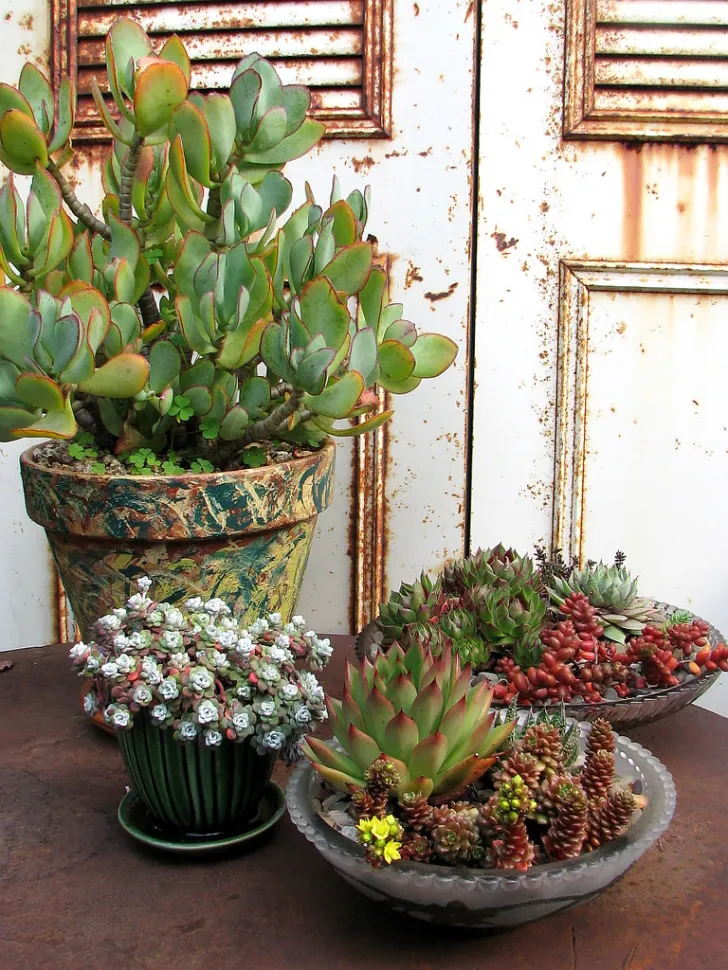
Different Pot Shapes by Seán A. O'Hara
No matter what species you want to grow, be wary of overly unusual shapes that make it difficult to access the plant. For example, with an amphora-shaped pot, you'll have to break the container to perform repotting on the plant.
Find out more
 Plants toxic to cats and dogs: varieties to avoid in the garden and indoors
 Seaside garden: which spray-resistant plants to plant?
 Vegetable gardening: 10 mistakes that ruin your harvests









