Root rot: how to prevent and treat it?
Article for :All parent plants
Article summary
If Tralalero Tralala, Brr Brr Patapim and their Italian brainrot sidekicks threaten to soften your neurons, there's another scourge lurking around the corner: root rot. Fortunately, there are simple ways of preventing and even curing this potentially fatal ailment.
What causes root rot?
Root rot is a common phenomenon in the cultivation of plants. As the name suggests, the root system is the first to be affected. The roots die, decompose and are no longer able to nourish the plant. Without intervention, leaves wither, stems collapse... And the plant eventually dies.
Root rot is often thought to be caused by excess water. This is both true and false. In fact, root rot can be caused by a number of factors.
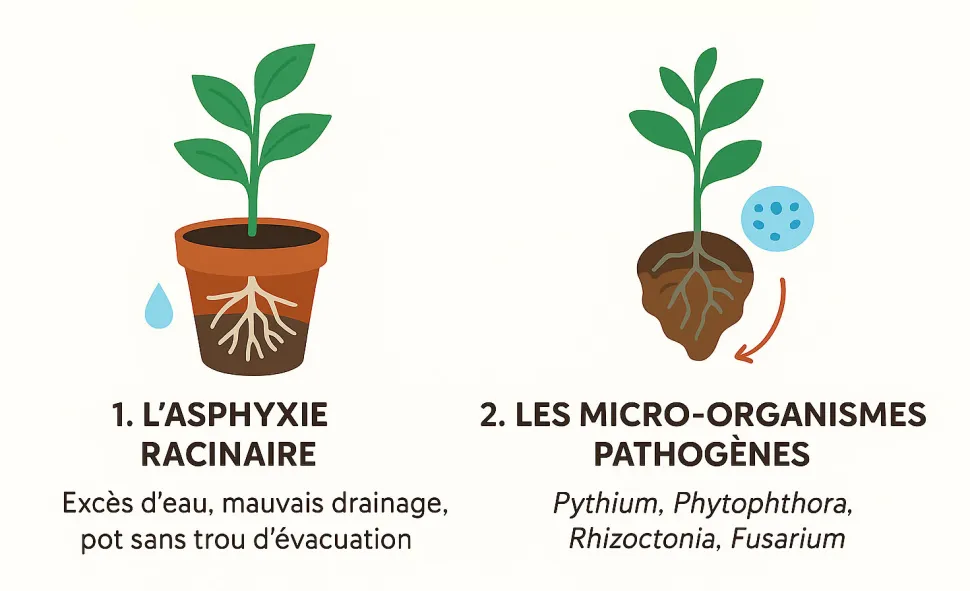
Over-watering is not the only cause of root rot.
Root asphyxiation
Root rot is most often caused by too much water. When you water too often, the soil remains moist. The water drives out oxygen and the roots can no longer breathe. They suffocate, die and rot.
Too much fertilizer can also cause root rot: too many nutrients "burn" the roots, weakening them and facilitating decomposition.
Too much fertilizer can also cause root rot: too many nutrients "burn" the roots, weakening them and facilitating decomposition.
Micro-organisms
Root rot can also be caused by micro-organisms such as Pythium, Phytophthora, Rhizoctonia or Fusarium fungi. They are present in the soil or on the plant and pose no problem as long as the environment remains healthy.
But in an excessively humid or poorly aerated environment, they thrive. They colonize the roots, releasing enzymes and toxins that lead to necrosis and root rot.
These fungi also reawaken when an under-watered plant is suddenly rehydrated.
But in an excessively humid or poorly aerated environment, they thrive. They colonize the roots, releasing enzymes and toxins that lead to necrosis and root rot.
These fungi also reawaken when an under-watered plant is suddenly rehydrated.
Which plants are most affected by root rot?
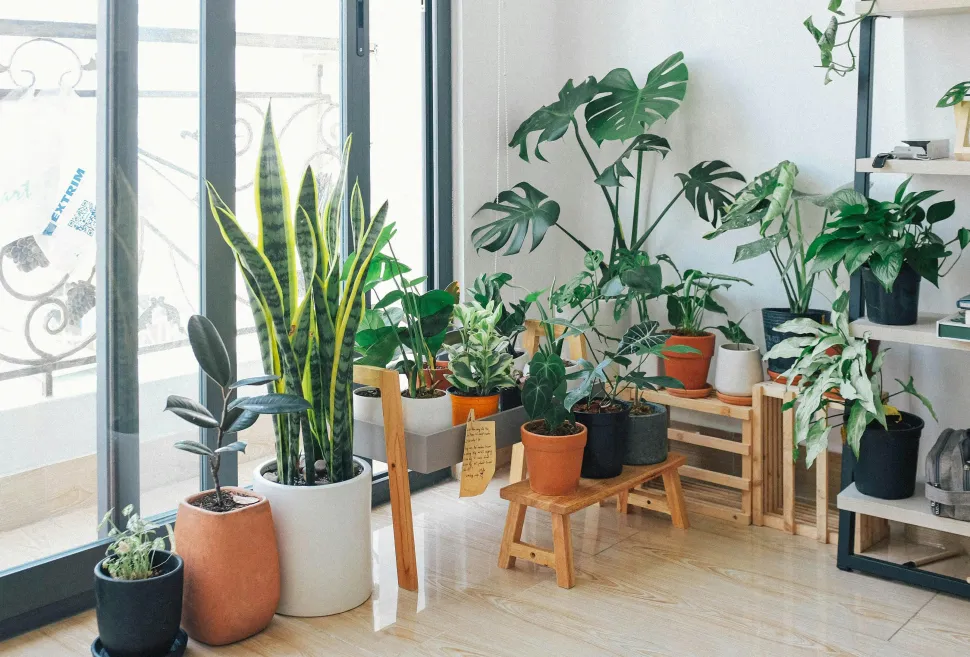
Root rot mainly affects potted plants. Photo by Huy Phan / Pexels
Root rot mainly affects potted plants, whether grown outdoors or indoors. Plants grown in the ground are generally spared. The soil benefits from better air circulation, a balanced microbial fauna and natural drainage that prevents water from stagnating. Excessive watering is therefore more easily compensated for.
However, all indoor and outdoor plant species are affected by root rot:
- Tropical plants ;
- Succulents and cacti;
- Shrubs;
- Fruit trees;
- Aromatic plants.
What are the symptoms of root rot?
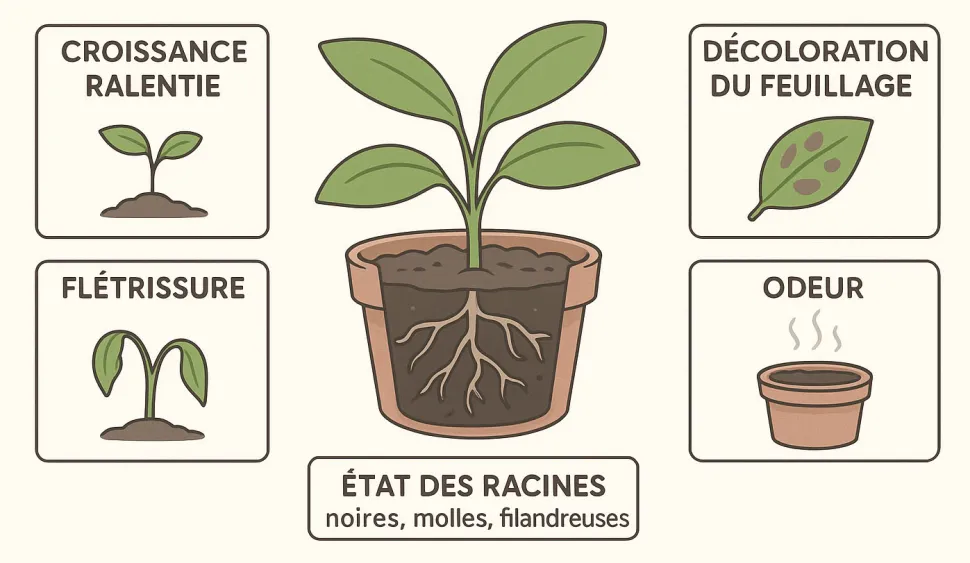
Is your plant showing any of these symptoms? Its roots are probably rotting.
Here are the signs that should alert you. But as is often the case in gardening, one symptom can refer to very different problems. You need to take into account the presence of several indicatorsand growing conditions to confirm your diagnosis of root rot.
Slower growth
Affected plants grow more slowly, and new leaves are sparse or deformed. In the case of root rot, young shoots rapidly turn brown.
Leaf discoloration
Leaf discoloration is a symptom of root rot. Depending on the extent of the damage, you may observe :
- Brown spots;
- Yellowing;
- Browning of leaf tips.
Leaves may also drop off faster than on a healthy plant.
Wilting
When the roots stop working, the plant can no longer keep itself hydrated. Stems and leaves lose their firmness. They become limp and withered.
Smell
This is the sign that can't be mistaken! If your potting soil smells bad, somewhere between musty compost, swamp and stale egg, then there's no doubt about it. You're dealing with rotten roots.
Root condition
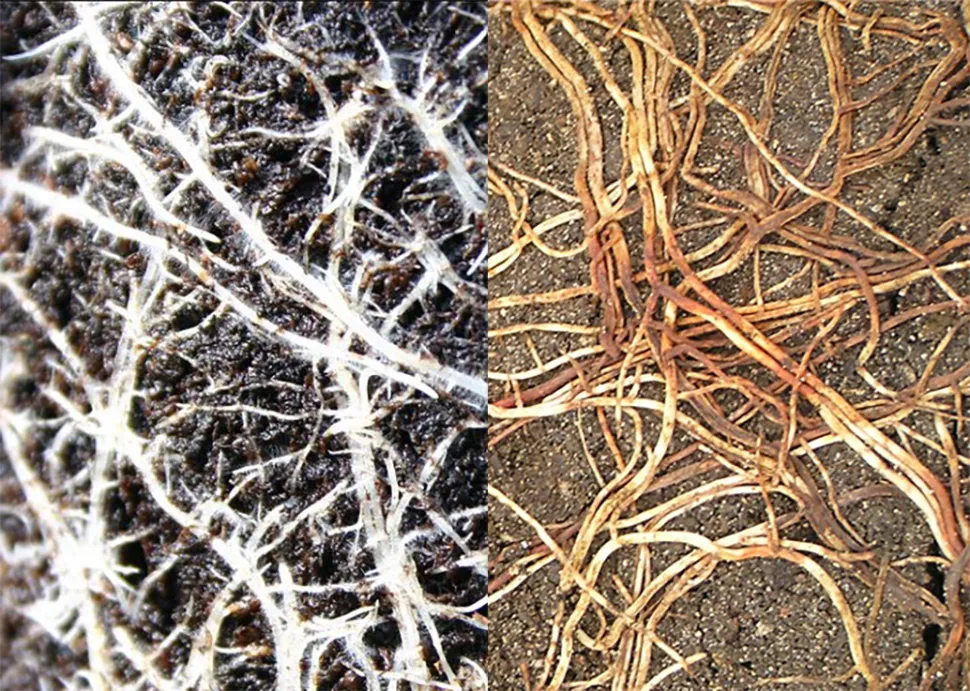
Healthy roots on the left, diseased roots on the right. Photo by B. Livingston and S. Nelson / Flickr
Healthy roots are white or beige in most plants. They are also firm. When rotten, roots are very dark brown or black. They are stringy and pull easily when pulled.
How to treat root rot?
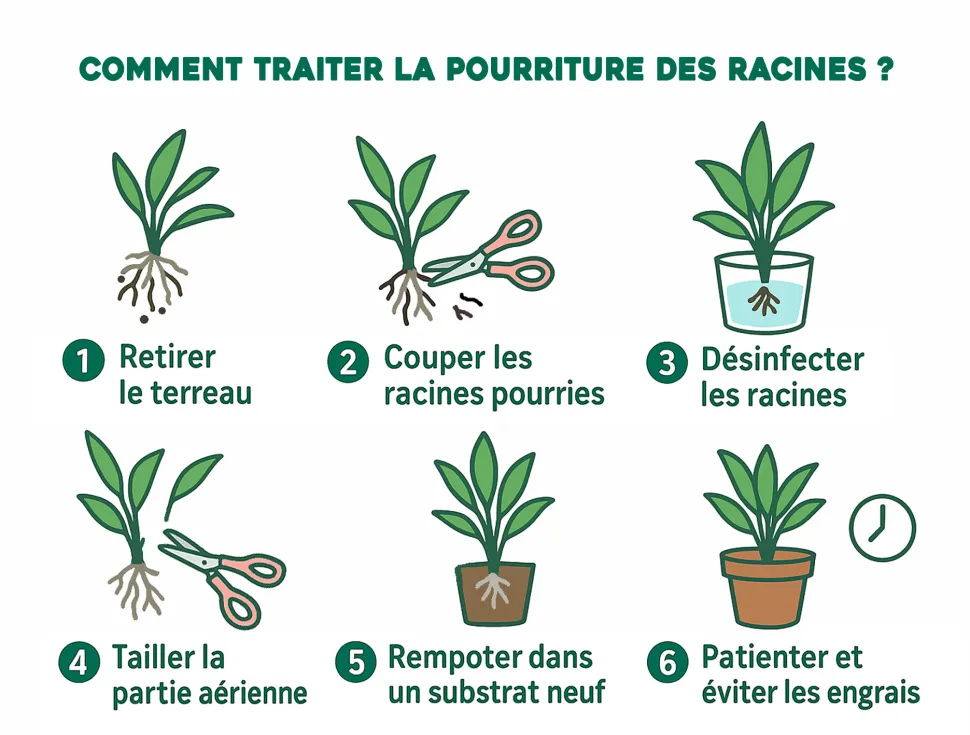
Six steps to treating root rot.
Is your plant affected by root rot? Start by isolating it from other plants. Certain parasites can carry the fungus and make the rest of your jungle more vulnerable.
Here are the steps you need to follow to cure root rot and give your plant a fighting chance.
Here are the steps you need to follow to cure root rot and give your plant a fighting chance.
Step 1: Remove the soil
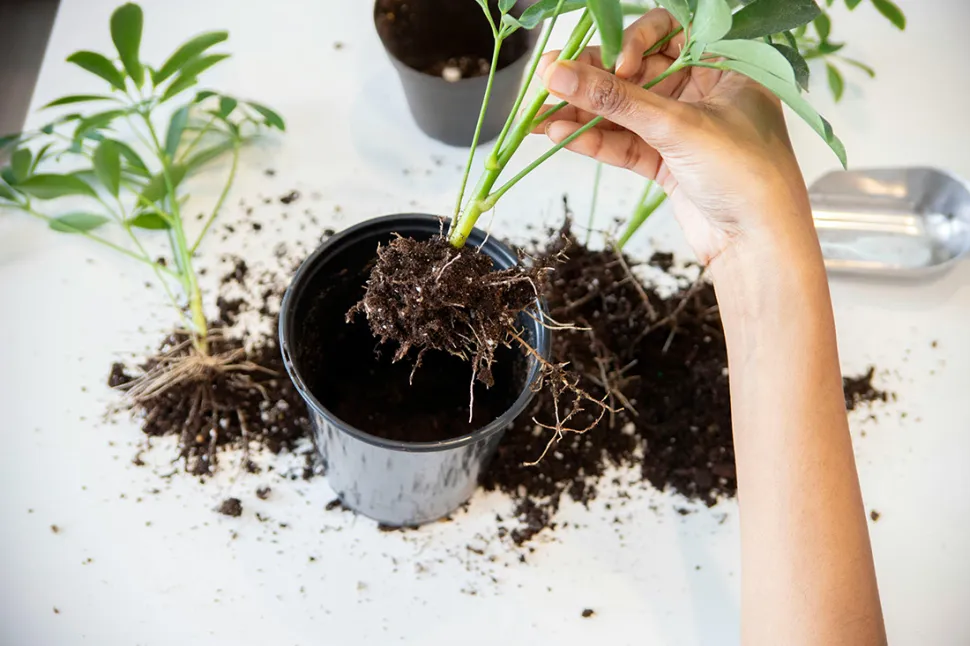
Carefully unstack the plant and remove all the soil. This will allow you to confirm your diagnosis by observing the roots and prevent the rot from spreading.
Never reuse the old potting soil: it probably contains the fungi responsible for the rot.
Never reuse the old potting soil: it probably contains the fungi responsible for the rot.
Step 2: Cut away damaged roots
Using a clean, disinfected tool (pruning shears or scissors), cut off any brown, soft or smelly roots. Keep only the healthy parts (firm, clear and odorless).
In doubt? Pull gently on the root. Rotting can be easily removed.
In doubt? Pull gently on the root. Rotting can be easily removed.
Step 3: Disinfect the roots
Soak the roots for a few minutes in a mixture ofwater (2/3) and3% hydrogen peroxide (1/3) to eliminate the fungi responsible for rotting.
Hydrogen peroxide burns the foliage. Take care not to apply the product to leaves and stems. Take care with your eyes too, and wear gloves to avoid irritation.
Hydrogen peroxide burns the foliage. Take care not to apply the product to leaves and stems. Take care with your eyes too, and wear gloves to avoid irritation.
Step 4: Prune the plant
If you've removed a lot of roots, reduce the foliage in proportion. This helps the plant regain a balance between its roots and aerial parts.
Remove any damaged, stained or discolored leaves. If you have to cut healthy stems and leaves, keep them for cuttings.
Always use clean, disinfected pruning shears or scissors to facilitate healing and prevent the spread of disease.
Remove any damaged, stained or discolored leaves. If you have to cut healthy stems and leaves, keep them for cuttings.
Always use clean, disinfected pruning shears or scissors to facilitate healing and prevent the spread of disease.
Step 5: Repotting in new potting soil
Repot your plant in a pot with holes adapted to its size. If you've done a lot of pruning, you'll probably need to choose a smaller container. If you reuse the same pot, clean and disinfect it to make sure it's fungus-free.
Choose a substrate to suit your plant's needs (highly draining for cacti and succulents, aerated for semi-epiphytes...).
At the bottom of the pot, you can place a drainage layer, such as clay balls, so that any water stagnating in the saucer doesn't come into contact with the potting soil.
Choose a substrate to suit your plant's needs (highly draining for cacti and succulents, aerated for semi-epiphytes...).
At the bottom of the pot, you can place a drainage layer, such as clay balls, so that any water stagnating in the saucer doesn't come into contact with the potting soil.
Step 6: Wait
Once you've repotted your plant, all you have to do is resume regular watering and wait. After a few weeks, new leaves will appear. This indicates that your plant is growing again.
Thinking of giving your plant a boost by fertilizing it? Not a good idea. With its root system still recovering, it won't be able to absorb the fertilizer. What's more, the new substrate contains sufficient nutrients to enable it to continue growing.
Thinking of giving your plant a boost by fertilizing it? Not a good idea. With its root system still recovering, it won't be able to absorb the fertilizer. What's more, the new substrate contains sufficient nutrients to enable it to continue growing.
Six tips to prevent root rot
The best way to prevent root rot is to maintain a sufficiently dry environment for your plant. Here are a few tips on how to achieve this.
#1: Water the plant only when it needs it
Find out what your plant needs before you water it. Some species, like ferns, like to keep their soil slightly moist. Others, like cacti, prefer the soil to be completely dry before being watered again.
In the Monstera app, you'll find all the information you need to know when and how to water your plant. What's more, you'll receive a personalized reminder to let you know when it's time to water.
Before taking out your watering can, check the condition of the soil. If it's dry enough, you can water. If not, wait another day or two.
#2: Use a pierced pot
Always repot your plants in a pierced pot. The drainage hole is essential to evacuate excess water when watering.
#3: Choose the right pot size
Pot size influences aeration, drainage and humidity. Depending on its dimensions, it can promote root rot or prevent it.
Indeed, in a pot that's too big, the substrate remains constantly damp and the roots end up rotting. Roots are also more prone to rot when the pot is too small. They lack space and oxygen, and their soil dries out too quickly. Weakened, they become more susceptible to rotting if water stagnates for a day.
Conversely, the right size pot, slightly larger than the root ball, improves air circulation and drainage.
Indeed, in a pot that's too big, the substrate remains constantly damp and the roots end up rotting. Roots are also more prone to rot when the pot is too small. They lack space and oxygen, and their soil dries out too quickly. Weakened, they become more susceptible to rotting if water stagnates for a day.
Conversely, the right size pot, slightly larger than the root ball, improves air circulation and drainage.
#4: Potting in a suitable substrate
Potting soil should be light, airy, draining and suited to your plant's needs. Not sure which one to choose ? Download the Monstera application. We'll explain the most suitable type of substrate for each variety.
#5: Add perlite to potting soil
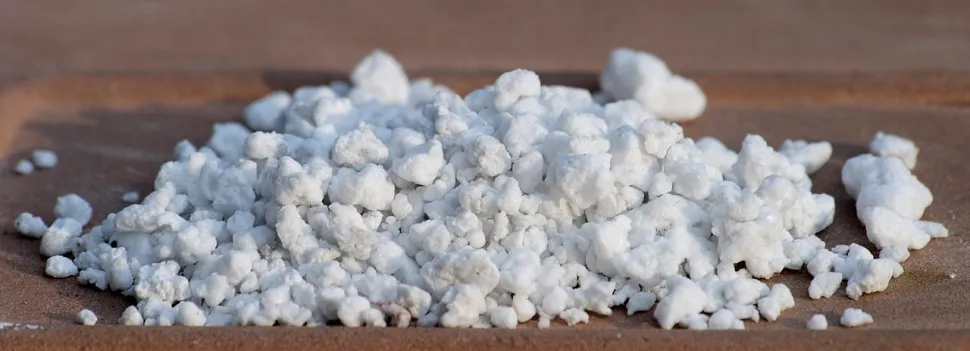
Perlite is suitable for almost all plants. Photo by Ragesoss / Wikipedia
Perlite is a light, porous volcanic rock. When mixed with potting soil, it improves drainage and aerates the substrate. You can add some when repotting to prevent root rot.
The proportion depends on your plant's needs. For most houseplants, you can mix one-third perlite to two-thirds potting compost.
#6: Empty the planter after each watering
Empty the water stagnating in the planter or saucer after each watering. Excess water rises by capillary action, creating a constantly damp environment for the roots and encouraging rotting.
By Servane Nemetz
the 19-12-2025 à 22h54
the 19-12-2025 à 22h54
Article tags


 In the same category
 Newsletter
Indoor plantsOutdoor plants
Latest articles
Seaside garden: which spray-resistant plants to plant?
Living in a house with a garden by the sea is like being on vacation all year round. But not for your plants! Between the sea spray that burns the leaves, the wind that blows r...
Living in a house with a garden by the sea is li...
Vegetable gardening: 10 mistakes that ruin your harvests
What if having a profitable vegetable garden wasn't just a question of varieties and the lunar calendar? Whether you have a vegetable garden in your backyard or a few pots on y...
What if having a profitable vegetable garden was...
Vegetable garden on a balcony: how to create a productive vegetable garden in the city?
Apartment gardening isn't just about growing houseplants. If you have a balcony, even if it's only 2 or 3 m², you can turn it into a vegetable garden and harvest your own tomat...
Apartment gardening isn't just about growing hou...
Vegetable gardening: 10 mistakes that ruin your harvests
What if having a profitable vegetable garden wasn't just a question of varieties and the lunar calendar? Whether you have a vegetable garden in your backyard or a few pots on y...
What if having a profitable vegetable garden was...
Vegetable garden on a balcony: how to create a productive vegetable garden in the city?
Apartment gardening isn't just about growing houseplants. If you have a balcony, even if it's only 2 or 3 m², you can turn it into a vegetable garden and harvest your own tomat...
Apartment gardening isn't just about growing hou...
How to get rid of aphids efficiently and naturally?
Gardening means having a long list of enemies. Among the most formidable and frequent are aphids. Tiny but voracious, these insects relentlessly attack your plants' sap, weaken...
Gardening means having a long list of enemies. A...