The kiwi, Actinidia chinensis
Actinidia chinensis
- Exposures
- Sun, Half-shade
- Hardiness (USDA)
- 8b (-9.4°C ≤ T° < -6.7°C)
- Lifecycle
- Perennial
- Foliage
- Deciduous
- Family
- Actinidiaceae
- Genus
- Kiwi Actinidia
- Species
- Kiwi Actinidia chinensis
Whether green or yellow, the kiwi belongs to the species Actinidia chinensis. This plant, native to China and often grown for its fruit, is also a vigorous vine that can cover a wall, arbor, or trellis during the warmer months.
How to identify the kiwi, Actinidia chinensis?
The kiwi (Actinidia chinensis) is a perennial plant with a climbing or creeping habit. It grows up to ten meters tall and five meters wide. Its vines can exceed ten meters in length in mature plants.
The woody branches climb their support using tendrils. Young shoots are covered with fine hairs.
The deciduous leaves are borne on a long petiole, which may also be hairy. Oval, almost heart-shaped, they are a bright green with prominent veins. Young shoots are covered with hairs.
The flowers have five to six petals. White, pale yellow, or golden in color, they bloom in clusters from May through June. Kiwi plants are dioecious. A single plant bears either female flowers—which are larger—or male flowers. Two plants of different sexes are therefore necessary to produce fruit.
The fruit, called a kiwi, grows on female plants. This cylindrical berry, no larger than an egg, weighs up to 100 g. The thin, brown, hairy skin encloses green or yellow fleshand numerous dark seeds.
Which kiwi varieties should you grow in your garden?
When choosing kiwis to grow in your garden, you have the following options:
- the yellow kiwi (Actinidia chinensis var. Chinensis);
- green kiwi (Actinidia chinensis var. Deliciosa).
Both have juicy, tangy flesh—yellow in the former, green in the latter. The main difference lies in the seeds: the green kiwi contains more of them. However, the seeds are edible in both varieties.
The choice of kiwi variety to grow depends largely on the space you have available. If you have limited space, opt for the self-fertile varieties available in stores. This way, a single plant will be enough to produce fruit. You can also plant only self-fertile plants and harvest kiwis from each one.
If you have a large garden or vegetable patch, plant four female plants for every male plant. The fruit will be larger than that of a self-fertile variety.
Here are some examples of varieties commonly found at nurseries and garden centers:
- 'Hayward': a female green kiwi that produces large fruit;
- 'Soreli': a female yellow kiwi with very sweet, low-acid fruit;
- 'Tomuri': a male kiwi used as a companion to 'Hayward';
- 'Golden Delight': a male yellow kiwi;
- 'Solo': a self-fertile green kiwi variety;
- 'Solissimo': a self-fertile green kiwi that produces 4-cm fruits;
- 'Herma': a self-fertile variety that produces large green kiwis.
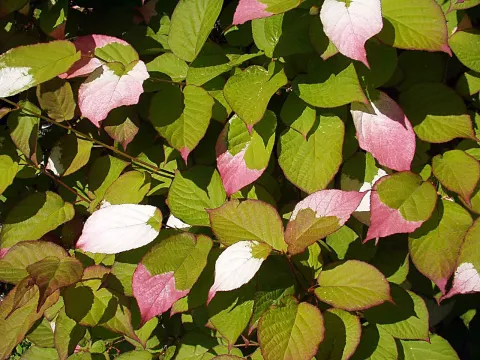
Finally, if you're looking for a kiwi with decorative foliage, actinidia kolomikta, with its pink-variegated leaves, should be just what you're looking for.
Is the kiwi (Actinidia chinensis) poisonous?
The kiwi is not a toxic plant. The flesh is edible, but not the skin. Eating the skin can cause stomachaches and digestive problems.
However, the fruit contains a protein (actinidin) that can cause allergic reactions. It triggers swelling (of the mouth, lips, and tongue) and digestive problems in sensitive individuals. In the most severe cases, kiwi can cause anaphylactic shock.
Our care tips
Kiwis They bear their first fruit at two or three years of age. However, only plants that are eight years old or older produce a regular and abundant harvest.
 Watering
Let the soil dry out on the surface between waterings. Water your Kiwi with non-hard water, such as collected rainwater. To avoid water stress, make sure the water is at room temperature.
If you use a saucer or a planter, remove any standing water from the bottom. It may cause the roots to rot.
 Repotting
The Kiwi is a climbing plant. You should provide a stake or plant it near a support (pergola, wall, arbor, etc.).
If you've chosen a self-fertile variety, a single plant is sufficient. Otherwise, you'll need to plant one male plant and several female plants. A single male plant typically produces enough fruit to pollinate four female Actinidia chinensis.
Use a pot with drainage holes that is at least 30 cm in diameter for each plant. You can place clay pellets or small stones at the bottom to improve drainage. Fill the pot with all-purpose potting soil or citrus-specific potting mix. Leave a few centimeters free around the edge to create a watering basin.
Plant your Kiwi without burying the root collar. Firm the soil and water to encourage root growth.
 Fertilization
You can stimulate the growth of your plant during its growth phase, in spring and summer, with fertilizer.
Kiwis are greedy. Your harvest will be more abundant if you fertilize them with a special strawberry or fruit tree fertilizer.
 Harvest
ing begins in summer and lasts until the first frosts.
When the leaves begin to fall and the flesh of the fruit gives slightly when you press it with your fingers, you can harvest it.
Cut the stem above the fruit using a pair of scissors or pruning shears.
You can eat the fruit right after picking it or store it. If storing, place it in a basket or crate and keep it in a cool room at a temperature of about 5 °C.
 Pinch
Pinch off the fruit-bearing branches above the fourth leaf following the last cluster of fruit. You can do this by hand or use clean, sharp pruning shears.
Shoots that form during the summer can be pruned back to the second leaf. This final pruning helps the plant focus its resources on ripening the fruit and wood before winter sets in.
 Planting
Once the last spring frosts have passed, you can plant.
If you're planting a self-fertile variety, you can plant a single plant or only self-fertile plants. Otherwise, you must pair male and female Actinidia chinensis. A male plant produces enough flowers to pollinate four female plants. Place the male plant in the center and the female plants all around it, at a minimum distance of three meters.
Two weeks before planting, work the soil deeply. Loosen the soil, then remove weeds, stones, and root debris. Add compost or all-purpose potting mix to enrich the soil.
On planting day, soak the root ball of your Actinidia chinensis in water. Dig a hole slightly larger than the root ball. Set up your stake first so you don't damage the root system later.
Plant your Kiwi, taking care not to bury the root collar, which should be level with the surface. Finally, firm up the soil and water thoroughly to encourage good root establishment.
 Taking cuttings
Locate a semi-arched stem. Take a 10-15 cm section with at least 2 or 3 knots. Use a clean, sharp tool such as pruning shears.
Remove half the foliage at the bottom. Reduce the size of the leaves you keep by 50% to limit evapotranspiration.
Fill a pot with potting mix for seedlings and planting. Make a small hole with your finger or a pen. Moisten the soil, for example by misting it. Plant your cutting and gently pat the soil down to ensure it stays in place.
Actinidia chinensis cuttings root best under covered conditions. Place your pot in a mini-greenhouse, under a cloche, or cover it with a clear plastic bag.
Place your cuttings in a warm, sunny spot. The temperature should not drop below 20 °C. Ventilate daily to prevent rot and mist the soil with water to keep it moist.
Frequently asked questions
When should you harvest kiwis?
Kiwis are generally harvested from October to November, before the heavy frosts. The fruits are still firm at the time of harvest and then ripen at room temperature. Harvest them when the fruits have reached their full size and give slightly when pressed.
Do kiwis grow quickly?
Yes, the kiwi is a fast-growing vine that requires regular pruning. Under the right conditions (rich soil, sunlight, and regular watering), it can grow 2 to 4 meters per year. The first fruits usually appear after 3 to 5 years, depending on the variety and growing conditions.
Where should I plant a kiwi?
Plant the kiwi in full sun or light partial shade, in deep, fertile, well-drained, and cool soil. Choose a spot sheltered from cold winds, against a wall or a pergola. Provide a sturdy support, as this vine becomes vigorous over time.
Diseases / Threats
Information
- Lifecycle
- Perennial
- Foliage
- Deciduous
- Exposures
- SunHalf-shade
- Substrates
- Calcareous earthHumus soil
- Planting methods
- Open groundIn potsIn tubs
- Category
- Climber
- Tags
- Edible fruitHardy
- Origin
- East Asia
- Hardiness (USDA)
- 8b (-9.4°C ≤ T° < -6.7°C)
- Leaf color
- Dark green
- Flower colors
- WhiteYellowGolden
- Fruit colors
- Light greenYellowBrown
Discover plants from the same family
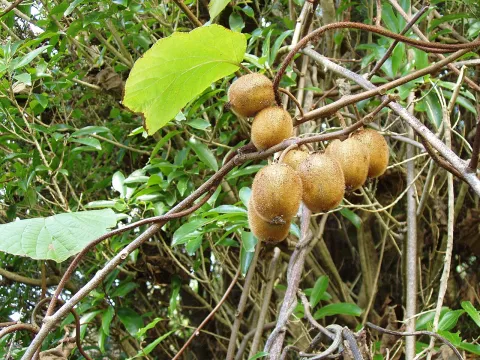
Green kiwi
Actinidia chinensis var. deliciosa
Find out more
Find all our tips in the Monstera application








