Sempervivum tectorum, roof houseleek
Sempervivum tectorum
- Exposures
- Sun, Half-shade
- Hardiness (USDA)
- 6a (-23.3°C ≤ T° < -20.6°C)
- Lifecycle
- Perennial
- Foliage
- Evergreen
- Family
- Crassulaceae
- Genus
- Houseleek Sempervivum
- Species
- Common houseleek Sempervivum tectorum
Sempervivum tectorum grows in the mountains of southern and eastern Europe. It has been cultivated since ancient times for its supposed magical powers. In the Middle Ages, it was planted on the roofs of houses to protect them from lightning. While there is no proof that the plant can withstand thunder and the wrath of Zeus, it does survive frost and temperatures as low as -25°.
How can you identify Sempervivum tectorum, the houseleek?
Sempervivum tectorum is a creeping succulent plant. When in bloom, it can reach a height of 50 centimeters.
The rosette of leaves measures five to fifteen centimeters wide. It consists of glaucous-green, lanceolate leaf blades with red tips and hairy margins. The rest of the leaf, which is fleshy and waxy, is hairless. The pattern of the fuzz helps distinguish houseleek from its cousins, cobweb houseleek and the Mountain Houseleek.
In summer, clusters of pink flowers bloom at the top of a flower stalk covered with scales. But the mountain houseleek blooms only once. It dies when flowering ends. Fortunately, it takes care to reproduce before withering. Each year, it produces up to 30 new rosettes of leaves along its stolons.
Sempervivum tectorum is said to have medicinal properties and magical powers. From corns on the feet to insomnia, burns, and impotence, the houseleek is said to cure all ailments. But it's best to refrain from playing the sorcerer's apprentice. The plant is said to contain substances that are toxic to animals if ingested.
Our care tips
Rooftop houseleeks These are easy-to-care-for outdoor plants. They just need a sunny spot and a well-draining substrate. They can thrive on a rooftop, in a crack in a low wall, or in a rock garden. You can also grow them in pots. There's just one rule to follow: don't mix them with other species, which might take over.
 Watering
Water only when the soil has completely dried out. Use room-temperature water with low calcium content, such as rainwater.
Water generously to allow the leaves to soak up the water. Make sure any excess water has drained away before replacing your Common Houseleek. If necessary, remove any water that has accumulated in the saucer or planter.
 Misting
Rooftop houseleeks grow in arid regions and do not like humidity. No need to spray them.
 Repotting
In spring, transfer your Sempervivum tectorum to a larger pot, so that it can continue to grow.
Obtain a pierced terracotta pot. Line the bottom with a layer of clay balls or gravel. This way, in the event of over-watering, your plant won't get its feet wet.
Add a mixture of garden soil (50%) and sand or pozzolan (50%). Plant your Common Houseleek in the center. Tamp and water to remove air bubbles.
 Prune
Remove dried leaf rosettes after flowering.
 Planting
Once the last spring frosts have passed, you can plant.
Choose a sunny, well-drained spot, such as the top of a slope. Loosen the soil by raking it. If your soil is compact, add sand, crushed pozzolan, or gravel to lighten it.
Dig a hole the size of the root ball and plant your Common Houseleek. Space the plants at least 20 centimeters apart to give the offshoots room to grow. Do not plant other, larger varieties nearby. They may cast shade and take over the entire space.
Pack down the soil and water to help the plant establish roots.
 Taking cuttings
Propagation by cuttings is carried out during the strong growth phase, generally in spring and early summer.
After a few years, young shoots appear at the base. With a sharp knife, dig up one of these "babies", also removing its roots.
Obtain a perforated pot. Add a layer of clay balls or gravel to the bottom for drainage.
Mix equal parts garden soil and sand or crushed pozzolan. Plant common Houseleek in the center. Tamp gently and water generously to encourage rooting.
Disease / Threat

Information
- Lifecycle
- Perennial
- Foliage
- Evergreen
- Exposures
- SunHalf-shade
- Substrates
- Calcareous earthHumus soilSandy soil
- Planting methods
- Open groundIn potsPlanter
- Categories
- RhizomeHerbaceousFloweryHanging plants
- Tags
- BeginnerFloweryHard to killHardyToxic
- Origins
- Eastern EuropeSouthern Europe
- Hardiness (USDA)
- 6a (-23.3°C ≤ T° < -20.6°C)
- Leaf color
- Glaucous green
- Flower color
- Rose
Discover plants from the same family

Cobweb houseleek
Sempervivum arachnoideum

Mountain houseleek
Sempervivum montanum

Ciliate houseleek
Sempervivum ciliosum
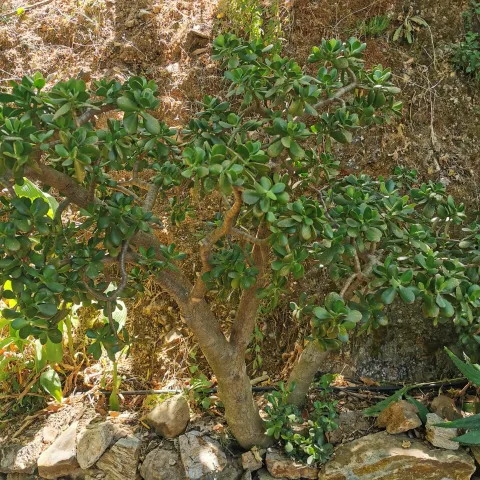
Jade tree
Crassula ovata
Find out more
Find all our tips in the Monstera application








