Sempervivum arachnoideum, spider's web houseleek
Sempervivum arachnoideum
- Exposures
- Sun, Half-shade
- Hardiness (USDA)
- 4b (-31.7°C ≤ T° < -28.9°C)
- Lifecycle
- Perennial
- Foliage
- Evergreen
- Family
- Crassulaceae
- Genus
- Houseleek Sempervivum
- Species
- Spider's web houseleek Sempervivum arachnoideum
Not all succulents grow at the other end of the world. Spider's web houseleek (in Latin, Sempervivum arachnoideum) lives in Europe, in the Alps and Pyrenees. Easy to care for, this member of the Crassulaceae family can be grown in the garden, in rock gardens or as ground cover.
How to recognize spider's web houseleek, Sempervivum arachnoideum?
Spider's web houseleek is a succulent plant with a bushy habit. It is short, growing to a height of no more than 15 cm when in flower.
The rosette of leaves measures no more than four centimetres in diameter. The fleshy leaf blades are green and pointed at the apex. Hundreds of white threads link the tips of the leaves together. Silky, they form a lace-like veil or spider's web. As with sempervivum ciliosum, they help retain moisture.
Sempervivum arachnoideum flowers in summer. Pink flowers bloom on 10-centimetre flower stalks. They have eight to ten petals with darker veins. After flowering, cobwebs die. But it takes the time to produce shoots to multiply.
Not all specialists agree. For some, it's harmless. For others, it is slightly toxic to animals and humans if ingested.
Our care tips
The cobweb houseleeks These are easy-to-care-for outdoor plants. They just need a sunny spot and a well-draining substrate. They can thrive on a rooftop, in a crack in a low wall, or in a rock garden. You can also grow them in pots. There's just one rule to follow: don't mix them with other species, which might take over.
 Watering
Only water your Cobweb houseleek when the substrate is dry. If you're not sure what your plant needs, observe it: when it's thirsty, its leaves become hollow and stunted.
Avoid tap water, which is often too hard. Instead, use room-temperature rainwater or demineralized water.
Thirty minutes after watering, empty any stagnant water from the saucer or planter to prevent root rot.
 Misting
The cobweb houseleeks grow in arid regions and do not like humidity. No need to spray them.
 Repotting
In spring, transfer your Sempervivum arachnoideum to a larger pot, so that it can continue to grow.
Obtain a pierced terracotta pot. Line the bottom with a layer of clay balls or gravel. This way, in the event of over-watering, your plant won't get its feet wet.
Add a mixture of garden soil (50%) and sand or pozzolan (50%). Plant your Cobweb houseleek in the center. Tamp and water to remove air bubbles.
 Prune
Remove dried leaf rosettes after flowering.
 Planting
Once the last spring frosts have passed, you can plant.
Choose a sunny, well-drained spot, such as the top of a slope. Loosen the soil by raking it. If your soil is compact, add sand, crushed pozzolan, or gravel to lighten it.
Dig a hole the size of the root ball and plant your Cobweb houseleek. Space the plants at least 20 centimeters apart to give the offshoots room to grow. Do not plant other, larger varieties nearby. They may cast shade and take over the entire space.
Pack down the soil and water to help the plant establish roots.
 Taking cuttings
Propagation by cuttings is carried out during the strong growth phase, generally in spring and early summer.
Take the shoots that form at the base of your Cobweb houseleek. The larger they are, the greater the chances of success. Choose shoots with several leaves.
Cut off the new plant and its roots with a clean, sharp blade.
Obtain a perforated pot. Add a layer of clay balls or gravel to the bottom for drainage.
Mix equal parts garden soil and sand or crushed pozzolan. Plant cobweb houseleek in the center. Tamp gently and water generously to encourage rooting.
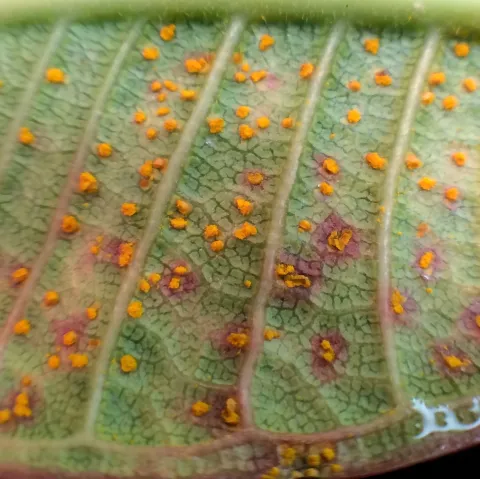
Disease / Threat
Information
- Lifecycle
- Perennial
- Foliage
- Evergreen
- Exposures
- SunHalf-shade
- Substrates
- Calcareous earthHumus soilSandy soil
- Planting methods
- Open groundIn potsPlanter
- Categories
- RhizomeHerbaceousSucculent
- Tags
- BeginnerFloweryHard to killHardyToxic
- Origin
- Southern Europe
- Hardiness (USDA)
- 4b (-31.7°C ≤ T° < -28.9°C)
- Leaf color
- Light green
- Flower color
- Rose
Discover plants from the same family

Mountain houseleek
Sempervivum montanum

Ciliate houseleek
Sempervivum ciliosum

Common Houseleek
Sempervivum tectorum
Jade tree
Crassula ovata
Find all our tips in the Monstera application








