Rhipsalis pilocarpa, the mistletoe cactus
Rhipsalis pilocarpa
- Exposure
- Half-shade
- Hardiness (USDA)
- 11a (4.4°C ≤ T° < 7.2°C)
- Lifecycle
- Perennial
- Foliage
- Evergreen
- Family
- Cactaceae
- Genus
- Rhipsalis
- Species
- Mistletoe cactus Rhipsalis pilocarpa
Other names:Erythrorhipsalis pilocarpa, Rhipsalis pilocarpa f. minima
Rhipsalis pilocarpa falls somewhere between Shrek's hairy grandfather and Cousin So-and-so who's dyed his hair. Native to Brazil, the cactus-mistletoe actually belongs to the Cactaceae family. In our part of the world, it's grown indoors and as a hanging plant.
How can you recognize the cactus-mistletoe, Rhipsalis pilocarpa?
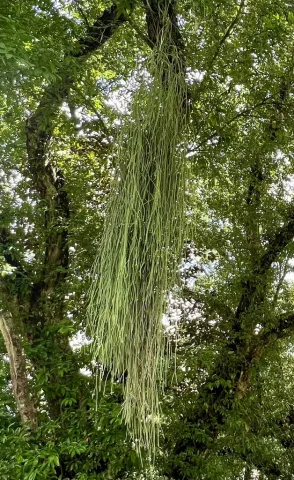
A succulent plant with a trailing habit, Rhipsalis pilocarpa can reach 60 centimeters in height and the same span.
The cactus-mistletoe is an epiphyte. Its root system remains shallow, even in mature plants. Its roots are used primarily to cling to the trees on which it grows, without, however, parasitizing them.
The green stems can grow several tens of centimeters long and branch out. They are divided into fleshy, rounded segments. While the stems of Rhipsalis paradoxa are hairless, this is not the case for Rhipsalis pilocarpa. Young shoots are adorned with spines, and the branches, regardless of their age, are covered with white hairs.
The star-shaped flowers are white, sometimes yellow. They appear at the tips of the stems in late fall or early winter.
The plant then produces spherical berries that are white, slightly pinkish, or red. They measure no more than seven millimeters in diameter. Their resemblance to mistletoe berries has earned Rhipsalis pilocarpa the nickname “mistletoe cactus.”
But the similarities end there. Unlike mistletoe, Rhipsalis pilocarpa is not toxic to humans or pets. It poses no danger if ingested or touched.
Our care tips
Rhipsalis pilocarpa may be a cactus, but its needs are different from those of other succulents. It likes humidity, appreciates a spot in partial shade and can't stand overheated interiors. Grow it in a veranda or room with a temperature between 15 and 25°C.
 Watering
Water your plant generously during the growing season.
Rhipsalis pilocarpa like to keep feet cool. Keep the substrate moist, especially in summer, watering as soon as the soil dries on the surface (by less than a centimetre).
Always use rainwater at room temperature. It's non-calcareous and provides the plant with the nutrients it needs to thrive.
Reduce watering during dormancy.
Feed your Mistletoe cactus only when the substrate has dried thoroughly (at least five centimeters). Water generously with room-temperature rainwater and let the excess run off through the drainage holes.
Drain off any stagnant water in the dish or planter. It will rot the roots.
 Misting
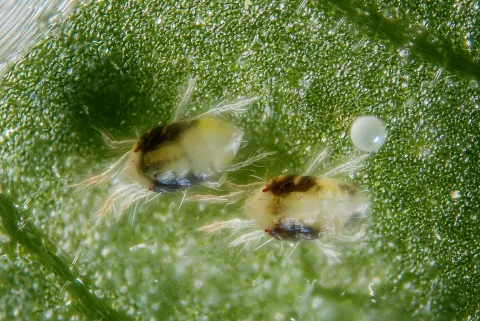
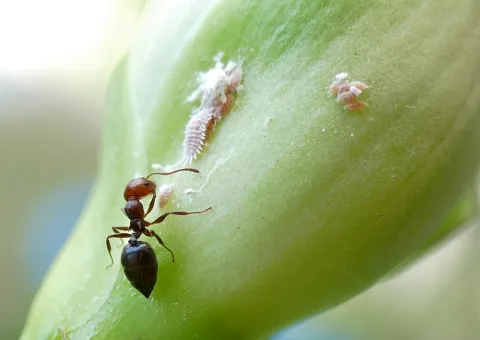
Dry air favors the appearance of mites and other pests. Mist the foliage of your Mistletoe cactus to prevent invasions and improve hygrometry.
Use non-calcareous water, such as reclaimed rainwater. Tap water is often too hard and leaves marks on the leaves.
 Repotting
Every year in the spring, repot your Rhipsalis pilocarpa to give it more space.
Choose a shallow, pierced pot with a larger diameter than the previous one. Rhipsalis pilocarpa are epiphytes, their roots are superficial.
Fill the bottom of the pot with potting soil for cacti and succulents. If you don't have any, you can use a mixture of houseplant potting soil and perlite.
Plant your Mistletoe cactus in the center and add substrate. Tamp gently and water generously to encourage rooting.
 Cleaning
The pages may collect dust. If you choose to clean them, gently dust them with a clean, damp cloth.
 Prune
Mulch the base of your Rhipsalis pilocarpa to protect it from the cold. Preferably use organic matter. As it decomposes, it enriches the soil.
 Taking cuttings
Propagation by cuttings is carried out during the strong growth phase, generally in spring and early summer.
Locate a healthy stem without flowers or fruit. Using clean, sharp pruning shears, cut a section at least ten centimetres long. Cut at a node, where two items meet.
Leave your cuttingto dry for 48 hours, until a callus forms.
Fill a perforated pot with potting soil for cacti and succulents.
Make a hole and plant your Mistletoe cactus. Several cuttings can be placed in the same pot to create a fuller plant.
Keep the substrate moist until growth resumes, to encourage rooting.
Diseases / Threats
Information
- Lifecycle
- Perennial
- Foliage
- Evergreen
- Exposure
- Half-shade
- Substrates
- Humus soilSandy soil
- Planting method
- In pots
- Categories
- IndoorHerbaceousSucculentHanging plants
- Tags
- BeginnerCold-sensitive
- Origin
- South America
- Hardiness (USDA)
- 11a (4.4°C ≤ T° < 7.2°C)
- Leaf color
- Dark green
- Flower colors
- WhiteYellow
- Fruit colors
- WhitePale pink
Discover plants from the same family
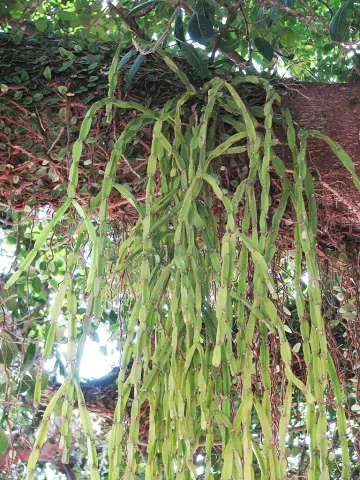
Coral cactus
Rhipsalis cereuscula

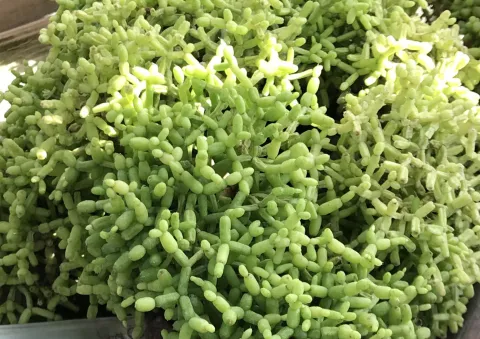
Christmas cactus
Schlumbergera truncata
Find out more
Find all our tips in the Monstera application








