Rhipsalis cereuscula, the coral cactus
Rhipsalis cereuscula
- Exposure
- Half-shade
- Hardiness (USDA)
- 10a (-1.1°C ≤ T° < 1.7°C)
- Lifecycle
- Perennial
- Foliage
- Evergreen
- Family
- Cactaceae
- Genus
- Rhipsalis
- Species
- Coral cactus Rhipsalis cereuscula
Other names:Erythrorhipsalis cereuscula, Hariota cereuscula
Not all cacti grow in arid deserts! Rhipsalis cereuscula, a plant in the Cactaceae family also known as the coral cactus, comes from the tropical forests of Bolivia and Brazil.
How can you recognize Rhipsalis cereuscula, the coral cactus?
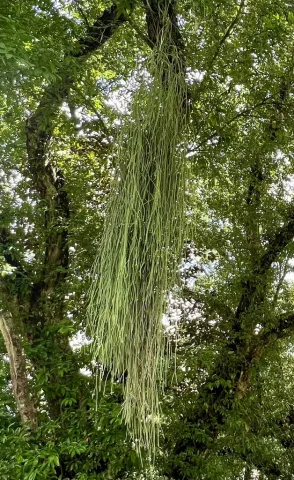
Rhipsalis cereuscula measures 60 centimeters in height and width. This epiphytic succulent has a compact, trailing growth habit.
The cylindrical stems grow up to 90 centimeters long. They start out growing straight upward and eventually droop as they lengthen. They are divided into segments and form a bulge where two sections meet. Because of this distinctive feature, which resembles underwater reefs, Rhipsalis cereuscula is nicknamed the “coral cactus.”
The segments are smooth and hairless, as in rhipsalis baccifera. They have neither hairs nor spines. Only white pits accentuate the green color of the segments. And when the plant is cold, the tips of the stems turn red.
The white flowers bloom in clusters at the tips of the stems. They are bell-shaped and contain white stamens.
They are replaced by round, translucent berries that are white or pinkish. The fruits measure less than one centimeter in diameter but contain numerous seeds.
Rhipsalis cereuscula is not toxic. The coral cactus poses no risk to humans or pets if ingested or touched.
Our care tips
Rhipsalis cereuscula may be a cactus, but its needs are different from those of other succulents. It likes humidity, appreciates a spot in partial shade and can't stand overheated interiors. Grow it in a veranda or room with a temperature between 15 and 25°C.
 Watering
Water your plant generously during the growing season.
The plant should be watered when the surface of the root ball is dry (about one centimeter deep). Water with non-calcareous room-temperature water, such as rainwater or demineralized water.
To prevent root rot, never leave standing water in the saucer or at the bottom of the planter.
To prevent root rot, never leave standing water in the saucer or at the bottom of the planter.
Reduce watering during dormancy.
When the soil is dry on the surface, for about five centimetres, water generously, but without flooding the pot. Use non-calcareous water, such as rainwater. If you don't have any, you can use tap water that has been left to stand for 24 hours. Always ensure that the water is at room temperature.
As with most plants, stagnant water causes roots to rot. If your Coral cactus pot is on a saucer, empty it after watering. If your plant is too large to be moved, raise the pot above the saucer (by placing it on gravel or clay balls) or remove the saucer.
 Misting
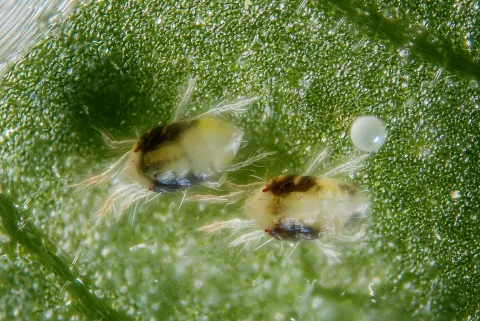
Spray foliage with non-calcareous water at room temperature. This increases humidity, prevents pest attacks and repels dust.
 Repotting
In spring, transfer your Rhipsalis cereuscula to a larger pot, so that it can continue to grow.
Choose a shallow, pierced pot with a larger diameter than the previous one. Rhipsalis cereuscula are epiphytes, their roots are superficial.
Fill the bottom of the pot with potting soil for cacti and succulents. If you don't have any, you can use a mixture of houseplant potting soil and perlite.
Plant your Coral cactus in the center and add substrate. Tamp gently and water generously to encourage rooting.
 Cleaning
To promote photosynthesis, remove any dust that accumulates on the leaves with a feather duster or a clean, damp cloth.
 Prune
Remove wilted flowers. If you can't cut the flower stem with your hands, you can use pruning shears. Remember to clean your tool beforehand to prevent disease transmission.
 Taking cuttings
Propagation by cuttings is carried out during the strong growth phase, generally in spring and early summer.
Section a branch about ten centimeters long, containing two to three articles and no buds. Cut with a clean tool where the two sections meet.
Leave your cutting to dry for a day to allow the wound to heal.
Fill a perforated pot with potting soil for cacti and succulents.
Make a hole and plant your Coral cactus. Several cuttings can be placed in the same pot to create a fuller plant.
Keep the substrate moist until growth resumes, to encourage rooting.
Diseases / Threats
Information
- Lifecycle
- Perennial
- Foliage
- Evergreen
- Exposure
- Half-shade
- Substrates
- Humus soilSandy soil
- Planting method
- In pots
- Categories
- IndoorHerbaceousSucculentHanging plants
- Tags
- BeginnerCold-sensitive
- Origin
- South America
- Hardiness (USDA)
- 10a (-1.1°C ≤ T° < 1.7°C)
- Leaf color
- Dark green
- Flower color
- White
- Fruit colors
- WhiteRose
Discover plants from the same family
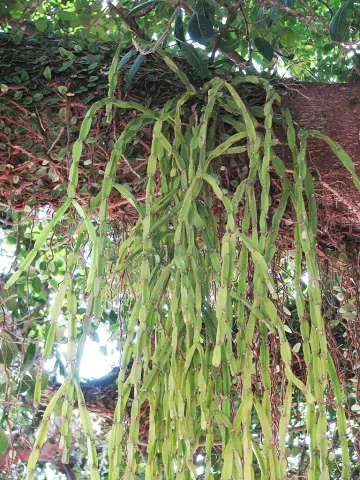
Mistletoe cactus
Rhipsalis pilocarpa

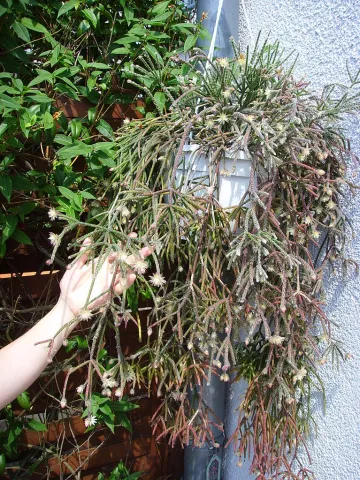
Christmas cactus
Schlumbergera truncata
Find out more
Find all our tips in the Monstera application








