These plants with incredible graphic foliage
Article for :All plant parents
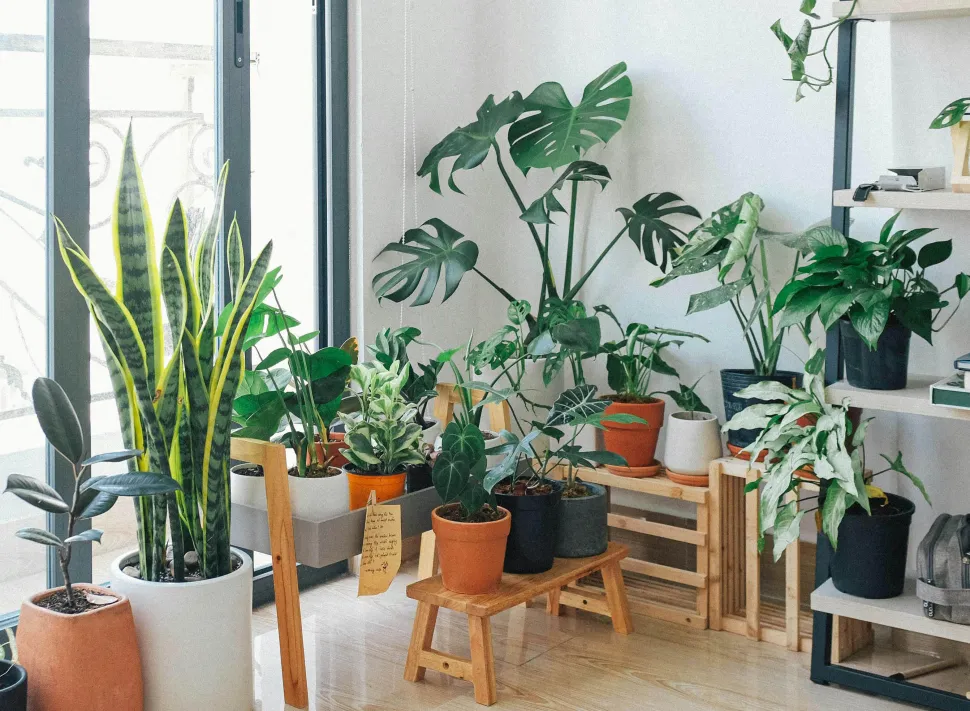
Article summary
- #1 Begonia rex
- #2 The Caladium bicolor
- #3 Mother-in-Law's Tongue (Sansevieria trifasciata)
- #4 Monstera variegata
- #5 Alocasia cuprea
- #6 Syngonium wendlandii
- #7 Calathea orbifolia (Goeppertia orbifolia)
- #8 Philodendron 'Pink Princess'
- #9 Aglaonema commutatum
- #10 Calathea ornata (Goeppertia ornata)
- #11 Begonia maculata 'Wightii'
- #12 Anthurium clarinervium
- #13 Zebra Spider Plant (Tradescantia zebrina)
- #14 Cissus discolor
- #15 Crassula 'Buddha's Temple'
- #16 Croton (Codiaeum variegatum)
- #17 Maranta leuconeura 'Fascinator'
- #18 Ficus elastica 'Tineke'
- #19 The Jewel Orchid (Ludisia discolor)
- #20 Macodes petola
- #21 Peperomia clusiifolia
- #22 The Freckled Plant (Hypoestes phyllostachya)
- #23 The ZZ Raven Plant (Zamioculcas zamiifolia 'Raven')
- #24 Pothos 'Neon' (Epipremnum aureum 'Neon')
- #25 Four-Leaf Clover (Oxalis tetraphylla)
- #26 Schefflera actinophylla (Heptapleurum actinophyllum)
- #27 Florist's Asparagus (Asparagus setaceus)
If you're passionate about interior design and would like to give your home a contemporary touch but can't afford a designer piece, head to your favorite florist. With our selection of shrubs and plants featuring striking foliage, just a few dozen euros is all it takes to give your living room a makeover and expand your collection.
#1 Begonia rex
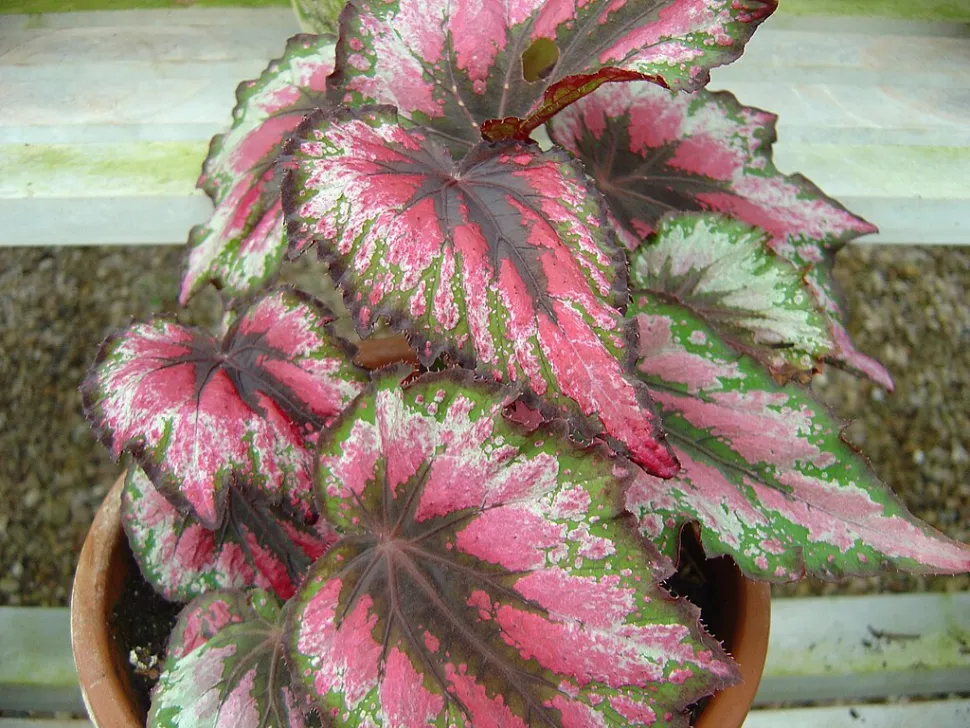
With its green and pink leaves, the 'Zurich' cultivar isn't half bad either – Photo by Mininain / Wikipedia
All Begonia rex varieties feature very striking foliage. It's hard to choose between the contrast of green and black on the leaves of Begonia 'Beleaf' and the soft hues of pink and pale green on the leaves of Begonia 'Maui Sunset'.
The colorful foliage of Rex begonia comes at a price! The plant is delicate and cannot tolerate overwatering. To avoid killing yours, wait until the substrate has dried out to a depth of at least three centimeters. Then water sparingly, so as not to drown the delicate roots.
#2 The Caladium bicolor
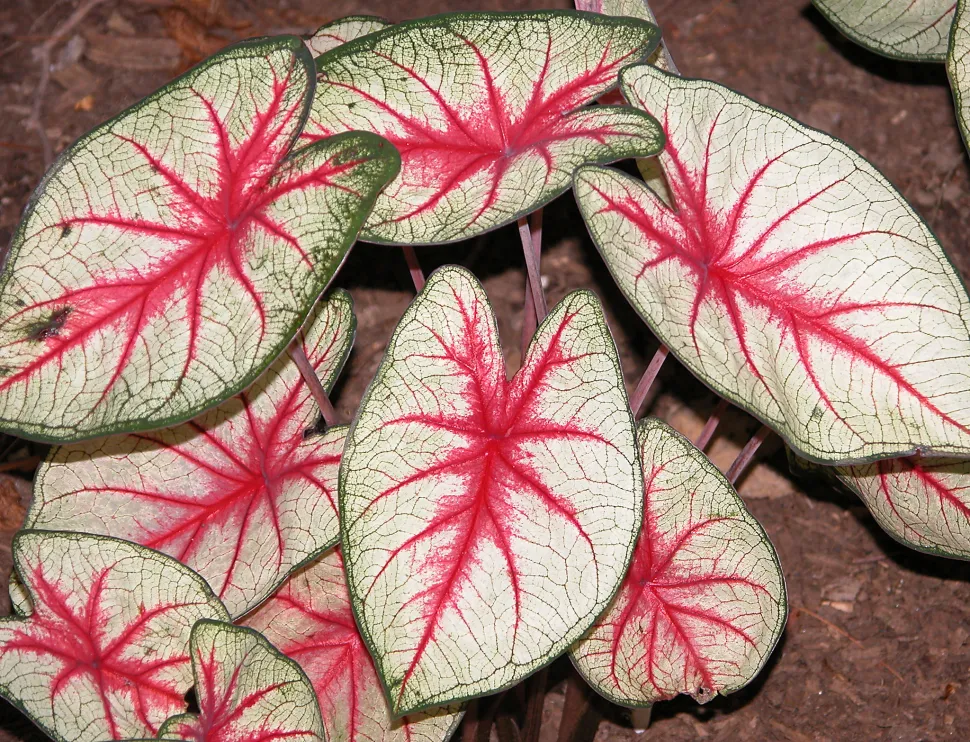
I promise, this plant really exists. It's not an AI-generated image – Photo by Carl E. Lewis / Flickr
White, pink, or green. With regular patterns or Jackson Pollock-style splatters… There are bicolor Caladiums to suit every taste. But they all share the same delicacy, which gives their foliage an otherworldly look.
Unfortunately, you can't decorate your apartment with Caladiums all year round. In the fall and winter, these plants go dormant. All that's left are the bulbs, which you should keep dry and out of direct sunlight.
#3 Mother-in-Law's Tongue (Sansevieria trifasciata)

Finally, a plant with striking foliage that's perfect for beginners – Photo by Carlos Ebert / Flickr
With snake plants everywhere, it's easy to forget just how striking and stylish they are. Their long green leaves edged in yellow add color and vertical interest to both bright spaces and dark corners.
Sansevieria trifasciata is incredibly hardy. It survives in the shade and with very little water. But that's no reason to neglect it! Download the Monstera app and follow our care tips to give it optimal growing conditions.
#4 Monstera variegata
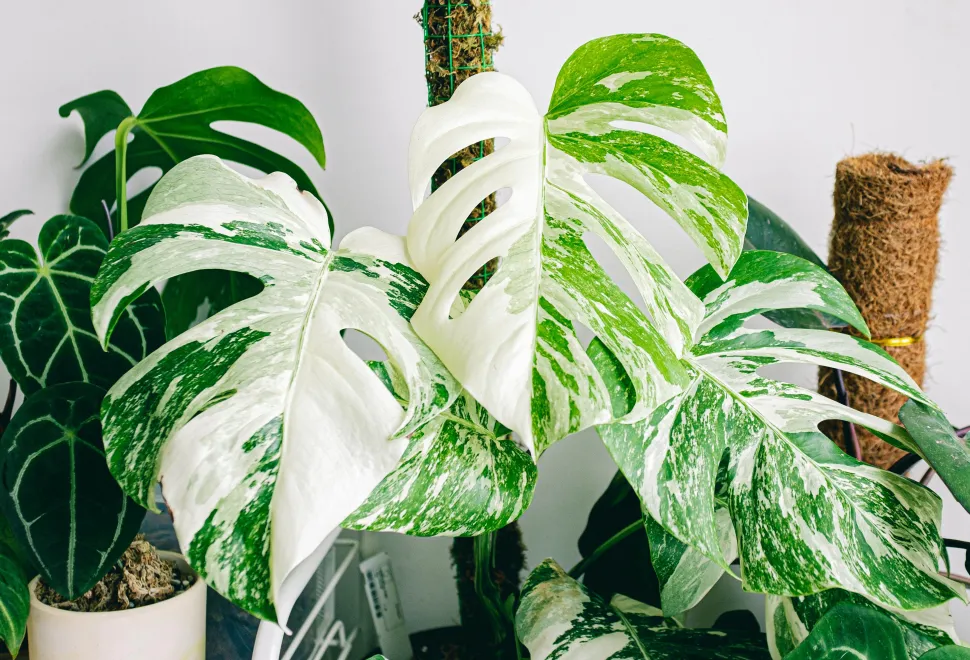
A classic that never goes out of style, the Monstera Variegata continues to win over fans – Photo by Huy Phans / Pexels
A staple of modern, minimalist interiors, the Monstera deliciosa comes in a variety with even more striking foliage: monstera deliciosa variegata. Its green, perforated leaves are accented with white variegation.
Over time, dust accumulates on the leaves. Be sure to clean them with a soft, clean, damp cloth. This will allow the plant to receive more light, and you'll be able to fully enjoy its variegated foliage.
#5 Alocasia cuprea
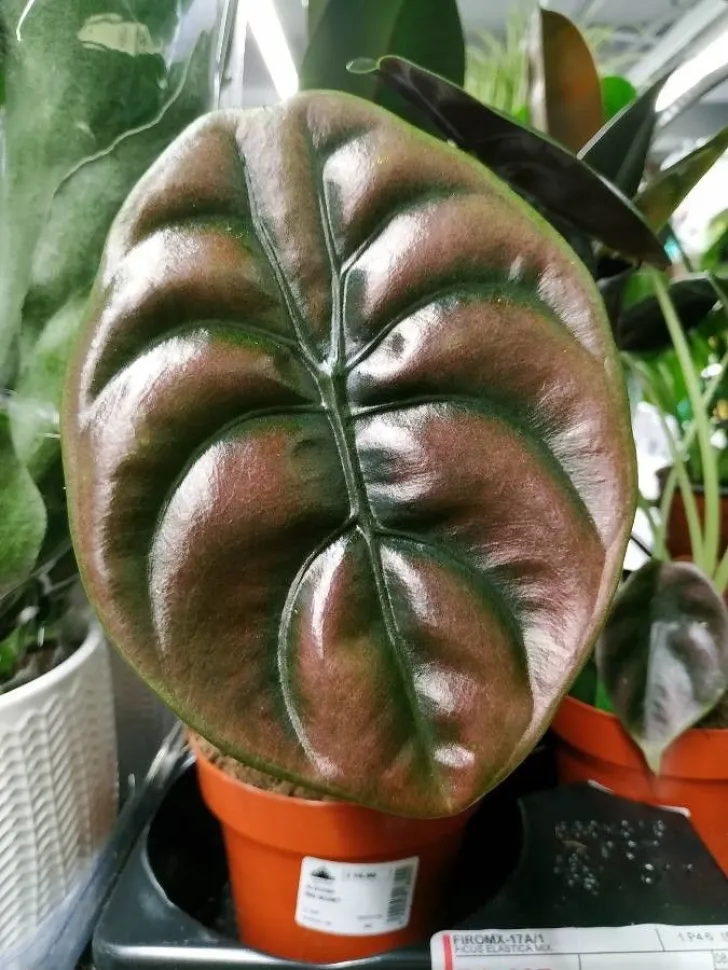
Growing an Alocasia isn't exactly a walk in the park, but it's well worth the effort – Photo by Sabine Issanchou / Plantnet
The metallic-hued leaves of Alocasia cuprea are a real eye-catcher. Whether bronze, copper, or silver, they transform the plant into a sculpture with a luxurious look.
Alocasias are best suited for experienced gardeners. They require striking the perfect balance between watering, humidity, and sunlight. This variety thrives in indirect light for several hours a day during cooler periods. It will do well behind an east- or west-facing window, but not in the shade.
#6 Syngonium wendlandii
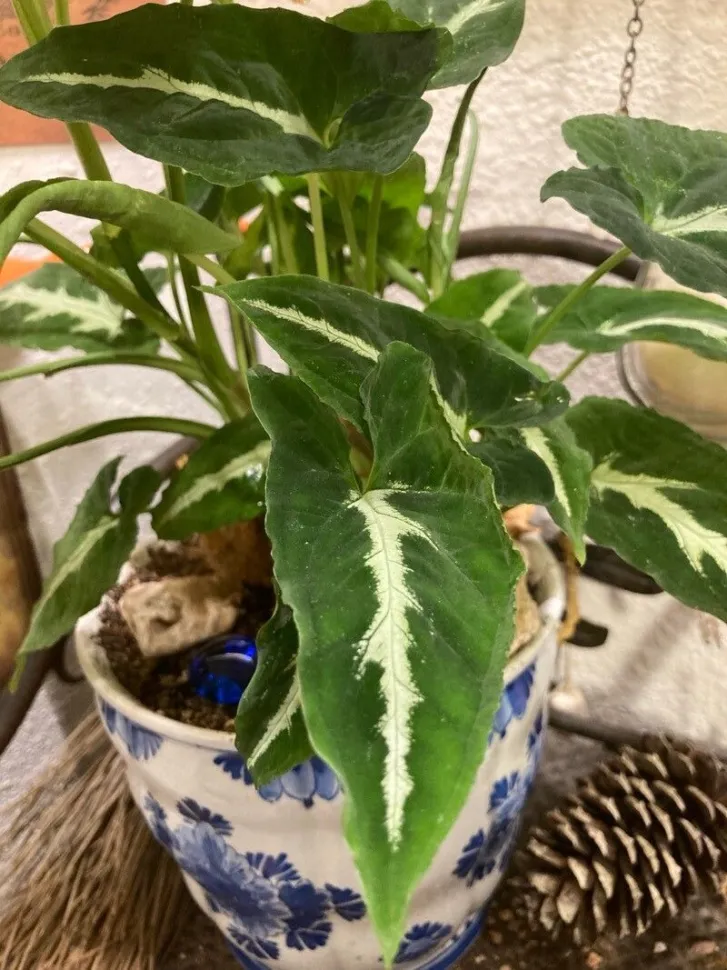
Syngonium wendlandii is sort of like Alocasia for beginners – Photo by Djinn Rickey / Plantnet
For anyone who loves green leaves with white veins but can't seem to keep an Alocasia alive, we have the solution: Syngonium wendlandii. This climbing plant has velvety, two-toned leaves that are just as spectacular.
However, syngonium wendlandii is much easier to grow! It needs watering when the substrate is dry on the surface, but it's forgiving of both missed waterings and overwatering—as long as you don't overdo it!
#7 Calathea orbifolia (Goeppertia orbifolia)
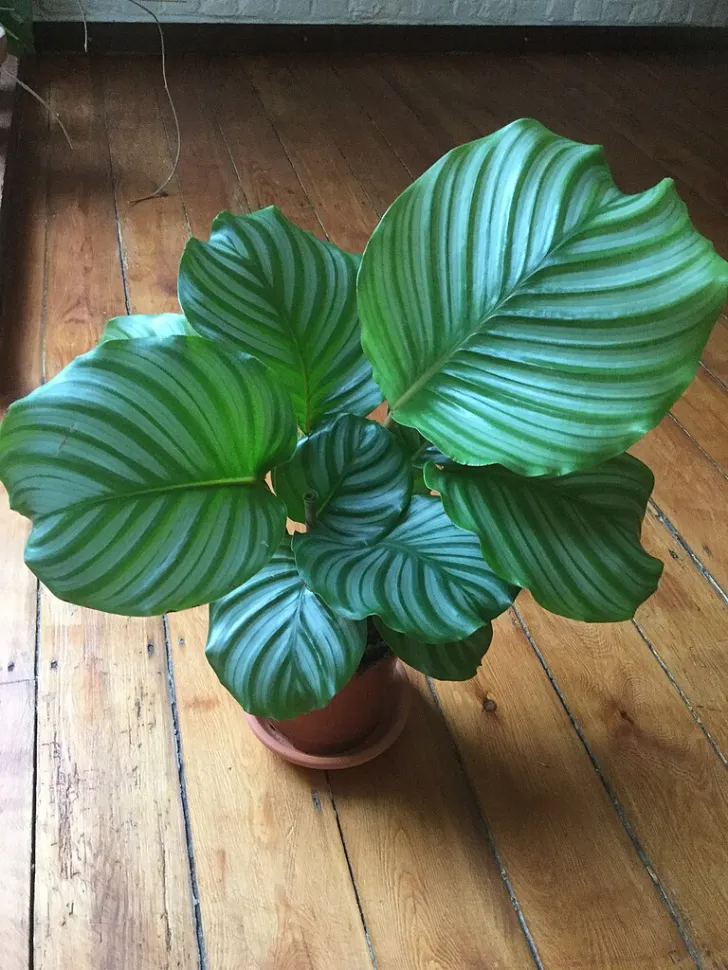
No need for furniture when you have a Calathea like this one – Photo by Fregisseur / Wikipedia
The leaves of Calathea orbifolia measure up to 30 centimeters in diameter. Yet their size isn't the first thing you notice! Light green in color, they're accented with dark green and silvery streaks.
Goeppertia orbifolia grows very slowly. If you want an impressive houseplant, buy a specimen that's already mature.
#8 Philodendron 'Pink Princess'
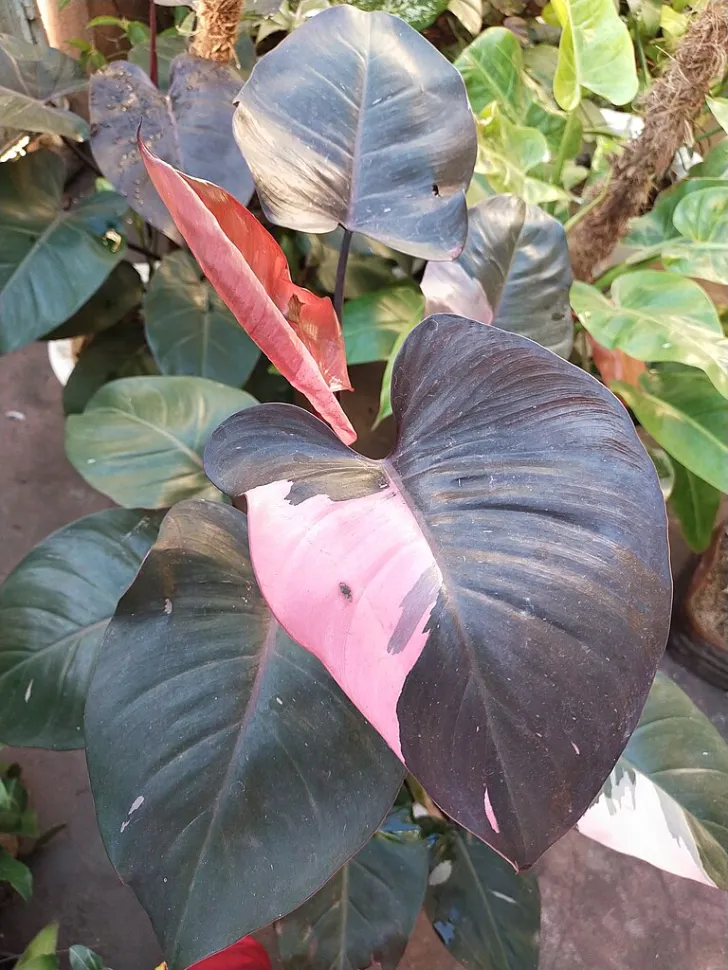
The Philodendron 'Pink Princess' is a hybrid of Philo hastatum and Philo erubescens – Photo by Srikandi73 / Wikipedia
Each leaf of the Philodendron 'Pink Princess' is unique. The pink and green hues create a new pattern every time. Some leaves are almost entirely green with just a single pink spot, while others are speckled, striped, or bicolored.
The vines of Philodendron erubescens 'Pink Princess' grow to nearly two meters in length. You can prune them in the spring using clean pruning shears. Also, pinch off the tips of the stems. This encourages the plants to branch out and helps maintain a compact shape.
#9 Aglaonema commutatum
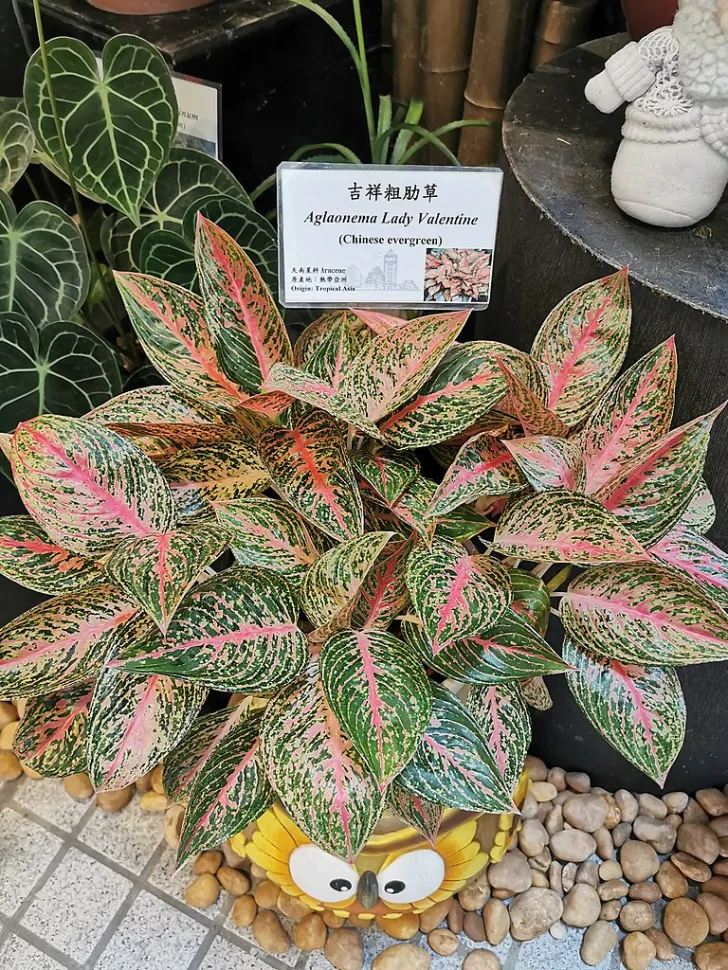
This variety is hard to find in stores, but you can purchase cuttings online – Photo by Ahmed / Wikipedia
With a look like that, it's no wonder that Aglaonema commutatum was chosen by Luc Besson to accompany the heroes of the movie *Léon*. In the wild, the botanical variety has green foliage. But some cultivars go all out with pink or silvery leaves. Our favorite? Aglaonema 'Lady Valentine' with its green leaves splashed with pink.
Striking, easy to care for, and suited to dimly lit interiors… chinese Evergreen is almost the perfect plant! Its downside? It's toxic to pets if ingested. Keep yours out of reach of your dog or cat.
#10 Calathea ornata (Goeppertia ornata)
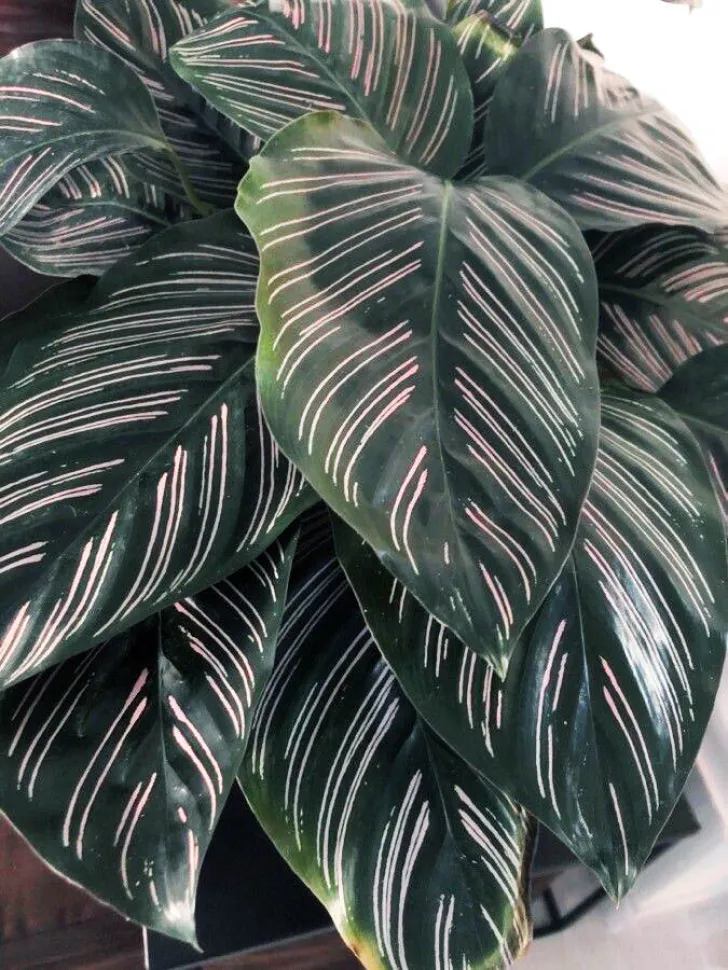
For a more subtle touch of pink, choose Calathea ornata… Photo by Philippe Pon / Plantnet
The delicate pale pink lines that adorn the foliage of Calathea ornata look as though they were painted by a patient and somewhat obsessive artist. They brighten up the deep green of the leaves.
The Goeppertia ornata is a tropical variety native to the forests of South America. It requires high humidity to thrive. You can perform misting on it or, better yet, place it in the shade of other plants in your collection.
#11 Begonia maculata 'Wightii'
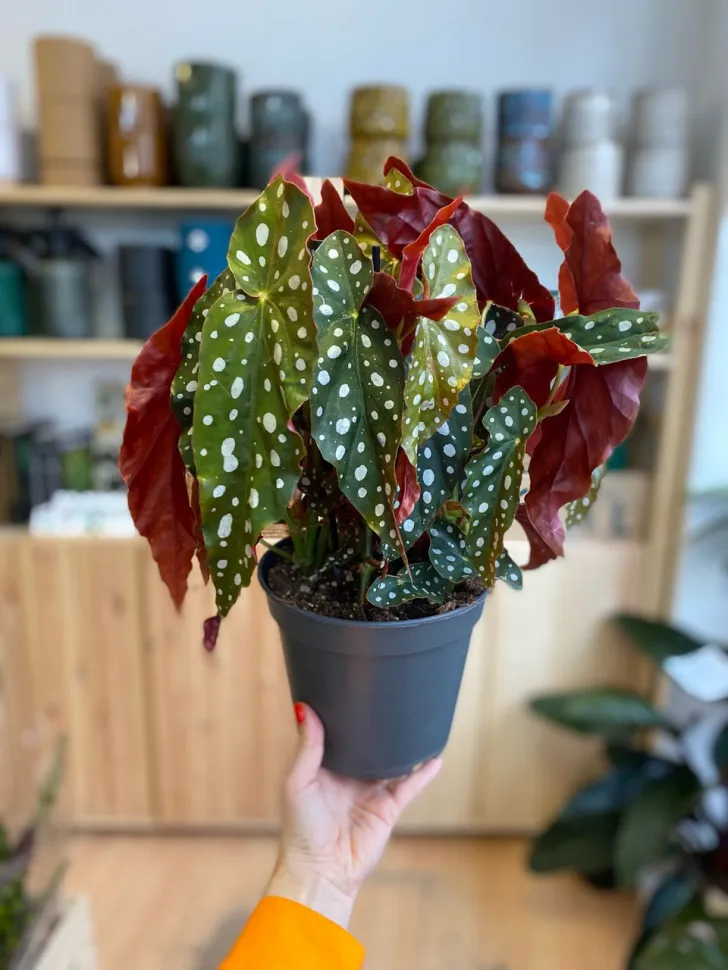
Polka dots offer a nice change from stripes and variegation – Photo by H. Kewell / Wikipedia
Another plant that seems to have come straight out of a painter's imagination: Begonia maculata 'Wightii'. Its green leaves, dotted with white or silvery spots, resemble a painting by Seurat or a work by Yayoi Kusama.
Indoors, Begonia maculata can be attacked by mealybugs. If you spot any pests on your plant, remove them with a cotton swab dipped in alcohol.
#12 Anthurium clarinervium
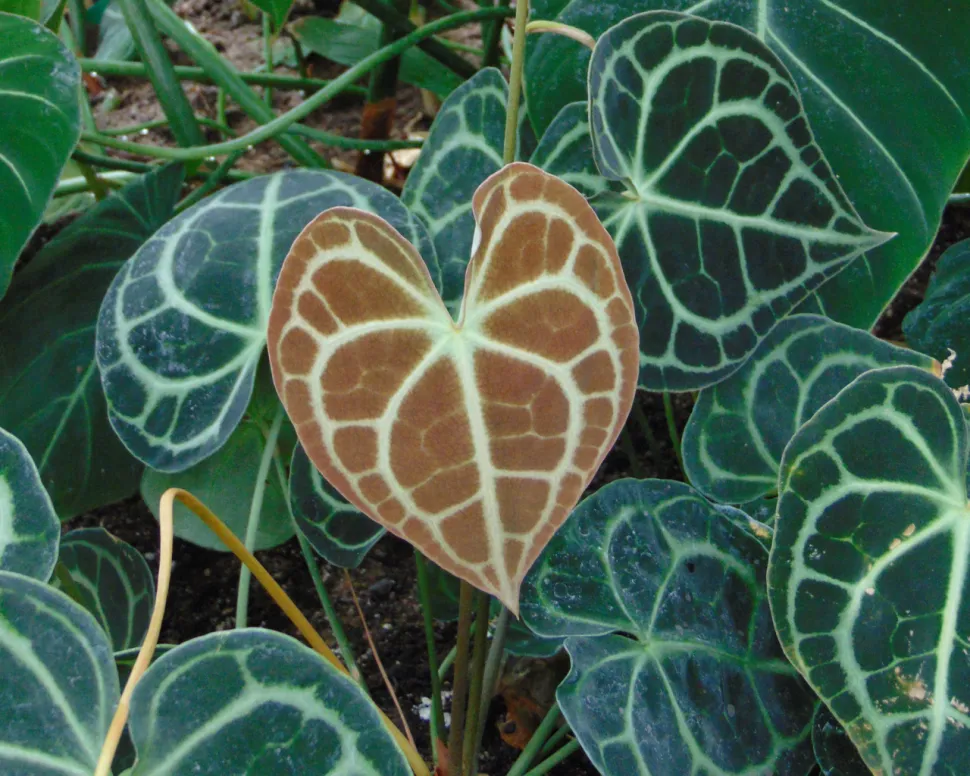
After a few weeks, the young leaves lose their golden color and turn green – Photo by Nadiatalent / Wikipedia
This particular Anthurium isn't grown for its flowers, but for its velvety, heart-shaped foliage. If you're already captivated by its dark green leaves with prominent veins, get ready to be blown away. When they first emerge, the young leaves are golden with white veins.
To encourage the growth of your Anthurium clarinervium, fertilize it with a fertilizer for houseplants between March and early fall. Follow the manufacturer's recommended dosage on the package to avoid damaging the foliage.
#13 Zebra Spider Plant (Tradescantia zebrina)
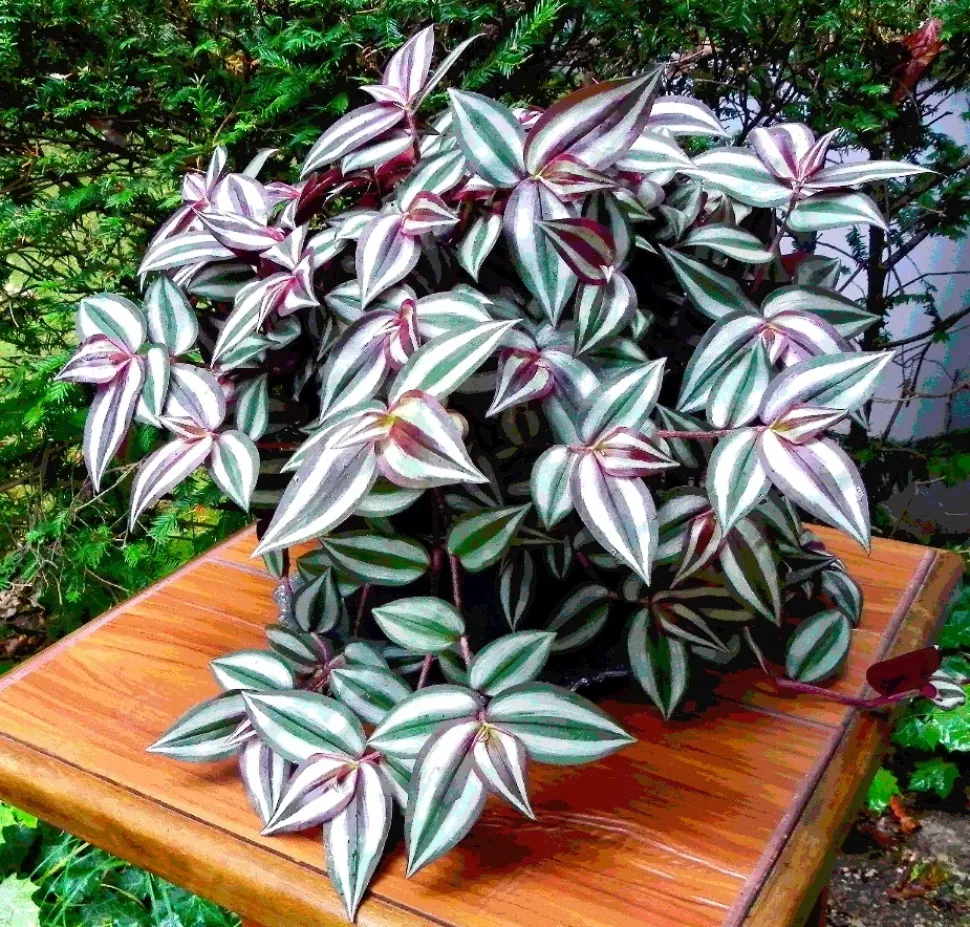
Who came up with the idea of giving such a beautiful plant such a grim name? Photo by T. Voekler / Wikipedia
The foliage of Tradescantia zebrina combines color and pattern. The dark green and purple leaf blades are crisscrossed with silvery lines.
The stems of Tradescantia zebrina tend to become spindly over time. To keep the plant full and bushy, propagate it from cuttings. Simply cut off the tip of a stem and replant it, either in the same pot or in a new one. This method works every time, as long as you do it in the spring and keep the potting mix moist.
#14 Cissus discolor
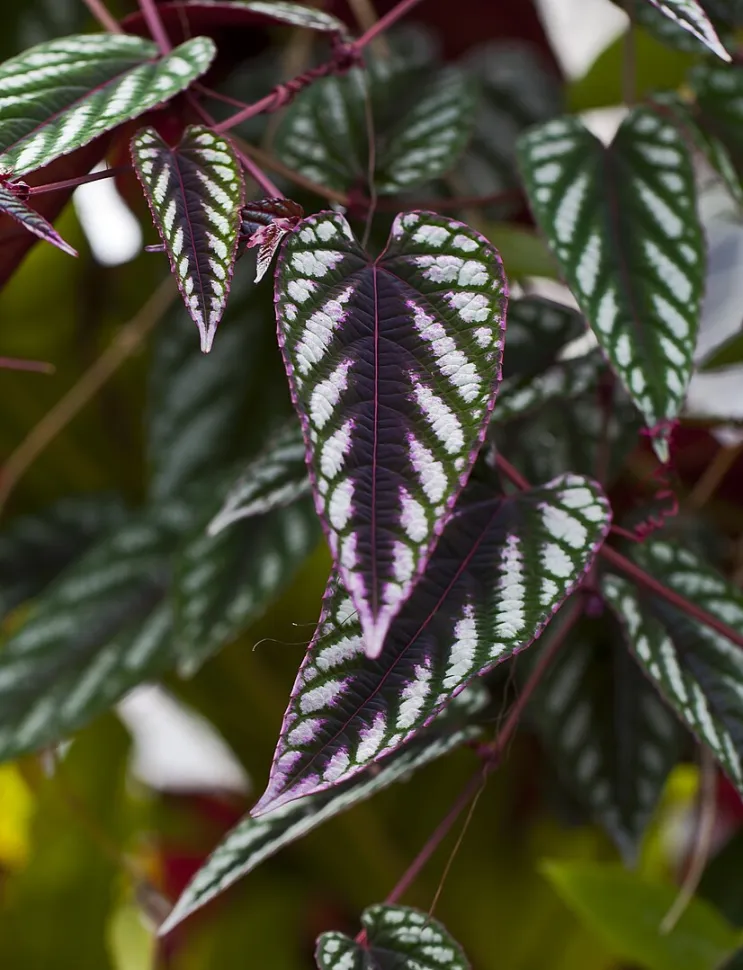
Nothing like a touch of neon to liven up green foliage – Photo by Diego Delso / Wikipedia
With its green leaves featuring silver and purple patterns on the underside, Cissus discolor could easily be mistaken for a Calathea or a Begonia rex. But that's not the case. This plant, grown indoors in our region, belongs to the Vitaceae family and is native to South Asia.
Cissus discolor thrives in humid environments but doesn't like excess water. Place your vine in your kitchen or bathroom and water only when the soil is dry all the way through.
#15 Crassula 'Buddha's Temple'

With flowers, Crassula 'Buddha's Temple' is even prettier – Photo by Stephen Boisvert/Flickr
A plant can be visually striking even with monochromatic foliage. The leaves of Crassula 'Buddha's Temple' are a solid green. But their arrangement makes them a curiosity. The leaf blades interlock with one another, forming a column with a geometric appearance.
Your Crassula 'Buddha's Temple' will not grow taller than 30 centimeters. Once it reaches maturity, continue to repot it every two years in a pot with drainage holes to provide it with fresh, nutrient-rich potting soil.
#16 Croton (Codiaeum variegatum)
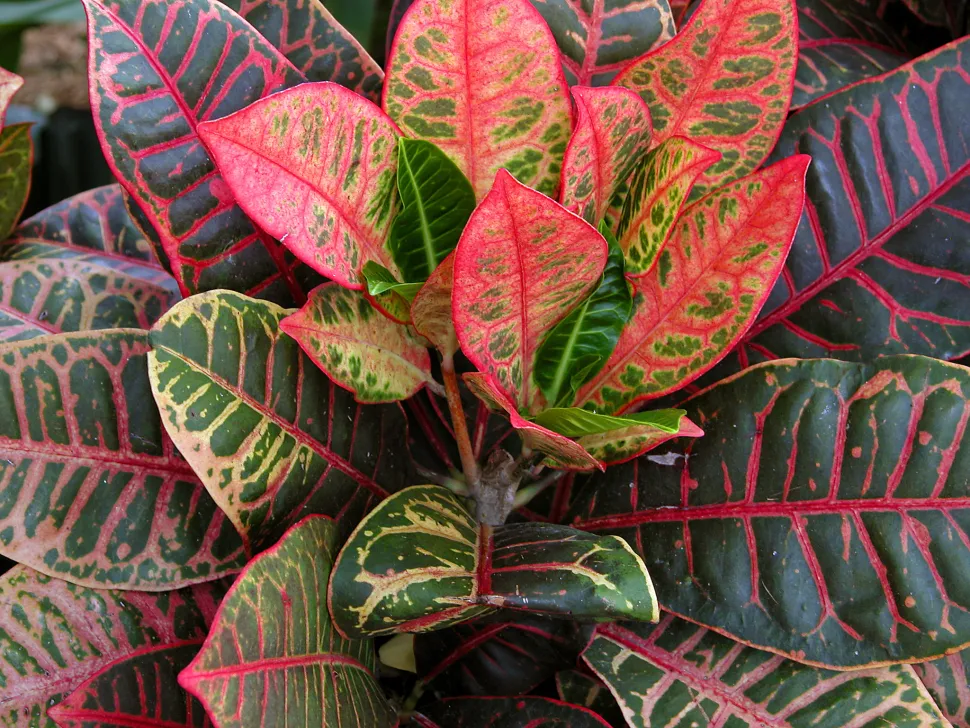
Why choose when you can have every color on a single set of leaves? Photo by Carl Lewis / Flickr
Striking doesn't necessarily mean minimalist or understated. If you want a colorful houseplant, get a Croton. Depending on the variety, you can choose from green, yellow, pink, orange, and purple. Like little rainbows, some leaves even combine all these shades.
In the wild, crotons grow in tropical regions. Indoors, when the air is too dry, the leaves turn yellow and fall off. To prevent this, place your pot on a saucer filled with moist clay pellets.
#17 Maranta leuconeura 'Fascinator'
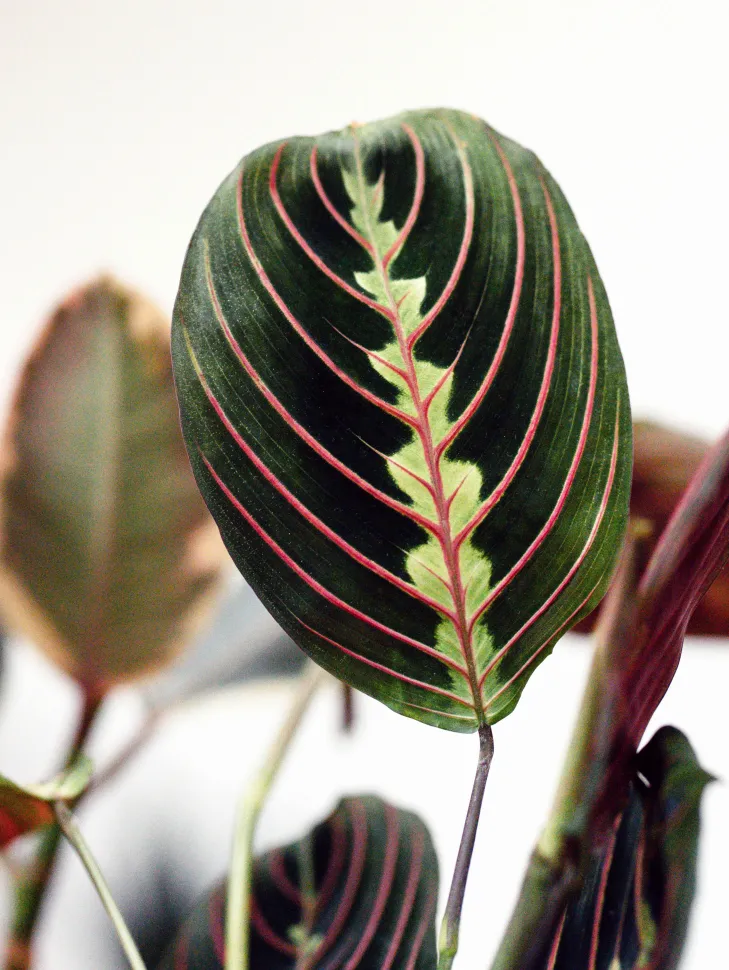
Marantas are every bit as stunning as calatheas and are much easier to grow – Photo by Cottonbro studio / Pexels
There's something mesmerizing about the foliage of the Maranta leuconeura 'Fascinator.' Once you start gazing at them, it's hard to take your eyes off these bright green leaves crisscrossed with yellow and red lines.
The Maranta leuconeura 'Fascinator' is one of the “praying” plants. Every evening, it folds its leaf blades in pairs, like hands clasped in prayer. In the morning, it unfolds them again.
#18 Ficus elastica 'Tineke'

Each leaf of the Ficus elastica 'Tineke' has a unique pattern – Photo by Scott Webb / Pexels
Who can resist the green leaves accented with cream and pink of Ficus elastica 'Tineke'? In just a few years, they've taken our homes—and Pinterest's decorative boards—by storm.
Has your plant lost a few leaves since you brought it home? That's normal. Like many plants, ficus trees hate change. Place yours behind a window, away from drafts and direct sunlight. And don't move it again. The leaf drop should stop after a few days.
#19 The Jewel Orchid (Ludisia discolor)
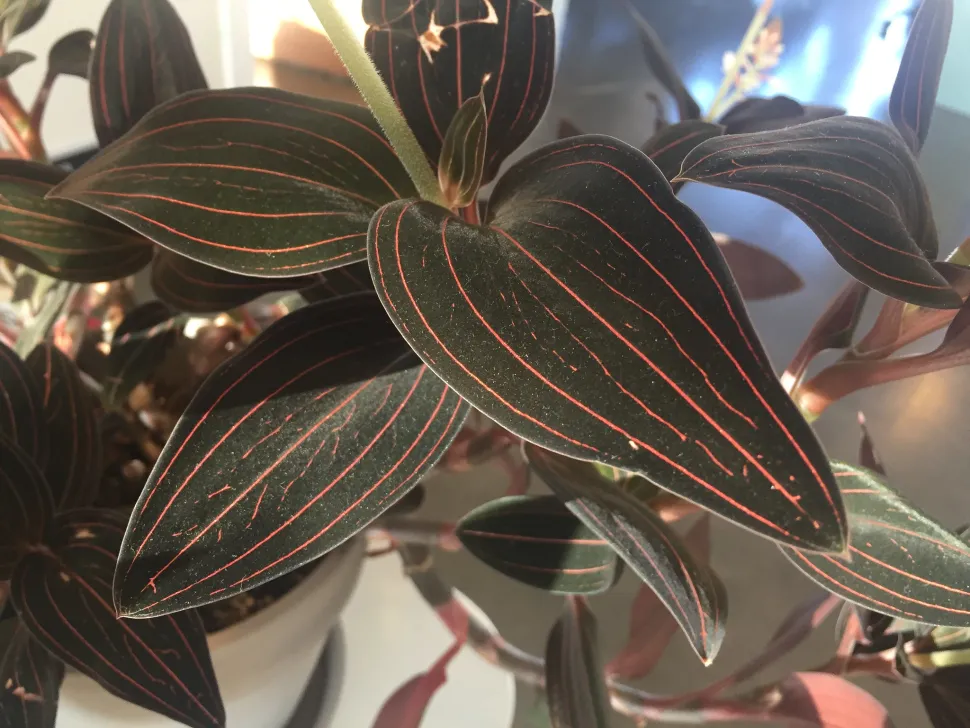
On the jewel orchid, the foliage is more spectacular than the flowers – Photo by Megan Hansen / Flickr
The white and yellow flowers of Ludisia discolor seem almost dull compared to its foliage. Pink, yellow, beige, or orange veins run across its deep green or purple leaves.
Ludisia discolor is a terrestrial orchid. It needs rich, well-drained soil. You can use potting mix for houseplants with a little perlite added. You can also prepare your own substrate by mixing peat moss, perlite, pine bark, and leaf mold.
#20 Macodes petola

Macodes petola also belongs to the jewel orchid family – Photo by JMK / Wikipedia
Do you prefer emeralds to rubies? Macodes petola might be just what you're looking for. Its golden veins winding through bright green foliage give this jewel orchid a striking, elegant appearance.
To encourage foliage growth and flowering in your Macodes petola, add orchid-specific fertilizer to the water during watering in the spring and summer.
#21 Peperomia clusiifolia
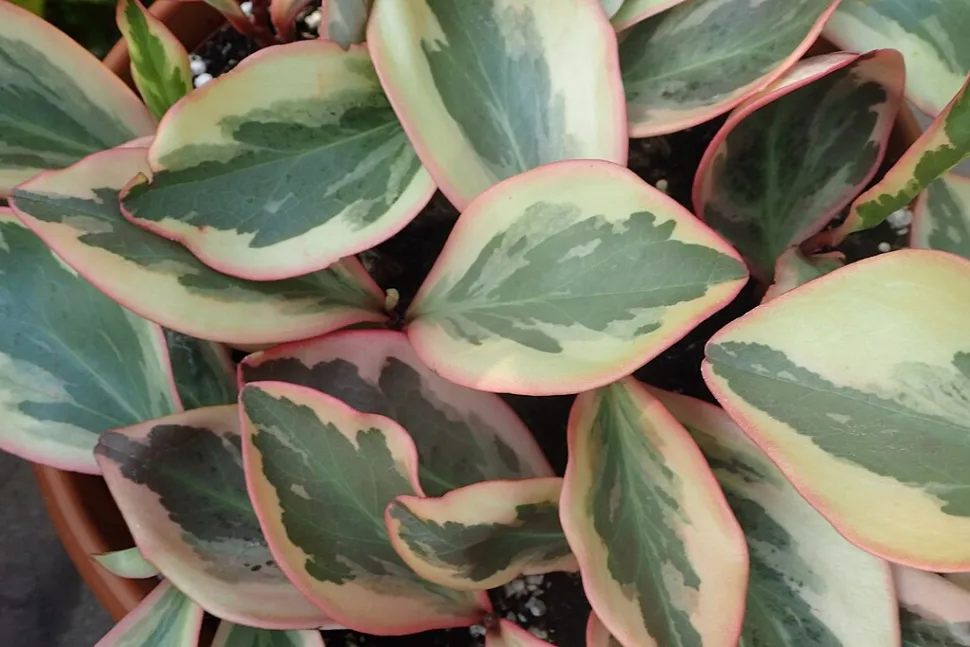
Peperomia clusiifolia 'Jelly' features soft pastel hues – Photo by Krzysztof Ziarnek / Wikipedia
Do you think the solid dark green leaves edged in dark red of Peperomia clusiifolia are too plain to be included in this selection of plants with graphic foliage? The 'Jelly,' 'Ginny,' and Variegata varieties will undoubtedly change your mind! In these cultivars, the leaf blades blend several shades of green, a hint of cream, and bright pink or pastel-colored margins.
Peperomia clusiifolia does not have any hardiness. In our climate, it's grown in pots indoors. When the warm weather arrives, bring your plant out onto your windowsill or into the garden. Just be sure to acclimate it to the sun gradually so its leaves don't get scorched.
#22 The Freckled Plant (Hypoestes phyllostachya)
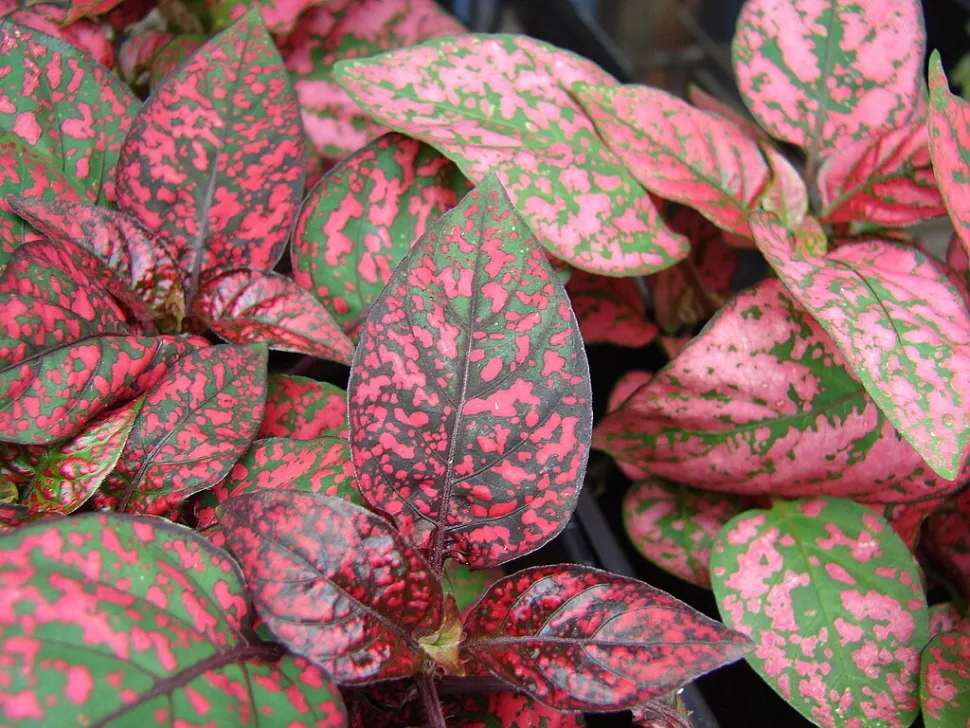
The color of the leaves and spots on Hypoestes phyllostachya varies depending on the cultivar – Photo by Forest and Kim Starr / Wikipedia
Hypoestes phyllostachya is nicknamed the “freckled plant” (from the scientific term for freckles) because of the multitude of spots that adorn its pink, green, or red leaves.
Hypoestes phyllostachya requires high humidity. Feel free to plant yours in a terrarium to ensure it has sufficient humidity.
#23 The ZZ Raven Plant (Zamioculcas zamiifolia 'Raven')
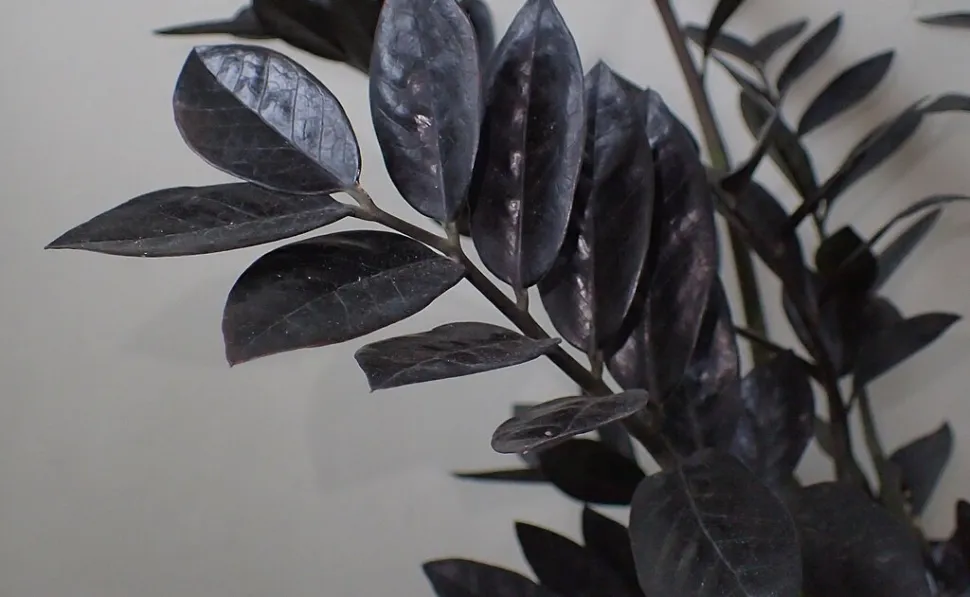
Few plants have foliage this black – Photo by Krzysztof Ziarnek / Wikipedia
If you've opted for a black-and-white decor, Zamioculcas zamiifolia 'Raven' is the plant for you. Its leathery, dark green—almost black— leaves blend just as well into a Scandinavian-style living room as they do into a Gothic-style bedroom.
ZZ plant is a very hardy houseplant. However, it can become infested with mealybugs when the air becomes too humid. Be sure to ventilate regularly, especially in winter, to maintain dry air and a dry environment.
#24 Pothos 'Neon' (Epipremnum aureum 'Neon')
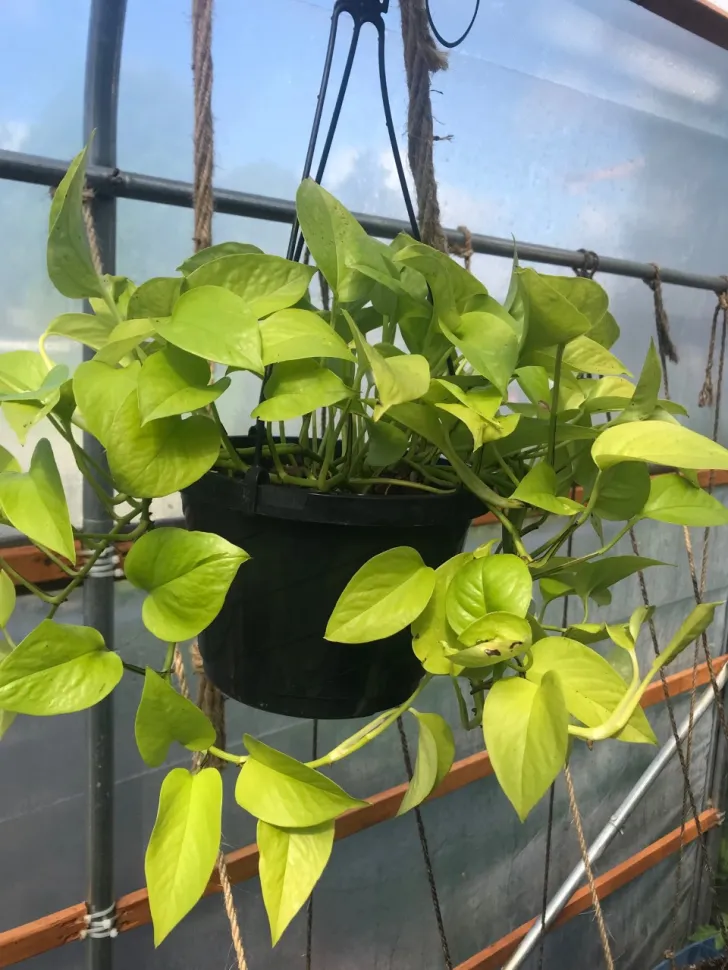
Easy to care for, the Pothos is ideal for beginners – Photo by Julien Gagné / Wikipedia
It was hard to choose just one variety of Pothos to add to this list of plants with the most striking foliage. We chose the Pothos 'Neon' for its green leaves with a neon yellow tint. Their color alone is enough to liven up any decor!
Pothos 'Néon' can be grown as a hanging plant or as a climber. It's best to use a stake wrapped in sphagnum moss. This will help keep the moss moist, making it easier for your vine to cling to it.
#25 Four-Leaf Clover (Oxalis tetraphylla)
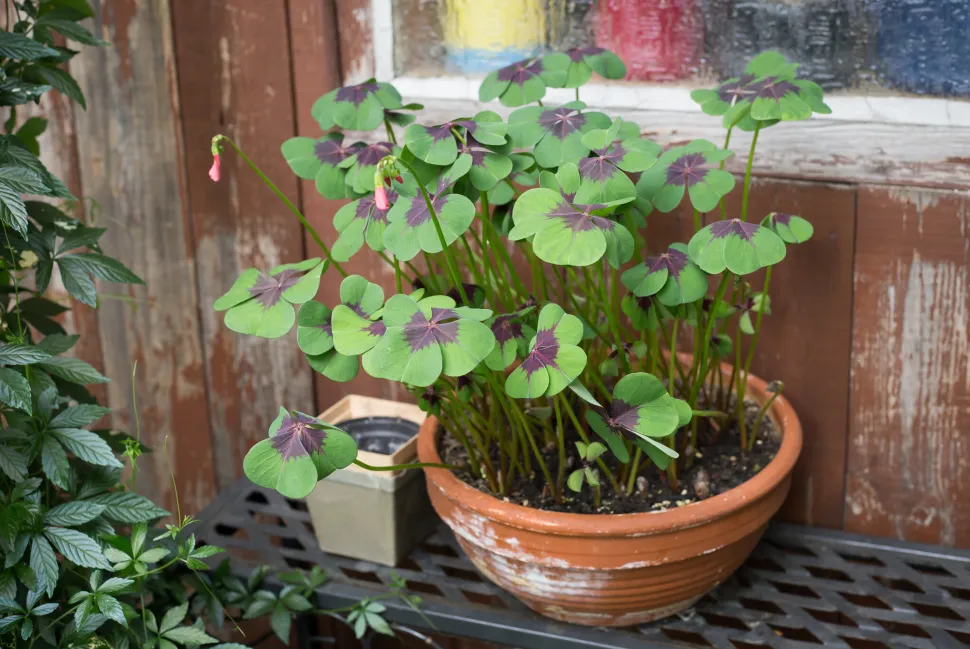
Oxalis tetraphylla blooms from May through July – Photo by Maja Dumat / Flickr
Oxalis tetraphylla may not bring you luck, but it will add a touch of elegance to your garden. Its four green leaflets, each with a black or purple center, can be grown as groundcover or in a pot.
If you live in a region with mild winters, you can plant your Oxalis tetraphylla directly in the ground. Outside the orange tree zone, plant it in a pot so you can put it outside during the warmer months and bring it back inside in the fall.
#26 Schefflera actinophylla (Heptapleurum actinophyllum)

Some varieties feature variegated foliage – Photo by Juan Jose Peña / Plantnet
If you need to fill a large space, choose a Heptapleurum actinophyllum. This shrub grows up to two meters tall in a pot. Already quite striking in its standard form, with a single trunk and solid green palmate leaves, the umbrella tree is even more remarkable when it has a braided trunk and leaves edged with yellow.
After a few years, your shrub will be too large for repotting. You can still refresh the substrate annually by top-dressing. Remove one-third of the soil and replace it with potting mix for houseplants enriched with a little peat moss and sand.
#27 Florist's Asparagus (Asparagus setaceus)
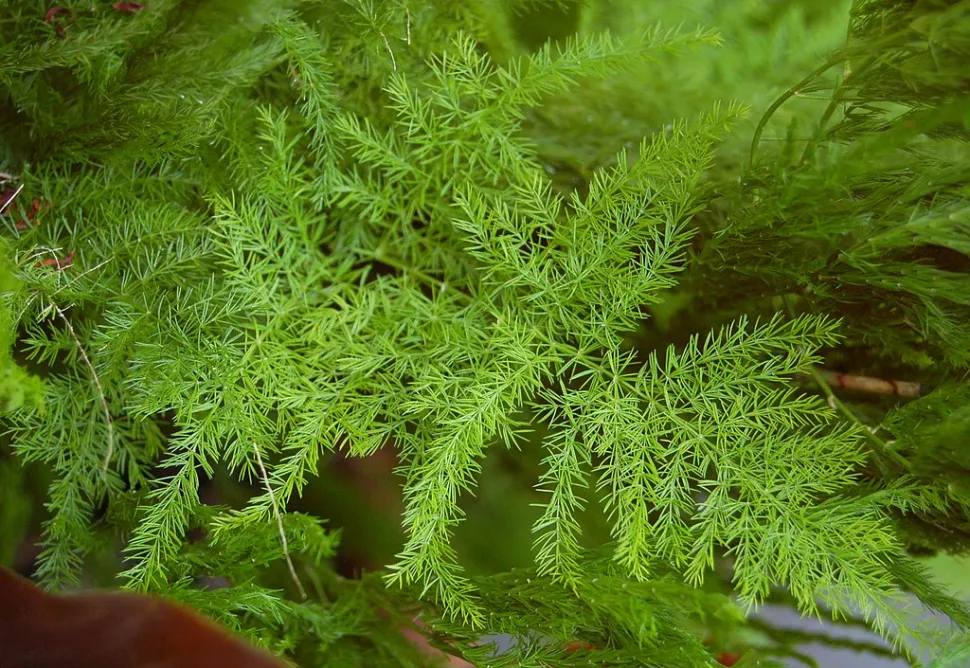
The cladodes look like leaves, but they're actually branches – Photo by Ram Man / Wikipedia
At first glance, the plain green foliage of Asparagus setaceus seems unremarkable. But when you get closer, you realize it's made up of thousands of bright green cladodes, each only a few millimeters long.
Asparagus setaceus does not tolerate hard water. When watering it, use rainwater rather than tap water. Also, make sure the water is at room temperature to avoid stressing the roots.
 Plants toxic to cats and dogs: varieties to avoid in the garden and indoors
 Seaside garden: which spray-resistant plants to plant?
 Vegetable gardening: 10 mistakes that ruin your harvests









