Zamioculcas zamiifolia, a unique plant
Zamioculcas zamiifolia
- Exposures
- Sun, Half-shade, Shade
- Hardiness (USDA)
- 9b (-3.9°C ≤ T° < -1.1°C)
- Lifecycle
- Perennial
- Foliage
- Evergreen
- Family
- Araceae
- Genus
- Zamioculcas
- Species
- Plant ZZ Zamioculcas zamiifolia
Zamioculcas zamiifolia belongs to the same family as alocasia zebrina and monstera deliciosa: the Araceae. But it is the only representative of its genus, Zamioculcas. Another special feature of the ZZ plant is its resilience. In Zanzibar, its native land, it grows in rocky areas and can withstand both drought and torrential rain. In our latitudes, this houseplant survives the mistakes and oversights of novice gardeners.
How to recognize Zamioculcas zamiifolia, the ZZ plant?
Zamioculcas zamiifolia measures between 30 centimetres and one metre in height. The plant is acaule. It has a tuberous rhizome at its base, in which it stores water.
Thanks to its foliage, the ZZ plant has an upright habit. The thick, fleshy leaves are a shiny, dark green. They consist of eight to sixteen leaflets arranged alternately along the petiole. Each is oval and slightly pointed at the apex.
If you're growing Zamioculcas zamiifolia indoors, you're unlikely to see it flower. In its native environment, short-stemmed, spiky flowers of around ten centimetres bloom. The pale green flower, surrounded by a darker spathe, turns brown at maturity.
With its evergreen foliage and ability to grow against all odds, the ZZ plant symbolizes stability, wealth and good luck. In Asia, it is used to decorate the home for the Lunar New Year.
But beware: Zamioculcas zamiifolia is toxic to pets. It is even fatal to cats. In humans, it causes stomach upsets if ingested, and irritation on contact with its sap.
Our care tips
Is it really worth giving you advice on how to care for your Zamioculcas zamiifolia? The species is indestructible and resists everything except the flood. But just because it's accommodating doesn't mean you should neglect it. With the right care, it will flourish and perhaps even become your favorite plant!
 Watering
Your Plant ZZ tolerates drought better than too much water.
Water only when the substrate is dry at depth (at least 5 centimetres). Drain any stagnant water from the saucer.
 Misting
Your Zamioculcas zamiifolia hates wet foliage. Don't mist the plant.
 Repotting
Every year in the spring, repot your Zamioculcas zamiifolia to give it more space.
Obtain a pierced terracotta pot. This material allows the soil to dry evenly and reduces the risk of root rot. Place clay balls or gravel at the bottom for drainage.
Pour in a layer of potting soil for green plants. Plant your Plant ZZ in the center and fill in with substrate. Tamp down and water for the first time, to encourage rooting.
Your Plant ZZ is a tropical plant. It appreciates high humidity. Place the pot on a saucer filled with moist clay balls.
 Cleaning
You can spray your Zamioculcas zamiifolia with non-calcareous water at room temperature to remove the dust that accumulates on the leaves.
 Prune
Mulch the base of your Zamioculcas zamiifolia to protect it from the cold. Preferably use organic matter. As it decomposes, it enriches the soil.
 Taking cuttings
Propagation by cuttings is carried out during the strong growth phase, generally in spring and early summer.
Using your hands or a clean, sharp tool, separate one of the shoots that has formed at the base of the plant. Choose a young shoot with roots.
Soak your graft in a glass of clear water at room temperature. Remember to change the water when it becomes cloudy. You can also immerse a piece of charcoal to keep it clean.
Place your cutting in a bright spot away from direct sunlight, behind a window with a curtain for example.
Place your cutting in a bright spot away from direct sunlight, behind a window with a curtain for example.
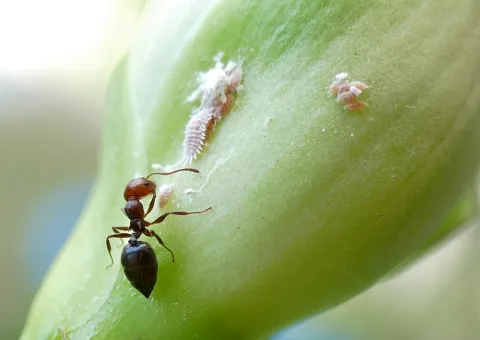
Disease / Threat
Information
- Lifecycle
- Perennial
- Foliage
- Evergreen
- Exposures
- SunHalf-shadeShade
- Substrates
- Humus soilSandy soil
- Planting methods
- In potsIn tubs
- Categories
- IndoorHerbaceous
- Tags
- BeginnerHard to killToxic
- Origin
- East Africa
- Hardiness (USDA)
- 9b (-3.9°C ≤ T° < -1.1°C)
- Leaf color
- Dark green
- Flower colors
- BrownPale green
Discover plants from the same family
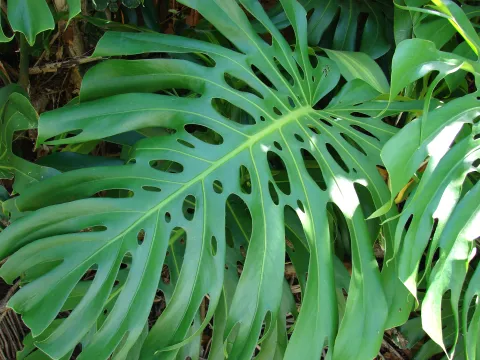
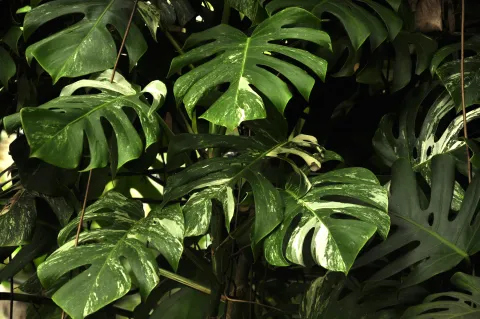
Monstera variegata
Monstera deliciosa variegata
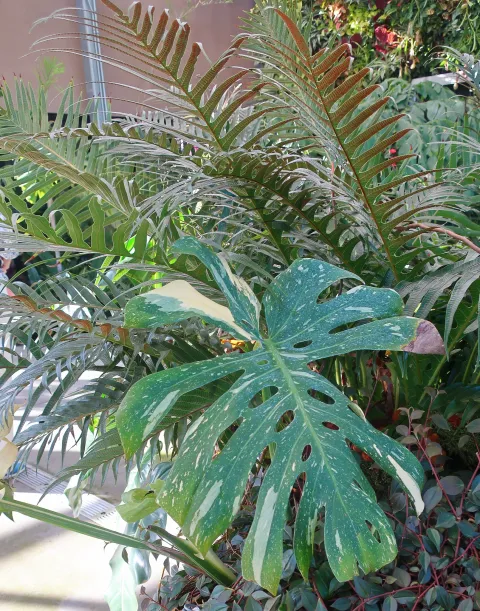
Monstera 'Thai Constellation'
Monstera deliciosa ‘Thai Constellation’
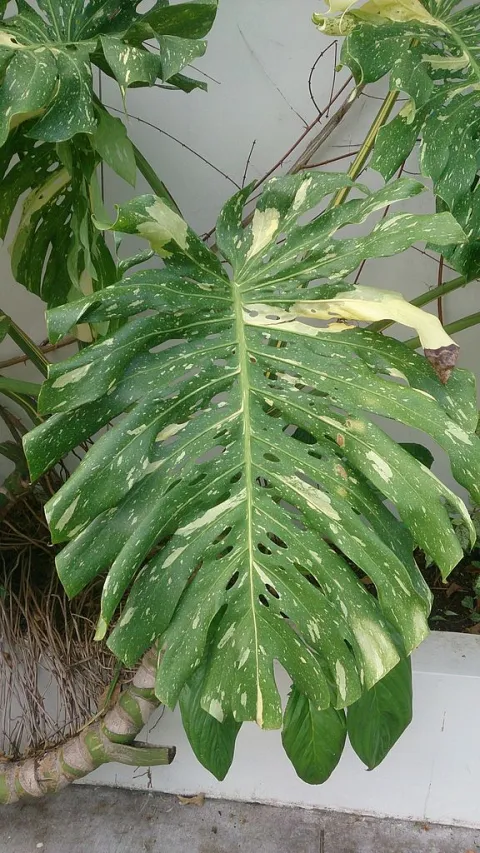
Monstera albo variegata
Monstera deliciosa albo variegata
Find out more
- How to get rid of soil gnats?
- These plants with incredible graphic foliage
- 15 easy-to-cut and propagate houseplants
- Eight lucky plants
- 20 Easy-to-Care-For Houseplants for Winter
- Living room, bedroom or bathroom: which houseplant is right for each room?
- 15 plants for lightless interiors
- Ten maintenance-free houseplants
Find all our tips in the Monstera application