Tradescantia pallida, the purple heart that turns purple in the sun
Tradescantia pallida
- Exposures
- Sun, Half-shade
- Hardiness (USDA)
- 9b (-3.9°C ≤ T° < -1.1°C)
- Lifecycle
- Perennial
- Foliage
- Evergreen
- Family
- Commelinaceae
- Genus
- Spiderwort Tradescantia
- Species
- Purple heart Tradescantia pallida
Other names:Rose Setcreasea purpurea, Tradescantia purpurea hort.
Purple Misery (Tradescantia pallida) is a herbaceous member of the Commelinaceae family native to Mexico. Thanks to its graphic purple foliage, it has become a popular houseplant with novice and experienced gardeners alike.
How to recognize purple misery or Tradescantia pallida?
Tradescantia pallida is a 20-centimetre-high creeping plant. Its branches can exceed one metre in length. Outdoors, it spreads out and covers the ground. Indoors, it can be planted in pots or suspended to take advantage of its drooping vines.
Although not a succulent, Tradescantia pallida has water-storing roots and fleshy stems. Fragile, they break if handled carelessly.
The lanceolate, pointed leaves enclose the stem like a sheath or gutter. When there's enough light, the leaf blades are purple or violet on both sides. In the absence of sun, they remain green. The evergreen foliage is dotted with a fine down, almost invisible to the naked eye.
In summer, three-petaled pink flowers appear. They're only one or two centimetres wide, and only bloom for a day!
When the inflorescence is fertilized, it gives rise to a fruit. This takes the form of a capsule containing wrinkled, rough seeds.
Tradescantia pallida is not toxic to humans. It does, however, cause allergic skin reactions in dogs and cats.
It is a perennial plant considered invasive in Australia and New Zealand. Like small-leaf spiderwort, it grows rapidly and multiplies easily in the open ground when weather conditions are favorable. But it behaves like an annual when grown in temperate climates and outdoors. Not very frosty, purple misery cannot withstand several consecutive days of frost.
Our care tips
The more light your Purple heart receives, the more its colors will shine through. Give it a bright spot, but keep it out of direct sunlight. Its favorite spot? Behind a curtained window. On summer mornings and evenings, you can even put it out on your windowsill.
 Watering
The Purple Hearts They like to keep their substrates moist, but hate having a soggy root ball. Water when the substrate begins to dry out on the surface.
Use non-hard water—rainwater, for example—at room temperature.
The Purple Hearts They need a thorough watering. Pour water until the excess drains out through the drainage holes.
Let your Purple heart drain for a few minutes, then return the plant to its place. Also remove any standing water from the saucer or planter. It may cause the roots to rot.
 Misting
Your Purple heart is a tropical plant. It appreciates humidity. Spray its foliage with water at room temperature.
Avoid calcareous water, which leaves white marks on the leaves. Prefer rainwater or filtered water.
 Repotting
Every year in the spring, repot your Tradescantia pallida to give it more space.
Choose a pierced pot slightly larger than the previous one. First lay a bed of clay balls or gravel to optimize drainage. Top it off with a special potting soil for green plants. This will provide your shrub with nutrients, at least for a few weeks.
You can place the pot in a saucer filled with moist clay balls. This will improve the hygrometry without risk to the roots.
 Fertilization
To promote the growth of your Tradescantia pallida, apply fertilizer in spring and summer.
Apply a liquid fertilizer for green plants to stimulate growth.
 Prune
When the flowers bloom, remove them with a clean pair of scissors. Their growth is detrimental to that of the foliage.
To maintain the compact habit of your Tradescantia pallida, shorten receding vines.
 Pinch
Pinch your Tradescantia pallida during its growing season.
Pinch the ends of the stems with your fingers to help the plant branch out and maintain a compact habit.
 Taking cuttings
Propagation by cuttings is carried out during the strong growth phase, generally in spring and early summer.
Using your pre-cleaned scissors, remove a ten- to fifteen-centimeter stem (about three nodes). Remove the leaf at the base of your cutting.
Place your cutting in a glass of water at room temperature. Change the water regularly to keep it clear.
Place your graft in a bright spot away from direct sunlight while the roots develop.
Place your graft in a bright spot away from direct sunlight while the roots develop.
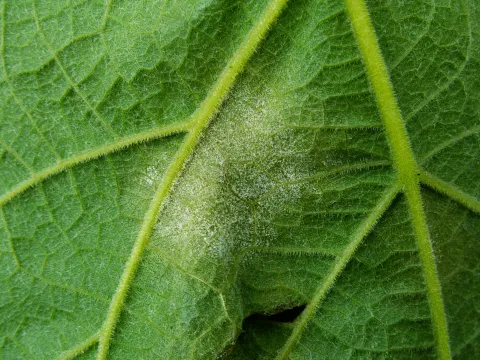
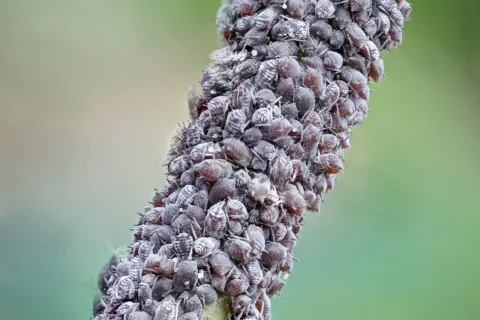
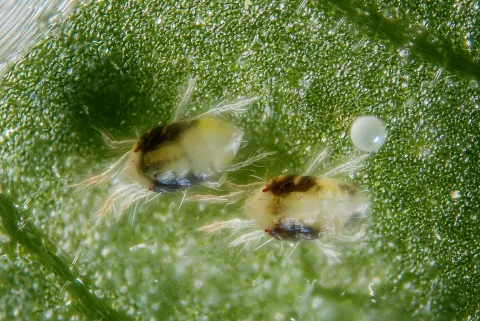
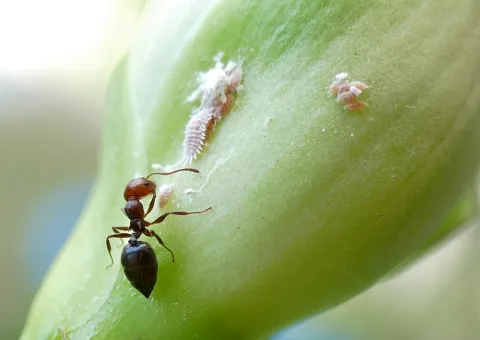
Diseases / Threats
Information
- Lifecycle
- Perennial
- Foliage
- Evergreen
- Exposures
- SunHalf-shade
- Substrates
- Clay soilHumus soilSandy soil
- Planting method
- In pots
- Categories
- IndoorHerbaceousHanging plants
- Tags
- BeginnerInvasiveHard to killToxic
- Origin
- Central America
- Hardiness (USDA)
- 9b (-3.9°C ≤ T° < -1.1°C)
- Leaf colors
- Dark greenPurple
- Flower color
- Rose
Discover plants from the same family
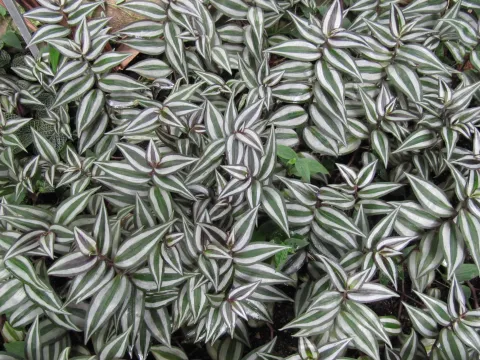
Inch Plant
Tradescantia zebrina
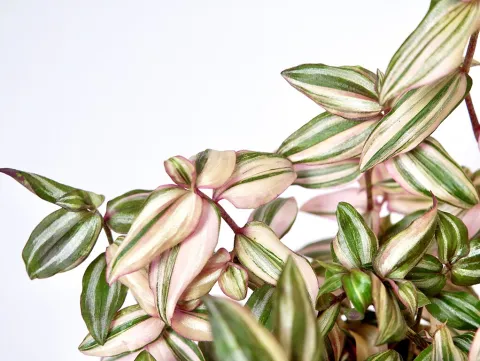
Tradescantia zebrina 'Discolor Multicolor'
Tradescantia zebrina ‘Discolor Multicolor’
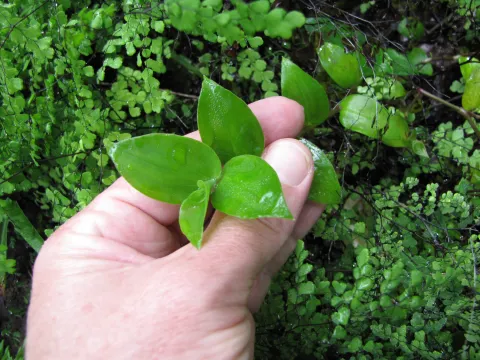
Small-leaf spiderwort
Tradescantia fluminensis
Find out more
Find all our tips in the Monstera application








