Cucurbita maxima, the pumpkin
Cucurbita maxima
- Exposure
- Sun
- Hardiness (USDA)
- 10b (1.7°C ≤ T° < 4.4°C)
- Lifecycle
- Annual
- Foliage
- Evergreen
- Family
- Cucurbitaceae
- Genus
- Cucurbita
- Species
- Cucurbita maxima
Other names:Cucurbita pepo var. maxima, Pepo maximus
Every year in Germany, gardeners gather for competitions to find the biggest pumpkin. Some specimens even exceed a ton! But the Cucurbita maxima is more than just a showpiece: it's an essential vegetable plant, appreciated for its productivity, shelf life and sweet taste.
How to recognize the pumpkin, Cucurbita maxima?
The pumpkin (Cucurbita maxima) is an annual herbaceous plant. It is a cultigen, a plant selected and modified by man to meet certain requirements.
Its rough, hairy stems can grow up to ten meters long. Although creeping, they are fitted with tendrils that enable them to climb up a support.
The bright green leaves are whole and heart-shaped. They have five lobes and measure between 15 and 30 centimetres in length.
The orange-yellow flowers are funnel-shaped. The same plant bears both male and female flowers, facilitating pollination. Only the female flowers produce fruit. They can be recognized by the swelling at their base. This is the ovary that will develop into the pumpkin.
As is often the case with squash, fruits are distinguished by their variety. They can be :
- Spherical, flattened, bumpy or elongated;
- Weigh between 1 and 200 kg;
- Be green, red, white, yellow or orange.
However, their flesh is always orange and the stalk spongy.
The white seeds are 2 to 3 cm long. They are rounded and smooth.
Which pumpkin varieties to choose for your garden?
The most popular pumpkin varieties include :
- Bleu de Hongrie: a late-harvest, hardy squash with round, bluish-gray vegetables weighing 4 to 8 kg, which keep for a long time;
- Rouge Vif d'Étampes: an early pumpkin with large, flat, ribbed, bright orange pumpkins (5 to 10 kg);
- Atlantic Giant: a variety with round, yellow to orange, enormous fruits (they can exceed 100 kg);
- Giraumon Turban: a pumpkin weighing up to 5 kg, shaped like a Turkish bonnet in red, green and white, both decorative and edible;
- Marina di Chioggia: a late-harvest, hardy pumpkin with warty, dark-green skin, weighing 3-5 kg and sweet flesh.
Is pumpkin toxic?
Pumpkin is non-toxic and safe to eat when properly prepared. It belongs to the edible squash family and is widely used in cooking for its nutritional qualities and mild flavor.
However, like some other cucurbits, it can become unfit for consumption if it contains cucurbitacins. This sometimes happens when two varieties are accidentally crossed, giving them a very bitter taste. To find out if your pumpkin is edible, simply taste a small piece before cooking.
Our care tips
Place the fruit on a brick or tile to prevent damage from damp soil.
 Watering
Keep the soil cool and moist, but not soggy.
Water, preferably with rainwater, at the foot of your Cucurbita maxima.
 Fertilization
Pumpkins are greedy plants. You need to fertilize them throughout their growth, adapting the type of fertilizer to their development:
- After planting: apply a nitrogen-rich fertilizer (special vegetable fertilizer or nettle manure);
- When flowers appear: fertilize with a potassium-rich fertilizer (tomato fertilizer or comfrey purin).
 Planting
When the risk of frost has passed, it's time to plant.
To enable your Pumpkin to thrive, leave 1.5 m between plants and 2 m between rows.
Pumpkins plants like rich soil. Before planting, work the soil to a depth of at least 45 cm. Spade, remove weeds, roots and stones. Amend with compost or manure.
Dig a hole slightly larger than the root ball. Add a nitrogen-rich fertilizer (ground horn or dried blood, for example) to the bottom. Plant your Cucurbita maxima without burying the leaves. If you want the stems to climb, place the first ones on the stake to guide them.
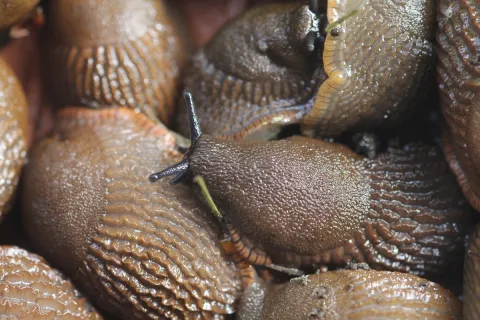
Tamp the soil gently and water generously. You can mulch the soil to conserve water, enrich the substrate and protect against slugs.
 Sowing
Once the risk of frost has passed, you can sow your Cucurbita maxima seeds.
Pumpkins need space to grow. Separate seedlings by at least 1.5 m and rows by at least 2 m.
Loosen the soil to a depth of 20-30 cm. Incorporate well-decomposed manure or compost to enrich it. Remove weeds, stones and roots.
Pumpkins can be sown in stacks. Dig holes 1.5 to 2 meters apart and place 2 to 3 seeds per hole. Bury them under 2 cm of soil.
Water lightly after planting, then regularly. Keep the soil moist, but not soggy. Emergence takes about ten days.
Frequently asked questions
What's the difference between pumpkin and pumpkin?
Pumpkin and pumpkin come from the same plant (Cucurbita maxima). But they are different varieties. They differ in shape, taste and culinary use. The pumpkin is generally larger than the pumpkin, with soft, slightly sweet flesh, while the potimarron is smaller, with a more pronounced flavor, reminiscent of chestnuts.
How long can I keep a pumpkin?
Pumpkins keep for several months in a cool, dry place. To maximize shelf life, make sure the skin is not damaged.
Which vegetables should be planted next to pumpkins?
The pumpkin appreciates the company of certain vegetables that promote its growth and limit pests. You can plant it near beans, corn or radishes, which occupy the space differently and enrich the soil. On the other hand, it's best to avoid placing it near potatoes or other squash, to avoid competition and common diseases.
Where to plant pumpkins in the garden?
Pumpkins should be planted in a sunny spot, sheltered from the wind and with enough room to grow. It prefers rich, deep, well-drained soil, ideally enriched with compost before planting. As its stems are creeping and can extend over several meters, it is advisable to reserve an open area of the vegetable garden for it, or to have it climb on a support.
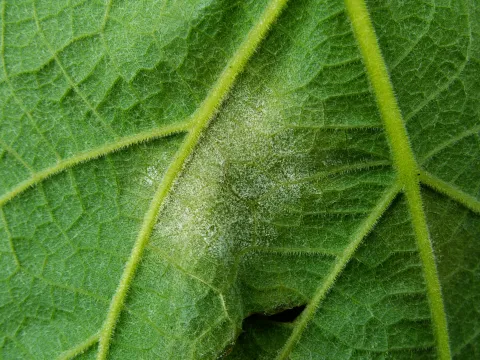
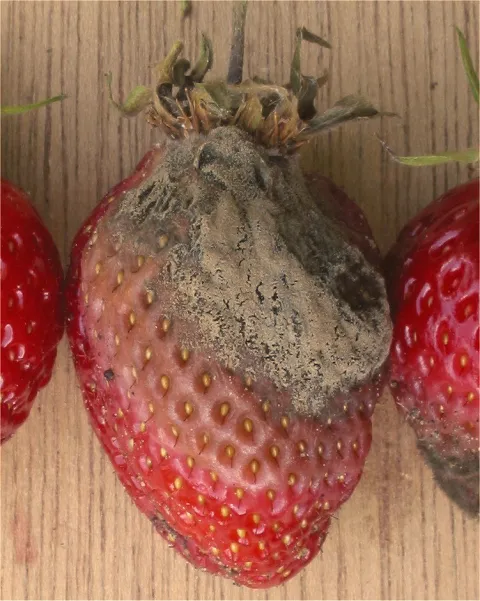
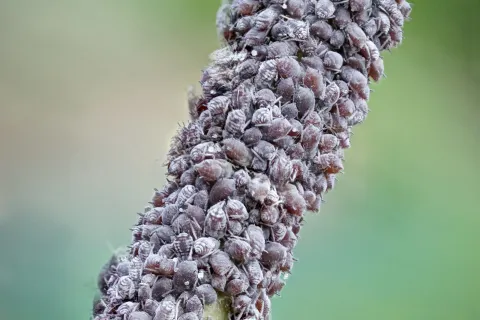
Diseases / Threats
Information
- Lifecycle
- Annual
- Foliage
- Evergreen
- Exposure
- Sun
- Substrate
- Humus soil
- Planting method
- Open ground
- Categories
- VegetableHerbaceous
- Tags
- FritillaryLarge potSoiffardeEdible vegetable
- Origin
- South America
- Hardiness (USDA)
- 10b (1.7°C ≤ T° < 4.4°C)
- Leaf color
- Light green
- Flower color
- Yellow
- Fruit colors
- WhiteRedYellowOrange
Discover plants from the same family
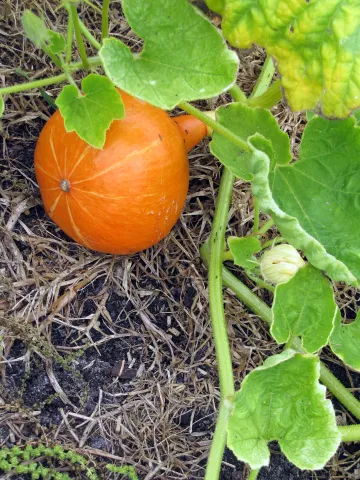
Pumpkin
Cucurbita maxima
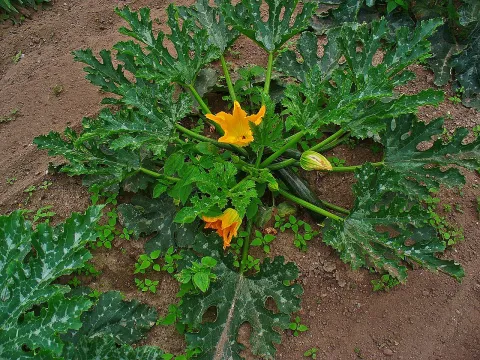
Zucchini
Cucurbita pepo
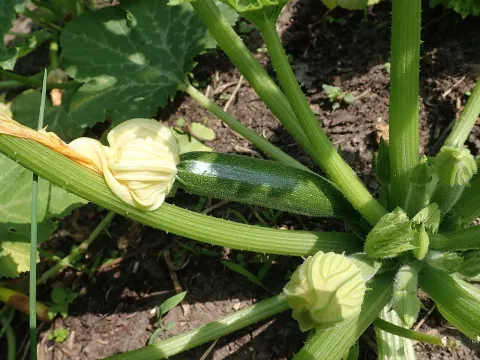
Non-running zucchini
Cucurbita pepo
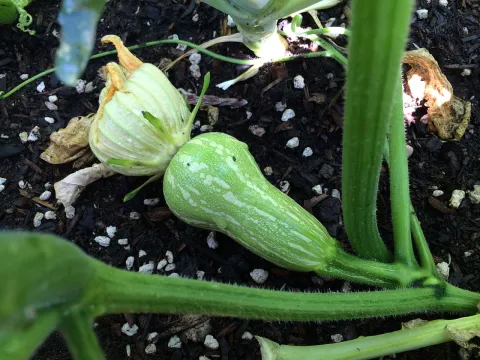
Zucchini coureuse
Cucurbita pepo
Find out more
Find all our tips in the Monstera application