10 houseplant care tips I wish I'd known earlier
Article for :All parent plants
Article summary
- #1: Always have a hole in the pot
- #2: Touch the soil before watering
- #3 Give your indoor plants light
- #4 Empty saucers and planters
- #5 Use a plant maintenance app
- #6 Choose the right substrate
- #7 Take your plants outside in summer
- #8 Clean houseplant leaves
- # 9 Don't fill your pot completely with potting soil
- # 10 Observe your houseplants
Growing houseplants, like everything else, is a learning process. You grope, you observe, you make mistakes... And you make progress at every stage. Unfortunately, yellowing leaves and thrips attacks are part of the learning process. But if you want to save time (and avoid losing too many of your protected plants), here are ten tips you might find useful.
#1: Always have a hole in the pot
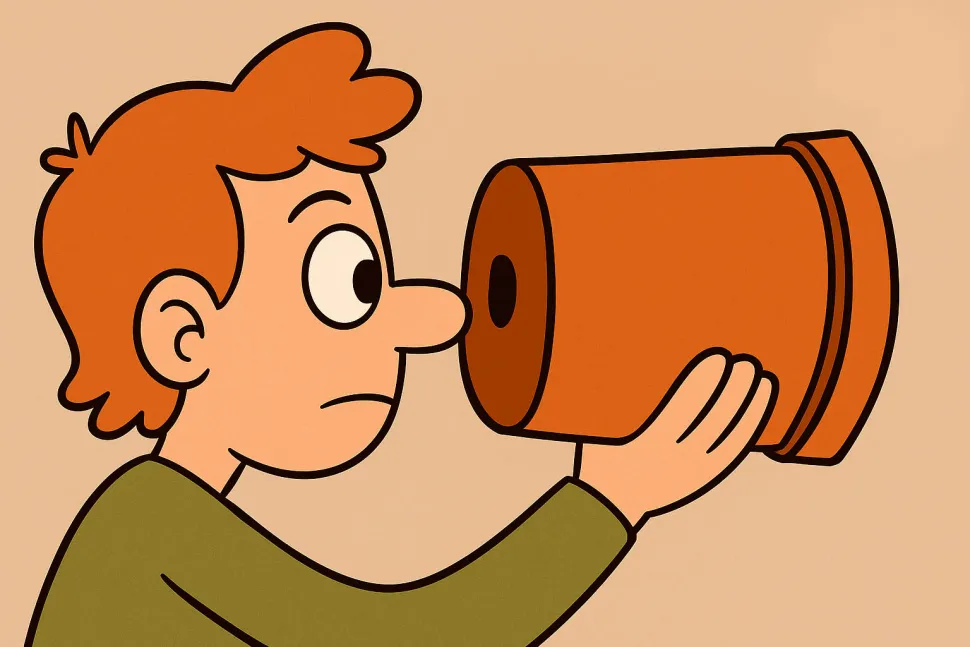
A drainage hole is essential for the health of your plants
When repotting a plant, always choose a pot with a hole in the bottom. This drainage hole is essential for :
- Evacuate excess water during watering;
- Allow water to rise when watering from below.
Without a hole, water remains in the pot and soaks the substrate. The roots can no longer breathe and the plant dies.
If you come across a container without a hole in the garden centre, it's not a pot, but a planter. You can slip your plant into it... But always in its original perforated pot.
Are you tempted to plant directly in the planter and water less to avoid excess water? Not a good idea. It's almost impossible to dose water correctly. A plant's needs change with the seasons and the weather. If you don't provide enough water at each watering, the plant will weaken. Its growth slows down, its leaves are damaged, and it's more vulnerable to pest attacks. The best thing to do is to water until the water drains away through the drainage hole, and then space out the watering.
#2: Touch the soil before watering
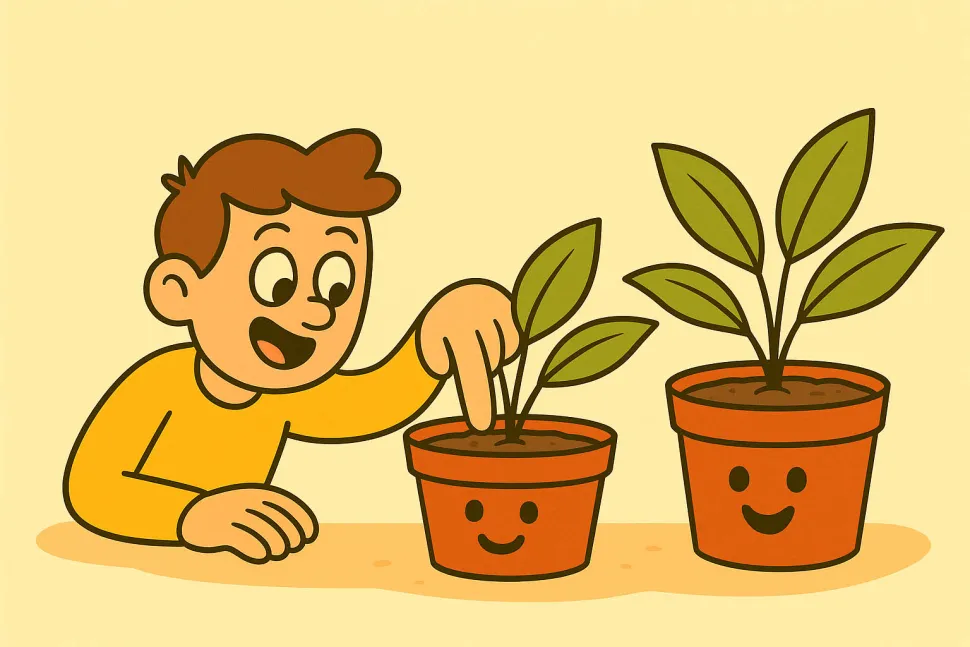
No need to invest in a hygrometer. Your finger is enough to measure the humidity in the pot.
Overwatering, i.e. Watering too often, is probably the leading cause of premature death in houseplants. Before adding water, make sure your plant is thirsty. How can you do this? Simply by touching the substrate to see whether it's still wet or dry, and to what depth.
Once you have this information, you can decide whether or not to water, depending on the plant's needs. Some plants, like succulents and cacti, prefer the substrate to dry out completely before being watered. Others, like Alocasia, need to keep the soil cool and slightly moist at all times.
#3 Give your indoor plants light
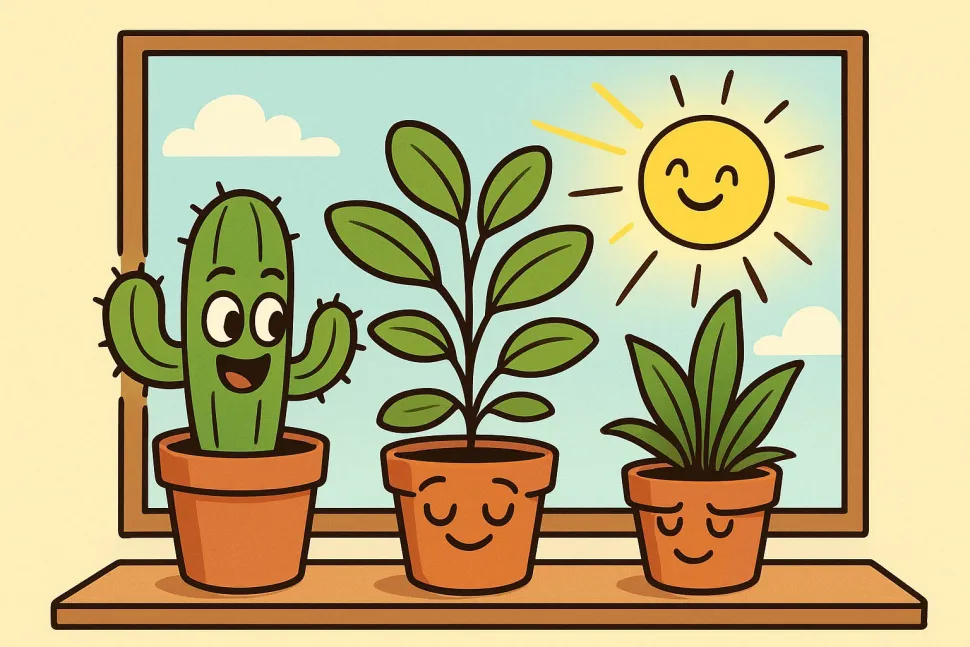
Indoors, there's less light than outdoors. So almost all your plants need to be close to the window
All plants need sunlight. You can't grow plants in a windowless room.
But putting your plants in a room with a window isn't enough for them to flourish. Ideally, you should place them within two meters of your natural light source. Reserve positions in the front row for species that need the most sun, such as cacti, succulents, Ficus, Bromeliads... Place plants behind you for which a shady or semi-shady exposure is recommended (ferns, Marantaceae, Pothos, Aglaonema, Philodendron, etc.).
You may have already read or heard that you should be careful and avoid direct sunlight, as it can burn plant foliage. This is true, but it applies mainly to outdoor plants. Indoors, the light is much less intense and the leaves of your Monstera deliciosa or Calathea won't be at much risk behind a bay window, especially in winter.
#4 Empty saucers and planters
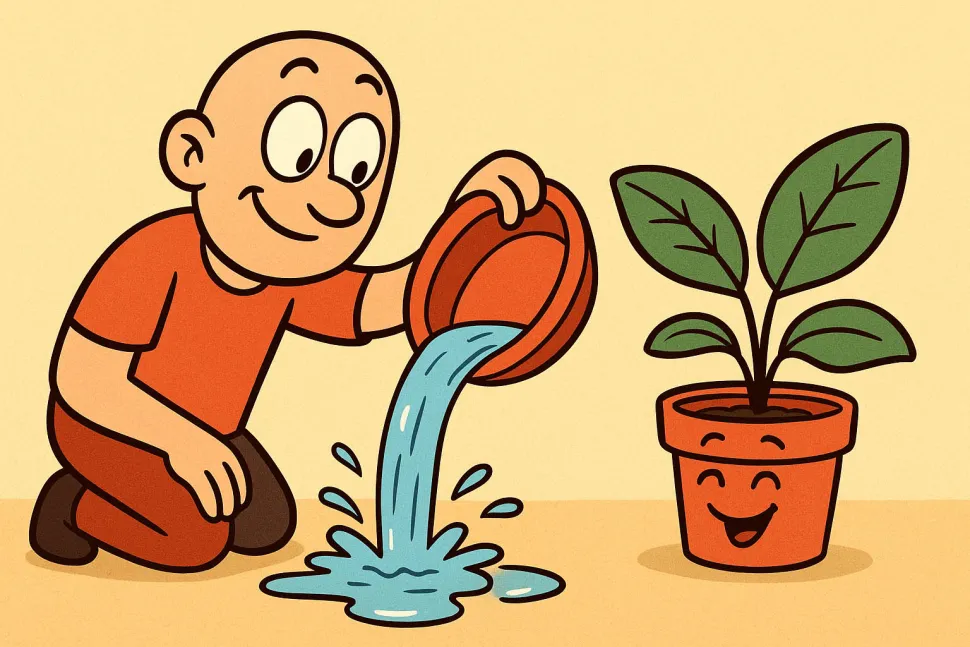
We're used to pouring excess water down the sink.
It's probably the easiest plant care tip to follow. And yet, many of us fail to apply it, out of laziness or absent-mindedness. Don't let the water stagnate in the cup. About 30 minutes after watering, empty the saucers and planters.
When water stagnates in the dish, it rises by capillary action (thanks to the drainage hole and the pot's porous material) and the soil remains soggy. The roots are immersed in water and lack oxygen. The effect is the same as for over-watering: roots asphyxiate and rot. What's more, this excess humidity around the plant also creates an ideal environment for the development of fungi, mold and midges.
#5 Use a plant maintenance app
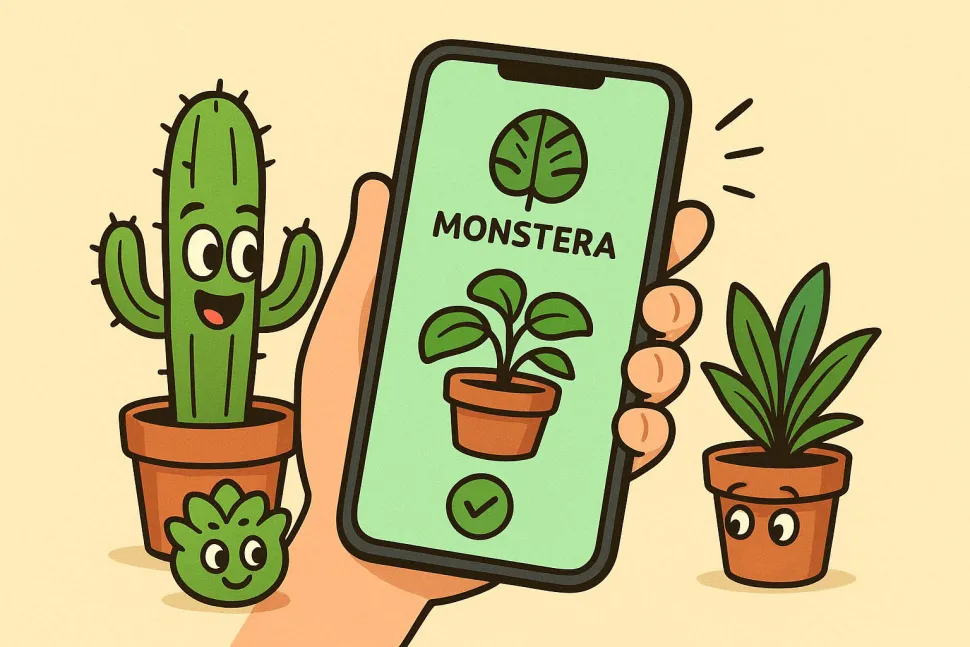
Monstera lets you manage up to five plants for free
Houseplants are a bit like M&Ms and tattoos. It's almost impossible to stop after the first. So after a few months (or weeks, for the most addicted), it's hard to remember who's been repotted, who's been fertilized or even the names of your protégés. Some keep notebooks, others make Excel spreadsheets. If you want to save time, download an app instead. With Monstera, you can keep track of your plants' growth, find all the information you need to care for them and even receive a personalized reminder when you need to water, fertilize or repot.
#6 Choose the right substrate
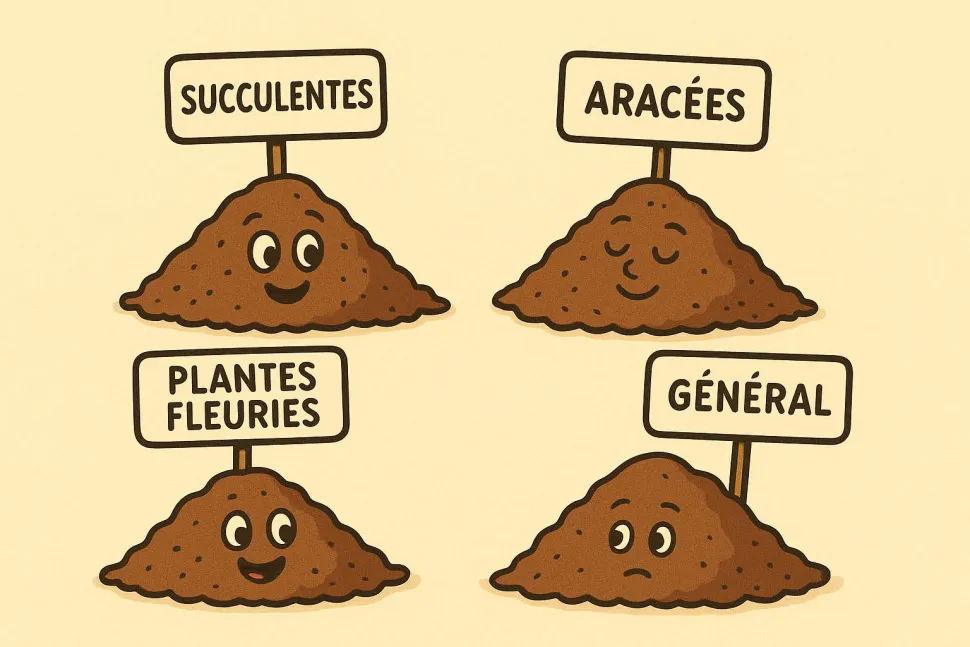
Light, draining, rich or able to retain water, each potting soil has its own properties.
Potting soil doesn't just support your plant. It also provides the nutrients it needs and plays a role in regulating watering. When repotting, therefore, you need to choose a substrate suited to your plant's nutritional requirements and drainage preferences.
Every plant has its own particular needs. For example:
- Cacti and succulents appreciate a light, highly draining substrate, but don't need much in the way of nutrients.
- Araceae (Syngonium, Monstera, Philodendrons) like humidity. Offer them a soil that is both aerated and moisture-retaining. And since they're hemi-epiphytic plants, they don't need too rich a soil.
You don't have to make your own substrate for healthy houseplants. Good-quality commercial potting soil (for green plants, ferns or succulents) will often do the trick. If you want to go the extra mile, invest a few euros in perlite, bark or vermiculite to aerate it. Conversely, you can also add peat moss, sphagnum moss or coconut earth if you want the soil to retain water better.
#7 Take your plants outside in summer
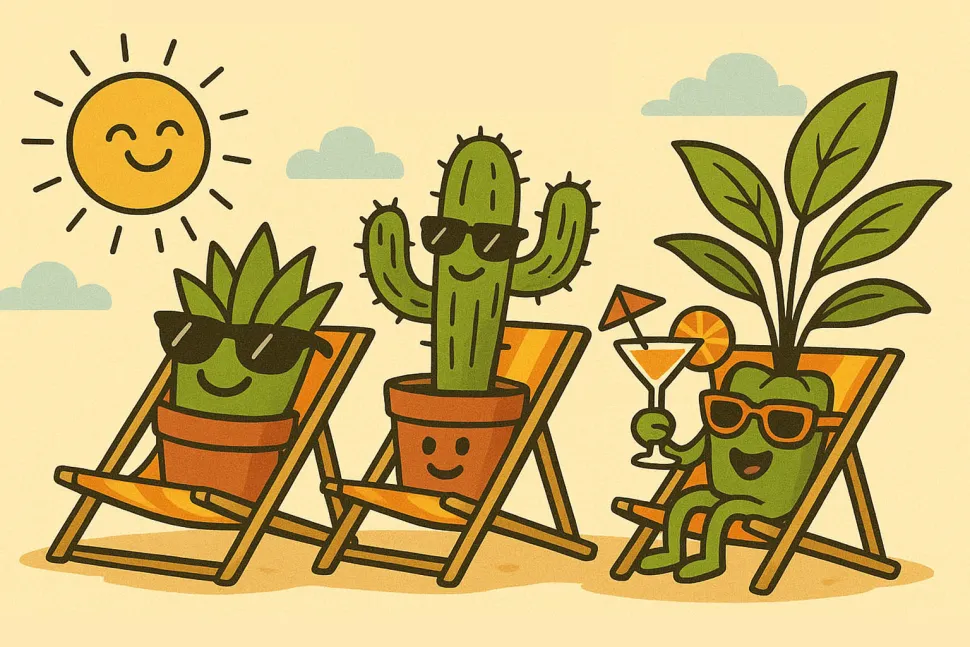
A windowsill is like a villa with a swimming pool for your plants.
Do you like to telework in the shade of your Money tree? You'll have to give up that little pleasure, at least during the summer. In fact, as soon as temperatures permit, take your plants out onto your windowsill, terrace or garden.
Separation may be difficult for you, but it's good for your plant. This outdoor stay allows it to:
- Receive more light;
- Enjoy less dry air;
- Benefit from better air circulation.
The result: brighter, faster-growing foliage. New shoots are more numerous, larger and stronger. For some plants, being outside can even induce flowering!
Taking your plants outside in summer requires a few precautions. You need to get them used to light, gradually increasing the duration and intensity of exposure. Before bringing them inside, examine them carefully. Check that they are not invaded by pests. If they are, treat them and quarantine them to prevent them contaminating others.
#8 Clean houseplant leaves
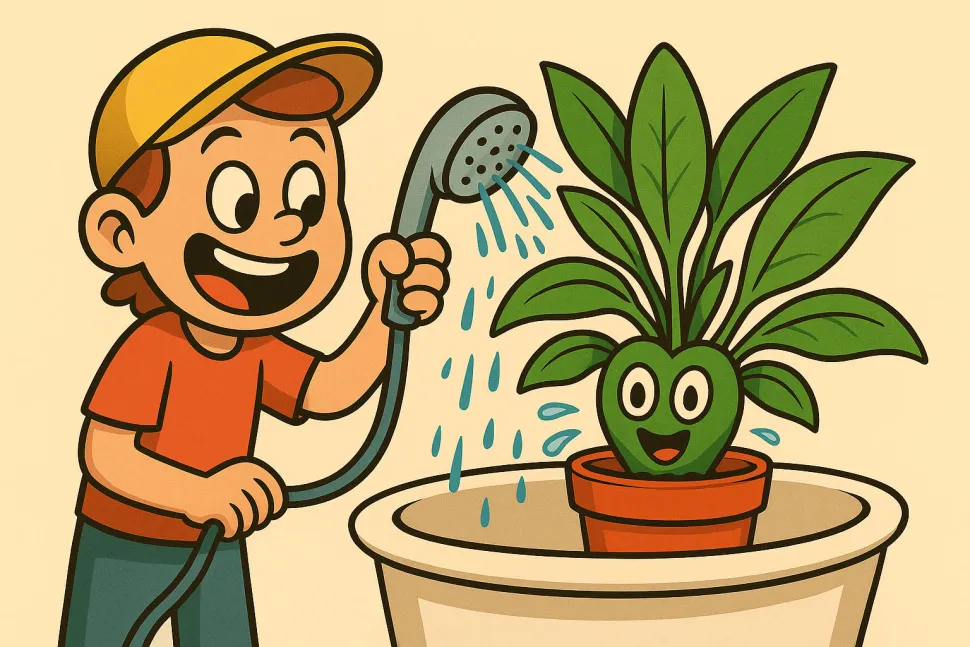
Cleaning not only removes dust, it also gets rid of pests
Sometimes, caring for houseplants requires a little tidying up. Over time, dust and impurities accumulate on the surface of the foliage. They block photosynthesis: the plant captures less light and produces less energy for its growth. Cleaning also allows you to quickly spot and eliminate any parasites (mealybugs, mites, aphids) that often hide on the underside of the leaves.
Dust can be removed with a clean, slightly damp cloth. For plants with small leaves, use a brush. If you don't feel like spending hours on it, and your pot can be moved, place your plant in your bathtub and give it a good shower. Just remember to use lukewarm water and not too strong a spray.
# 9 Don't fill your pot completely with potting soil
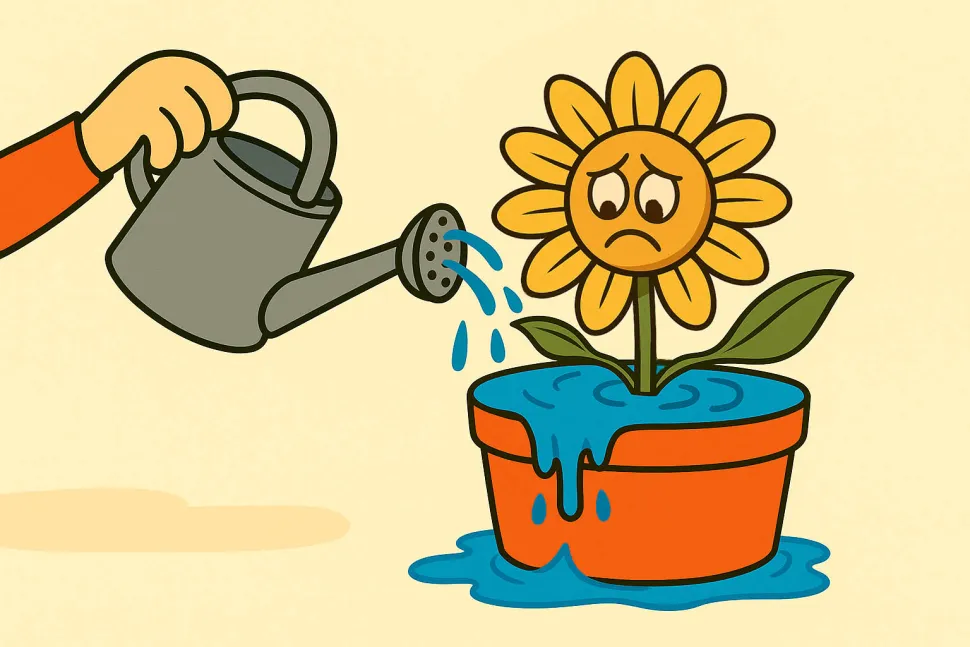
Making a watering bowl is more useful to you than to your plant
This maintenance tip won't change the life of your plants, but it can save you a lot of trouble. When repotting, don't fill the pot completely with potting soil. Stop a few centimetres from the edge. This space will come in handy when you water! Thanks to this space, the water won't overflow and you won't have to clean up after each watering.
# 10 Observe your houseplants
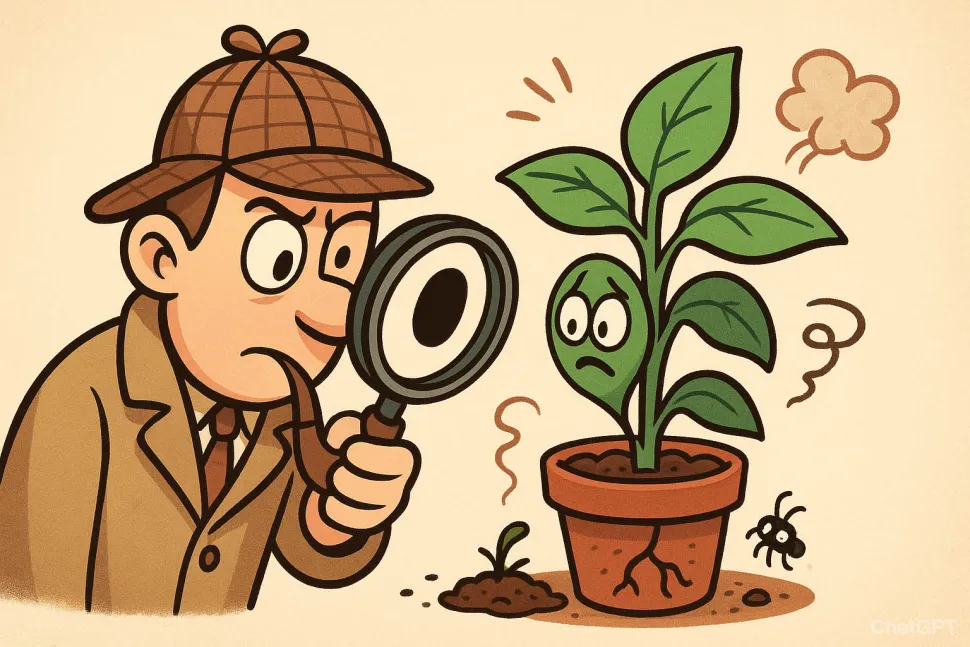
No need to don your Inspector Gadget outfit. However, a magnifying glass is useful for spotting even the smallest pests.
Observe your plants regularly to understand what they're trying to tell you. Is your Pothos drooping leaves? It probably needs watering. Roots escaping from the drainage hole? Repot it! Your Misery 's stems are withering? It needs more light!
Also check your plants for thrips, mealybugs and mites. The sooner you deal with pest infestations, the easier it is to get rid of them.
By Servane Nemetz
the 30-12-2025 à 20h50
the 30-12-2025 à 20h50
Article tags


 In the same category
 Newsletter
Indoor plants
Latest articles
Seaside garden: which spray-resistant plants to plant?
Living in a house with a garden by the sea is like being on vacation all year round. But not for your plants! Between the sea spray that burns the leaves, the wind that blows r...
Living in a house with a garden by the sea is li...
Vegetable gardening: 10 mistakes that ruin your harvests
What if having a profitable vegetable garden wasn't just a question of varieties and the lunar calendar? Whether you have a vegetable garden in your backyard or a few pots on y...
What if having a profitable vegetable garden was...
Vegetable garden on a balcony: how to create a productive vegetable garden in the city?
Apartment gardening isn't just about growing houseplants. If you have a balcony, even if it's only 2 or 3 m², you can turn it into a vegetable garden and harvest your own tomat...
Apartment gardening isn't just about growing hou...
Vegetable gardening: 10 mistakes that ruin your harvests
What if having a profitable vegetable garden wasn't just a question of varieties and the lunar calendar? Whether you have a vegetable garden in your backyard or a few pots on y...
What if having a profitable vegetable garden was...
Vegetable garden on a balcony: how to create a productive vegetable garden in the city?
Apartment gardening isn't just about growing houseplants. If you have a balcony, even if it's only 2 or 3 m², you can turn it into a vegetable garden and harvest your own tomat...
Apartment gardening isn't just about growing hou...
How to get rid of aphids efficiently and naturally?
Gardening means having a long list of enemies. Among the most formidable and frequent are aphids. Tiny but voracious, these insects relentlessly attack your plants' sap, weaken...
Gardening means having a long list of enemies. A...