9 things you need to know about the heartworm (Ceropegia woodii)
Article for :All parent plants
Article summary
- #1: The heart chain is native to Africa
- #2: The heart chain looks like ivy... But isn't!
- #3 Ceropegia woodii is easy to live with
- #4: Stems can grow as tall as narwhals
- #5: Chain-of-hearts leaves aren't always green
- #6 : Ceropegia woodii is also a flowering plant
- #7: Chain of hearts can trap flies
- #8: Ceropegia woodii is easy to cut
- #9: Ceropegia woodii is a climber
In the garden center or on Instagram, its heart-shaped silver leaves melt ours. But the heart chain hides many secrets behind its delicate creeper appearance. Monstera takes you on a discovery of Ceropegia woodii through nine unusual and essential facts.
#1: The heart chain is native to Africa
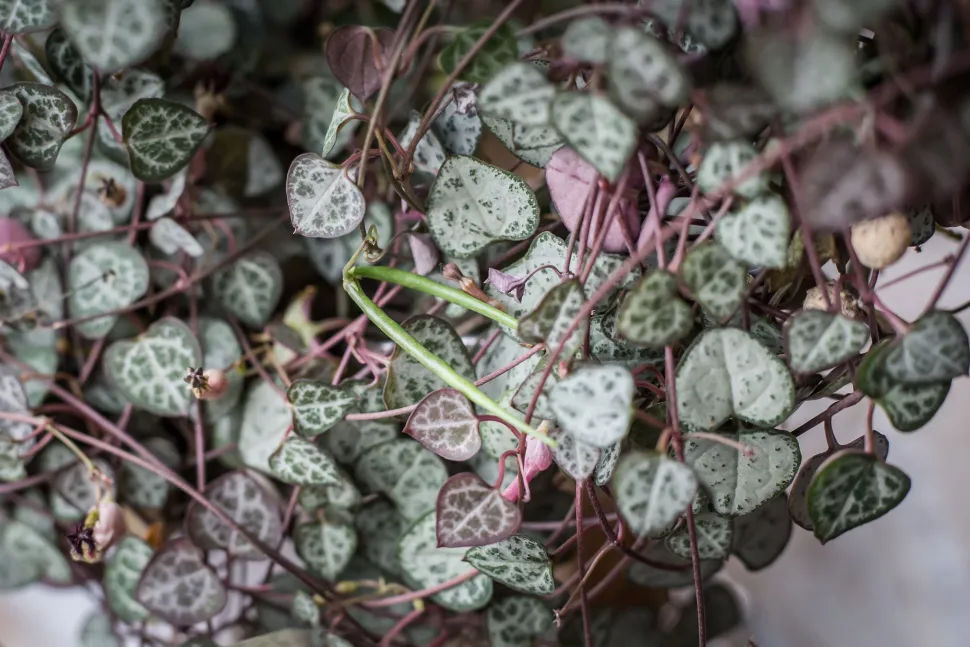
In most regions, the heart chain is grown in pots and indoors. Photo by Maja Dumat /Flickr
Chain of Hearts comes to us fromSouth Africa. The plant grows wild in countries such as Eswatini, Zimbabwe and South Africa. It was in South Africa, in the province of KwaZulu-Natal, that Ceropegia woodii was discovered by local botanist John Medley Wood.
More accustomed to arid deserts than mountain winters, the heart chain is not a hardy plant. It cannot withstand frost or temperatures below 10°C. Unless you live in the tropics, grow it as a warm houseplant.
#2: The heart chain looks like ivy... But isn't!
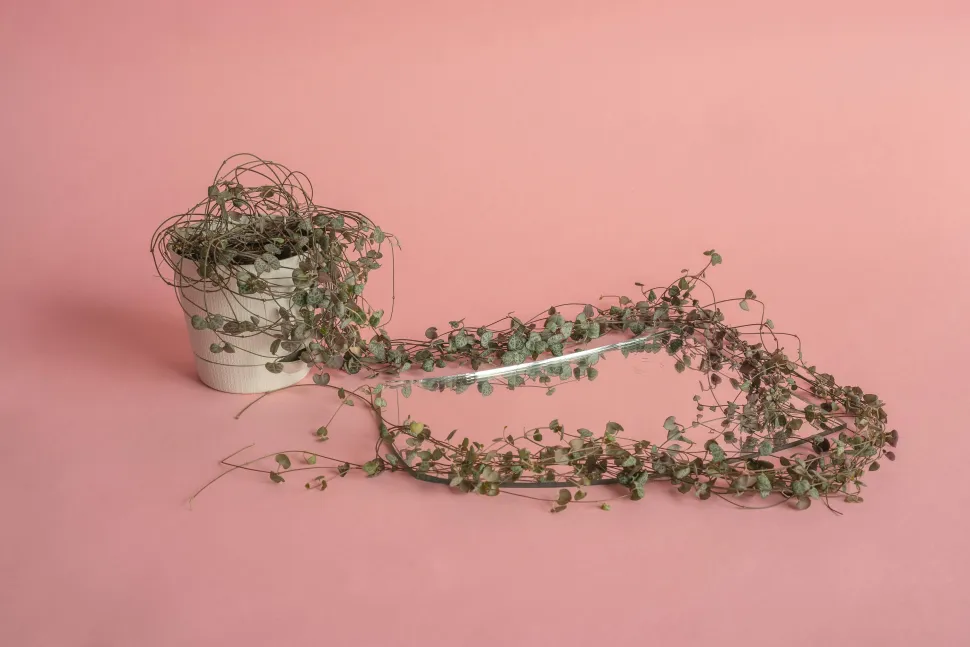
In botany, appearances are often deceiving – Photo by Marina Leonova / Pexels
Because of its long, drooping stems, plant lovers often confuse Ceropegia woodii with ivy. Hedera helix (Hedera helix) belongs to the Araliaceae family, while heart chain is an Apocynaceae.
Your heart chain is therefore closely related to..:
- hoya kerrii, a plant with heart-shaped leaves and porcelain flowers;
- Frangipani (Plumeria), a shrub with waxy white flowers;
- Nerium oleander (Nerium oleander), a flowering shrub with notes of aniseed and vanilla;
- Madagascar jasmine (Stephanotis floribunda), a plant with immaculate, fragrant flowers;
- Periwinkle (Vinca), a colorful perennial.
But unlike some of its cousins, Ceropegia woodii is not a toxic plant.
#3 Ceropegia woodii is easy to live with
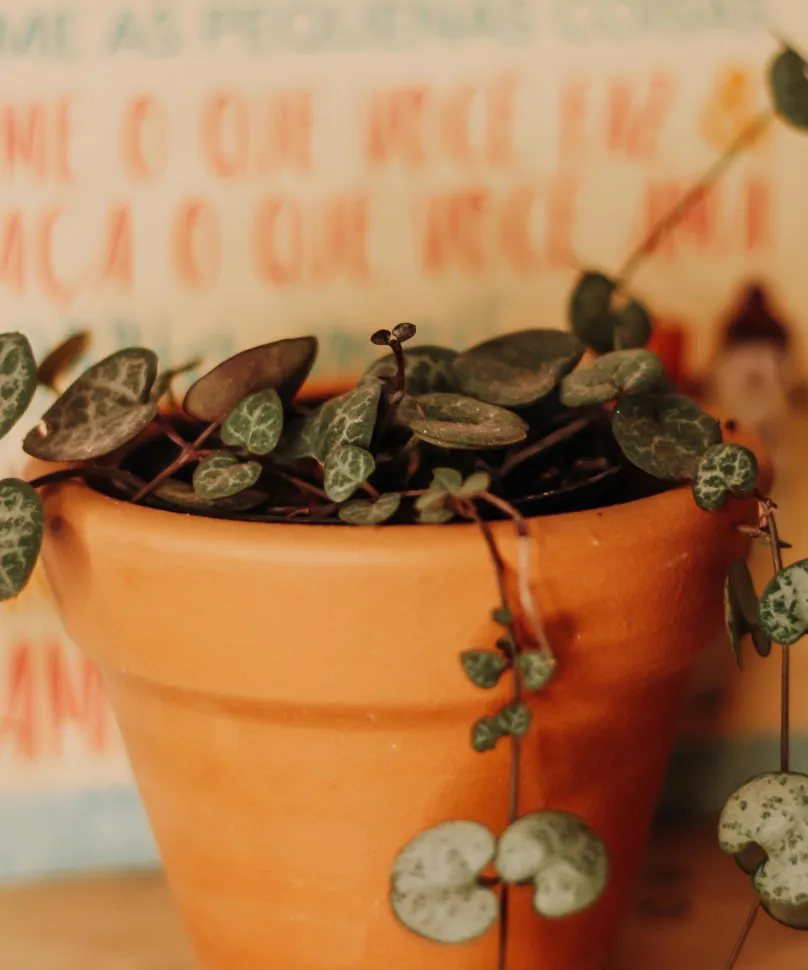
Choose a terracotta pot. Water dries more evenly – Photo by Paloma Clarice / Pexels
All Ceropegia woodii needs is a little love and (not too) fresh water. The heart chain is a semi-succulent plant, which makes it much easier to maintain. It stores water in its tubers and leaves, enabling it to go several weeks without watering.
Water only when the substrate has dried deeply (by at least three centimetres). Haven't downloaded the Monstera app yet and don't know whether to water your heart chain? Take a look! When the leaves are flat, curled up or wrinkled, it means your plant is thirsty.
Ceropegia woodii can also be grown like a cactus or fat plant when it comes to its substrate. It likes light, well-draining soil. You can, for example, repot your Chain of Hearts in a pierced pot filled with potting soil for cacti and succulents.
#4: Stems can grow as tall as narwhals
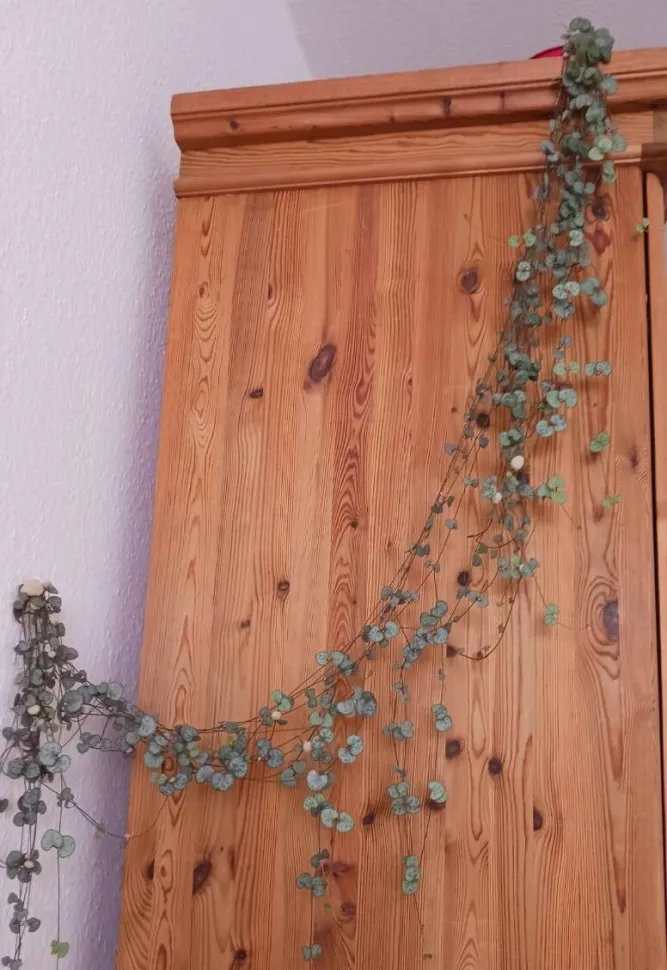
With its long vines, heart chain is perfect for hanging – Photo by Nette Sch / Plantnet
Ceropegia woodii stems can grow to four meters. The equivalent of a narwhal with its horn, a baby elephant or a young giraffe.
If you want your Ceropegia woodii's vines to grow as long as a car or a menhir, fertilize it during its growth phase with a succulent fertilizer.
Are the stems starting to invade your soil? You can prune them at any time of year. You can even use the pruning residues to make cuttings.
#5: Chain-of-hearts leaves aren't always green
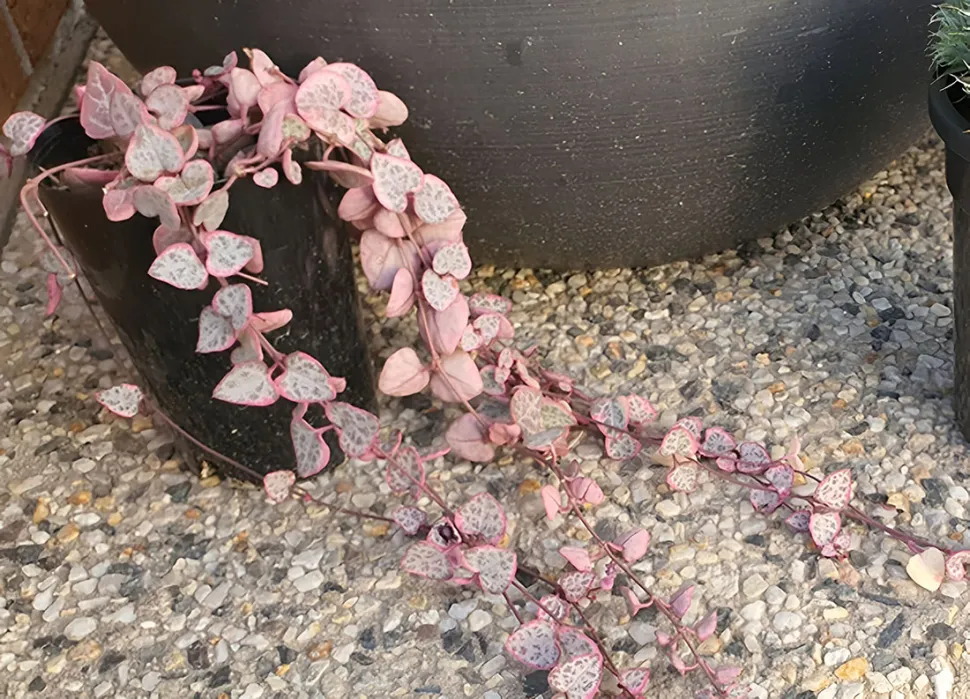
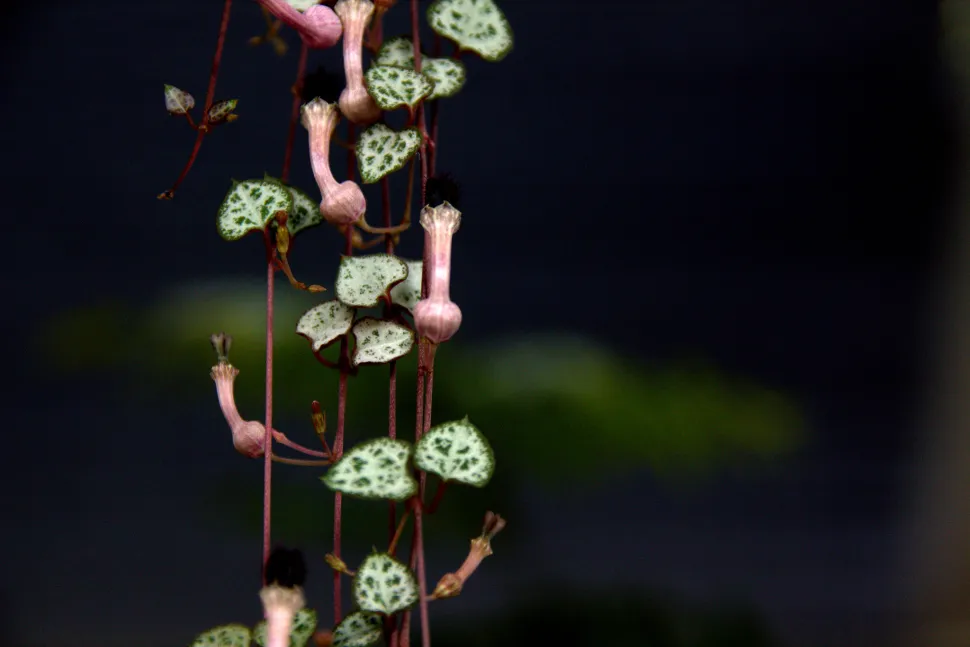
Little pink hearts, what could be more romantic? Lek Khauv /iNaturalist
The color of the foliage changes with the light. Botanical Ceropegia woodii, the one most often found, has light green, silvery leaves when the plant receives sufficient light. But the leaves turn dark green when the heart chain lacks sunlight,
Foliage color also depends on the variety. There is, for example, a hybrid variety: Ceropegia woodii variegata. Its light-green blades are variegated with cream and pink. You too can treat yourself to a Ceropegia woodii 'Silver Glory'. Its leaves, larger than those of the botanical variety, are predominantly silver, with only the edges green.
Whichever variety you grow, give your plant plenty of light so that it can develop all its colors. Indoors, hang your chain of hearts behind an east- or west-facing window. You can also take it outside when temperatures permit, to let it enjoy the sunshine. It's always brighter outdoors. However, you need to gradually get your Ceropegia woodii used to its new exposure, and never leave it in direct sunlight during the hottest hours of the day. You risk burning its foliage.
#6 : Ceropegia woodii is also a flowering plant
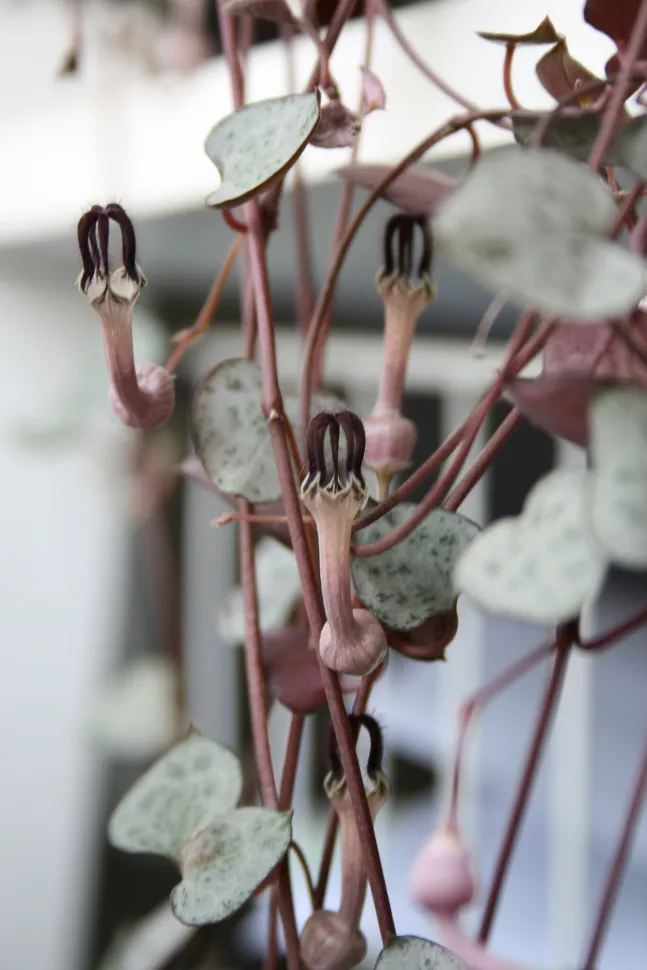
The flowers of Ceropegia woodii, both beautiful and bizarre – Photo Wikipedia
Ceropegia comes from the Greek keros (meaning wax) and pege (meaning fountain). The name is a direct reference to the shape of the flowers. Why is this? Quite simply because the botanist Carl von Linné, who named the genus, thought the tubular flowers resembled little waxy fountains.
If you know what he was thinking, send us a message! Monstera's pink or purple tubular flowers look like lanterns or urns.
In nature, the heart chain blooms in summer. Flowering is rarer when the plant is grown in pots and indoors, but is not exceptional and occurs all year round. Provided your Ceropegia woodii receives sufficient light and has a resting period in winter. Place your heart chain for a few weeks in a veranda or loggia with a temperature between 10 and 15°C to stimulate its flowering.
#7: Chain of hearts can trap flies
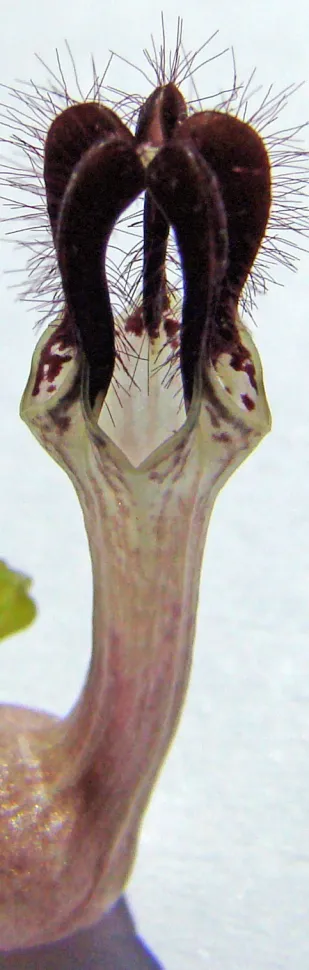
Close-up, the flower is even more bizarre, or beautiful, it's up to you to decide – Photo by Mercewiki /Wikipedia
Ceropegia woodii's tubular flowers aren't just for show. Above all, they help the plant to reproduce. And for this, the heart chain has an unstoppable technique.
Firstly, its flowers give off a sweet fragrance to attract insects. And they're covered with hairs that trap them. The flies, attracted by the scent, crawl inside the flowers. They are temporarily held captive by the hairs, until they are covered with pollen. They then deposit the pollen on the next flower they visit, enabling the plant to multiply.
#8: Ceropegia woodii is easy to cut
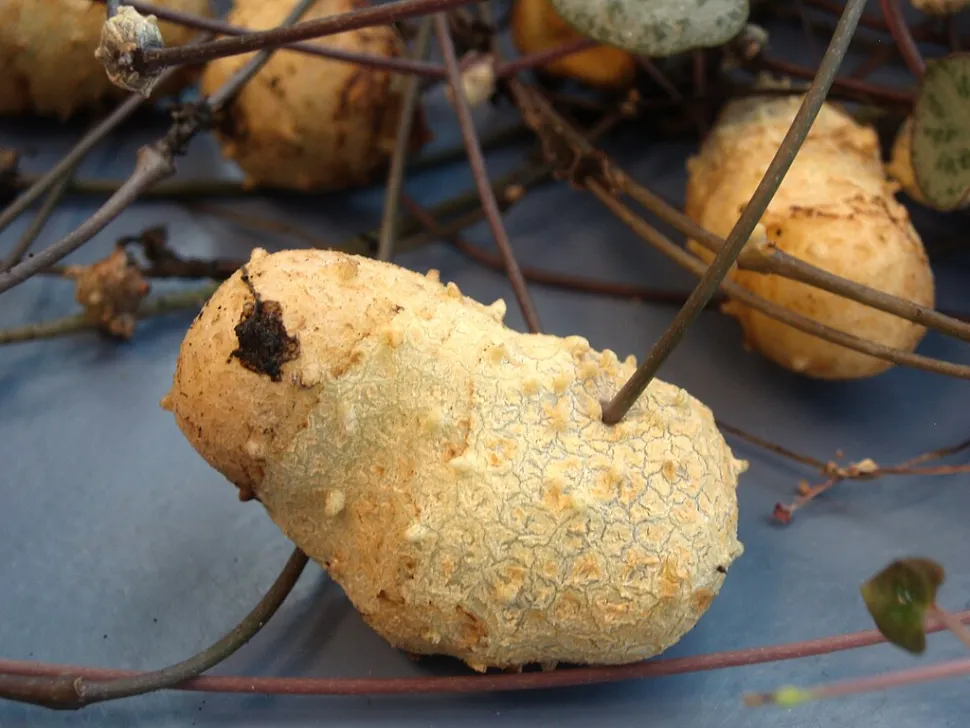
With a tuber, propagation is quick and easy – Photo by Mercewiki / Wikipedia
Easy to grow, Ceropegia woodii is also easy to propagate. You can :
- Remove a tuber (caudex) and replant it in the soil;
- Cut a stem with a caudex in the soil;
- Root single stems without tubers in water before repotting.
Chain hearts are fast-growing. It takes just a few weeks in summer for your cuttings to produce roots and give you new plants.
#9: Ceropegia woodii is a climber
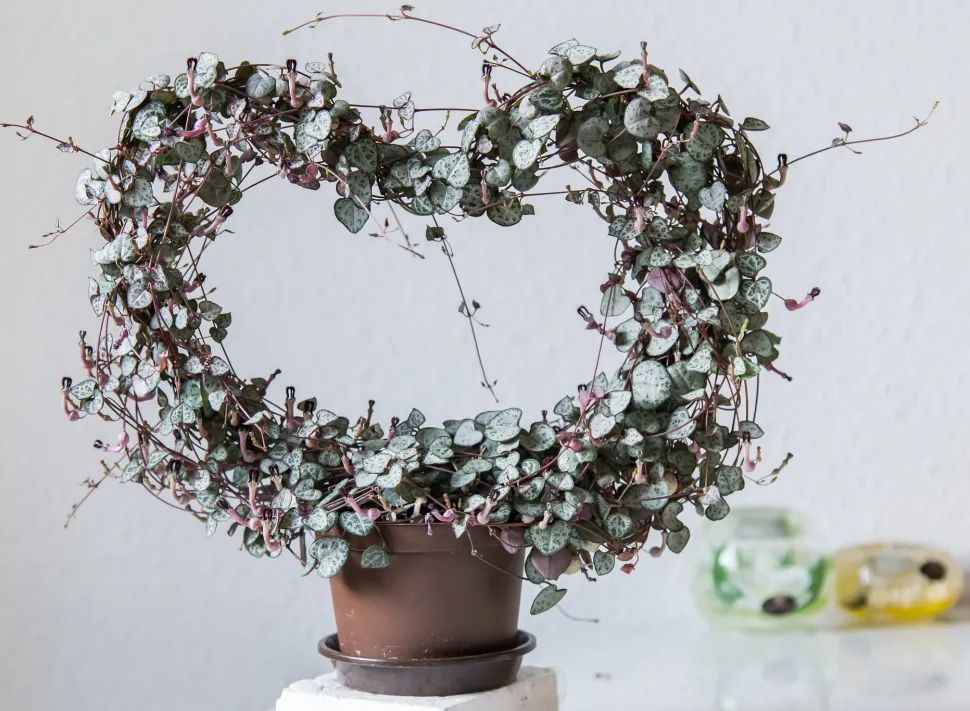
How many hearts can you count in this photo? Photo by Maja Dumat /Flickr
Indoors, we almost always grow the heart chain suspended to enjoy its cascades of foliage. But in the wild, it's happy to climb trees and rocks.
There's nothing to stop you reproducing this behavior at home: a stake, a trellis, a decorative support... And you'll see your Ceropegia woodii in a whole new light.
 Plants toxic to cats and dogs: varieties to avoid in the garden and indoors
 Seaside garden: which spray-resistant plants to plant?
 Vegetable gardening: 10 mistakes that ruin your harvests