Grow plants without soil thanks to hydroponics
Article for :Experienced plant loverPlant addict professional
Article summary
Tired of your cat confusing its litter box with the potting soil in your Ficus elastica? Why not get rid of it (the potting soil, not the cat or the Ficus)? Thanks to hydroponics, you can grow your plants without soil, simply with water, a medium and a nutrient solution. We tell you more about this simpler-than-it-seems growing method.
What is hydroponics?
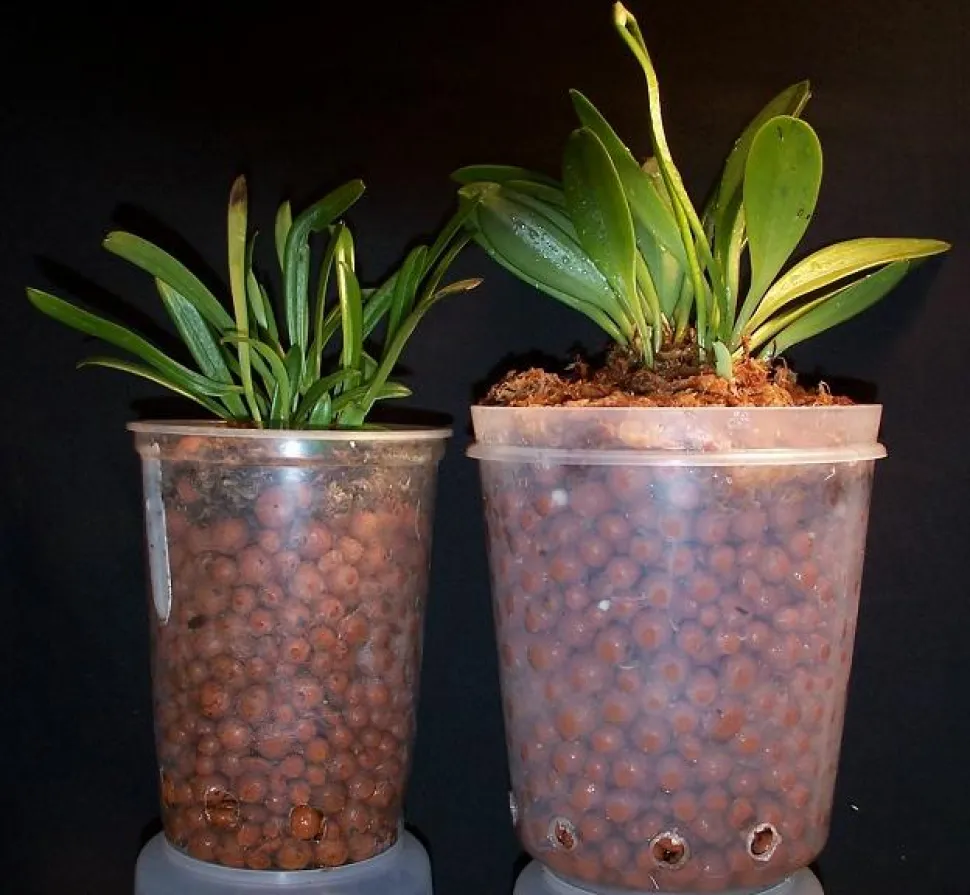
Hydroponics is a method of growing plants without soil, in a moist, stable environment. Instead of potting soil, we use a neutral substrate (with a pH of 7), such as :
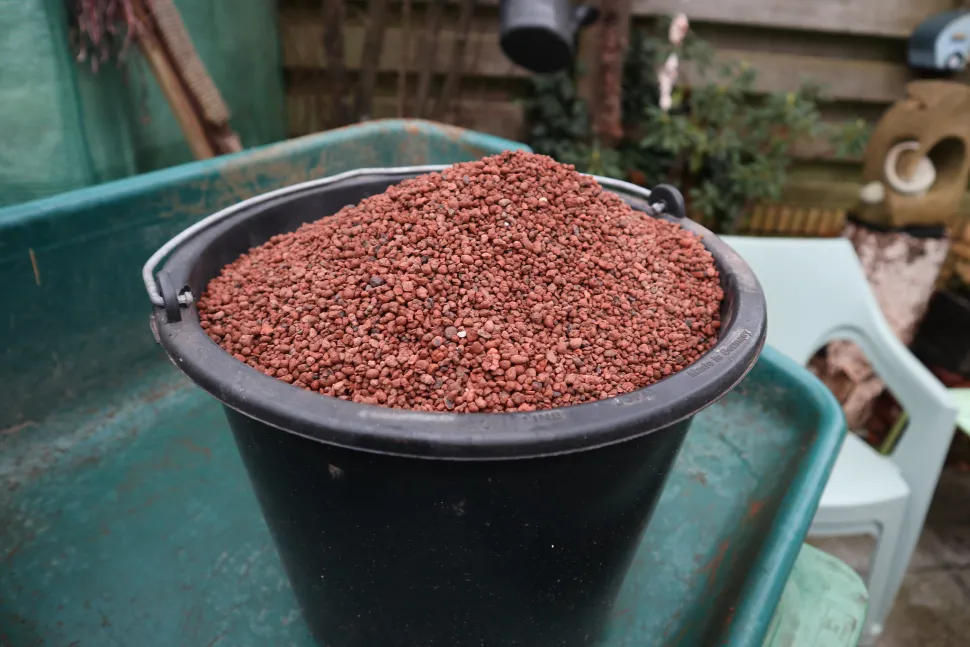
LECA is one of the most widely used substrates for growing hydroponic houseplants - Photo by Jerry Norbury /Flickr
- Clay beads or LECA (acronym for Lightweight expanded clay aggregate);
- Pozzolan ;
- Sand ;
- Perlite ;
- Coconut fiber;
- PON (a mineral substrate made from pumice and lava rock).
These substrates provide no nutrients, unlike potting soil or garden soil. They are used to support the plant. To feed the plant, you need to add a nutrient solution to the water.
Finally, hydroponics requires a regular supply of water to maintain constant humidity around the roots.
When a plant is grown in LECA, PON or pozzolan, we speak ofpassive hydroponics. In professional agriculture, we also find active systems, with pumps that ensure continuous water and air circulation.
What's the difference between hydroponics and hydroculture?
The terms hydroponics and hydroculture are often used interchangeably. Yet there is a difference between the two.
In hydroponics, the plant is grown on a support. This method is also known as semi-hydroculture or semi-hydro.
In hydroponics, plants grow only in water, like when we take cuttings. In recent years, this technique has become much more widespread. More and more of us are growing plants, even mature ones, in water, without any substrate.
Should we adopt soil-less cultivation?
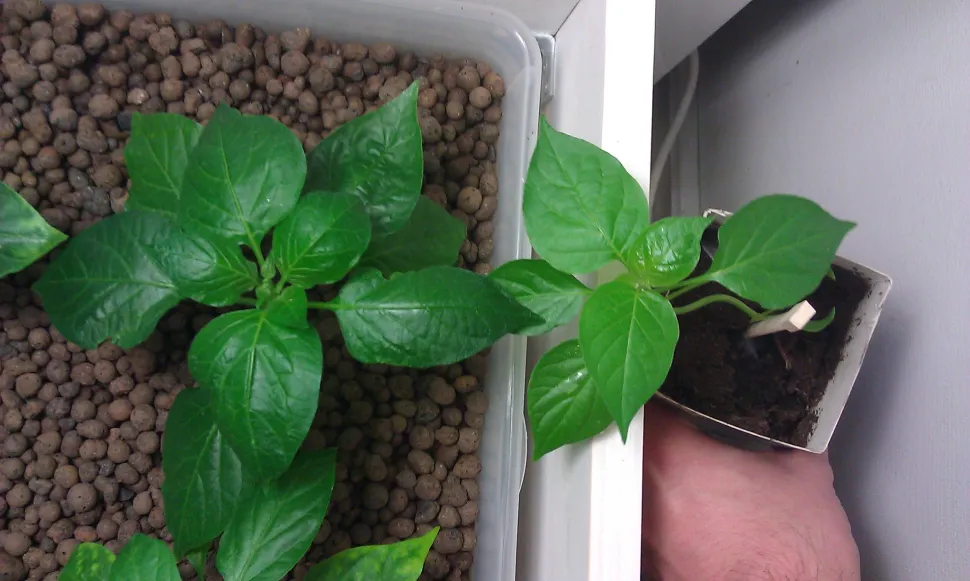
Some claim that plants grown hydroponically grow faster - Photo by Mannewaar /Flickr
Many enthusiasts say they switched to hydroponics for aesthetic reasons. A transparent container, revealing the clay balls and roots, is far more pleasing to the eye than a pot filled with potting soil.
Others see it as a more practical way of maintaining green plants. Fewer repottings, less watering... But a little more rigorous water and nutrient management. It's up to you to decide which you prefer!
The (real) advantages of hydroponics
Hydroponics allows you to monitor the condition of the roots without having to remove the plant from the soil. You can monitor their development and detect the first signs of distress.
Semi-hydroculture reduces the risk of root rot. Theoretically, water levels are kept under control, and not all roots are in water all the time. What's more, the draining support ensures good air circulation.
The absence of soil also limits the development of parasites. Fungi, bacteria, soil-borne midges and even mealybugs prefer water-logged soil to a hydroponic environment that's too clean and damp for them!
Last but not least, semi-hydro cultivation means you can be away for longer. Plants benefit from a larger water reserve than in a pot. So they can survive a few days longer without your intervention.
Disadvantages of hydroponics
Hydroponics requires greater precision. A poorly adjusted pH, too much fertilizer or forgetting to change the water can quickly unbalance the system. What's more, since plants have fewer resources with which to survive, they are less forgiving of mistakes.
What's more, managing pH and nutrient supply is a little more complicated than just getting out your watering can. You need to be more attentive, more regular and more meticulous than when growing in soil.
Light encourages the proliferation of green algae in the water. While not dangerous, they can interfere with root respiration and assimilate nutrients instead of your plant. Transparent containers should be washed regularly to remove them.
Last but not least, taking your plants out in hydro during the summer months can be complicated. Glass containers are not always suitable for use in the garden. What's more, rainwater can upset the balance of the growing medium.
Which plants to choose for semi-hydroculture?
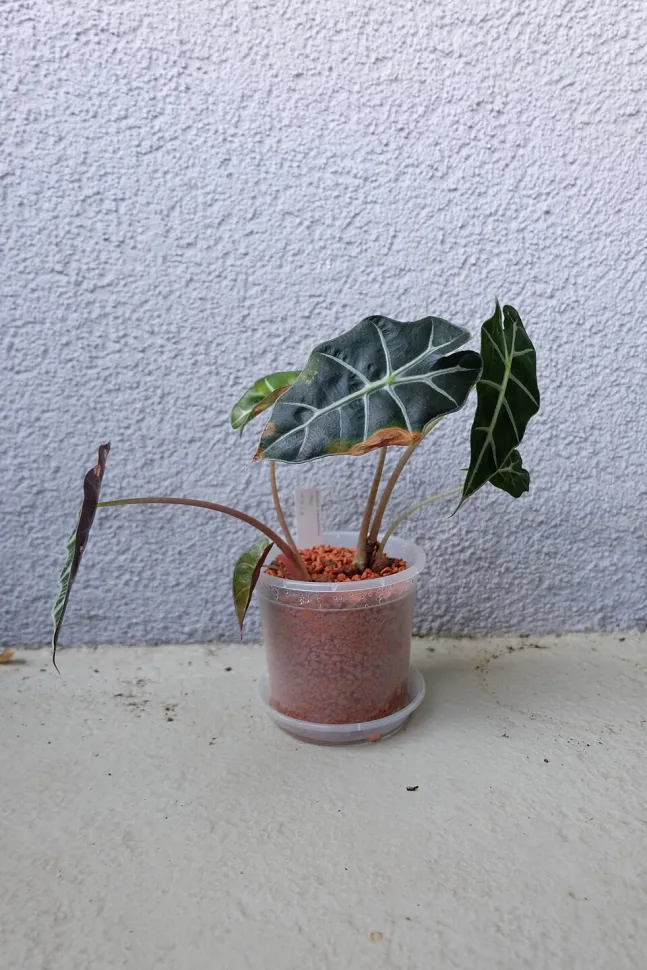
Alocasia are almost easier to grow hydroponically - Photo by Tim Kortekamp /wikipedia
Most houseplants tolerate hydroponics well, but some are easier to grow than others. For starters, give preference to :
- Araceae: Monstera, Pothos, Philodendron, Spathiphyllum, Syngonium ;
- Begonias ;
- Ficus ;
- Calatheas ;
- Miseries (Tradescantia).
Once you're comfortable, you can try more demanding plants such as Alocasia, Homalomena or Anthuriums with decorative foliage.
On the other hand, the hydroponic system is not suitable for outdoor cultivation, as you can less easily control the various parameters.
How do I set up hydroponics at home?
To get started with hydroponics, it's best to choose a cutting or a plant that you need to save. Transplanting a specimen that is doing well in soil to semi-hydro culture is risky. It may have difficulty adapting.
To grow your plants hydroponically, you'll need:
- A container ;
- A substrate;
- Filtered water with a pH between 5.5 and 6.5;
- A nutrient solution.
Step 1: choosing the right container
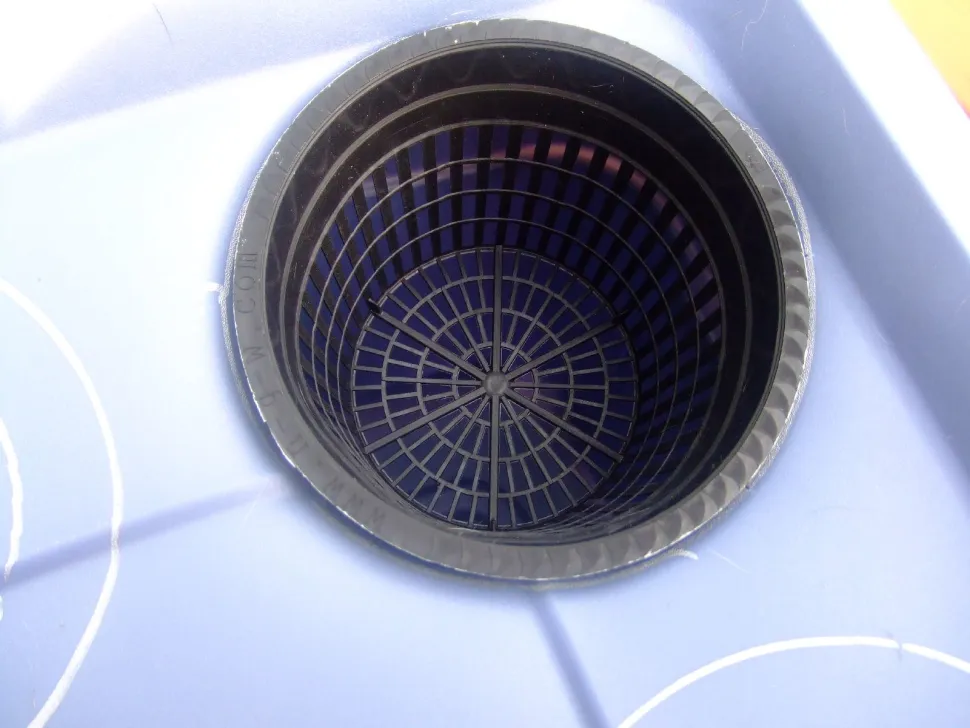
A hydroponic basket makes it easier to change water - Photo by J. Wynia / Flickr
You can use a vase or a pot. But you'll find it easier to care for your plant if you opt for a pierced container that you slip into a slightly larger one. You can, for example, buy a hydroculture basket or cut holes in a plastic pot.
You can choose a transparent container, but to avoid algae, prefer an opaque model.
Step 2: Prepare your substrate
Rinse the LECA, PON or pozzolan thoroughly until the water runs clear.
If you're using a clay-based substrate, soak it in water for 24 hours to hydrate it.
Step 3: Clean the roots
Remove all soil from around the roots. Potting soil can contaminate the water and rot the root system.
Are you doing a rescue? Trim the roots with a clean, sharp tool to remove any damaged parts.
Step 4: Install the plant
Pour a layer of your neutral medium into the hydroponic container or basket. Install your plant and add substrate up to the collar. Slide your pierced container (hydroponic basket or pot riddled with holes) into its planter.
Add water up to halfway up the roots. If your plant already has roots, dilute the nutrient solution in the water. If you're growing a cutting, add water only. You'll add nutrients when the first roots appear.
Then place the plant in its final location. Make sure you respect the recommended exposure (shade, sun, half-shade). If you're not familiar with hydroponics, take a look at our growing guides!
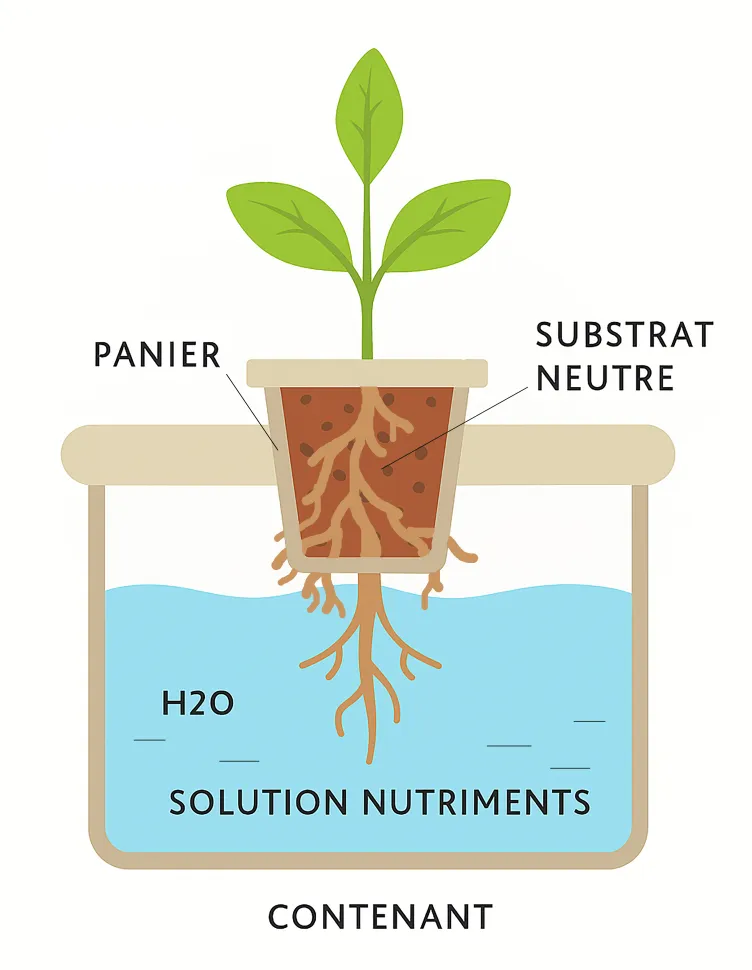
Hydroponics in a nutshell
How do you care for a plant that grows without potting soil?
The key to hydroponic maintenance lies in the nutrients you provide your plant. Without them, it won't grow. There are several products on the market, with different dosages and frequency of administration. Prices also vary according to brand. It's up to you to decide which one suits you best.
You also need to change your water regularly to keep it healthy and nutrient-rich. In general, you should change it every two to three weeks. The frequency is indicated on the hydroponic nutrient solution you use. You can also test the water's pH and mineral content, so as to renew it when thresholds are exceeded.
Take advantage of the water change to wash your pot, especially if it's transparent and algae are proliferating. Clean it with clear water (you can use tap water), but don't add washing-up liquid or any other product. It could leave a residue in your vase.
Mistakes to avoid with semi-hydro
Semi-hydro cultivation is simpler than it sounds. But certain mistakes can be fatal to your plants. Here's what they are:
1. Not rinsing the substrate. You absolutely must rinse the LECA, PON or pozzolan to eliminate dust and residues.
2. Forgetting to change the water: renewing the water helps oxygenate the plant's roots and prevent the appearance of bacteria.
3. Incorrect fertilizer dosage. Without a nutrient solution, your plants won't grow. Conversely, too much fertilizer can burn the roots. You must respect the dosage and frequency prescribed by the manufacturer.
4.use too much water. Only the bottom of the roots should be soaked in water, otherwise the plant will suffocate.
5.use water with the wrong pH. Unless otherwise indicated, the pH should be slightly acidic, between 5.5 and 6.5. Avoid bottled water, which contains minerals and nutrients you can't check or control.
By Servane Nemetz
the 17-12-2025 à 14h37
the 17-12-2025 à 14h37
Article tags


 In the same category
 Newsletter
Indoor plants
Latest articles
Seaside garden: which spray-resistant plants to plant?
Living in a house with a garden by the sea is like being on vacation all year round. But not for your plants! Between the sea spray that burns the leaves, the wind that blows r...
Living in a house with a garden by the sea is li...
Vegetable gardening: 10 mistakes that ruin your harvests
What if having a profitable vegetable garden wasn't just a question of varieties and the lunar calendar? Whether you have a vegetable garden in your backyard or a few pots on y...
What if having a profitable vegetable garden was...
Vegetable garden on a balcony: how to create a productive vegetable garden in the city?
Apartment gardening isn't just about growing houseplants. If you have a balcony, even if it's only 2 or 3 m², you can turn it into a vegetable garden and harvest your own tomat...
Apartment gardening isn't just about growing hou...
Vegetable gardening: 10 mistakes that ruin your harvests
What if having a profitable vegetable garden wasn't just a question of varieties and the lunar calendar? Whether you have a vegetable garden in your backyard or a few pots on y...
What if having a profitable vegetable garden was...
Vegetable garden on a balcony: how to create a productive vegetable garden in the city?
Apartment gardening isn't just about growing houseplants. If you have a balcony, even if it's only 2 or 3 m², you can turn it into a vegetable garden and harvest your own tomat...
Apartment gardening isn't just about growing hou...
How to get rid of aphids efficiently and naturally?
Gardening means having a long list of enemies. Among the most formidable and frequent are aphids. Tiny but voracious, these insects relentlessly attack your plants' sap, weaken...
Gardening means having a long list of enemies. A...