Hydroculture: how to grow your plants in water alone?
Article for :Experienced plant loverPlant addict professional
Article summary
You love plants, but hate repotting? Are you put off by potting soil, but still dream of an indoor jungle? Don't panic: your Monstera deliciosa can flourish in your home... Even without soil! Thanks to hydroculture, you can grow your plants directly in water, without the need for substrate.
What is hydroculture?
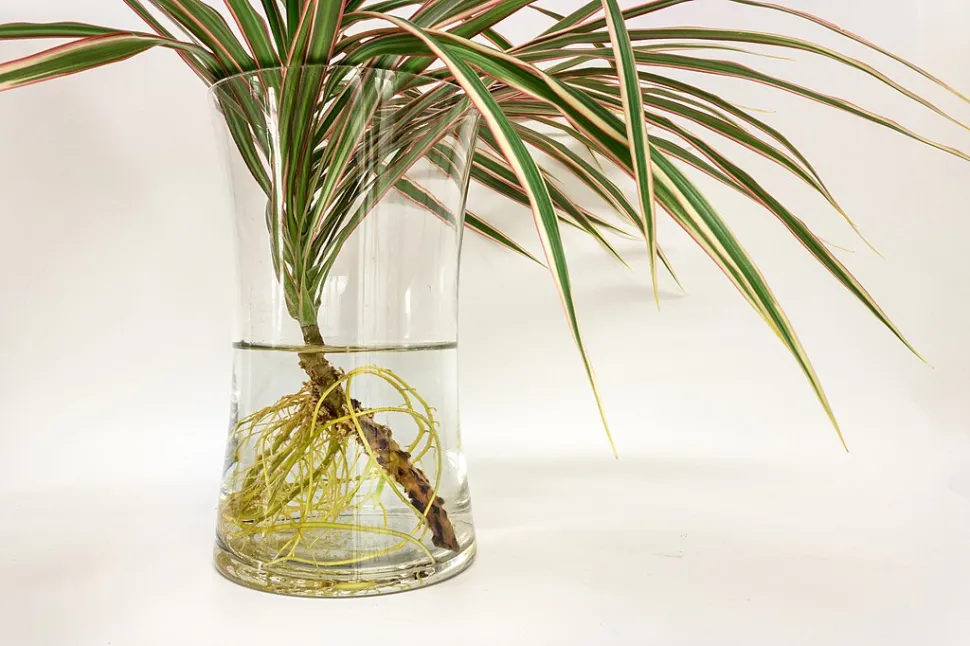
With hydroponics, you don't need soil, just water - Photo by W. Carter / Wikipedia
Hydroculture involves growing a plant solely in water, without soil or substrate. The roots receive all the minerals they need from a nutrient solution. This method is just as suitable for houseplants as it is for herbs, fruit or vegetables.
What's the difference between hydroculture, semi-hydro and hydroponics?
The terms hydroculture, hydroponics, semi-hydroculture or semi-hydroponics are often used interchangeably. But they're not quite the same thing.
Hydroponics, sometimes also called semi-hydroculture or semi-hydro, involves using a neutral substrate (PON, LECA, pozzolan, clay balls) in addition to water and nutrients. In hydroculture, you don't need any.
Advantages and disadvantages of hydroponics
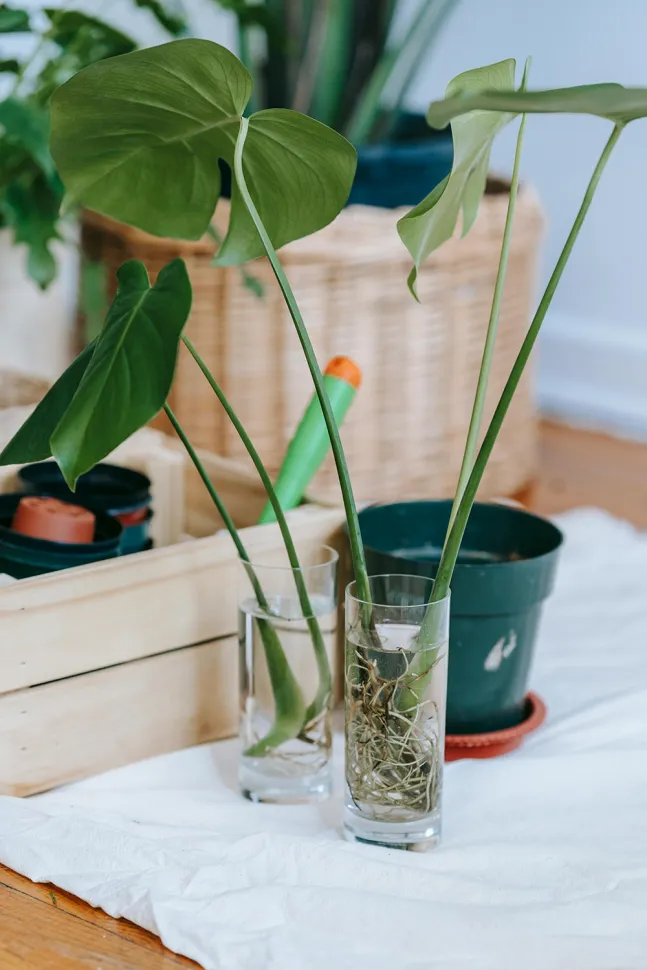
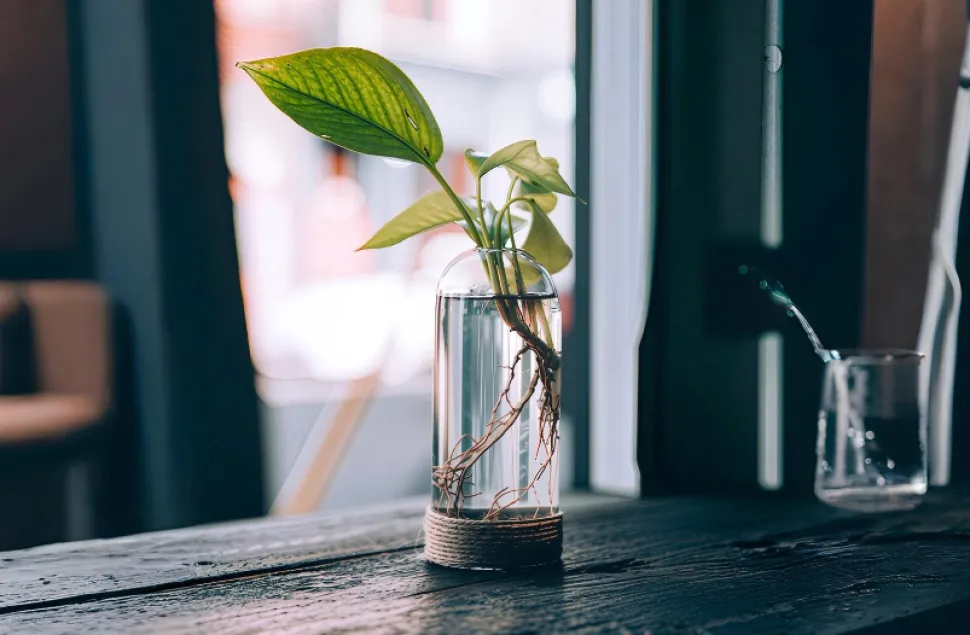
Seeing the roots helps identify problems - Photo by Teona Swift / Pexels
Many hydroponic enthusiasts emphasize the aesthetic benefits of growing plants in water, as well as the ease of maintenance. We'll let you be the judge. But while hydroculture spares you the hassle of repotting, you still need to maintain your jungle on a regular basis.
The advantages of hydroculture
Paradoxically, a plant is less at risk of over-watering or root rot when its root system is immersed in water! This is because water contains oxygen, whereas soggy soil becomes asphyxiating.
Hydroculture also helps to reduce parasite invasion, especially those that thrive in soil and proliferate under water stress.
Last but not least, hydroculture allows you to watch the roots develop and monitor their condition without having to de-pot the plant.
Disadvantages of hydroponics
Hydroponics requires greater regularity and attention than soil cultivation. While in potting soil, you can skip fertilization, in hydroculture, the nutrient solution is essential for your plants to survive.
At Monstera, we recommend that you take your houseplants out into the garden or onto the windowsill during the summer months, so that they can benefit from the rain and natural light. It's much more complicated with hydroponics! First of all, pretty glass vases are ill-suited to life in the great outdoors. And rain is likely to thwart your efforts to provide your protégée with pH-balanced water and nutrients.
Last but not least, hydroponic plants grow more slowly. While some point out that roots grow faster because they absorb the nutrient solution directly, others note that new leaves are fewer and less developed.
Which plants should be grown only in water?
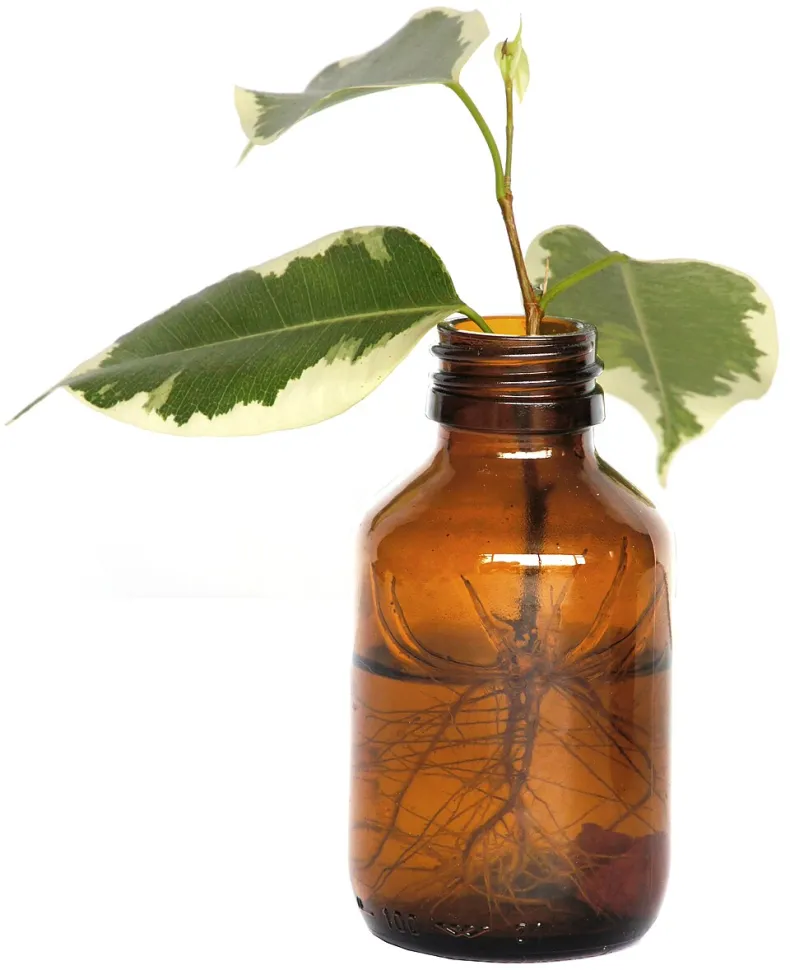
Ficus elastica adapts well to water - Photo by Bilusch / Wikipedia
Many houseplants can grow in water, without soil or substrate. To get you started, try these tolerant and readily available varieties:
- pothos ( Epipremnum aureum);
- monstera deliciosa;
- Lucky bamboo ( Dragonwood braunii);
- Les Misères (Tradescantia);
- philodendron hederaceum.
Once you've mastered the basics, you'll be able to tackle more demanding species that are just as suited to 100% water culture, such as :
- Alocasia ;
- Calathea ;
- Homalomena.
Last but not least, succulents such as mother-in-law's tongue are also suitable for hydroculture.
How to grow plants successfully in hydroculture (without substrate)?
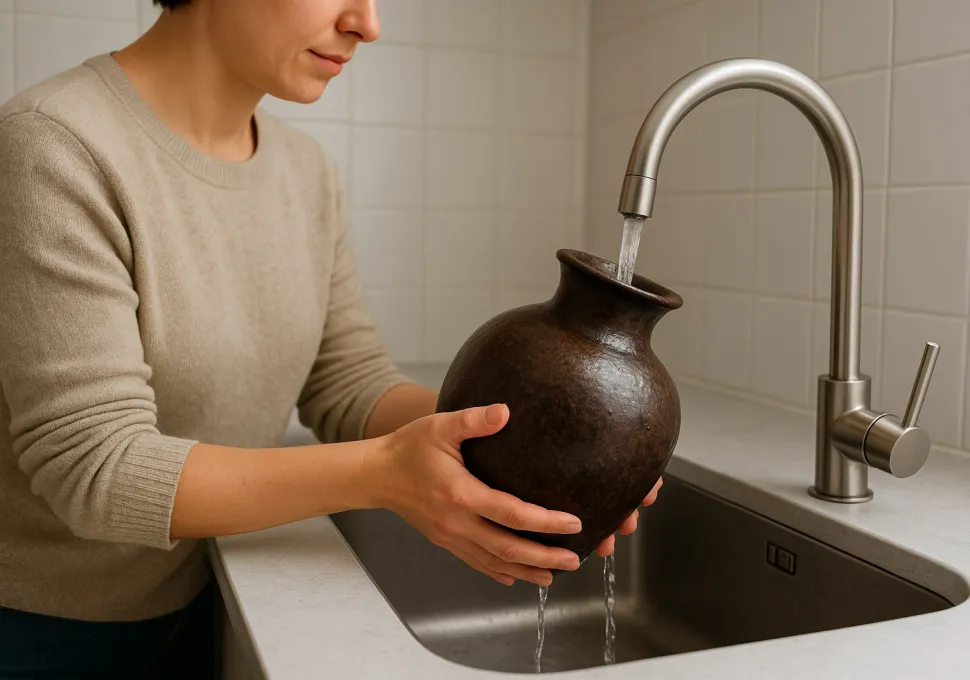
You can use tap water to clean your containers and roots.
Ready to get started? Here's how to get started.
Choosing the right container
In photos circulating on social networks, hydroponically grown plants take pride of place in pretty transparent vases that reveal their roots. In practice, however, these containers let in light and encourage the formation of green algae! Although not dangerous, they do consume some of the nutrients and cloud the water. You therefore need to clean the container regularly to eliminate them.
If you want to save yourself the hassle of cleaning with a swab, opt for an opaque, colored or semi-transparent pot. You can also place your glass vase in a light-blocking planter: your roots will stay healthy, and your plant will keep its radiance.
It doesn't matter whether it's translucent or opaque. Your container must be adapted to the size of your plant, so that it doesn't topple over under its weight. It must also be large enough to accommodate its roots, which, if all goes well, will grow at top speed.
Choosing your plant
Successful hydroculture is easier with a specimen that has always been grown in water. To get started, we recommend taking a healthy cutting from one of your plants.
You can also choose a soil-grown plant that you've bought off the shelf or already have at home.
Finally, you can try to save a plant that has been over-watered or attacked by thrips by switching to hydroponics.
Preparing the plant
If your plant was grown in soil, you need to remove all the substrate. Remove most of it by hand, then rinse the roots with lukewarm water until the last grain of soil has disappeared. You can do this with tap water.
This is a painful but essential step.The soil can carry bacteria and compromise the balance of the environment you're trying to create.
Preparing the water
Fill your container with water at room temperature and a pH between 5.5 and 6.5. You can use filtered or distilled water, or even tap water. But you'll need to check its pH and correct it with specialized products.
If your plant is a cutting, fill your container with pure water. Wait until the first roots appear before adding the nutrient solution.
If your plant has roots, add a nutrient solution to the water to provide nutrients. Products designed specifically for hydroponics and hydroculture are available on the market. But some gardeners prefer to use a liquid fertilizer, the same as for potted plants. In all cases, scrupulously respect the dosage recommended by the manufacturer to avoid damaging your plant and to provide it with the necessary nutrients.
Place your plant in the container filled with water.
Change the water regularly
Changing the water regularly is a key step in maintaining your hydroponic plants. It helps to :
- Reoxygenate the roots;
- Guarantee a regular supply of nutrients;
- Maintain a stable pH;
- Prevent the development of algae and bacteria.
Don't wait until the water is dirty or the level drops to change! Depending on your container, you'll need to change the water every week, every two weeks or every three weeks. The smaller your vase, the more regularly you'll need to do this.
When you change the water, take the opportunity to clean the pot. This will help get rid of algae and bacteria. Rinse thoroughly with clean water and use a clean swab or sponge. Avoid dishwashing liquid, however, as it leaves a residue.
Then fill your pot with water, add the nutrient solution and adjust the pH if necessary.
Our tips for successful hydroponics
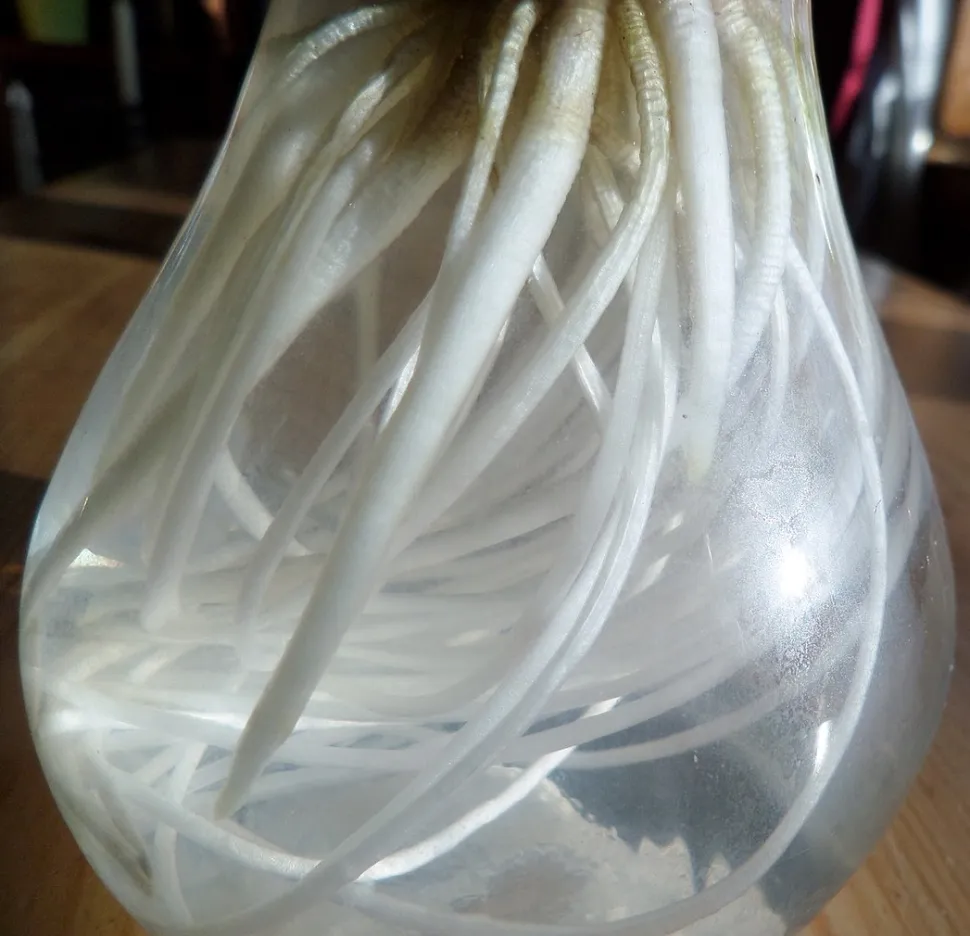
Your reward? Plenty of healthy roots - Photo by Rosser1954 / Wikipedia
1.regularity is the key to happy soil-less plants. Change the water regularly, clean the pot and don't forget the nutrient solution! If you're afraid you won't remember, download the Monstera app and set your own hydroculture reminders. We'll send you a notification when it's time to take action.
2.follow the instructions for dosing fertilizer or nutrient solution. Don't overdose to make your plants grow faster. It won't work, and you risk burning the roots or foliage!
3.your plant also needs light. Respect the recommended exposure (shade, half-shade or full sun).
4. Always use water at room temperature, whether for cleaning the roots or for your container. Water that's too cold or too hot will damage the roots.
5.don't fill your vase or pot to the brim. Stop two to five centimetres beforehand to allow oxygen to circulate and renew itself.
By Servane Nemetz
the 26-02-2026 à 20h30
the 26-02-2026 à 20h30
Article tags


 In the same category
 Newsletter
Indoor plants
Latest articles
Seaside garden: which spray-resistant plants to plant?
Living in a house with a garden by the sea is like being on vacation all year round. But not for your plants! Between the sea spray that burns the leaves, the wind that blows r...
Living in a house with a garden by the sea is li...
Vegetable gardening: 10 mistakes that ruin your harvests
What if having a profitable vegetable garden wasn't just a question of varieties and the lunar calendar? Whether you have a vegetable garden in your backyard or a few pots on y...
What if having a profitable vegetable garden was...
Vegetable garden on a balcony: how to create a productive vegetable garden in the city?
Apartment gardening isn't just about growing houseplants. If you have a balcony, even if it's only 2 or 3 m², you can turn it into a vegetable garden and harvest your own tomat...
Apartment gardening isn't just about growing hou...
Vegetable gardening: 10 mistakes that ruin your harvests
What if having a profitable vegetable garden wasn't just a question of varieties and the lunar calendar? Whether you have a vegetable garden in your backyard or a few pots on y...
What if having a profitable vegetable garden was...
Vegetable garden on a balcony: how to create a productive vegetable garden in the city?
Apartment gardening isn't just about growing houseplants. If you have a balcony, even if it's only 2 or 3 m², you can turn it into a vegetable garden and harvest your own tomat...
Apartment gardening isn't just about growing hou...
How to get rid of aphids efficiently and naturally?
Gardening means having a long list of enemies. Among the most formidable and frequent are aphids. Tiny but voracious, these insects relentlessly attack your plants' sap, weaken...
Gardening means having a long list of enemies. A...