Goeppertia zebrina, a praying plant full of surprises
Goeppertia zebrina
- Exposures
- Half-shade, Shade
- Hardiness (USDA)
- 12a (10°C ≤ T° < 12.8°C)
- Lifecycle
- Perennial
- Foliage
- Evergreen
- Family
- Marantaceae
- Genus
- Goeppertia
- Species
- Goeppertia zebrina
Other names:Calathea zebrina, Endocodon zebrina, Maranta zebrina, Phrynium zebrinum, Phyllodes zebrina
With its bright green ribbed leaves, Goeppertia zebrina delights lovers of decorative foliage. But the color and pattern of its leaf blades are not the only distinctive feature of this plant native to Brazil. In the evening, like other varieties in the Marantaceae family, it performs a curious dance.
How to recognize the Goeppertia zebrina?
Goeppertia zebrina is a bushy perennial. The largest specimens grow to over 1.50 m in height in their natural habitat. If you grow yours indoors in pots, it will reach 80 centimetres.
The short stems grow from an underground rhizome. They are topped by a 30 cm petiole. As with all praying plants, the petiole supports the pulvinus, an organ that enables the plant to fold its leaves vertically when daylight falls.
The elliptical leaf blades measure up to 45 cm long. Dark green, with lime-green veins and margins. The underside of the leaves is purple, as in the Goeppertia ornata.
In the wild, the plant flowers in spring and summer. But indoors, the purple flowers can bloom at any time of the year.
Our care tips
Not very demanding, your Goeppertia zebrina is content with a location without direct sunlight and plenty of humidity.
 Watering
Goeppertia zebrina It likes to keep its soil moist, but not soggy. Water when the top centimeter of potting soil has dried out.
Use room-temperature, low-mineral water. You can, for example, collect rainwater.
After watering, remove any excess water that has pooled in the saucer or planter. Goeppertia zebrina hates having its roots sitting in water.
 Misting
Brumisez le feuillage avec une eau non calcaire améliore l'hygrométrie et lutte contre les attaques de nuisibles.
 Repotting
Every year in the spring, repot your Goeppertia zebrina to give it more space.
Obtain a pierced pot of a larger size than the previous one. Don't hesitate to choose a ceramic or plastic model. These materials retain moisture and allow you to space out watering. Your Zebra Calathea also prefers a wide pot to a deep container to give it room to grow.
Line the bottom with gravel or clay balls for drainage. Then pour in potting soil for green plants. You can lighten it by adding perlite.
Plant your subject in the middle and fill in with substrate. Water for the first time to eliminate air bubbles and encourage rooting.
 Fertilization
To promote the growth of your Goeppertia zebrina, apply fertilizer in spring and summer.
To stimulate the growth of your Zebra Calathea, use a green plant fertilizer.
 Cleaning
Dust sometimes accumulates on the leaves of your Zebra Calathea and interferes with photosynthesis.
You can gently clean the foliage with a sponge or a clean, wet cloth.
If your plant looks dirty, you can add some black soap to the water.
You can gently clean the foliage with a sponge or a clean, wet cloth.
If your plant looks dirty, you can add some black soap to the water.
 Prune
Cut dead leaves with a sharp, clean tool.
 Taking cuttings
Propagation by cuttings is carried out during the strong growth phase, generally in spring and early summer.
Carefully dig up your plant. Locate a rhizome with roots and several leaves on its periphery.
Carefully separate it from the others using your hands or a clean, sharp tool.
Pour a drainage layer (gravel, clay balls, pozzolan, etc.) of one to two centimeters into a bucket or small pierced pot. Add a draining substrate, such as universal potting soil mixed with sand.
Make a pilot hole and plant the cutting. Do not bury the leaves. Press lightly and water.
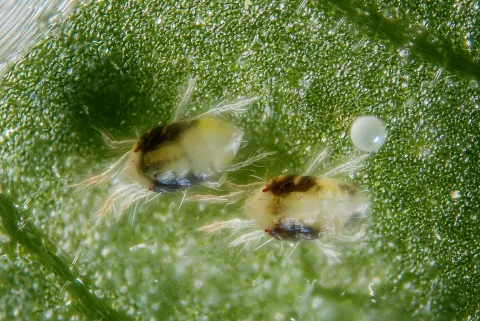
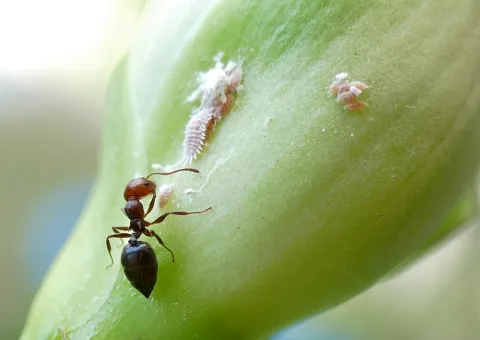
Diseases / Threats
Information
- Lifecycle
- Perennial
- Foliage
- Evergreen
- Exposures
- Half-shadeShade
- Substrate
- Humus soil
- Planting method
- In pots
- Categories
- IndoorRhizomeHerbaceous
- Tag
- Thirsty
- Origin
- South America
- Hardiness (USDA)
- 12a (10°C ≤ T° < 12.8°C)
- Leaf colors
- Dark greenLight green
- Flower color
- Violet
Discover plants from the same family
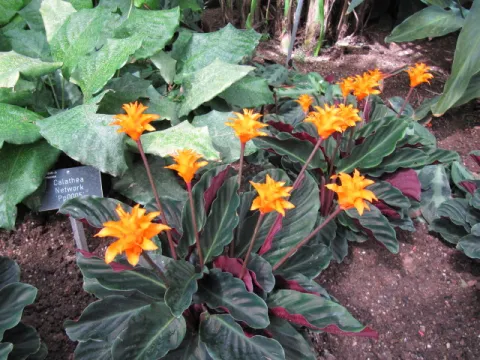
Calathea crocata
Goeppertia crocata
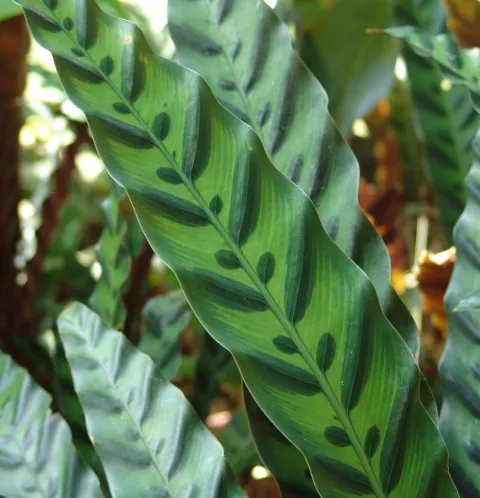
Calathea lancifolia
Goeppertia lancifolia
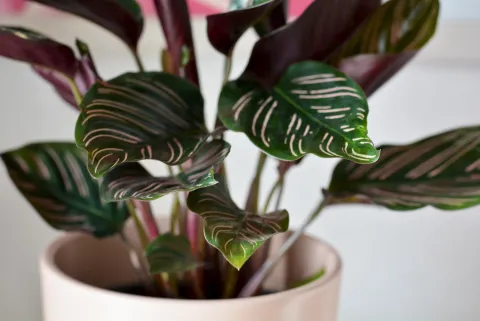
Calathea ornata
Goeppertia ornata
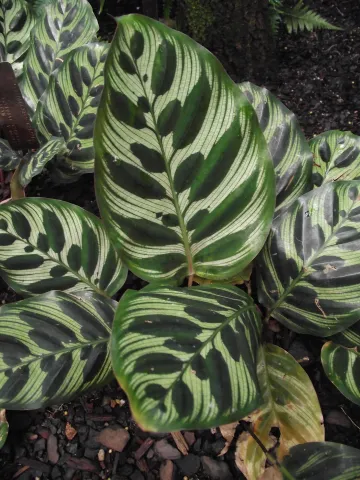
Calathea makoyana
Goeppertia makoyana
Find out more
Find all our tips in the Monstera application








