Goeppertia warscewiczii, a colorful houseplant
Goeppertia warscewiczii
- Exposures
- Half-shade, Shade
- Hardiness (USDA)
- 12a (10°C ≤ T° < 12.8°C)
- Lifecycle
- Perennial
- Foliage
- Evergreen
- Family
- Marantaceae
- Genus
- Goeppertia
- Species
- Goeppertia warscewiczii
Don't be fooled by appearances! Goeppertia warscewiczii doesn't grow in the valleys of Poland, but in the forests of Central America. This perennial plant belongs to the large Marantaceae family. Like its cousins, it has highly ornamental evergreen foliage.
How to recognize Goeppertia warscewiczii?
Goeppertia warscewiczii is an upright herbaceous plant. It can grow up to a metre high and as wide.
The first feature of its foliage is its velvety texture. But it's above all its tricolored, lanceolate leaves that make Goeppertia warscewiczii so fascinating to gardeners. Dark green on top, they are adorned with lighter spots on either side of the vein. The underside of the leaf blades is wine-red.
To complete this explosion of color, the tropical plant blooms every year. The flowers bloom in white bracts. These then turn crimson-pink.
Like goeppertia rufibarba and goeppertia zebrina, Goeppertia warscewiczii has pollution-removing properties. It's also a praying plant: every evening, it folds its leaves in pairs, like praying hands. When day breaks, it displays its full palette once again.
Our care tips
Not very demanding, your Goeppertia warscewiczii is content with a location without direct sunlight and plenty of humidity.
 Watering
Goeppertia warscewiczii can withstand neither drought nor excess water.
Before watering, check the condition of the potting soil. The surface must be at least one centimeter dry.
Before watering, check the condition of the potting soil. The surface must be at least one centimeter dry.
 Misting
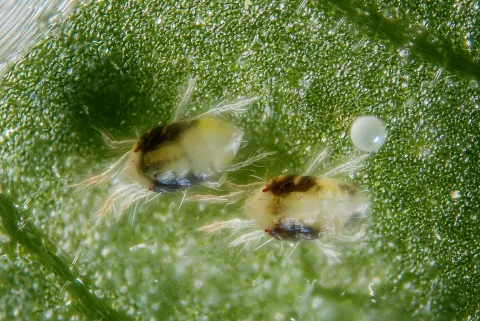
Mist foliage to increase humidity and repel pests. Always spray with rainwater. Tap water is too hard and leaves white marks on the leaves.
 Repotting
In spring, transfer your Goeppertia warscewiczii to a larger pot, so that it can continue to grow.
Choose a pierced pot one-third larger than the previous one. Choose width rather than height to allow roots to develop. Choose a plastic or ceramic container rather than a clay one. The latter tend to absorb water more quickly.
Install a bed of clay balls and cover it with potting soil for indoor plants. Don't hesitate to mix in some perlite to optimize drainage. Then place the rootball and add potting soil until you reach a centimetre or two below the rim of the pot. Tamp down to avoid air bubbles.
 Fertilization
You can stimulate the development of your plant during its growth phase, in spring and summer, with fertilizer.
Apply a liquid fertilizer for green plants. Respect the doses indicated by the manufacturer on the packaging. Too high a dose will damage foliage.
 Cleaning
Photosynthesis is slowed down by dust accumulating on the leaves. To help your Calathea warscewiczii make the most of its exposure, clean the foliage with a clean, damp cloth.
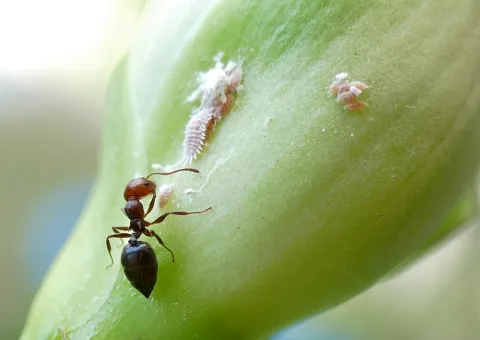
Dusting also helps prevent pest attacks.
 Prune
Remove dead leaves. If you use pruning shears or scissors, clean them beforehand to prevent the spread of disease.
 Taking cuttings
Propagation by cuttings is carried out during the strong growth phase, generally in spring and early summer.
Carefully dig up your Calathea warscewiczii. Locate a rhizome with at least two or three shoots. Separate it from the mother plant with a clean, sharp knife or pruning shears. Remove leaves, a rhizome and roots.
In a pierced pot, pour a drainage layer (clay balls or gravel, for example).
Add potting soil for seedlings and plantations. Plant your graft in the substrate. To help you, you can use a pen to make a pilot hole.
Water for the first time to eliminate air bubbles and encourage rooting.
Diseases / Threats
Information
- Lifecycle
- Perennial
- Foliage
- Evergreen
- Exposures
- Half-shadeShade
- Substrate
- Humus soil
- Planting method
- In pots
- Categories
- IndoorRhizomeHerbaceous
- Tag
- Thirsty
- Origin
- Central America
- Hardiness (USDA)
- 12a (10°C ≤ T° < 12.8°C)
- Leaf colors
- Dark greenLight greenPurple
- Flower colors
- WhiteRosePurple
Discover plants from the same family
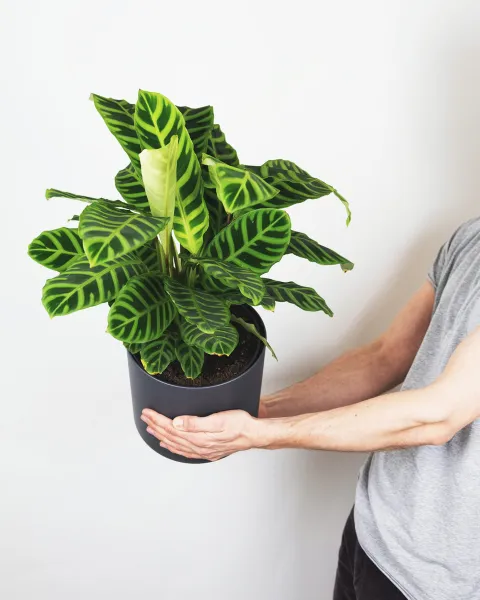
Zebra Calathea
Goeppertia zebrina
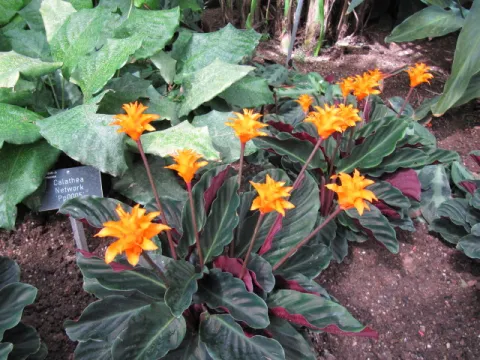
Calathea crocata
Goeppertia crocata
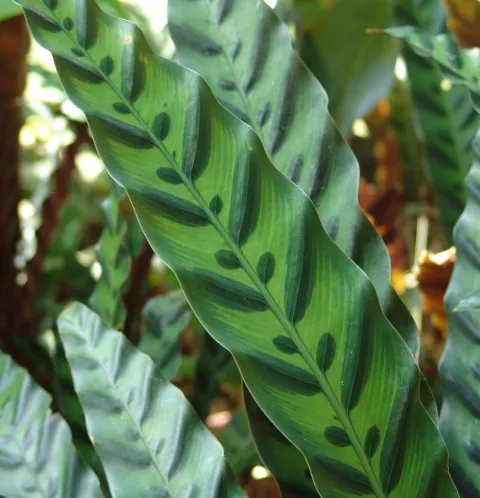
Calathea lancifolia
Goeppertia lancifolia
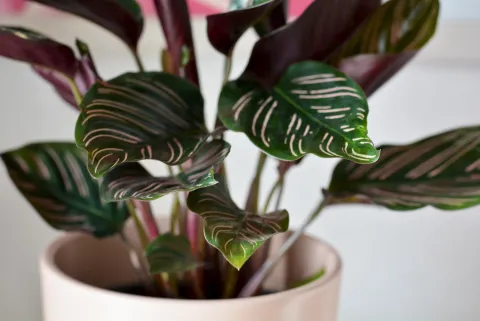
Calathea ornata
Goeppertia ornata
Find out more
Find all our tips in the Monstera application








