Pink flowers wood honeysuckle

Pink and yellow flowers wood honeysuckle

Yellow and white flowers wood honeysuckle

Toxic red berries wood honeysuckle

Wood honeysuckle Lonicera
Contents
Find all our tips in the Monstera application


Wood honeysuckle, a honeysuckle with pink, fragrant flowers
Contents
Find all our tips in the Monstera application
Scientific classification
Family
Caprifoliaceae
Type
Honeysuckle - Lonicera
Species
Wood honeysuckle - Lonicera periclymenum
Other names:Caprifolium periclymenum, Periclymenum vulgare
Wood honeysuckle can be found in the wild all over Europe and even in Morocco. This shrub of the Caprifoliaceae family brightens up undergrowth, clearings and gardens with its pink, fragrant blossoms.
How to recognize wood honeysuckle (Lonicera periclymenum)?
Wood honeysuckle is a climbing shrub with a sarmentose stump. It can reach 5 to 6 meters in height and spread when given suitable support.
It climbs thanks to its voluble purplish stems, which wrap around trees, trellises or fences. This growth can become invasive: the lianas sometimes choke the supporting trees.
Opposite, elliptical leaves grow in pairs. Their color varies from bright green to slightly bluish green. Foliage is deciduous and disappears in winter, as in tartarian Honeysuckle (Lonicera tatarica).
Flowering lasts from July to October. The flowers, grouped in terminal inflorescences, change color over time: pink when they open, they then turn white, then yellow. Highly fragrant, melliferous and nectar-bearing, they attract numerous insects and butterflies. Because of their tubular shape, only species with a sufficiently long proboscis have access to nectar.
After flowering, red globular berries appear, which are eaten by birds and help disperse the seeds.
Is wood honeysuckle toxic?
Honeysuckle berries are toxic to humans and domestic animals. Ingestion can cause digestive problems (nausea, vomiting, diarrhea). It is therefore advisable to supervise young children, dogs and cats, and avoid accidental consumption.
Our maintenance tips
If your Lonicera periclymenum subsp. Periclymenum is balding, prune it severely at the beginning of winter. The plant will recover in spring.
 Watering
Water the base of your Lonicera periclymenum subsp. Periclymenum when the soil has dried by about three centimetres. Your plant likes rainwater, but will also tolerate mains water.
Don't let water stagnate in the planter or saucer. It will rot the roots.
 Repotting
Every spring, repot your Lonicera periclymenum subsp. Periclymenum to give it more space.
Get a tub or pot with holes at least 50 centimetres deep. You can place clay balls or gravel at the bottom to optimize drainage.
Pour in a layer of universal potting soil. A mixture of garden soil and planting mix may also be suitable. Plant your Lonicera periclymenum subsp. Periclymenum. Add substrate, compact and water generously.
Your Lonicera periclymenum subsp. Periclymenum is a climber. Give it something to climb on (pergola, trellis, fence). Guide the branches along the support to show them the way.
When your Lonicera periclymenum subsp. Periclymenum has grown, you can repot your cutting.
Get a pierced pot suitable for the size of your cutting. You can make a drainage layer at the bottom with clay balls or gravel. Fill your pot with potting soil for seedlings and plantations. Plant your cutting and water generously.
If you're growing your plant as a climber and its size allows it, install your support and guide the branches to show them the way.
If you're growing your plant as a climber and its size allows it, install your support and guide the branches to show them the way.
 Fertilization
To promote the growth of your Lonicera periclymenum subsp. Periclymenum, apply fertilizer in spring and summer.
Apply flowering plant fertilizer to stimulate flowering.
 Prune
Prune
Using shears or pruning shears, cut back dead, diseased or damaged branches.
If your Lonicera periclymenum subsp. Periclymenum is very dense, you can also remove the most tangled branches to control the shape and let light penetrate to the heart of the plant.
Finally, prune flower-bearing branches to encourage new growth. Always cut above a bud or group of healthy leaves.
 Plantation
A few days before planting, prepare the soil over an area approximately four times the size of the root ball of your Lonicera periclymenum subsp. Periclymenum:
- Spade ;
- Remove stones and weeds;
- Add compost and universal potting soil to enrich the soil.
Soak the root ball of your Lonicera periclymenum subsp. Periclymenum to rehydrate it. Dig a hole slightly deeper than the root ball. If you've provided a trellis or stake for your plant to climb, install it now.
Plant your Lonicera periclymenum subsp. Periclymenum. The surface of the rootball should be flush with the ground. Fill in, compact and water. Guide the stems over the support to help them climb.
If you're planting several specimens, to make a hedge, for example, it's advisable to spacethem at least 50 centimetres apart andplant only one plant per square metre.
 Cutting
Prepare a pierced pot of a size suitable for your cutting (about ten centimetres in diameter). Pour a bed of clay marbles into the bottom, followed by a mixture of potting soil for seedlings and cuttings and sand (or perlite). Water generously
Use a pencil or pick to make a pilot hole. Plant your Wood honeysuckle.
Cuttings root more easily when smothered. Cover the pot with a transparent plastic bag or place it in a mini greenhouse. If you don't have one, a translucent plastic crate will do.
Place in semi-shade and air for a few minutes each day.
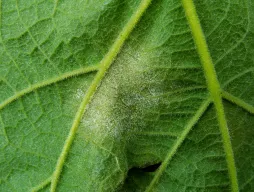
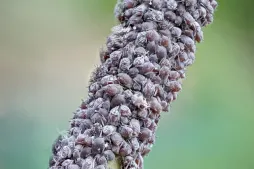
Diseases / Threats
Information
| Lifecycle | Perennial |
| Foliage | Deciduous |
| Exposures | |
| Substrat | |
| Planting methods |
Open ground In pots In tubs |
| Categories | |
| Tags |
Beginner Flowery Rustic Toxic |
| Origins |
Northern Europe Eastern Europe Southern Europe Western Europe |
| Hardiness (USDA) | 6b (-20.6°C ≤ T° < -17.8°C) |
| Leaf color |
|
| Flower colors |
|
| Fruit color |
|
Discover plants from the same family
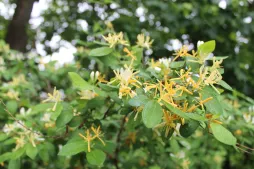
Japanese honeysuckle
Discover
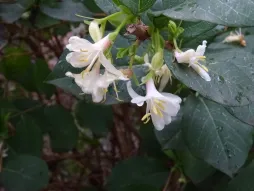
Winter honeysuckle
Discover
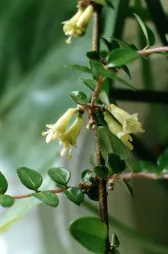
Lonicera nitida
Discover
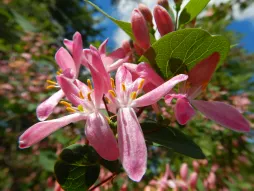
Tartarian honeysuckle
Discover
Find out more