Lonicera tatarica, a pink honeysuckle
Lonicera tatarica
- Exposures
- Sun, Half-shade
- Hardiness (USDA)
- 5b (-26.1°C ≤ T° < -23.3°C)
- Lifecycle
- Perennial
- Foliage
- Deciduous
- Family
- Caprifoliaceae
- Genus
- Honeysuckle Lonicera
- Species
- Tartarian honeysuckle Lonicera tatarica
Other names:Lonicera karataviensis, Caprifolium tataricum, Chamaecerasus tatarica, Xylosteon tartaricum, Chamaecerasus ciliata, Lonicera angustata, Lonicera angustifolia, Lonicera micrantha, Lonicera parvifolia, Lonicera sibirica
Native to Central Europe and Asia (China), Tartarian honeysuckle (Lonicera tatarica) is a shrubby honeysuckle recognizable by its spring bloom. Pink, it is much less fragrant than that of other species in the Lonicera genus.
How to recognize Lonicera tatarica?
Tartarian honeysuckle is a shrub with a bushy, rounded habit. At maturity, it reaches a height of around three meters and a width of 2.5 meters.
The oblong leaves, 6 to 12 cm long, have a light to dark green upper surface and a slightly bluish underside. Foliage is deciduous and falls off in winter.
Tartarian honeysuckle blooms in spring. The tubular pink flowers, with their greenish calyx, consist of five petals, five stamens and a five-lobed calyx. Unlike those of Lonicera fragrantissima (Lonicera fragrantissima), they are not very fragrant, but are melliferous and nectariferous. They attract many pollinators: bees, bumblebees and butterflies.
After flowering, globular berries appear, first yellow, then orange to red when ripe. They are very popular with birds, which disperse the seeds.
Is Lonicera tatarica toxic?
Lonicera tatarica berries can only be eaten by birds. They are toxic to humans and pets (especially cats and dogs). Ingestion causes digestive problems such as nausea, vomiting, diarrhea and abdominal pain, which can become serious if eaten in large quantities.
Little is known about the toxicity of other parts of the plant. As a precaution, keep young children and pets away from honeysuckle.
Our care tips
If your Lonicera tatarica is balding, prune it severely at the beginning of winter. The plant will recover in spring.
 Watering
Water the base of your Lonicera tatarica when the soil has dried by about three centimetres. Your plant likes rainwater, but will also tolerate mains water.
Don't let water stagnate in the planter or saucer. It will rot the roots.
 Repotting
Every year in the spring, repot your Lonicera tatarica to give it more space.
Choose a perforated pot or a tub at least 50 centimetres deep. You can place clay balls or gravel at the bottom to form a drainage layer.
Pour in universal potting soil. A mixture of garden soil and planting mix may also be suitable. Plant your Lonicera tatarica. Add substrate, compact and water generously.
 Fertilization
To promote the growth of your Lonicera tatarica, apply fertilizer in spring and summer.
Apply flowering plant fertilizer to stimulate flowering.
 Prune
Prune
Using clean, sharp pruning shears, trim the branches of your Lonicera tatarica to control its shape.
 Planting
A few days before planting, prepare the soil onan area approximately four times the size of the root ball of your Lonicera tatarica:
- Spade ;
- Remove stones, roots and weeds;
- Add compost and universal potting soil to enrich the soil.
Soak the root ball at Lonicera tatarica. Dig a hole slightly deeper than the root ball. Plant your Lonicera tatarica. Align the surface of the rootball with the soil. Fill in, compact and water.
If you're planting several specimens, to make a hedge, for example, it's advisable to space them at least 50 centimetres apart and plant only one plant per square metre.
 Taking cuttings
Choose a healthy, vigorous branch of the year, about 20 centimeters long. It should have at least two layers of leaves.
Using a clean, sharp tool, prune flush with the lower leaves. Remove them. Prune a centimetre above the top leaves.
Plant your graft in a pierced pot lined witha rich, light substrate, such as potting soil with sand.
Install the cutting in a mini greenhouse. If you don't have one, you can cover it with a translucent bottle. Remember to aerate regularly and mist the soil if it dries out.
Frequently asked questions
Is Tartar honeysuckle invasive?
Yes, Tartar honeysuckle (Lonicera tatarica) is an invasive species. It is fast-growing and can quickly out-compete other plants. Regular pruning and planting in pots can limit its growth. Nurserymen have also created non-invasive cultivars, such as Lonicera × brownii 'Dropmore Scarlet' and Lonicera x heckrotii 'American Beauty'.
Is Tartar honeysuckle toxic?
Yes, Tartar honeysuckle is toxic to humans and animals (except certain birds). Its berries cause digestive problems (nausea, vomiting, diarrhea, stomach ache). The effects can be severe if ingested in large quantities.
How big is Tartar honeysuckle?
Tartarian honeysuckle (Lonicera tatarica) grows up to three meters high and 2.5 meters wide. It's a fast-growing plant that reaches its mature size after three to five years.
Diseases / Threats
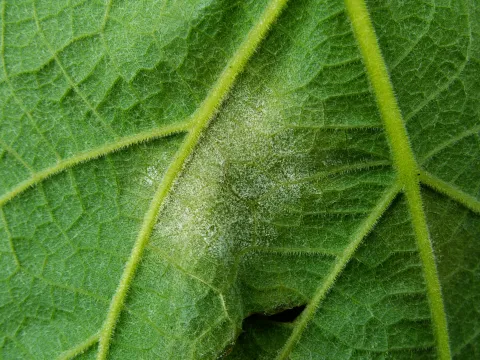
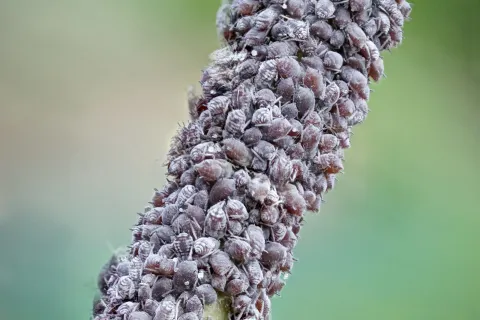
Information
- Lifecycle
- Perennial
- Foliage
- Deciduous
- Exposures
- SunHalf-shade
- Substrate
- Humus soil
- Planting methods
- Open groundIn potsIn tubs
- Tags
- BeginnerInvasiveFloweryHardyToxic
- Origins
- Central AsiaWestern AsiaEast AsiaEastern Europe
- Hardiness (USDA)
- 5b (-26.1°C ≤ T° < -23.3°C)
- Leaf colors
- Dark greenLight green
- Flower color
- Rose
- Fruit colors
- RedYellowOrange
Discover plants from the same family
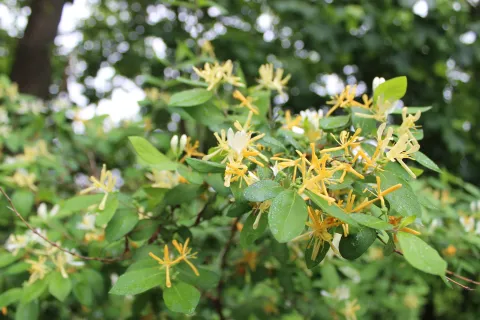
Japanese honeysuckle
Lonicera japonica
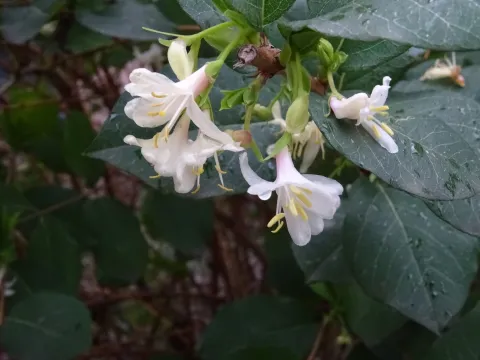
Winter honeysuckle
Lonicera fragrantissima
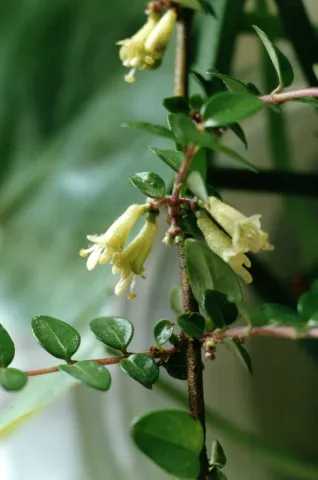
Lonicera nitida
Lonicera ligustrina var. yunnanensis
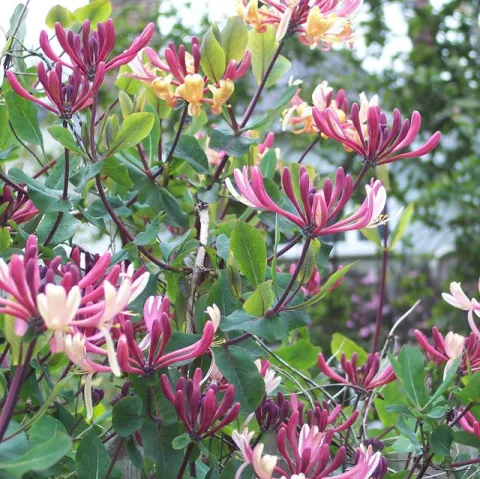
Wood honeysuckle
Lonicera periclymenum subsp. periclymenum
Find out more
Find all our tips in the Monstera application