Ornithogalum arabicum, the Star of Bethlehem
Ornithogalum arabicum
- Exposures
- Sun, Half-shade
- Hardiness (USDA)
- 9b (-3.9°C ≤ T° < -1.1°C)
- Lifecycle
- Perennial
- Foliage
- Deciduous
- Family
- Asparagaceae
- Genus
- Ornithogale Ornithogalum
- Species
- Star of Bethlehem Ornithogalum arabicum
Other names:Caruelia arabica, Melomphis arabica, Myanthe arabica, Ornithogalum speciosum
The Star of Bethlehem doesn't just shine over the Near East. Ornithogalum arabicum grows wild in Asia, northern Africa and southern Europe. It can now be found in gardens all over the world, where its fragrant white flowers delight bees and gardeners alike.
How to recognize the Star of Bethlehem (Ornithogalum arabicum)?
Ornithogalum arabicum has a bushy, spreading habit. This perennial bulbous plant is 50 centimetres high and 20 centimetres wide.
The oval bulb produces a rosette of six basal leaves. The light-green blades are ribboned. Upright then drooping, they can reach 25 centimetres in length.
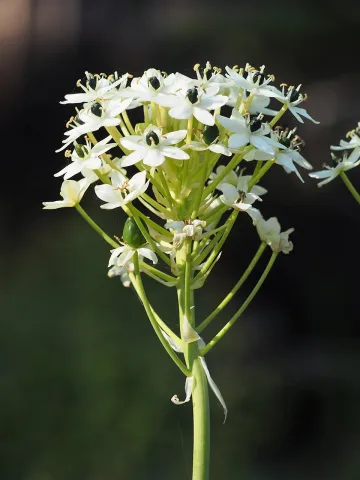
The bulb then gives rise to a straight, cylindrical, pruney flowering stem. It bears a corymb of ten or so flowers. The flowers form a flared cup. Their three petals and three sepals are staggered. They are white with a black center and are highly melliferous.
After being visited by pollinators, the flowers produce green, oblong capsules. These enclose the shiny black seeds.
Like ornithogalum thyrsoides, Ornithogalum arabicum is toxic to animals and humans. The plant contains cardiotoxic glycosides, which cause digestive and cardiac disorders if ingested. Concentrations are particularly high in the bulb. Keep it away from your pets!
Our care tips
The care cycle of Ornithogalum arabicum depends on its flowering period. You need to take care of it during the vegetative period and do little or nothing for the rest of the year.
 Watering
Water your plant generously during the growing season.
Ornithogalum arabicum They like to keep the potting mix moist, but not soggy. Water when the soil is dry on the surface (about two to three centimeters deep).
Water the substrate with non-hard water—such as rainwater—at room temperature.
Let the water drain out through the drainage holes before returning the plant to its place. Empty any standing water from the saucer or planter. It may cause the roots to rot.
During the rest of the year, adjust the watering of your Ornithogalum arabicum.
Sprinkle lightly with non-calcareous water at room temperature. Simplymoisten the substrate to prevent it from drying out completely.
 Repotting
Once the foliage and flowers have faded, you can repot.
Once the flowers and leaves have faded, repot your Star of Bethlehem in a pierced pot or window box.
Ornithogalum arabicum plants that are well drained are happy with a universal substrate. Mix two-thirds potting soil for green or flowering plants with pozzolan or perlite. You can also use garden soil (50%), sand (25%) and universal potting soil (25%).
Place a layer of substrate at the bottom of your pot. Plant your bulbs, pointing upwards, at a depth of five centimetres. Cover with soil and leave the plant in a bright spot.
 Fertilization
Apply a fertilizer for flowering plants or green plants diluted with water.
 Planting
Once the last spring frosts have passed, you can plant.
Choose a sunny or semi-shady location. Hoe the soil to a depth of about 20 centimetres. Remove stones, weeds and roots.
Plant your bulbs, pointing upwards, at a depth of five centimetres. When planting several bulbs, space them at least fifteen centimetres apart. If your soil is very compact or clayey, add a handful of sand to the hole.
 Taking cuttings
Cutting is carried out during the strong growth phase, generally in spring and early summer.
Dig up bulbs after the leaves have wilted. If they have given rise to bulblets, separate them.
Find a location in sun or half-shade. Work the soil to a depth of 20 centimetres to aerate it. Remove weeds, stones and roots.
Plant your bulbs pointing upwards. They should be about five centimetres underground. If you're planting several ornithogalum arabicum, space them at least fifteen centimetres apart.
Diseases / Threats
Information
- Lifecycle
- Perennial
- Foliage
- Deciduous
- Exposures
- SunHalf-shade
- Substrates
- Calcareous earthHumus soilSandy soil
- Planting methods
- Open groundIn potsPlanter
- Categories
- BulbFlowery
- Tags
- FloweryToxic
- Origins
- North AfricaCentral AsiaSouthern Europe
- Hardiness (USDA)
- 9b (-3.9°C ≤ T° < -1.1°C)
- Leaf color
- Light green
- Flower color
- White
- Fruit color
- Light green
Discover plants from the same family
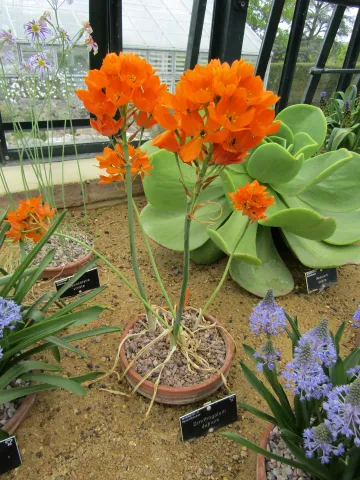
Ornithogale douteux
Ornithogalum dubium
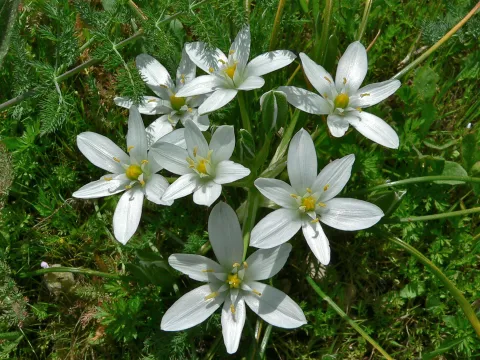
Eleven o'clock beauty
Ornithogalum umbellatum
Find out more
Find all our tips in the Monstera application