Aronia prunifolia, Purple Aronia
Aronia × prunifolia
- Exposures
- Sun, Half-shade
- Hardiness (USDA)
- 4a (-34.4°C ≤ T° < -31.7°C)
- Lifecycle
- Perennial
- Foliage
- Evergreen
- Family
- Rosaceae
- Genus
- Aronia
- Species
- Purple Aronia Aronia × prunifolia
Other names:Crataegus × prunifolia, Mespilus amelanchier var. prunifolia, Mespilus × prunifolia Pyrus × hippomenes
Aronia prunifolia is said to be a natural hybrid of Aronia melanocarpa and Aronia arbutifolia, two shrubs in the Rosaceae family. But for some botanists, this variety, found in eastern Canada and the USA, is a genus in its own right. In fact, Purple Aronia also thrives in regions where its relatives don't grow.
How to recognize Aronia prunifolia, the Purple Aronia?
Aronia prunifolia is a highly branched shrub. Bushy and dense, it doesn't exceed two meters in height.
The oval leaves have serrated margins and measure up to seven centimeters. In summer, they are a brilliant dark green. In autumn, the foliage turns purplish-red before wilting on the branch or falling off.
Aronia prunifolia blooms in summer. Blooms can last until October. The shrub is then adorned with white flowers with five narrow petals. Fragrant and melliferous, they are grouped together on a common stem.
But the Purple Aronia is best known for its fruit, globular purple or dark blue drupes. Raw, the berries are almost inedible. But they're even better when made into jam or jelly!
Aronia prunifolia is not listed as a toxic plant. However, ingesting too many berries can cause digestive problems, and pollen from the flowers can cause allergic reactions.
Our care tips
The Aronia × prunifolia produce numerous shoots. Plant them in the ground so that they can develop.
 Watering
Water when the soil is dry, to a depth of about three centimeters. Use room-temperature, non-calcareous water, preferably rainwater. When watering, avoid wetting the leaves.
Thirty minutes after watering, drain off any stagnant water in the saucer. It may rot the roots.
To improve humidity, place your Aronia × prunifolia with your other plants or place its pot on a dish of moist clay balls.
 Repotting
Choose a pot with drainage holes or a container large enough to accommodate your Purple Chokeberry, and its future offshoots. You can place clay pellets or gravel at the bottom for drainage.
Mix all-purpose potting soil with garden soil. You can also enrich the substrate with compost or heather soil. Pour a layer of this mixture into the bottom of the pot and plant your Purple Chokeberry. The root ball should sit a few centimeters below the rim to form a watering basin. Add potting soil to reach the level of the root ball.
Water thoroughly to encourage root growth and mulch around the base to keep the soil cool.
 Fertilization
Place a little compost at the foot of your Purple Chokeberry to enrich the soil and accelerate growth.
 Prune
Always use clean, sharp pruning shears for pruning.
Remove dead wood and thin out the center by removing crossing branches, for example.
Shorten the other branches by about one-third if you want to control the growth of your Purple Chokeberry.
 Planting
When the risk of frost has passed, it's time to plant.
Soak your Purple Chokeberry while you dig a hole at least 50 centimeters wide and as deep as the root ball. If you're planting several specimens—to form a hedge, for example—space them one meter apart.
Plant your Purple Chokeberry in the center. You can fill in the hole with garden soil, but your plant will thrive better if you add compost and heather soil.
Pack the soil down and water generously to help the plant establish roots. You can also mulch the soil to reduce the need for watering.
 Taking cuttings
Separate a seedling, with its root system, from the mother plant. If their roots are intertwined, sever them with a clean knife.
Pour universal potting soil into a perforated pot. Use your finger or pen to make a hole. Plant your Aronia × prunifolia. Water generously to encourage rooting and place the cutting in partial shade.
Disease / Threat
Information
- Lifecycle
- Perennial
- Foliage
- Evergreen
- Exposures
- SunHalf-shade
- Substrates
- Calcareous earthHumus soilPeat soil
- Planting methods
- Open groundIn tubs
- Tags
- BeginnerFloweryHardy
- Origin
- North America
- Hardiness (USDA)
- 4a (-34.4°C ≤ T° < -31.7°C)
- Leaf color
- Dark green
- Flower color
- White
- Fruit colors
- BlueViolet
Discover plants from the same family
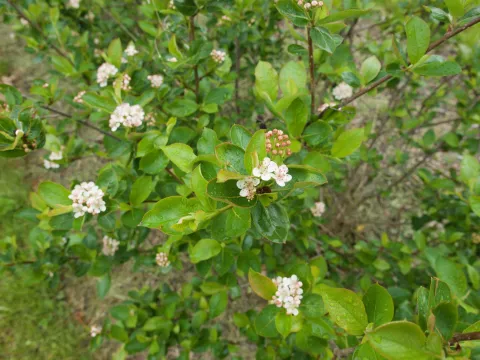
Black chokeberry
Aronia melanocarpa
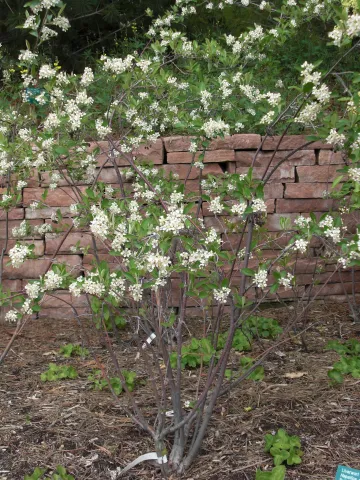
Red Chokeberry
Aronia arbutifolia
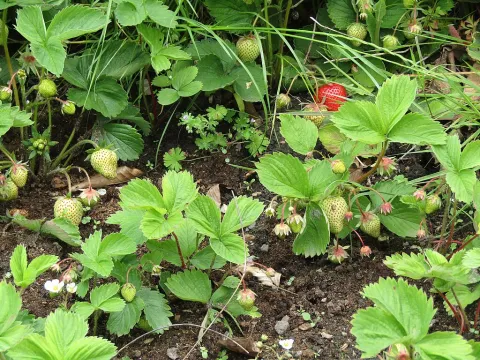
Cultivated strawberry
Fragaria × ananassa
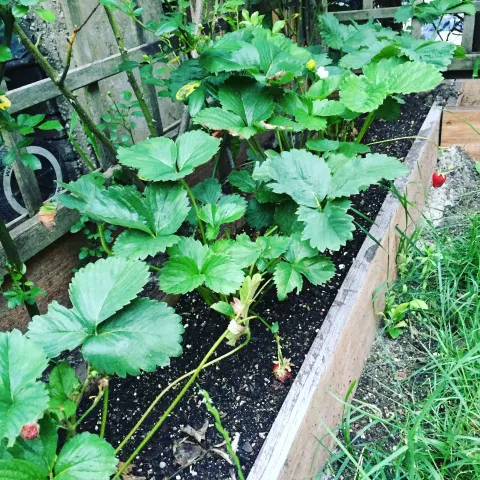
Everbearing strawberry
Fragaria x ananassa
Find out more
Find all our tips in the Monstera application