Aronia melanocarpa, Black Aronia
Aronia melanocarpa
- Exposures
- Sun, Half-shade
- Hardiness (USDA)
- 6a (-23.3°C ≤ T° < -20.6°C)
- Lifecycle
- Perennial
- Foliage
- Evergreen
- Family
- Rosaceae
- Genus
- Aronia
- Species
- Black Aronia Aronia melanocarpa
Other names:Pyrus angustifolia var. melanocarpa, Adenorachis melanocarpa, Aronia arbutifolia var. melanocarpa, Mespilus arbutifolia var. melanocarpa, Photinia melanocarpa, Pyrus melanocarpa, Sorbus melanocarpa
In the forests of eastern and central Canada and the United States grows a shrub with white flowers and black berries: Aronia melanocarpa. This member of the Rosaceae family can also be grown as an ornamental tree in our latitudes.
How to recognize Aronia melanocarpa, the black chokeberry?
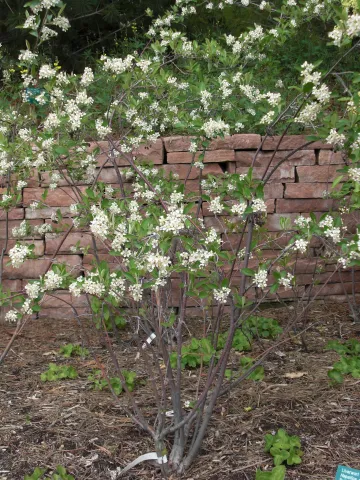
A shrub with a dense, bushy habit, Aronia melanocarpa measures up to three meters in height and more than two meters in spread.
The branched trunk and branches are covered with smooth, reddish-brown bark.
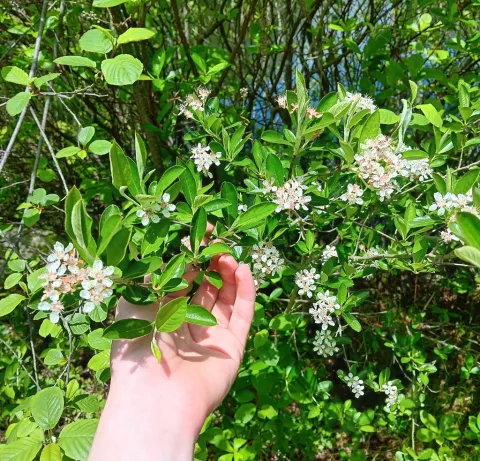
The oval to obovate leaves have serrated margins, as in aronia × prunifolia (Aronia prunifolia). But they are smaller, generally no more than six centimeters long. Dark green, they turn red in autumn and drop off in winter.
Aronia melanocarpa flowers in spring. The flowers are grouped in corymbs. White or slightly pinkish, they have rounded petals and enclose clusters of stamens with pink or red anthers.
Aronia melanocarpa is nicknamed black chokeberry because of its fruit. The green globular drupes turn black when ripe. In the depths of winter, the berries delight robins and certain rodents. But they're less popular with humans! Raw berries have a sour taste.
Black chokeberry berries are not toxic. Nevertheless, avoid eating too many. They may cause digestive problems. The rest of the plant is not known to be harmful if ingested or if it comes into contact with the skin.
Our care tips
The Aronia melanocarpa produce numerous shoots. Plant them in the ground so that they can develop.
 Watering
The Aronia melanocarpa They prefer consistent but moderate moisture. Before watering your plant, check to see if it needs water by touching the surface of the potting soil. If the top two to three centimeters are dry, you can water it.
If possible, use soft water such as rainwater or filtered water.
Also make sure that water does not pool in the saucer or planter.
If possible, use soft water such as rainwater or filtered water.
Also make sure that water does not pool in the saucer or planter.
 Repotting
Choose a pot with drainage holes or a container large enough to accommodate your Black chokeberry, and its future offshoots. You can place clay pellets or gravel at the bottom for drainage.
Mix all-purpose potting soil with garden soil. You can also enrich the substrate with compost or heather soil. Pour a layer of this mixture into the bottom of the pot and plant your Black chokeberry. The root ball should sit a few centimeters below the rim to form a watering basin. Add potting soil to reach the level of the root ball.
Water thoroughly to encourage root growth and mulch around the base to keep the soil cool.
 Fertilization
Place compost at the foot of your Black chokeberry.
 Harvest
Pick the berries when they are ripe and easily detachable from the branch.
 Prune
Always use clean, sharp pruning shears for pruning.
Remove dead wood and thin out the center by removing crossing branches, for example.
Shorten the other branches by about one-third if you want to control the growth of your Black chokeberry.
 Planting
Once the last spring frosts have passed, you can plant.
Soak your Black chokeberry while you dig a hole at least 50 centimeters wide and as deep as the root ball. If you're planting several specimens—to form a hedge, for example—space them one meter apart.
Plant your Black chokeberry in the center. You can fill in the hole with garden soil, but your plant will thrive better if you add compost and heather soil.
Pack the soil down and water generously to help the plant establish roots. You can also mulch the soil to reduce the need for watering.
 Taking cuttings
Locate one of the young shoots that have sprouted at the base of the main plant. Be sure to remove it along with its roots.
Pour universal potting soil into a perforated pot. Use your finger or pen to make a hole. Plant your Aronia melanocarpa. Water generously to encourage rooting and place the cutting in partial shade.
Disease / Threat
Information
- Lifecycle
- Perennial
- Foliage
- Evergreen
- Exposures
- SunHalf-shade
- Substrates
- Calcareous earthHumus soilPeat soil
- Planting methods
- Open groundIn tubs
- Tags
- BeginnerFloweryHardy
- Origin
- North America
- Hardiness (USDA)
- 6a (-23.3°C ≤ T° < -20.6°C)
- Leaf color
- Dark green
- Flower colors
- WhiteRose
- Fruit color
- Black
Discover plants from the same family
Red Chokeberry
Aronia arbutifolia
Purple Chokeberry
Aronia × prunifolia
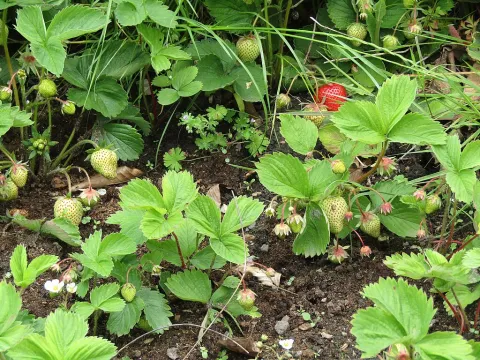
Cultivated strawberry
Fragaria × ananassa
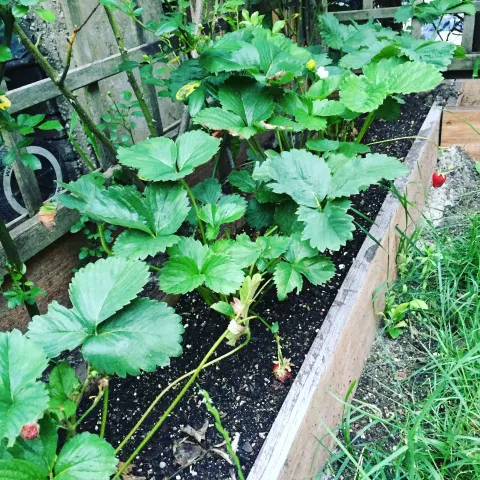
Everbearing strawberry
Fragaria x ananassa
Find out more
Find all our tips in the Monstera application