Non-remontant raspberry bushes: a bountiful harvest in summer
Rubus idaeus
- Exposure
- Sun
- Hardiness (USDA)
- 6a (-23.3°C ≤ T° < -20.6°C)
- Lifecycle
- Perennial
- Foliage
- Deciduous
- Family
- Rosaceae
- Genus
- Rubus
- Species
- Raspberry bush Rubus idaeus
The non-remontant raspberry bush (Rubus idaeus) produces raspberries only once a year, in the summer. Perfect for harvesting enough to make jams, jellies, or preserves, it comes in several varieties, with fruits of varying colors.
How can you recognize a non-remontant raspberry bush?
A bushy shrub, the non-remontant raspberry bush (Rubus idaeus) grows to between 50 cm and 2 m in all directions.
Its reddish-brown stems bear non-prickly thorns and pinnate leaves. Each leaf consists of three to seven leaflets. Bright green on top, they are whitish on the underside and covered with hairs.
The Raspberry Bush plant is self-fertile. Its white, five-petaled flowers contain both male and female reproductive parts. A single plant is sufficient to produce fruit.
The fruits are oval berries composed of fleshy drupes. They measure no more than 2.5 cm in diameter and length. Raspberries can display every shade of red, from vermilion to purple, including raspberry red with pinkish hues. Some cultivars, however, produce yellow fruit.
Which variety of non-remontant raspberry plant should you choose?
You can choose your non-remontant raspberry plant based onits size, fruit, hardiness, and early-bearing characteristics…Here are some varieties commonly found in stores:
- 'Malling Promises ': a very productive raspberry bush with conical, red berries;
- 'Tulameen': a hardy shrub that produces large raspberries;
- 'Ruby Beauty ': a dwarf variety that can be grown in a pot;
- 'Glen Ample': early-bearing and highly hardy, this cultivar is ideal for regions with short, low-sunlight summers;
- 'Golden Queen ': resistant to disease, this raspberry plant produces yellow, tart berries.
Is the non-remontant raspberry plant poisonous?
Raspberries are not toxic. You can enjoy them cooked or raw, in desserts, drinks, salads, or sauces.
Raspberry leaves are not toxic either. However, if ingested in large quantities, they can have a diuretic or laxative effect on humans and animals. Make sure your cat or dog doesn't eat all the leaves!
Our care tips
After a few years, non-remontant raspberry bushes will die back. Take cuttings every six to ten years to renew your plants. Also, remember to practice crop rotation. Wait four years before replanting Rubus idaeus in the same spot.
 Watering
Water your plant generously during the growing season.
Non-remontant raspberry bushes like water. You need to keep the soil moist, but not soggy.
Water with room-temperature water at the base of the plant. Avoid wetting the foliage to prevent disease.
Adapt your watering when the days get shorter.
Water the base of your Non-remontant raspberry bush when the substrate surface is dry. Do not wet the leaves to avoid the development of diseases and fungi. Watering is best done with rainwater at room temperature.
Water moderately to keep the soil fresh. Avoid watering if the ground is frozen to preserve the roots.
 Repotting
Non-remontant raspberry bushes They produce suckers and are not well-suited to container gardening. However, if you want to try, choose a compact variety and a deep container.
Get a container at least 50 cm deep. It must have drainage holes to allow excess water from watering to drain away.
Soak the root ball of your Non-remontant raspberry bush to rehydrate it. Line the bottom of your container with all-purpose potting soil. Plant your shrub and add more substrate. Gently firm the substrate and water.
You can mulch around the base to keep the soil cool.
 Fertilization
Place a little manure or compost at the foot of the plant to enrich the soil.
You can stimulate the growth of your plant during its growth phase, in spring and summer, with fertilizer.
Fertilize your Non-remontant raspberry bush using a fertilizer for small fruit trees. Be sure to follow the manufacturer's recommended dosage to avoid over-fertilization.
 Prune
Non-remontant raspberry bushes They bear fruit on the canes that grew the previous year. Those that have already borne fruit will not produce any more: you can therefore remove them.
Using clean, sharp pruning shears, cut back the canes that have already borne fruit to ground level. You can identify them by their side shoots and the remnants of the fruit stalks.
Also remove any weak, gray, or dried-out canes. Keep the strongest young shoots, which will ensure next year's harvest.
Finally, you can remove excess suckers to control the plant's growth.
 Planting
You can plant during the dormant phase, provided the ground is not frozen.
Non-remontant raspberry bushes They produce suckers and spread rapidly. Space your feet at least 50 cm apart and leave 1.20 m between rows.
Soak your Rubus idaeus. Meanwhile, dig a hole twice as large and deep as the root ball. Remove any stones, roots, and weeds.
Plant your Rubus idaeus. Fill in the hole with a mixture of all-purpose potting soil and garden soil. You can also add a handful of compost.
To make harvesting easier, stake “ non-remontant raspberry bushes.” You can set up stakes connected by wire and tie the stems to them. You can also bundle the canes together and secure them to a central support.
Create a watering basin and water generously to encourage root growth. You can also mulch the soil to reduce water evaporation during hot weather.
 Taking cuttings
Propagation by cuttings is carried out during the strong growth phase, generally in spring and early summer.
Choose a vigorous sucker, about 20 to 30 cm tall. Gently loosen the soil around the shoot. Separate it from the parent plant, keeping as many roots as possible.
Choose a pot with drainage holes that is at least 25 cm deep. Fill it with all-purpose potting soil or a mixture of potting soil and garden soil. Make a planting hole and plant your cutting. Water it to encourage root growth.
Propagation by cuttings is carried out during the strong growth phase, generally in spring and early summer.
Choose a vigorous sucker, about 20 to 30 cm tall. Gently loosen the soil around the shoot. Separate it from the parent plant, keeping as many roots as possible.
Work the soil to a depth and width of about 20 cm. Loosen the soil, and remove roots, stones, and weeds.
Dig a hole deep and wide enough to accommodate the roots, and plant your cutting. If planting multiple specimens, space them at least 50 cm apart and maintain a distance of 1.20 m between rows.
Fill the hole with a mixture of potting soil and garden soil. You can train the branches to make harvesting easier. You can also mulch the soil to reduce water evaporation.
Frequently asked questions
Where is the best place to plant a raspberry bush?
Raspberry bushes thrive in sunny or areas with partial shade, depending on the climate. Choose a spot with fertile, cool, well-drained, and slightly acidic soil. Avoid areas where water pools and locations that are too exposed to strong winds. In hot regions, light shade in the afternoon helps preserve soil moisture.
How long should you wait before replanting raspberry bushes?
It's best to wait at least four to five years before replanting raspberry bushes in the same spot. This rotation reduces the risk of soil-borne diseases and soil depletion. If your old raspberry bushes have suffered from disease or have died back, choose a new location and avoid planting other plants from the same family there right away.
What should I use to plant raspberry bushes?
Raspberry bushes produce suckers and can therefore compete with other crops in the vegetable garden. It's best to plant them in a hedge, away from other vegetable plants. You can plant them alongside flowers, such as calendula, forget-me-nots, or lavender, to encourage pollination.
Diseases / Threats
Information
- Lifecycle
- Perennial
- Foliage
- Deciduous
- Exposure
- Sun
- Substrate
- Humus soil
- Planting methods
- Open groundIn tubs
- Categories
- ShrubFruit tree
- Tags
- BeginnerHardyEdible vegetable
- Origins
- Northern EuropeEastern EuropeSouthern EuropeWestern EuropeNorth America
- Hardiness (USDA)
- 6a (-23.3°C ≤ T° < -20.6°C)
- Leaf color
- Dark green
- Flower color
- White
- Fruit colors
- RedYellowBlack
Discover plants from the same family
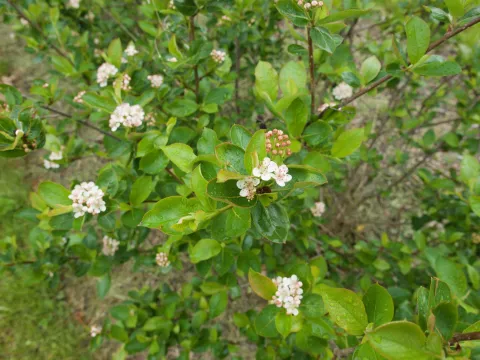
Black chokeberry
Aronia melanocarpa
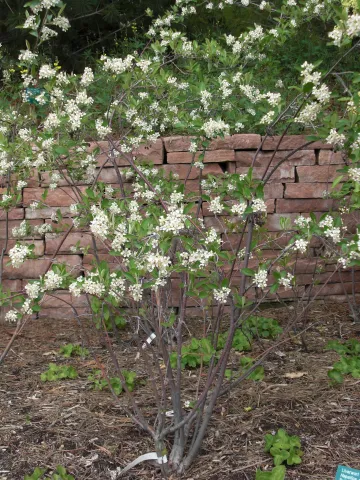
Red Chokeberry
Aronia arbutifolia
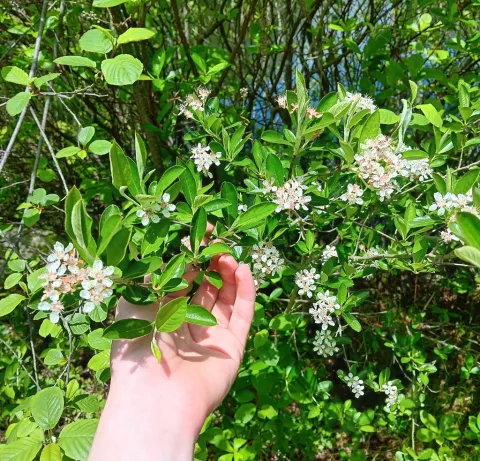
Purple Chokeberry
Aronia × prunifolia
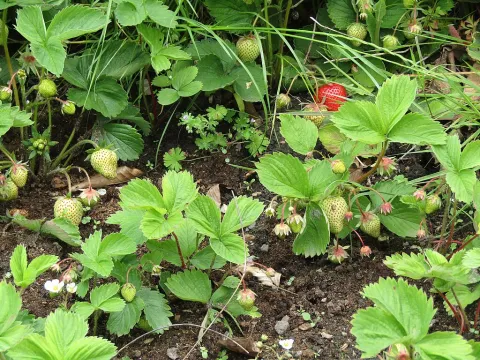
Cultivated strawberry
Fragaria × ananassa
Find all our tips in the Monstera application