Monstera dubia, the silver-leaved Monstera
Monstera dubia
- Exposures
- Sun, Half-shade
- Hardiness (USDA)
- 10a (-1.1°C ≤ T° < 1.7°C)
- Lifecycle
- Perennial
- Foliage
- Evergreen
- Family
- Araceae
- Genus
- Monstera
- Species
- Monstera dubia
Other names:Monstera acreana, Monstera irritans, Marcgravia dubia
You'd like to add a plant with colorful foliage and one with cut foliage to your collection, but you're short of space? What if you didn't have to choose? Monstera dubia has both! This Central American variety combines silver reflections and fenestration.
How to recognize Monstera dubia?
Monstera dubia grows up to three meters tall in its natural environment. In pots and indoors, it reaches a maximum of one meter. It is a hemiepiphytic plant with a creeping habit. But whereas monstera obliqua wraps its stems around tree trunks, Monstera dubia presses up against its support and grows skywards.
Young, light-green leaves are veined with dark green and silver highlights. As it grows, the foliage changes color. It becomes darker and loses its metallic hues. The heart-shaped leaf blades eventually tear. This feature allows light to reach the leaves at the base of the plant.
Monstera dubia flowers in spring and summer. A white spike blossoms at the heart of a pale pink spathe. But this phenomenon is rare indoors, even with good care.
The plant is toxic. Wear gloves when handling it, and make sure your children and pets don't ingest it.
Our care tips
The Monstera dubia are not difficult to care for. Regular watering, a little moisture, a pot optimized for drainage and a little fertilizer are all that's needed.
 Watering
Monstera dubia likes humidity, but not at root level. Water only when the rootball has dried to a depth of two or three centimeters.
Use non-calcareous water, such as rainwater, at room temperature. If you've placed your houseplant on a dish, empty the stagnant water each time it appears.
 Misting
Spray foliage with non-calcareous water at room temperature. This increases humidity, prevents pest attacks and repels dust.
 Repotting
In spring, transfer your Monstera dubia to a larger pot, so that it can continue to grow.
To repot your Monstera dubia, choose a perforated pot and install clay balls at the bottom. This promotes drainage and prevents standing water.
Choose a nutrient-rich potting soil to promote plant growth. Place your Monstera dubia in the center of the pot, about two centimeters below the rim.
Choose a nutrient-rich potting soil to promote plant growth. Place your Monstera dubia in the center of the pot, about two centimeters below the rim.
The Monstera dubia like to hang on. Give them a stake to climb on!
 Fertilization
You can stimulate the development of your plant during its growth phase, in spring and summer, with fertilizer.
Add green plant fertilizer to the watering water in the doses prescribed by the manufacturer.
 Cleaning
The dust that accumulates on the leaves prevents photosynthesis. To ensure that your Monstera dubia takes full advantage of the light, clean its foliage with a clean, damp cloth. Then wipe with a soft cloth.
 Pinch
Pinch your Monstera dubia during its growing season.
The Monstera dubia don't cut themselves. But you can pinch the ends of the stems to densify the plant and create new branches.
Your Monstera dubia is toxic. Wear gloves during the operation to avoid skin rashes.
 Taking cuttings
Propagation by cuttings is carried out during the strong growth phase, generally in spring and early summer.
Select a healthy stem. Take a portion of about ten centimetres with at least one leaf and one aerial root.
Always use a clean instrument to prevent the spread of disease, and a sharp one to facilitate healing.
Place your cutting in a glass filled with water at room temperature. Make sure the nodes are fully submerged; they are where the roots will grow.
Place the glass in a bright spot, but out of direct sunlight. Change the water regularly to keep it clear until roots appear.
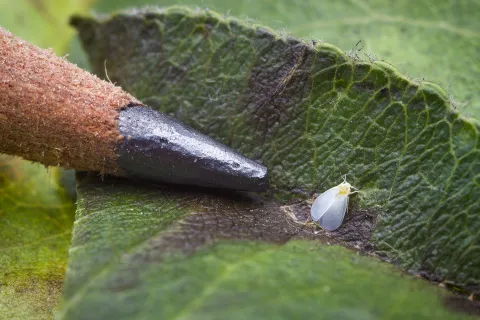
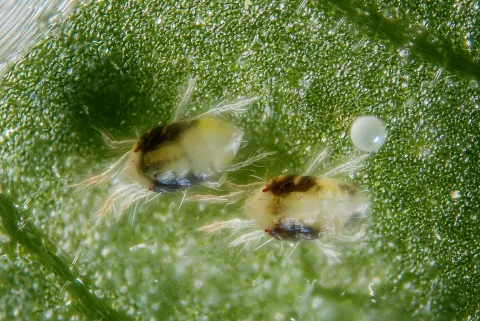
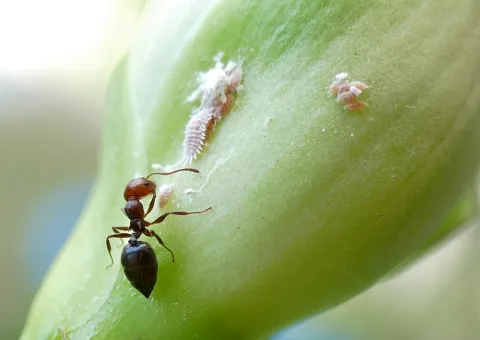
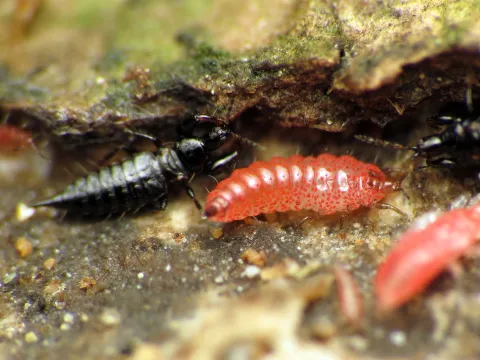
Diseases / Threats
Information
- Lifecycle
- Perennial
- Foliage
- Evergreen
- Exposures
- SunHalf-shade
- Substrates
- Clay soilHumus soilSandy soil
- Planting method
- In pots
- Tag
- Large pot
- Origin
- South America
- Hardiness (USDA)
- 10a (-1.1°C ≤ T° < 1.7°C)
- Leaf colors
- Dark greenLight greenSilver
- Flower colors
- WhitePale pink
- Fruit colors
- Dark greenLight greenWhite
Discover plants from the same family


Monstera variegata
Monstera deliciosa variegata

Monstera 'Thai Constellation'
Monstera deliciosa ‘Thai Constellation’

Monstera albo variegata
Monstera deliciosa albo variegata
Find all our tips in the Monstera application








