Monstera albo variegata, a false philodendron with almost white foliage
Monstera deliciosa albo variegata
- Exposures
- Sun, Half-shade
- Hardiness (USDA)
- 10a (-1.1°C ≤ T° < 1.7°C)
- Lifecycle
- Perennial
- Foliage
- Evergreen
- Family
- Araceae
- Genus
- Monstera
- Species
- Monstera deliciosa
Other names:Monstera deliciosa, Monstera borsigiana, Monstera deliciosa var. borsigiana, Monstera deliciosa var. sierrana, Monstera lenneana, Philodendron anatomicum, Philodendron fenestratum, Philodendron pertusum
While the Monstera adansonii 'Mint' was created by science, Monstera deliciosa albo Variegata is truly the work of Mother Nature. This hybrid of Monstera deliciosa owes its large white variegation to a spontaneous genetic mutation.
How can you recognize the Monstera deliciosa Variegata?
A perennial climbing plant, the Monstera albo Variegata grows up to 20 meters tall in its natural habitat, the tropical forests of Central America. When grown in a pot indoors, its growth will be more modest. But its vines can still grow over two meters long!
The plant clings to trees or its support using aerial roots. Located on the stem above the nodes, these roots also help it absorb moisture from the air.
The heart-shaped leaves are smooth and fleshy. Some measure more than 30 centimeters in every direction. In addition to their fenestrations, the green leaf blades feature broad white variegation. Some parts of the leaf may even be completely white!
The pure white color and the prominence of the variegation relative to the leaf's size help distinguish Monstera albo Variegata from Monstera deliciosa Variegata or 'Monstera Thai Constellation'. monstera deliciosa variegata has speckled leaf blades with finer variegation. In monstera 'Thai Constellation', the variegation tends more toward green, cream, or pale yellow.
Monstera albo Variegata blooms. Its flowers have the typical shape of Araceae inflorescences. They consist of a cream, white, or light green spathe and a yellow spadix.
You must keep your Monstera albo Variegata out of reach of pets. The plant is toxic. Its sap contains calcium oxalate crystals, which can cause digestive problems if ingested. It can also cause skin irritation upon contact.
Our care tips
Monstera albo variegata are not difficult to care for. Regular watering, a little moisture, a pot optimized for drainage and a little fertilizer are all that's needed.
 Watering
Monstera albo variegata needs a regular supply of water. But, like many plants, the plant cannot tolerate excess. Check that the potting soil has dried on the surface (two to three centimetres) before watering. If this is the case, use non-calcareous water at room temperature. You only need to moisten the root ball, not the soil.
Don't forget to drain off any stagnant water in the saucer or planter. It could rot the roots.
 Misting
Monstera albo variegata plants require a high level of humidity. Spray foliage with non-calcareous water, preferably rainwater.
 Repotting
In spring, transfer your Monstera deliciosa albo variegata to a larger pot, so that it can continue to grow.
Monstera albo variegata likes to be cramped. Re-pot only when the roots begin to emerge from the pot.
In a pierced terracotta pot, pour a layer of clay balls. Add a mixture of houseplant potting soil and perlite.
Clean the root ball of your Monstera deliciosa albo variegata by removing the remains of the previous substrate. Place your specimen in the center of the pot and cover with potting soil. To allow the roots to breathe, pack gently as you go along.
Monstera albo variegata if you like stakes for hanging, don't hesitate to supply one.
 Fertilization
You can stimulate the development of your plant during its growth phase, in spring and summer, with fertilizer.
To promote the growth of your Monstera deliciosa albo variegata, use a green plant fertilizer.
 Cleaning
Dust prevents leaves from absorbing light and slows photosynthesis. You can use a brush or feather duster to clean the foliage.
 Pinch
Pinch your Monstera deliciosa albo variegata during its growing season.
There may be several reasons why you want to deadhead your Monstera deliciosa albo variegata: to contain its growth, to multiply the plant or to stimulate its development.
Use your fingers or sharp, disinfected secateurs to cut between two knots.
Wear gloves when handling your plant.
Wear gloves when handling your plant.
 Taking cuttings
Propagation by cuttings is carried out during the strong growth phase, generally in spring and early summer.
Locate a node on the stem with at least one leaf and aerial roots. Cut two centimeters below it with clean, sharp pruning shears.
Soak your cutting in a glass of water at room temperature. Only the stem end should be immersed. Change the water every three days to keep it clear.
Place your cutting in a bright spot away from direct sunlight.
Place your cutting in a bright spot away from direct sunlight.
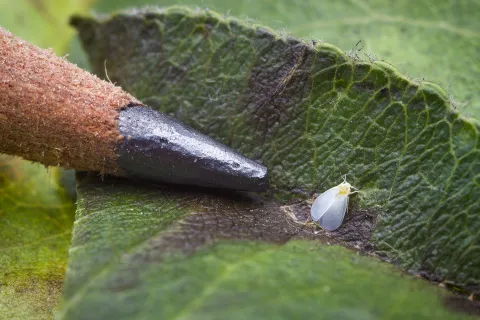
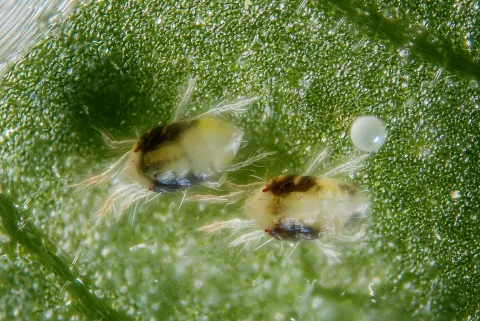
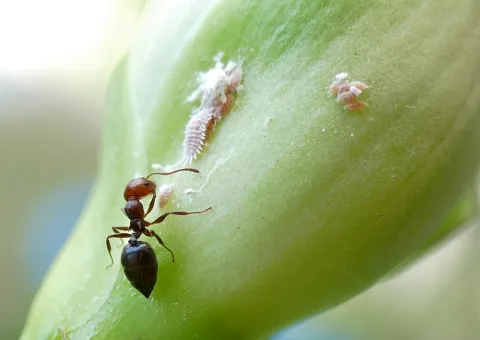
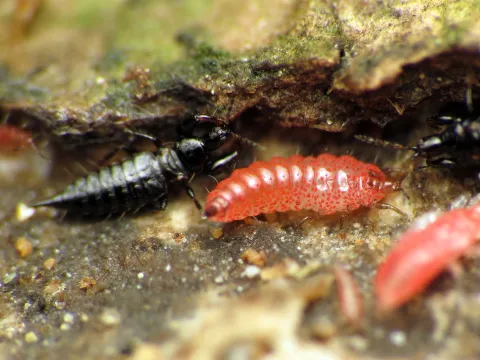
Diseases / Threats
Information
- Lifecycle
- Perennial
- Foliage
- Evergreen
- Exposures
- SunHalf-shade
- Substrates
- Clay soilHumus soilSandy soil
- Planting method
- In pots
- Tags
- Edible fruitBeginnerLarge potHard to killToxic
- Origin
- Central America
- Hardiness (USDA)
- 10a (-1.1°C ≤ T° < 1.7°C)
- Leaf colors
- Dark greenLight greenWhite
- Flower colors
- WhiteYellowPale yellowCream
Discover plants from the same family


Monstera variegata
Monstera deliciosa variegata

Monstera 'Thai Constellation'
Monstera deliciosa ‘Thai Constellation’

Find all our tips in the Monstera application








