The palmate maple, Acer palmatum, the other Japanese maple
Acer palmatum
- Exposure
- Half-shade
- Hardiness (USDA)
- 6b (-20.6°C ≤ T° < -17.8°C)
- Lifecycle
- Perennial
- Foliage
- Deciduous
- Family
- Aceraceae
- Genus
- Maple Acer
- Species
- Japanese maple Acer palmatum
Botanically speaking, Acer palmatum is not the true Japanese maple. But, like its cousin, it belongs to the Aceraceae family and comes to us from the forests of the archipelago and eastern Asia. And like the Acer japonicum, the palmate maple delights the Japanese during the kôyô period. They gather to contemplate the ephemeral beauty of its autumn foliage.
How to recognize the Japanese smooth maple, Acer palmatum?
The palmate maple is an arborescent shrub averaging seven meters in height. The smallest specimens grow to no more than five meters at maturity, while the largest trees reach twelve meters in height.
Acer palmatum's foliage changes with the seasons. Soft green in spring, purple in summer, turning orange and then bright red in autumn. Opposite, toothed leaves are five to ten centimetres long. They are webbed, with five to seven petioles.
Spring is the other season when Acer palmatum reveals its colors. During flowering, the foliage turns red, pale yellow and pinkish-white. The flowers are arranged in corymbs, in clusters of seven to twelve.
The fruit is a delight for children. Two twin achenes form a double winged samara. Like mini helicopters, they fly and spin when tossed into the air.
The palmate maple is not toxic. Take care, however, if you suffer from hay fever. The tree produces a lot of pollen to reproduce and can trigger allergies.
Our care tips
You don't have to be a pro to enjoy the maple's magnificent foliage. Hardy, the tree requires only a little water and rich soil.
 Watering
Water your Japanese maple when the soil surface is at least three centimetres dry.
Use non-calcareous water at room temperature, such as rainwater.
After 20 minutes, empty the planter or saucer. Stagnant water can rot the roots.
 Misting
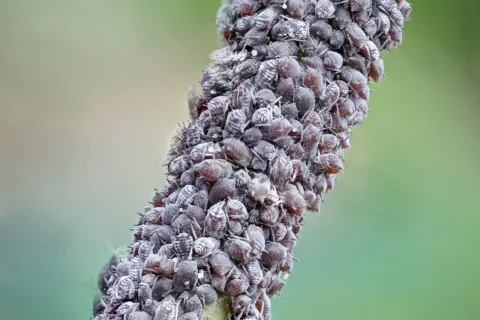
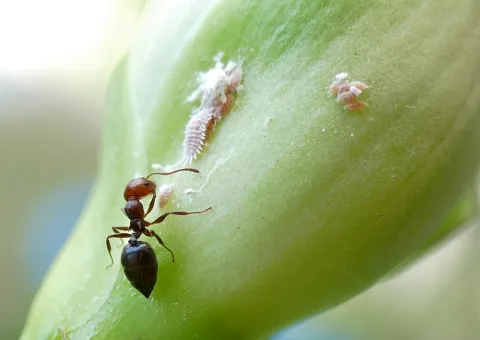
Dry air favors the appearance of mites and other pests. Mist the foliage of your Japanese maple to prevent invasions and improve hygrometry.
Use non-calcareous water, such as reclaimed rainwater. Tap water is often too hard and leaves marks on the leaves.
 Repotting
Every year in the spring, repot your Acer palmatum to give it more space.
Choose a pierced pot with a diameter slightly larger than the root ball. Plastic or PVC containers are preferable to terracotta ones: they retain moisture and resist frost.
Place a bed of clay balls at the bottom to improve drainage. Add a rich, draining potting soil, such as a mixture of heather, garden soil and vermiculite or pozzolan.
Place your shrub in the center of the hole. Its root ball should be level with the rim of the pot. Fill in with the substrate, without burying the crown. Pack down and water immediately after repotting. The water eliminates air pockets and encourages rooting.
Mulch the base to keep the soil cool.
 Fertilization
To promote the growth of your Acer palmatum, apply fertilizer in spring and summer.
Between two repottings, you can apply a special fertilizer for maples or slow-release fertilizer.
 Prune
Using clean, sharp pruning shears, remove dead branches. Then apply a healing putty to prevent the onset of disease.
 Planting
Choose a location in the sun and sheltered from the wind. Soak the root ball of your Japanese maple while you prepare the soil.
Dig a hole twice the size of the root ball. Take the opportunity to work the soil. Remove stones, weeds and plant waste.
Plant your plant in the center. The top of the rootball should be level with the ground. Fill in with garden soil. You can add potting soil or compost to enrich the soil. Tamp lightly and water to eliminate air bubbles.
Mulch the soil to retain moisture and reduce evaporation.
 Sowing
Collect seeds from a tree. You can use them with or without the winged part.
In a transparent box or airtight bag, such as a freezer bag, mix damp sand with the seeds. The seeds should be covered by the sand.
Seeds need cold to germinate. Expose them to a temperature of 1 to 5 degrees for 90 to 120 days. Your fridge will do just fine. Check for roots. Once you've spotted a seedling, carefully remove it without breaking the root. You can use a pencil or chopstick to do this. Return the can to the fridge to allow the other achenes to germinate.
Diseases / Threats
Information
- Lifecycle
- Perennial
- Foliage
- Deciduous
- Exposure
- Half-shade
- Substrates
- Humus soilSandy soil
- Planting methods
- Open groundIn potsIn tubs
- Tags
- BeginnerHardy
- Origin
- East Asia
- Hardiness (USDA)
- 6b (-20.6°C ≤ T° < -17.8°C)
- Leaf colors
- Light greenRedOrangePurple
- Flower colors
- WhiteRedPale yellow
- Fruit color
- Brown
Discover plants from the same family

Japanese maple
Acer japonicum
Find all our tips in the Monstera application