Sedum mendozae, Graptopetalum mendozae
Sedum mendozae
- Exposures
- Sun, Half-shade
- Hardiness (USDA)
- 9b (-3.9°C ≤ T° < -1.1°C)
- Lifecycle
- Perennial
- Foliage
- Evergreen
- Family
- Crassulaceae
- Genus
- Orpin Sedum
- Species
- Sedum mendozae
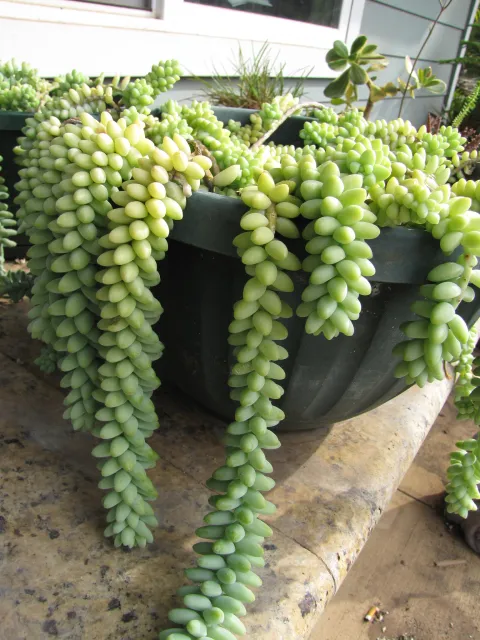
With its waxy, porcelain-clear leaves, Sedum mendozae is often mistaken for a Graptopetalum and sold under the name Graptopetalum mendozae. Like its cousins graptopetalum paraguayense and quetzalcoatlia superba, the plant belongs to the Crassulaceae family and is native to Mexico.
How to recognize Graptopetalum mendozae or Sedum mendozae?
Graptopetalum mendozae is a succulent plant growing to a height of 15 cm. It has a drooping, tapering or bushy habit when it multiplies and creates offshoots.
The thick, branched, creeping stems measure just half a centimetre in diameter. Cream or grey-green, they bear leaves or leaf scars.
The rosette consists of twelve to seventeen densely intertwined leaves. Those at the base are the widest, measuring up to two centimetres. They become progressively smaller as you move towards the center. Obovate or spatulate, the leaves are fleshy and covered with bloom. Foliage color varies according to heat, humidity and light. It can be cream, green or grey-green.
Sedum mendozae flowers in late winter. The flowers are pure white. They have five petals and resemble stars.
The plant is not toxic. It is harmless to humans and animals in the event of contact or even ingestion. However, it is not edible!
Our care tips
Sedum mendozae can be planted outdoors in regions with mild, dry winters.
 Misting
Sedum mendozae grow in arid regions and do not like humidity. No need to spray them.
 Repotting
Every year in the spring, repot your Sedum mendozae to give it more space.
Obtain a pierced pot one size larger than the previous one.
Fill the bottom with a very light, draining substrate such as commercially available potting soil for cacti and succulents. Plant your Graptopetalum mendozae in the center and add potting soil. Stop a few centimetres below the rim of the pot to form a watering trough.
Tamp down and wait three or four days for the soil to dry before watering.
 Fertilization
Add cactus and succulent fertilizer to watering water.
If you're repotting every year, there's no need to add fertilizer. Your plant will find sufficient nutrients in its substrate.
 Prune
Prune
Cut the flower stems flush once the flowers have faded, and remove dead leaves as you go along.
Use a clean, sharp tool to prevent the spread of disease and promote healing.
Use a clean, sharp tool to prevent the spread of disease and promote healing.
 Planting
Dig a hole slightly larger than the root ball. Plant your Graptopetalum mendozae, taking care not to bury the leaves. Fill in with garden soil.
 Taking cuttings
Take a healthy leaf, preferably from the outside of the plant. Leave it to dry for one or two days, until a wedge forms.
Fill a perforated pot with potting soil for cacti and succulents. Place your leaf horizontally on the substrate, without burying it.
Place your cutting in a bright, dry, frost-free spot.
Moisten the soil by spraying it with water. But be careful! Too much water may cause your Graptopetalum mendozae to rot.
Disease / Threat
Information
- Lifecycle
- Perennial
- Foliage
- Evergreen
- Exposures
- SunHalf-shade
- Substrates
- Calcareous earthSandy soil
- Planting methods
- Open groundIn potsIn tubsPlanter
- Category
- Succulent
- Tags
- BeginnerFloweryHard to kill
- Origin
- North America
- Hardiness (USDA)
- 9b (-3.9°C ≤ T° < -1.1°C)
- Leaf colors
- Pale greenCreamGreen-gray
- Flower color
- White
Discover plants from the same family
Find out more
Find all our tips in the Monstera application