Goeppertia veitchiana, Calathea 'Medallion
Goeppertia veitchiana
- Exposures
- Half-shade, Shade
- Hardiness (USDA)
- 12a (10°C ≤ T° < 12.8°C)
- Lifecycle
- Perennial
- Foliage
- Evergreen
- Family
- Marantaceae
- Genus
- Goeppertia
- Species
- Goeppertia 'Medallion Goeppertia veitchiana
Other names:Calathea veitchiana, Maranta veitchiana, Phyllodes veitchiana, Maranta veitchii
With its delicate patterns and 50 shades of green, you might think that the foliage of Calathea 'Medallion' (in Latin, Goeppertia veitchiana) was created in a laboratory, with a great deal of crossing and hybridization. In fact, it's nothing of the sort. The plant grows wild in the tropical forests of Ecuador.
How to recognize Calathea 'Medallion' (Goeppertia veitchiana)?
Calathea 'Medallion' is an evergreen perennial with a bushy habit. It can grow to over a metre in height.
The leaves grow in a rosette. Oval, they measure up to 25 centimetres in length. The upper surface has a pattern reminiscent of a medallion. The dark-green blade is adorned with silver mottling and dark- and light-green zigzags.
At night, the leaves reveal their crimson underside as the plant folds its foliage. This phenomenon, known as nyctinasty, is typical of Marantaceae. It can also be observed in other calatheas, such as calathea leopardinaleopardina (Goeppertia concinna).
Goeppertia veitchiana rarely flowers indoors. In the wild, it produces white to cream flowers, grouped in spikes at the base of the leaves.
Calathea 'Medallion' is non-toxic. Its leaves are harmless to pets and children.
Our care tips
Not very demanding, your Goeppertia veitchiana is content with a location without direct sunlight and plenty of humidity.
 Watering
Water your Calathea 'Medallion when the soil is dry on the surface, using non-calcareous water. The soil should remain slightly moist and fresh, especially in summer. But it must not be waterlogged, otherwise the roots may rot.
 Misting
In the wild, calathea 'Medallion benefits from high humidity. Spray it regularly with non-calcareous water to bring it closer to its natural environment.
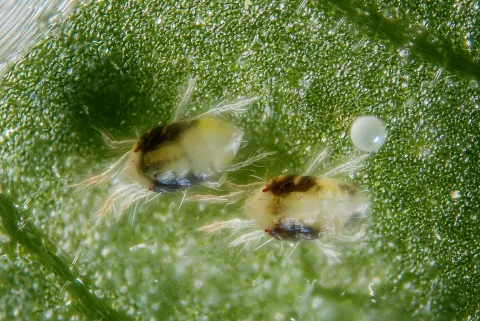
Fogging will also keep red spiders and other pests away.
 Repotting
Every year in the spring, repot your Goeppertia veitchiana to give it more space.
Obtain a pierced pot of a larger size than the previous one. Don't hesitate to choose a ceramic or plastic model. These materials retain moisture and allow you to space out watering. Your Calathea 'Medallion also prefers a wide pot to a deep container to give it room to grow.
Line the bottom with gravel or clay balls for drainage. Then pour in potting soil for green plants. You can lighten it by adding perlite.
Plant your subject in the middle and fill in with substrate. Water for the first time to eliminate air bubbles and encourage rooting.
 Fertilization
To promote the growth of your Goeppertia veitchiana, apply fertilizer in spring and summer.
Apply a liquid fertilizer for green plants to stimulate growth.
 Cleaning
Wipe foliage with a clean, damp cloth to remove dust and prevent pest invasion.
 Prune
Remove wilted and yellowed leaves.
 Taking cuttings
Cutting is carried out during the strong growth phase, generally in spring and early summer.
Calathea 'Medallion' are rhizomatous plants. They multiply by dividing clumps.
Take your Calathea 'Medallion out of its pot. Using your hands or a clean, sharp tool, separate a shoot with at least four leaves and a rhizome. The more developed your young shoot, the greater your chances of a successful cutting.
Place the reject in a pot with holes adapted to its size. Pour a thin layer of gravel or clay balls into the bottom. Add potting soil for seedlings and plantations. Plant your cutting and cover the roots with soil.
Water for the first time to facilitate contact between roots and substrate.
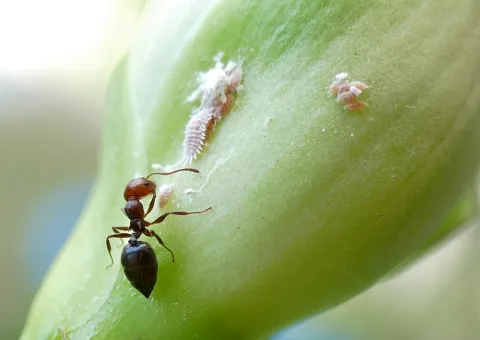
Diseases / Threats
Information
- Lifecycle
- Perennial
- Foliage
- Evergreen
- Exposures
- Half-shadeShade
- Substrate
- Humus soil
- Planting method
- In pots
- Categories
- IndoorRhizomeHerbaceous
- Tags
- Cold-sensitiveThirsty
- Origin
- South America
- Hardiness (USDA)
- 12a (10°C ≤ T° < 12.8°C)
- Leaf colors
- Dark greenLight greenSilverPurple
Discover plants from the same family
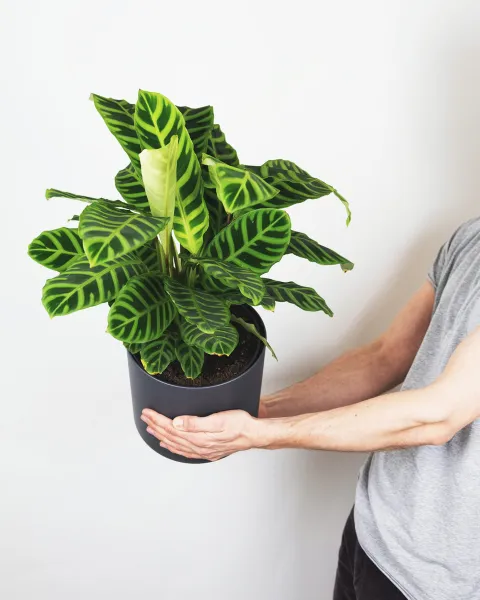
Zebra Calathea
Goeppertia zebrina
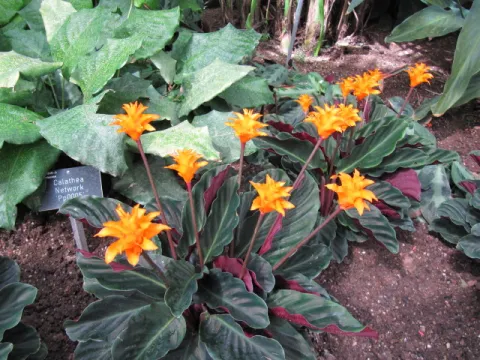
Calathea crocata
Goeppertia crocata
Calathea lancifolia
Goeppertia lancifolia
Calathea ornata
Goeppertia ornata
Find out more
Find all our tips in the Monstera application








