Our growing guides


239
Results

Mountain Strelitzia
Strelitzia caudata

Rush-leaved bird of paradise
Strelitzia juncea

Giant bird of paradise
Strelitzia nicolai

Bird of paradise
Strelitzia reginae

Saintpaulia
Streptocarpus ionanthus

Cape Primrose
Streptocarpus saxorum

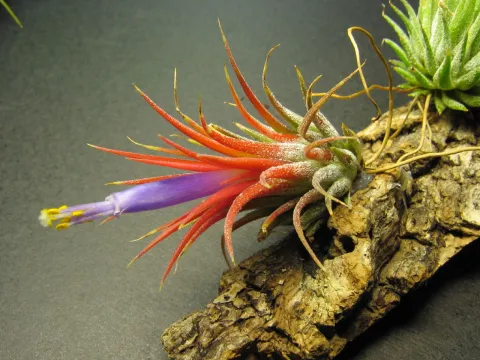
Tillandsia racket
Tillandsia cyanea


Trachelospermum asiaticum 'Ogon-Nishiki
Trachelospermum asiaticum 'Ogon-Nishiki'

Trachelospermum 'tricolor'
Trachelospermum asiaticum 'tricolor'

Star jasmine
Trachelospermum jasminoides

Star of Venice' star jasmine
Trachelospermum jasminoides ‘Star of Venice’

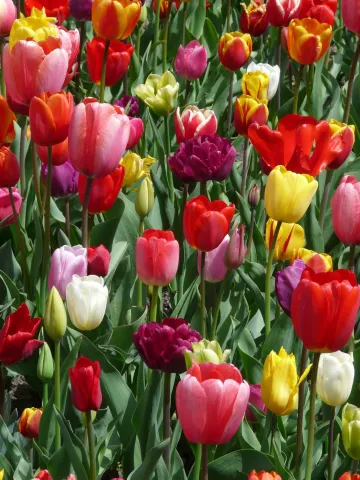
Garden tulip
Tulipa gesneriana

Vanilla
Vanilla planifolia

Periwinkle
Vinca major
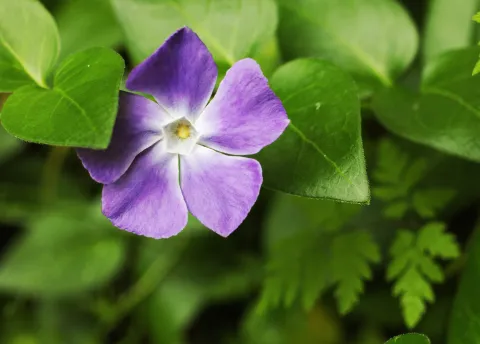
Small periwinkle
Vinca minor

Japanese Glycine
Wisteria floribunda

American Glycine
Wisteria frutescens

Chinese Glycine
Wisteria sinensis
Flowering plants
Flowering plants dominate the plant kingdom. They account for at least 90% of terrestrial species. More than 300,000 have been catalogued, and almost 2,000 new ones are discovered every year.
Flowering plants, definition
in everyday language, plant and flower are often synonymous. But not in botany. The flower is the reproductive part of a plant. Trees, shrubs and herbaceous plants can produce flowers and then fruit.
Scientists call flowering plants angiosperms. This Greek word means seed in a container. In angiosperms, ovules and seeds are protected by the ovary. The flower also contains the plant's sexual organs: the stamens for male flowers, the pistil for female flowers, or both for hermaphrodite flowers.
The flower transforms into fruit when fertilized during pollination. Wind, insects, birds and mammals such as bats carry out this task. They are attracted by the shape, color or smell of the inflorescence. As they gather nectar, the animals load themselves with pollen, which they then deposit on other specimens. The meeting of the pollen, which contains the male gametes, and the embryo sac results in fertilization.
Which plants to grow for flowers?
While flowers are essential to biodiversity, they are also cultivated for their ornamental properties.
Most of our houseplants are hardy tropical herbaceous plants. Some, such as the Phalaenopsis orchid, Kalanchoe and {{ link_to_variety("01FXR2DR0K461ARCPBGQ4JC0J3", "singular_name") }}, flower without requiring much care. Others, like {{ link_to_variety("01FW72RCZ159RABER0AR3ZRFZG", "singular_name") }} and {{ link_to_variety("01FV07QY8F7QDE67Y0HVKJ2DJH", "singular_name") }}, need a resting period to produce new flower buds.
Thanks to the great diversity of angiosperms, it's possible to enjoy a garden in bloom all year round. To celebrate the arrival of spring, opt for bulbs such as tulips, hyacinths and some crocuses. In summer, their petals are replaced by those of hollyhocks, sunflowers and carnations. In autumn, chrysanthemums, cyclamen and asters take over. Finally, for winter, you can count on hellebores and snowdrops. But you don't have to limit yourself to herbaceous plants: {{ link_to_category("01F1SV6TSPV5R6YTPQJ88P61DS") }} such as hydrangea, gardenia and St John's wort, and {{ link_to_category("01F1SV6CXY674WD55GTAHFWAH6") }} such as magnolia, cherry and Judas offer spectacular flowering.
Before landing on your plate, vegetables were flowers. If you want to combine beauty and goodness, plant your vegetable garden with zucchini, beans, onions, chives and potatoes.








