Strelitzia caudata, the mountain bird of paradise
Strelitzia caudata
- Exposure
- Sun
- Hardiness (USDA)
- 10a (-1.1°C ≤ T° < 1.7°C)
- Lifecycle
- Perennial
- Foliage
- Evergreen
- Family
- Strelitziaceae
- Genus
- Bird of paradise Strelitzia
- Species
- Mountain Strelitzia Strelitzia caudata
Strelitzia caudata is native to Zimbabwe and Mozambique, in the heart of the Chimanimani Mountains. This plant from the Strelitziaceae family displays its bird-of-paradise-like flowers amidst antelopes, buffalo, and butterflies.
How can you recognize Strelitzia caudata, the mountain bird of paradise?
In the wild, Strelitzia caudata can reach eight meters in height. When grown in a pot indoors, it does not exceed two meters. This herbaceous perennial has an upright growth habit. It has several stems that become woody over time. Upon close inspection, you can see leaf scars on them.
The leaves grow in two rows, fanning out from the tops of the pseudostems. Supported by a long, pinkish petiole, they measure up to two meters long by 80 centimeters wide. The gray-green leaf blades are leathery but fragile. They tear in the wind and eventually come to resemble the fronds of a palm tree.
Strelitzia caudata blooms in early spring. Several flowers appear on a boat-shaped, purple spathe. White with a hint of mauve, they are reminders of those of Strelitzia alba and Strelitzia nicolai. However, it is possible to distinguish between the three varieties. The petals of the mountain Strelitzia are rounder than those of Strelitzia alba. Furthermore, each inflorescence has only a single bract, whereas Strelitzia nicolai has multiple bracts. As with all other Strelitzia species, patience is required before you can admire the blooms. The first bird-of-paradise-shaped flowers bloom only after three years.
By late summer, the fruits replace the flowers. A woody, three-lobed capsule contains black, round seeds with a yellow aril.
Strelitzia caudata is a toxic plant. The harmful substances are primarily concentrated in the seeds and roots. If you have pets or young children, be sure to keep the plant out of their reach.
Our care tips
Your Mountain Strelitzia is not a diva. The plant needs plenty of light and regular watering. But for it to flower again, you'll need to overwinter it.
 Watering
Strelitzia caudata like to keep their feet cool, but can't stand soggy soil. Water when the substrate is dry on the surface, for about three centimetres.
To provide your plant with the nutrients it needs, give preference to rainwater. Avoid tap water, which is often too hard. Finally, to avoid damaging the roots, use water at room temperature.
If you use a saucer or planter, remove any stagnant water. It could rot the root system.
 Misting
Fogging helps to increase humidity and prevent pest invasion. Spray the foliage with fresh water, such as rainwater. Avoid tap water. Too hard, it leaves white marks on the leaves.
 Repotting
Every year in the spring, repot your Strelitzia caudata to give it more space.
Get a pot with a hole two or three centimetres larger than the previous one. In nature, strelitzia caudata likes to develop its roots deep down. Don't hesitate to choose a model that's taller than it is wide.
Line the bottom with a layer of clay balls or gravel to optimize drainage. Then add potting soil for flowering plants. Plant your Mountain Strelitzia in the center and fill with substrate. Tamp down without damaging the roots.
 Cleaning
 the leaves with a clean, damp cloth removes dust and limits pest attacks.
 Prune
Remove wilted leaves usinga clean, sharp tool.
 Planting
When the risk of frost has passed, it's time to plant.
If temperatures permit, you can plant your Mountain Strelitzia in the ground.
Choose a sunny spot sheltered from the wind. Prepare a mixture of one third sand, one third soil and one third compost. Dig a hole wide and deep enough for your plant.
Place a bed of gravel at the bottom for drainage, followed by a layer of substrate. Plant your specimen in the center and fill in with your mixture. Tamp to eliminate air bubbles and water for the first time.
 Sowing
Once the risk of frost has passed, you can sow your Strelitzia caudata seeds.
Remove the stringy husk covering the seeds. Then soak them for 48 hours in water at 30°. Remember to change the water twice a day to keep it clean.
Prepare pots filled with potting soil for sowing and planting. Place three to ten seeds in each pot. Cover them with three centimetres of substrate.
Place the seedlings in a greenhouse, exposed to light. For the seeds to germinate, the temperature must be between 20 and 30° and the soil must remain moist. Remember to spray and aerate your seedlings for five minutes every day.
When the young shoots appear, you can leave them in the open air.
 Taking cuttings
Cutting is carried out during the strong growth phase, generally in spring and early summer.
Carefully remove one of the plants from the ground at Mountain Strelitzia. Cut the root ball into several parts using your hands and a clean, sharp tool.
Prepare a pierced pot. Pour in a bed of clay balls or gravel to improve drainage, followed by a layer of potting soil for flowering plants.
Plant your plant in the center and fill in with substrate to within three centimeters of the rim. Tamp gently to remove air bubbles without damaging the roots.
 Wintering
Strelitzia caudata need a winter rest period to flower. Reduce watering and install your plant in a room with a temperature of 10 to 15°, such as an unheated veranda or greenhouse.
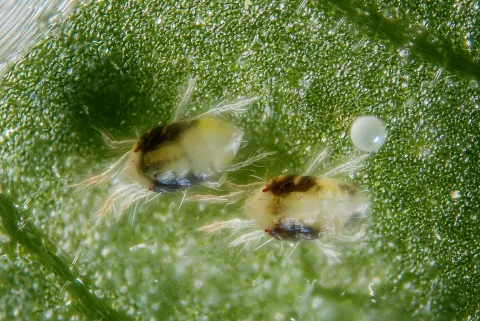
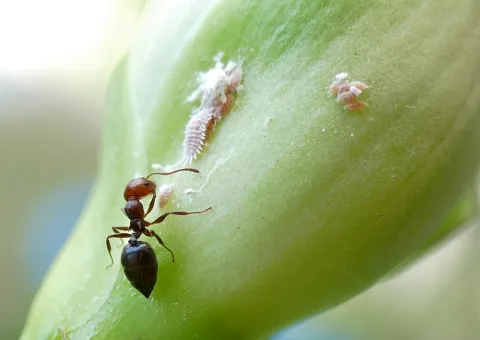
Diseases / Threats
Information
- Lifecycle
- Perennial
- Foliage
- Evergreen
- Exposure
- Sun
- Substrates
- Humus soilSandy soil
- Planting methods
- Open groundIn potsIn tubs
- Categories
- IndoorRhizomeHerbaceousFlowery
- Tags
- BeginnerFloweryLarge potToxic
- Origin
- South Africa
- Hardiness (USDA)
- 10a (-1.1°C ≤ T° < 1.7°C)
- Leaf color
- Green-gray
- Flower colors
- WhiteBlueViolet
- Fruit color
- Brown
Discover plants from the same family

Giant bird of paradise
Strelitzia nicolai

White bird of paradise
Strelitzia alba

Rush-leaved bird of paradise
Strelitzia juncea

Bird of paradise
Strelitzia reginae
Find out more
Find all our tips in the Monstera application








