Our 15 favorite succulents for your home
Article for :All parent plants
Article summary
- Succulent #1: Blossfeld's Kalanchoe (Kalanchoe blossfeldiana)
- Succulent plant #2: Mother-in-law's tongue (Sansevieria trifasciata)
- Succulent plant #3: Jade tree (Crassula ovata)
- Succulent #4: Aloe vera
- Succulent plant #5: Sedum burrito
- Succulent #6: Echeveria shaviana
- Succulent #7: Adromischus cristatus
- Succulent #8: Milky spurge (Euphorbia lactea)
- Succulent #9: Banded haworthia (Haworthiopsis fasciata)
- Succulent plant #10: Gasteria acinifolia
- Succulent #11: Graptopetalum amethystinum
- Succulent #12: Aeonium leucoblepharum
- Succulent #13: Blue agave (Agave tequilana)
- Succulent plant #14: Creeping callisia (Callisia repens)
- Succulent #15: Anacampseros rufescens
Looking for an eye-catching collection of plants? Adopt succulents! Used to growing in deserts and inhospitable places, they're easy to care for and will survive in your home without a hitch. And since their fleshy leaves allow them to store water, they'll forgive you if you forget to water them..
Succulent #1: Blossfeld's Kalanchoe (Kalanchoe blossfeldiana)
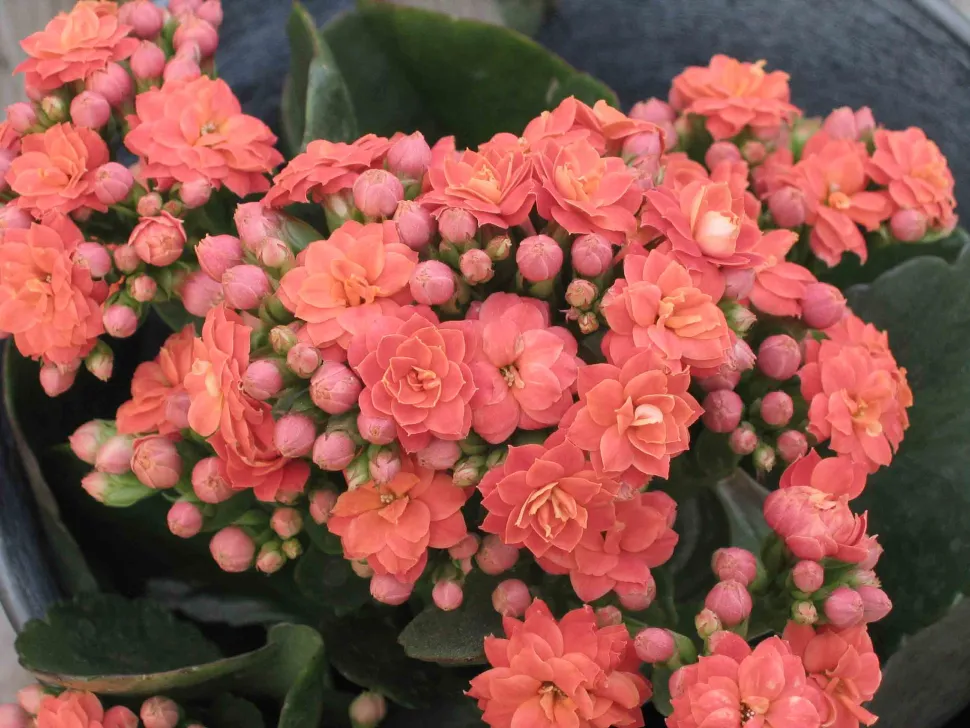
Indoors, the Kalanchoe de Blossfeld blooms in spring and winter – Photo by HQ Flower Guide / Flickr
Looking for a flowering succulent? Blossfeld's Kalanchoe (Kalanchoe blossfeldiana) should be just what you're looking for. Its round, serrated leaves store water so you don't have to water it too often, while its colorful inflorescence is a real eye-catcher. Red, purple, yellow, orange or white, there's a flower for every color!
Blossfeld's Kalanchoe is a small succulent plant, growing to no more than 40 centimetres in height. If you want to keep it compact, regularly pinch the ends of the stems between your fingers. This will encourage new branches and flowers to appear.
Succulent plant #2: Mother-in-law's tongue (Sansevieria trifasciata)
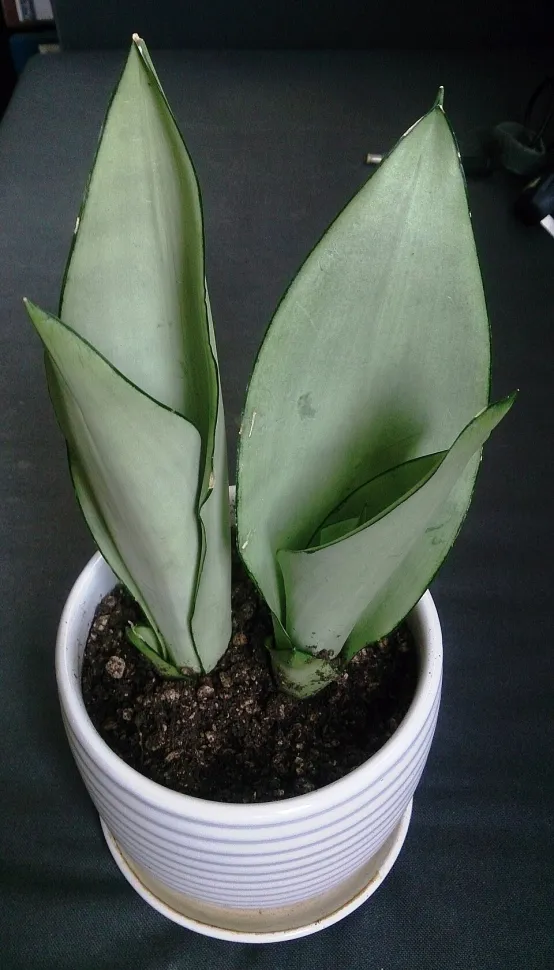
Mother-in-law's tongue, 'Moon Shine' version – Photo by Mokkie/ Flickr
Long relegated to the status of cheesy plant, mother-in-law's tongue (Sansevieria trifasciata) is making a comeback in our interiors thanks to its graphic allure. If you're not quite ready to live up to its dated image, forget the botanical variety with its long green and yellow leaves. Instead, opt for Sansevieria trifasciata 'Hahnii Green Leaves' with its bird's nest-like rosette or Sansevieria trifasciata 'Moonshine' with its dull grey foliage.
Mother-in-law's tongue is an almost indestructible succulent. It forgives all watering errors and survives, even without maintenance. It also tolerates low light and can be planted in semi-shade or even shade. However, its growth will be faster and its colors more beautiful if you offer it a sunny location, reminiscent of its native Africa.
Succulent plant #3: Jade tree (Crassula ovata)
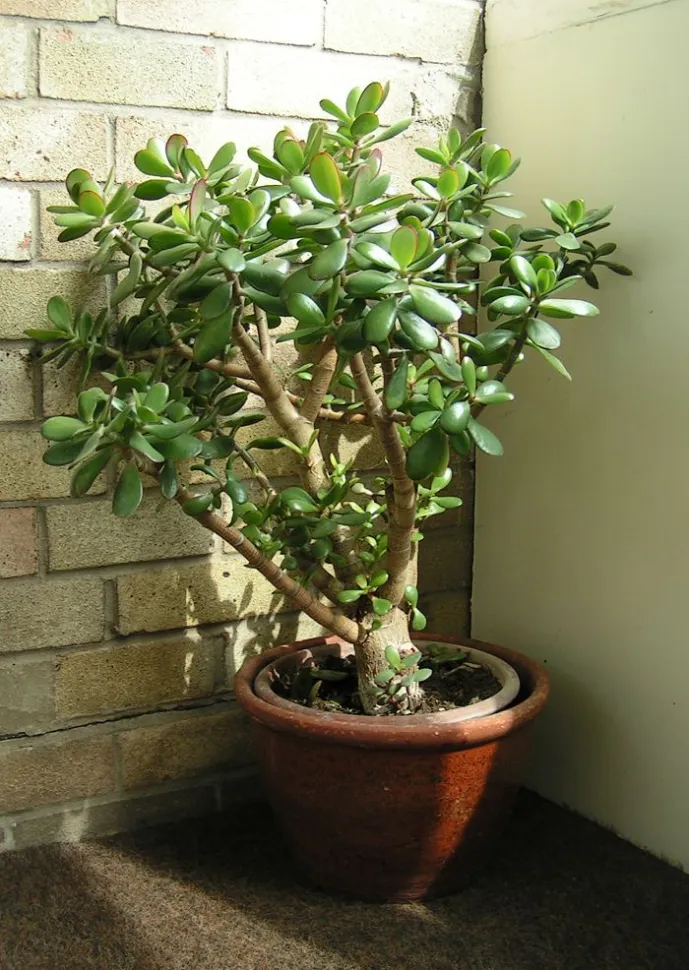
The jade tree is said to bring prosperity and harmony – Photo by Sannse / Wikipedia
When we think of a succulent plant, we think more of a rosette of leaves or a cactus than a three-metre-high shrub. Yet the Jade Tree (Crassula ovata) is indeed a succulent plant, as evidenced by its round, fleshy green leaf blades.
Water your Jade tree when the substrate has dried three to five centimetres. If in doubt, observe your succulent. When it runs out of water, its leaves become hollow and stunted. To avoid this, download the Monstera app. We'll send you a personalized reminder when it's time to water your plant.
Succulent #4: Aloe vera
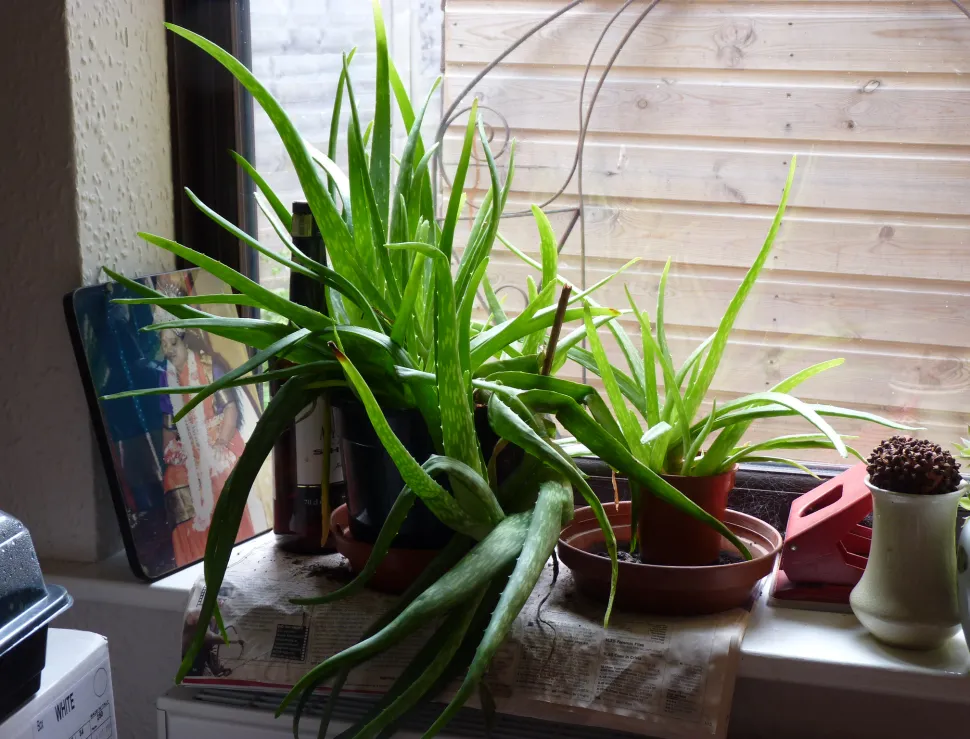
Aloe vera can not only beautify your skin, but also your home – Photo by Tony Hirtenstein /Flickr
A must-have variety in any self-respecting succulent plant collection, Aloe vera could almost pass for a cactus. Over time, it develops a woody stem and its long green leaves are bristling with spines!
The cosmetics industry and the culinary world love aloe vera. But you'd be better off growing your own just for its beauty! The plant is toxic. It contains a poisonous juice called aloin. Known for its powerful laxative effect, it also causes heart and respiratory disorders in animals and humans.
Succulent plant #5: Sedum burrito
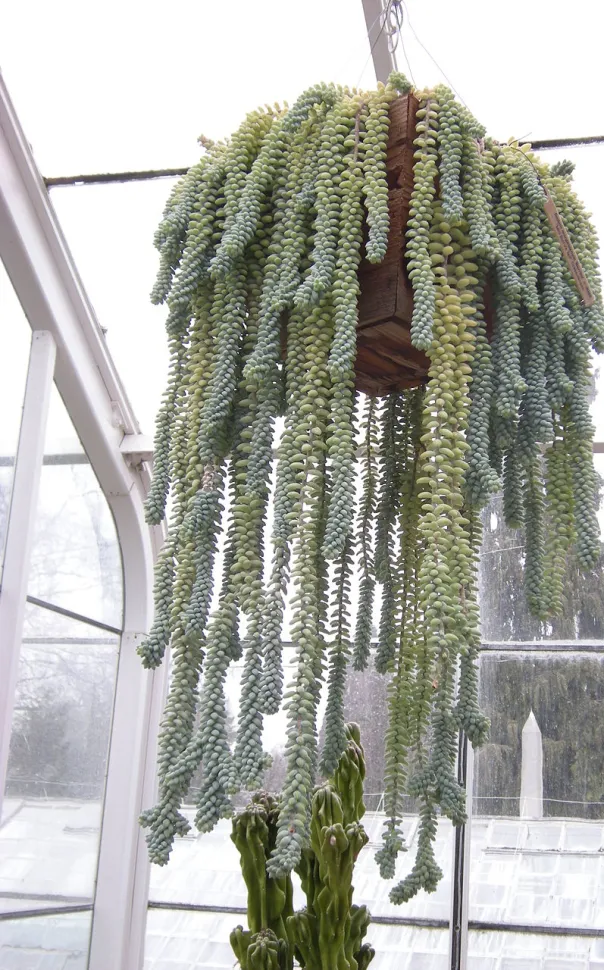
Sedum burrito is a bit like cousin what's-his-name with the coloring – Photo by Joe Mabel / Wikipedia
As its name suggests, Sedum burrito is native to Mexico. This succulent plant delights us with its rounded, fleshy leaves no bigger than a grain of rice. Blue, grey or green, they fall to form a delicate suspension.
Like many succulents, sedum burrito prefers heavy watering when its substrate is completely dry to several small doses. Pour water until the excess runs off through the drainage holes. Then remove any stagnant water from the saucer to prevent root rot.
Succulent #6: Echeveria shaviana
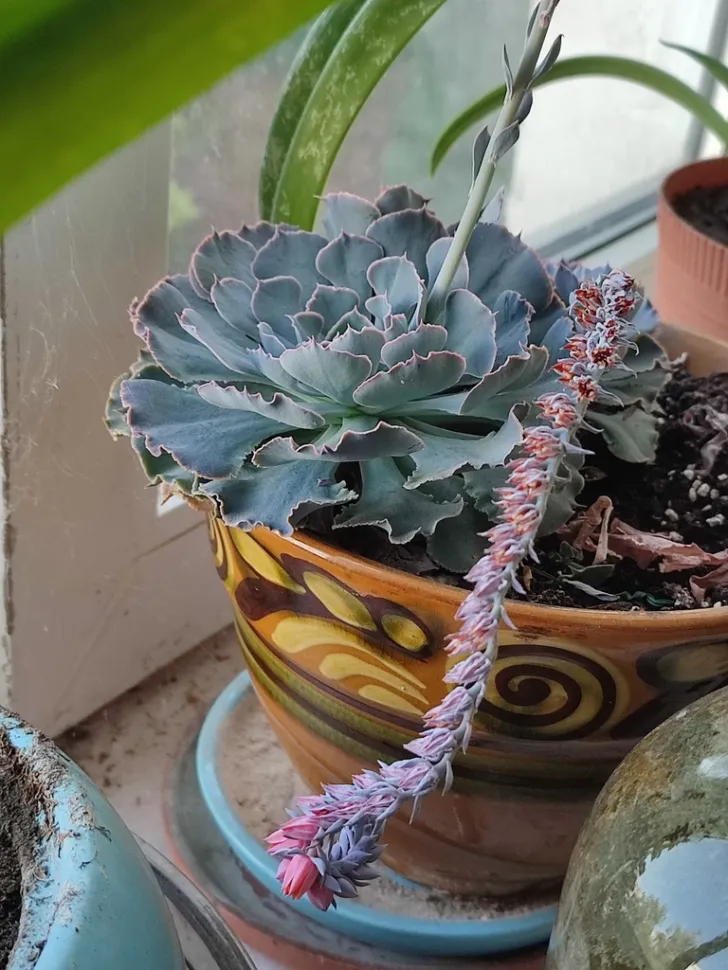
In sunlight, the foliage of Echeveria shaviana takes on purple accents – Photo by Igor Balashov / iNaturalist
Among all the varieties of Echeveria, it was difficult to find the one that would feature in this top list of the best succulents. We chose Echeveria shaviana not only for its bluish leaves with curly margins. It's also for its pink and orange blooms.
Like many succulents echeveria shaviana attracts mealybugs. When you buy a succulent, always check that it's not infested and quarantine it for two or three weeks so that it doesn't contaminate the rest of your jungle. If you notice any parasites or honeydew, remove them. Also clean your succulent, either with water or with a mixture of water and black soap.
Succulent #7: Adromischus cristatus
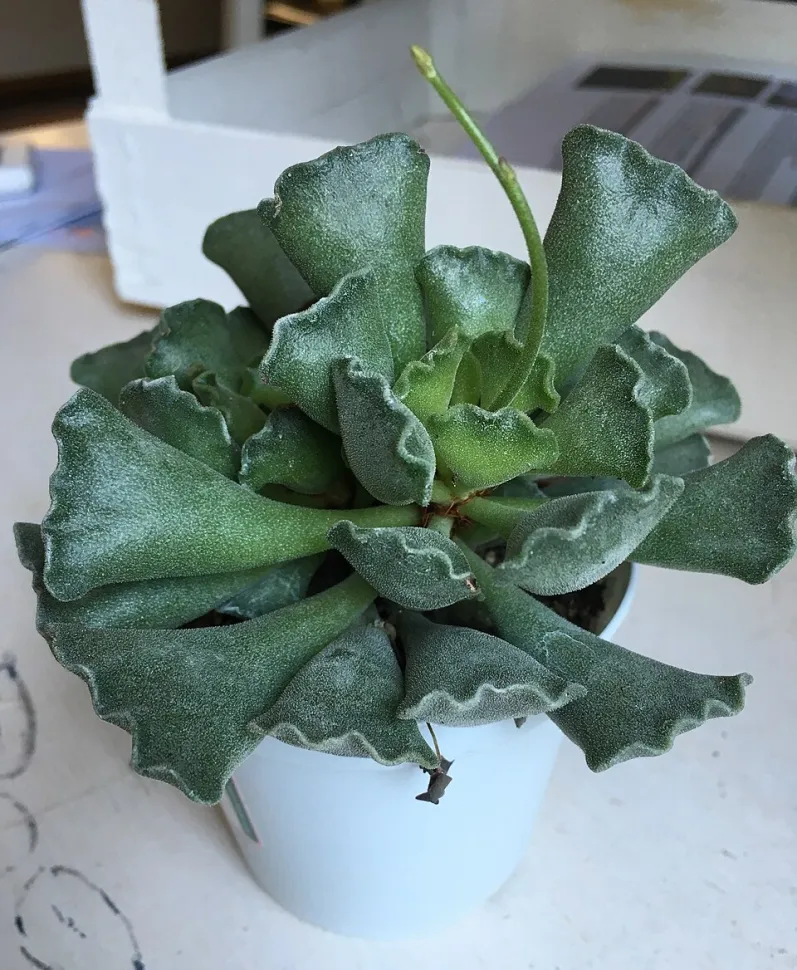
Adromischus cristatus and its small, fleshy leaves – Photo by Manuela Rosi / Wikipedia
You don't have much room, but you'd like to expand your succulent collection? Monstera has the solution! Adromischus cristatus measures no more than fifteen centimetres in all directions. The plant makes up for its small size with spectacular foliage: fleshy, dark-green leaves with wavy margins.
Easy to grow, Adromischus cristatus is also easy to propagate by taking leaf cuttings. In autumn, remove a healthy leaf (or pick up a fallen blade) and plant it in a well-draining substrate such as potting soil for succulents and cacti. Rooting can take several months. You should not water or touch your plant during this period. Once the first signs of recovery appear, spray the soil regularly to moisten it.
Succulent #8: Milky spurge (Euphorbia lactea)
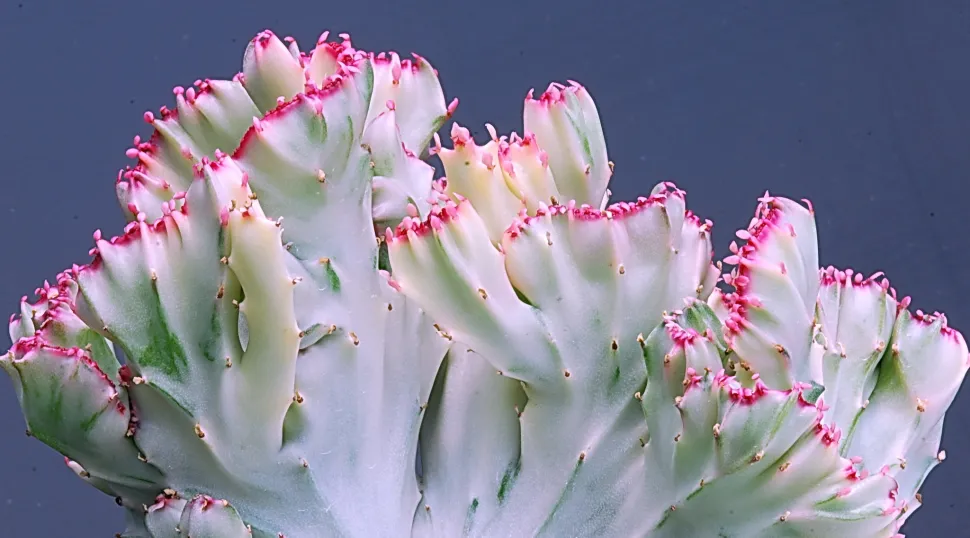
The outgrowths of Euphorbia lactea cristata display shades of white, green and pink – Photo by Mike Keeling / Flickr
Despite its candelabra-like silhouette and the thorns that hem in its stems, the milky spurge (Euphorbia lactea) is not a cactus. This plant is a succulent belonging to the Euphorbiaceae family. And that's not the most surprising part! The 'White ghost' variety stands out for its milky white color, while the Euphorbia lactea cristata has outgrowths that look like something out of Dr. Frankenstein's imagination.
Botany isn't the only factor that sets your Milky Euphorbia apart from the cacti. This species, which comes to us from Asia, needs regular watering, even in winter. It also needs fertilizing in spring and summer. Just remember to halve the dose prescribed by the manufacturer, as your plant is not very greedy.
Succulent #9: Banded haworthia (Haworthiopsis fasciata)
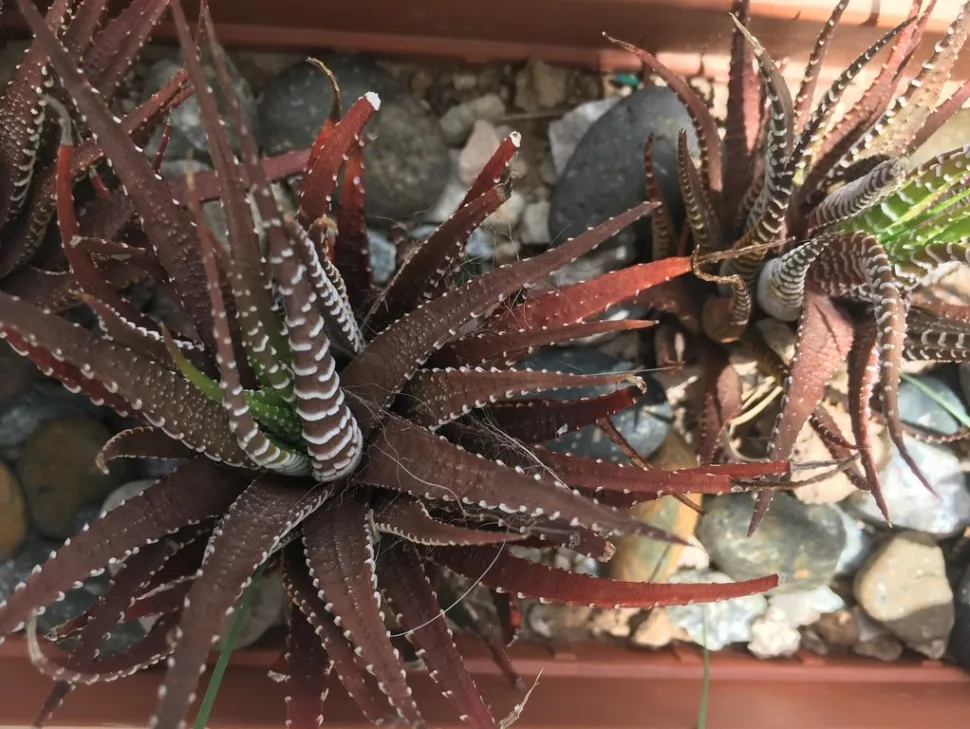
Haworthia fasciata turns red in the sun – Photo by Luis Parravicini / iNaturalist
Better known as Haworthia fasciata or banded haworthia, Haworthiopsis fasciata is a succulent plant native to South Africa. Its long, triangular leaves are stiff and streaked with white, giving it the appearance of a zebra aloe.
Haworthiopsis fasciata thrives in light, well-drained soil. Repot it in a perforated pot lined with potting soil for cacti and succulents. If you have a tendency to be heavy-handed when watering or to let water stagnate in the saucer, consider making a drainage layer with gravel or clay balls.
Succulent plant #10: Gasteria acinifolia

On Gasteria acinifolia, the leaves are speckled with white spots – Photo by David J. Stang / Wikipedia
Gasteria acinifolia is the XXL version of Haworthia fasciata. This succulent plant also has long, dark-green leaves studded with white spots. But it reaches 75 centimetres in height and 65 centimetres in diameter! Even its flowering is similar to that of the haworthia: orange-pink, bell-shaped flowers.
A good succulent plant, gasteria acinacifolia does not tolerate humidity. It develops fungi when its environment is too damp. To prevent fungus, water the substrate rather than the foliage. Always wait for the soil to dry out thoroughly before watering again. Also remove any stagnant water in the saucer or planter.
Succulent #11: Graptopetalum amethystinum
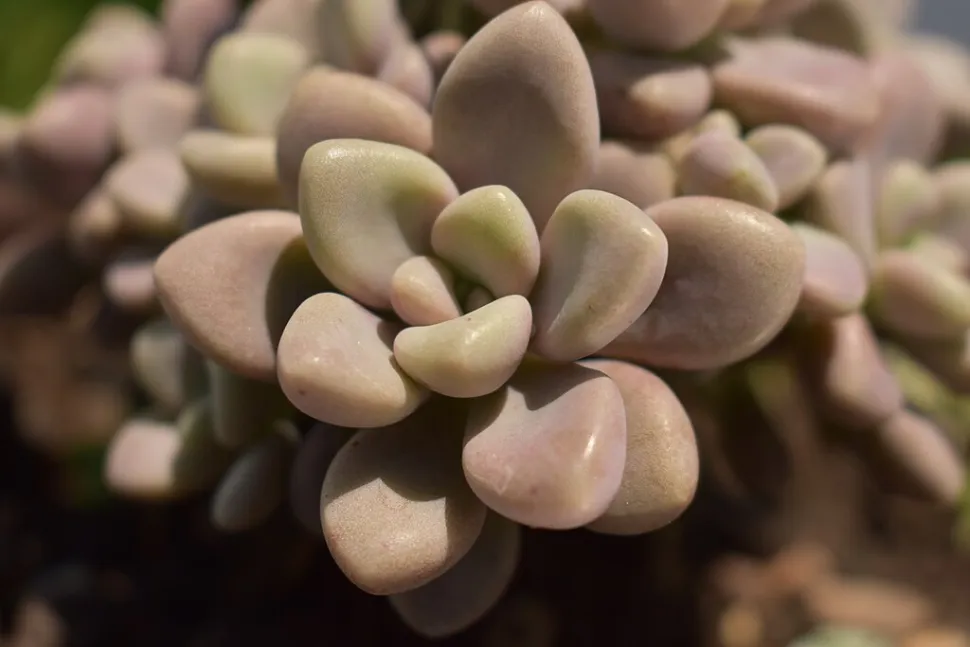
We're not lying when we say that the leaves of Graptopetalum amethystinum look like candy – Photo by Armando del Campo / Wikipedia
Graptopetalum amethystinum. Behind this somewhat barbaric name lies a delicate succulent plant, with round, shiny leaves like sugared almonds. Their color, too, is reminiscent of candy. The bloom that covers the foliage gives it a pink or violet hue.
Graptopetalum amethystinum tolerates half-shade exposure. But its color will be much more beautiful if you put it in the sun! In winter, place your succulent behind a south- or west-facing window. In summer, take it outside to enjoy the fine weather.
Succulent #12: Aeonium leucoblepharum
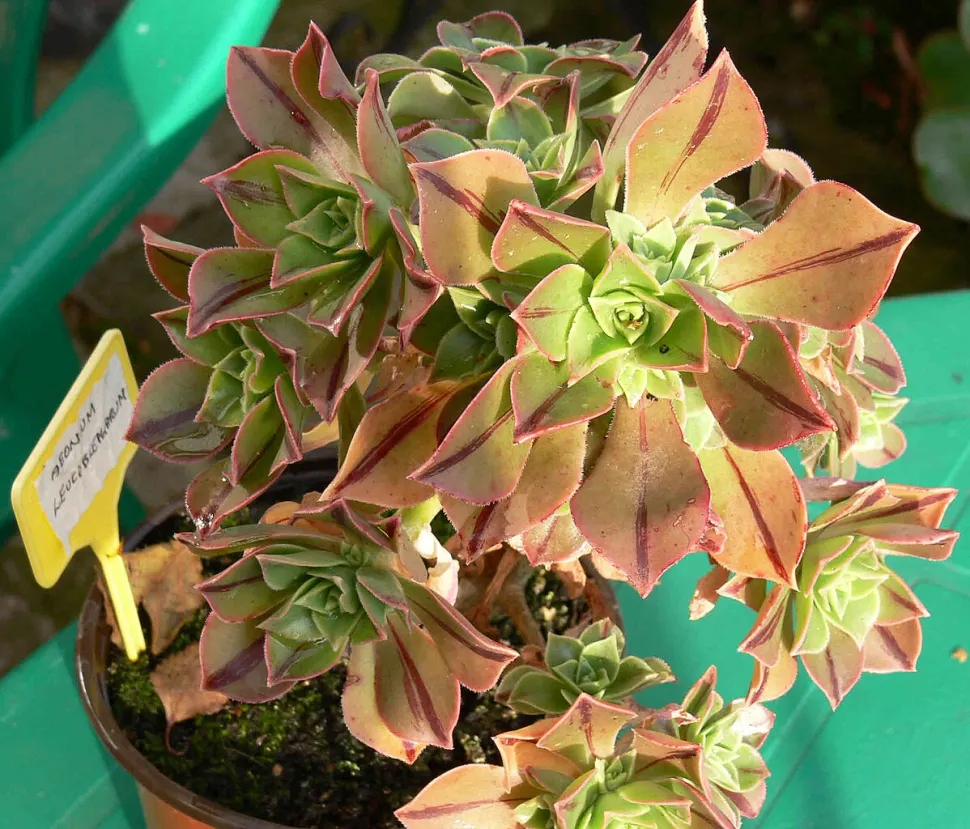
Guess the origin of this Aeonium leucoblepharum by the color of its foliage – Photo by Aeoniumb / Wikipedia
With aeonium leucoblepharum, the foliage acts as a passport. In this succulent shrub, the color of the fleshy leaves, grouped in rosettes at the ends of the branches, depends on the country of origin! The green limbs are tinged with red when the plant comes from Somalia, but brown or pink when it originates from Yemen.
During very hot weather, your Aeonium leucoblepharum goes into a state of rest. Its rosette retracts and some leaves fall off. Don't water or fertilize your plant in summer. In autumn, you'll start watering again in the same way you water your succulents: copiously when the soil has dried out completely!
Succulent #13: Blue agave (Agave tequilana)
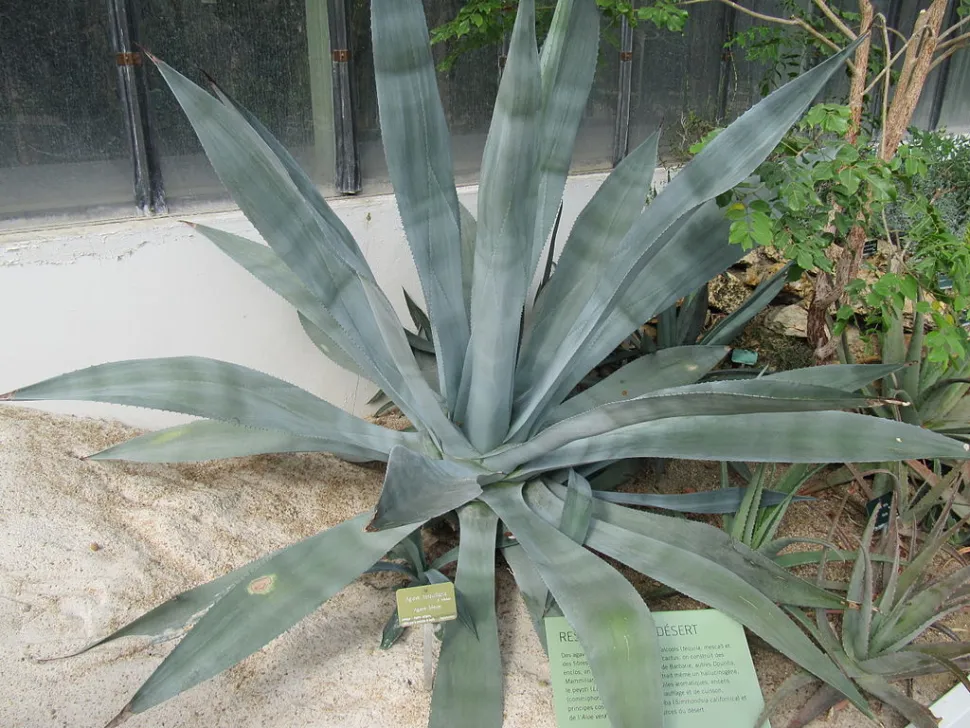
Although well known in Mexico, the Blue Agave is rather rare in our latitudes Photo by Leonora Enking / Wikipedia
Blue agave (Agava tequilana) is mostly grown in Mexico, in fields, to produce the syrup that will become tequila. But even if you're not planning to make your own alcohol, this succulent plant deserves a place in your home. Its majestic rosette of narrow, elongated leaves takes on deep blue hues thanks to the bloom.
Unless you live in a region with warm, dry winters, you should grow blue agave indoors in pots. This succulent plant is not resistant to frost or wet soil. It can withstand sub-zero temperatures for short periods (down to -5°C) only if the soil remains dry.
Succulent plant #14: Creeping callisia (Callisia repens)
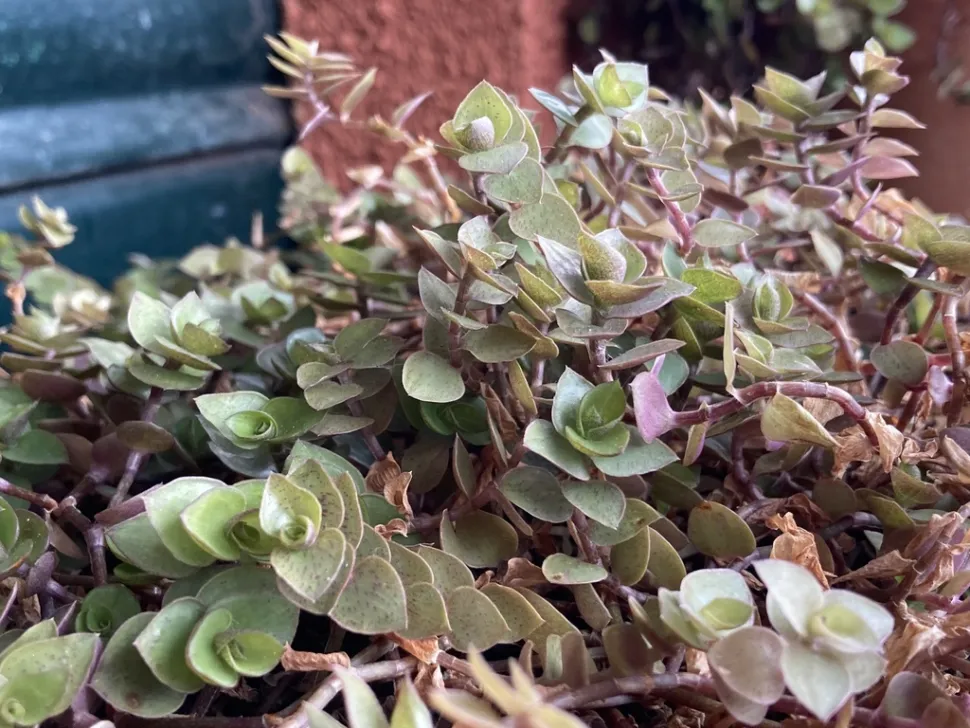
Callisia repens is not toxic. But keep it away from your turtle or rabbit. They may eat it – Photo by Marc Riera / iNaturalist
Rich in calcium, the leaves of the creeping callisia (Callisia repens) are a treat for turtles and chameleons. But the fleshy, heart-shaped leaves are also a delight for succulent plant lovers! Their color changes with the light. Acid green, they turn violet or red when callisia receives a lot of sunlight.
Re-pot your Creeping Callisia every year to give it more space. Use potting soil for cacti and succulents and a pierced ceramic or terracotta pot. This material allows better evaporation of water and prevents the soil from remaining too damp. A good way to prevent root rot!
Succulent #15: Anacampseros rufescens
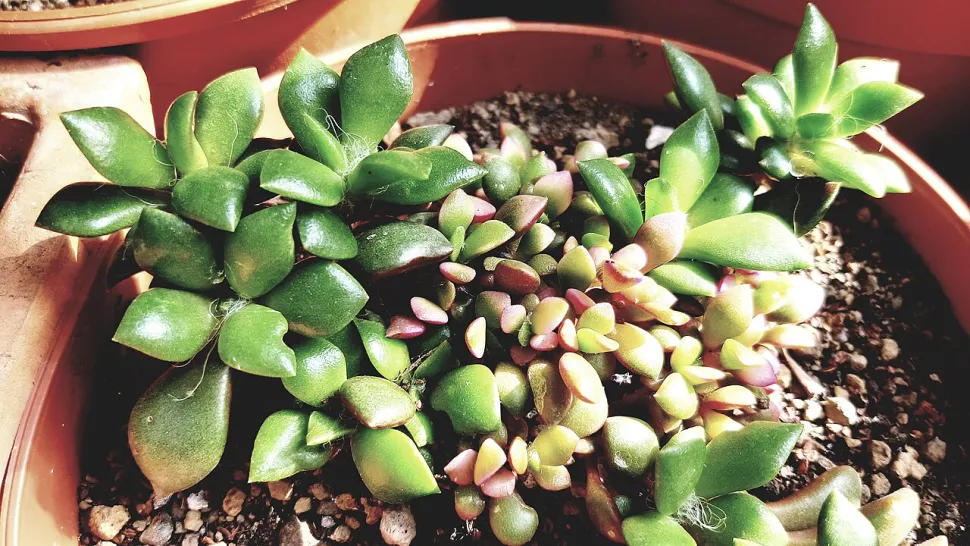
How can such a small plant have such long hairs? Photo by Pequod76 / Wikipedia
South Africa is home to the Anacampseros rufescens, a small succulent plant no more than ten centimetres tall. Its tufts of fleshy leaves are covered with white hairs. The green leaves of the botanical variety are variegated with pink and purple in the 'Sunrise' cultivar.
Place your succulent in a spot that gets plenty of sunlight to maintain compact, colorful rosettes. When the light is too weak, stems wither, foliage loses density and colors become dull. From October to May, a spot behind a south- or west-facing window is the ideal location for your potted plant. During the summer months, a stay outdoors will enhance its brightness and vigor.
Find out more
 Plants toxic to cats and dogs: varieties to avoid in the garden and indoors
 Seaside garden: which spray-resistant plants to plant?
 Vegetable gardening: 10 mistakes that ruin your harvests