Polyscias scutellaria 'Fabian', Aralia 'Fabian
Polyscias scutellaria ‘Fabian’
- Exposure
- Half-shade
- Hardiness (USDA)
- 12a (10°C ≤ T° < 12.8°C)
- Lifecycle
- Perennial
- Foliage
- Evergreen
- Family
- Araliaceae
- Genus
- Polyscias
- Species
- Polyscias scutellaria
Polyscias scutellaria 'Fabian' is a cultivar obtained from Polyscias scutellaria, a tree of the Araliaceae family native to Polynesia. Often sold under the name Aralia 'Fabian', it has been selected for its compact habit and ornamental foliage.
How to recognize Aralia 'Fabian' (Polyscias scutellaria 'Fabian')?
Polyscias scutellaria 'Fabian' is a shrub with a dense, bushy habit. It doesn't exceed two meters in height and a spread of 70 centimeters.
Its gnarled, light-brown trunk branches into short, thick branches.
These bear round, raised leaves at the end of a long stalk. Wavy at the margins, they have embossed veins. New shoots are reddish. Then they turn green. But the underside retains its purple color.
Aralia 'Fabian' is grown for its decorative foliage. Polyscias scutellaria rarely flowers indoors. In the wild, it produces panicles of white flowers, followed by spherical berries.
Polyscias scutellaria 'Fabian' is toxic ifingested. Its leaves are a danger to both pets and humans. Keep your plant out of the reach of small children, dogs and cats.
Our care tips
Fabian' Polyscias do not like strong light or limestone. Place your plant behind an east-facing window and water it preferably with rainwater.
 Watering
Fabian' Polyscias They like to keep the potting mix moist, but not soggy. Water when the soil is dry on the surface (about two to three centimeters deep).
Water the substrate with non-hard water—such as rainwater—at room temperature.
Let the water drain out through the drainage holes before returning the plant to its place. Empty any standing water from the saucer or planter. It may cause the roots to rot.
 Misting
In the wild, polyscias 'Fabian benefits from high humidity. Spray it regularly with non-calcareous water to bring it closer to its natural environment.
Fogging will also keep red spiders and other pests away.
 Repotting
Every year in the spring, repot your Polyscias scutellaria ‘Fabian’ to give it more space.
Obtain a pierced pot one size larger than the previous one. Pour clay balls or pebbles in the bottom to improve drainage.
Fabian' Polyscias like rich, aerated soil. Mix one or two handfuls of heather earth with potting soil for green plants. Place a layer of substrate on top of the clay balls. Plant your plant and add potting soil to the height of the root ball.
Tamp and water to encourage rooting.
Your Polyscias scutellaria ‘Fabian’ appreciates humid environments. Place its pot on a dish of wet clay marbles to increase ambient humidity.
 Fertilization
To promote the growth of your Polyscias scutellaria ‘Fabian’, apply fertilizer in spring and summer.
To stimulate the growth of your Polyscias scutellaria ‘Fabian’, use a liquid fertilizer for green plants.
 Prune
You are not obliged to trim your Polyscias scutellaria ‘Fabian’. However, you can shorten the tops of stems or branches to control its growth and shape.
Always use a sharp, clean tool to promote healing and avoid spreading disease.
 Taking cuttings
Using a clean, sharp tool, such as scissors or pruning shears, remove a ten- to fifteen-centimeter stem with at least two nodes and three levels of leaves. Remove the lower limbs, leaving only the terminal pair.
To propagate cuttings, plant the seedling in a pot with a fine potting soil, such as potting soil for cuttings and seedlings, or a substrate that you have previously sieved.
Mist and cover with an empty bottle. Aerate your mini-greenhouse for a few minutes a day and spray two or three times a day.
Mist and cover with an empty bottle. Aerate your mini-greenhouse for a few minutes a day and spray two or three times a day.
Diseases / Threats
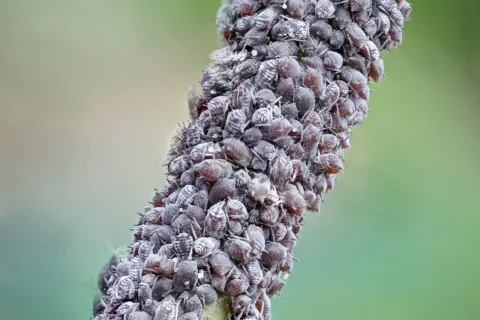
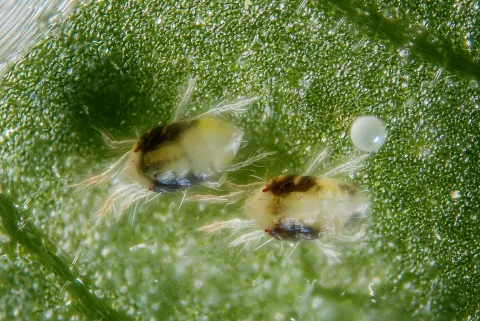
Information
- Lifecycle
- Perennial
- Foliage
- Evergreen
- Exposure
- Half-shade
- Substrate
- Humus soil
- Planting methods
- In potsIn tubs
- Tags
- Cold-sensitiveToxic
- Origin
- Oceania
- Hardiness (USDA)
- 12a (10°C ≤ T° < 12.8°C)
- Leaf colors
- Dark greenPurple
- Flower color
- White
Discover plants from the same family


Find out more
Find all our tips in the Monstera application








