Polyscias balfouriana 'Marginata', an aralia with variegated leaves
Polyscias balfouriana 'Marginata'
- Exposure
- Half-shade
- Hardiness (USDA)
- 11a (4.4°C ≤ T° < 7.2°C)
- Lifecycle
- Perennial
- Foliage
- Evergreen
- Family
- Araliaceae
- Genus
- Polyscias
- Species
- Polyscias balfouriana
A cultivar derived from Polyscias balfouriana, Polyscias balfouriana 'Marginata' is distinguished by its green and white foliage. This shrub, a member of the Araliaceae family, can be grown indoors at our latitudes.
How to recognize Polyscias balfouriana 'Marginata'?
Polyscias balfouriana 'Marginata' is an upright, bushy shrub. Outdoors, it can grow to over four meters in height, with a spread of almost two meters. Indoors, however, it will not exceed 1.20 meters.
The slender, woody gray trunk supports supple green branches.
The glossy, smooth, thick leaves have three leaflets. They are rounded, with irregularly serrated margins. The acid-green to dark-green leaf blade is edged with white.
Flowering is rare indoors. When it does occur, it takes the form of umbels of small, whitish or cream flowers.
Fruits, dark drupes, appear even more rarely when the plant is growing outside its natural environment.
Polyscias balfouriana 'Marginata' is toxic to humans and pets. Ingestion can cause digestive problems. We therefore recommend keeping it out of the reach of young children, dogs and cats.
Our care tips
Polyscias balfouriana 'Marginata hate bright light and limestone. Place your plant behind an east-facing window and water it only with rainwater or natural spring water.
 Watering
Polyscias balfouriana 'Marginata require regular watering. But it must be moderate, otherwise the roots will rot. The substrate must remain moist but never soggy.
Water your plant with soft, non-calcareous water at room temperature. Once you've finished, drain off any water that accumulates in the saucer or planter.
Water your plant with soft, non-calcareous water at room temperature. Once you've finished, drain off any water that accumulates in the saucer or planter.
 Misting
Mist foliage to increase humidity and repel pests. Always spray with rainwater. Tap water is too hard and leaves white marks on the leaves.
 Repotting
In spring, transfer your Polyscias balfouriana 'Marginata' to a larger pot, so that it can continue to grow.
Get a pot with holes larger than the root ball. You can line the bottom with clay balls to optimize drainage.
Polyscias balfouriana 'Marginata plants grow best in heather soil. Place a layer of potting soil at the bottom of the pot. Plant your plant and add substrate to reach the height of the root ball.
Tamp and water to encourage rooting.
Place your pot on a saucer filled with moist clay balls to improve humidity.
 Fertilization
You can stimulate the development of your plant during its growth phase, in spring and summer, with fertilizer.
Apply green plant fertilizer in addition to watering.
 Prune
You can prune your Polyscias balfouriana 'Marginata' to control its growth.
Use clean pruning shears to top. You can also shorten the branches.
 Taking cuttings
Using your pre-cleaned scissors, remove a ten- to fifteen-centimeter stem (about three nodes). Remove the leaf at the base of your cutting.
To propagate cuttings, plant the seedling in a pot with a fine potting soil, such as potting soil for cuttings and seedlings, or a substrate that you have previously sieved.
Mist and cover with an empty bottle. Aerate your mini-greenhouse for a few minutes a day and spray two or three times a day.
Mist and cover with an empty bottle. Aerate your mini-greenhouse for a few minutes a day and spray two or three times a day.
Diseases / Threats
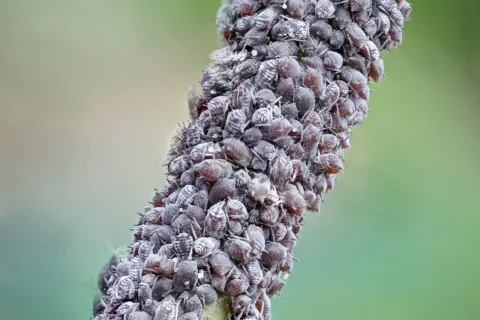
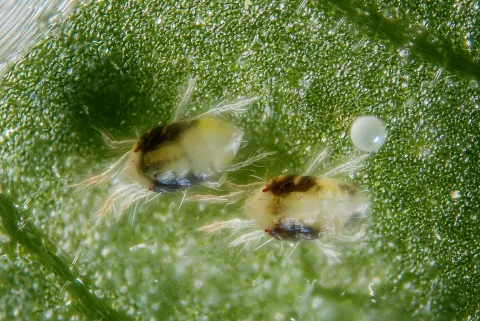
Information
- Lifecycle
- Perennial
- Foliage
- Evergreen
- Exposure
- Half-shade
- Substrate
- Humus soil
- Planting methods
- In potsIn tubs
- Tag
- Toxic
- Origin
- Oceania
- Hardiness (USDA)
- 11a (4.4°C ≤ T° < 7.2°C)
- Leaf colors
- Dark greenWhite
- Flower colors
- WhiteCream
Discover plants from the same family


Polyscias 'Elegans
Polyscias fruticosa 'Elegans'
Find out more
Find all our tips in the Monstera application








