Tillandsia cyanea, a tropical plant with spectacular flowers
Tillandsia cyanea
- Exposure
- Sun
- Hardiness (USDA)
- 11a (4.4°C ≤ T° < 7.2°C)
- Lifecycle
- Perennial
- Foliage
- Evergreen
- Family
- Bromeliaceae
- Genus
- Air plant Tillandsia
- Species
- Tillandsia racket Tillandsia cyanea
Other name:Tillandsia raquette
Native to the tropical forests of Ecuador, Tillandsia cyanea has made a name for itself in our latitudes as a houseplant. It stands out from its Bromeliaceae cousins, such as medusa's head, in terms of its appearance and flowering.
How to recognize Tillandsia cyanea?
Tillandsia cyanea grows in a rosette. Slow-growing, it reaches a maximum height of 50 centimetres and a spread of 50 centimetres. It has a dense, supple habit.
Tillandsia cyanea's evergreen foliage is characterized by narrow, elongated leaves measuring 30 centimetres long and 2 centimetres wide. Dark green, they are sometimes streaked with brown at the base.
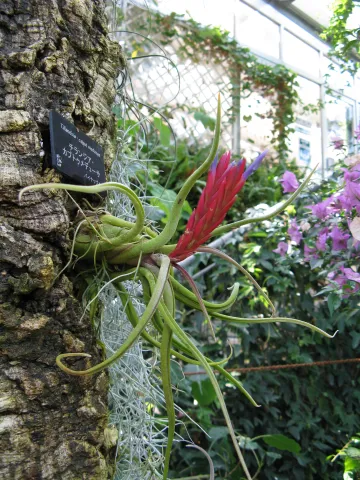
Tillandsia cyanea is distinguished from other flowering exotic plants, such as anthurium andraeanum, by its inflorescence. Almost fluorescent pink, it appears at the heart of the foliage. It's made up of interlocking bracts, like scales. Tillandsia cyanea's fan-like or snowshoe-like shape has earned it the nickname Tillandsia raquette.
The violet-blue flowers grow between the scales. The three petals form a corolla that includes the pistil and stamens. In the wild, they bloom in spring and autumn.
Tillandsia racket will bring color to your living room, even if you share your space with young children, dogs or cats. The herbaceous plant and its flowers are non-toxic to humans and animals alike. Last but not least, it absorbs moisture from the air.
Our care tips
Taking care of an epiphytic plant like your Pink quill is not complicated. You just need to change your watering and repotting habits.
 Watering
Your Tillandsia cyanea does not draw water from its roots, but from its leaves.
Mist the foliage with room-temperature water to nourish your Tillandsia cyanea. Its favorite meal? Recovered rainwater. It provides all the nutrients it needs for healthy growth. If you don't have any, you can use bottled water with a low mineral content.
If you notice water stagnating in the heart of the plant, blot it gently with absorbent paper.
To find out if you're watering your Tillandsia cyanea sufficiently, look at the foliage. Rolling leaf blades are a sign that the plant is thirsty. Conversely, yellowing and drooping leaves indicate excess water.
 Repotting
Get a pot with drainage holes that's about ten centimeters in diameter. Since there are no roots, your Tillandsia cyanea won't take up much space.
Place a drainage layer at the bottom (clay pellets, gravel, or pozzolan). Then fill it with orchid substrate. You can also make your own substrate by mixing equal parts:
- non-calcareous potting mix;
- peat;
- sand;
- chopped leaves.
Make a hole and plant your Tillandsia cyanea in the center. Gently firm the soil around the plant. You can place your pot on a saucer filled with moist clay pellets to improve humidity.
 Fertilization
Fertilize your Pink quill with a low-nitrogen fertilizer, such as an orchid fertilizer.
 Taking cuttings
The best time to take cuttings is after your Tillandsia cyanea has bloomed.
The snowshoe Tillandsias die a few months after flowering. But before leaving you, your plant will have taken care to develop shoots. Remember to remove them to give it a second life.
Remove a sucker at least five centimetres long with a knife. Leave the young shoot to dry for 24 to 48 hours.
Prepare a pot with a diameter of ten centimeters. Place a drainage layer (clay balls, gravel) at the bottom and fill it with potting soil for orchids or Bromeliads. You can also make your own substrate by mixing potting soil, peat, sand and cut leaves.
Plant your cutting in the center and tamp gently, so that it stands upright.
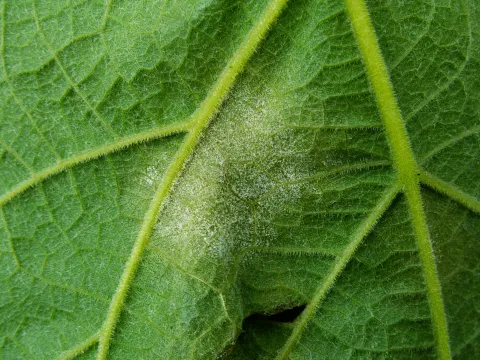
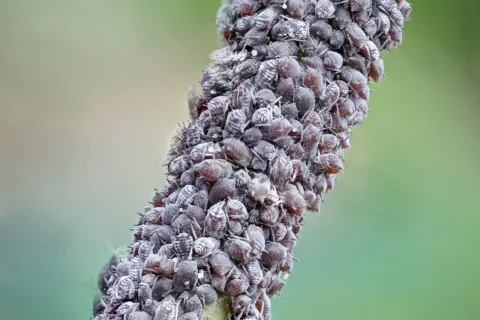
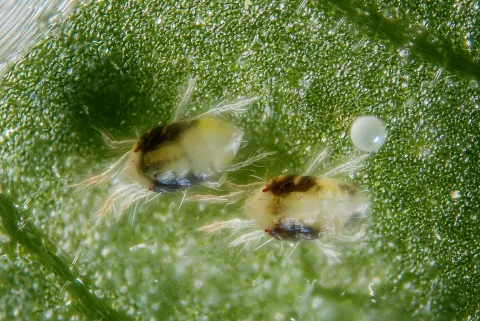
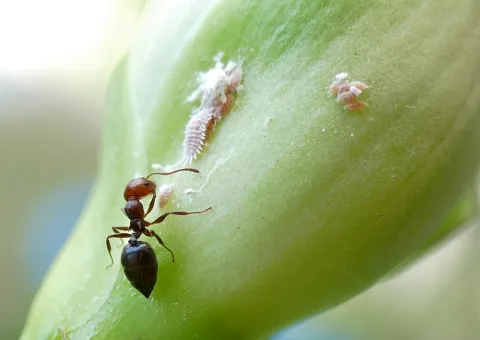
Diseases / Threats
Information
- Lifecycle
- Perennial
- Foliage
- Evergreen
- Exposure
- Sun
- Planting method
- In pots
- Categories
- IndoorHerbaceousFlowery
- Tag
- Flowery
- Origin
- South America
- Hardiness (USDA)
- 11a (4.4°C ≤ T° < 7.2°C)
- Leaf color
- Dark green
- Flower colors
- BlueFuchsia
Discover plants from the same family
Medusa's head
Tillandsia caput-medusae

Spanish moss
Tillandsia usneoides
Find all our tips in the Monstera application








