Monstera adansonii, the little monster
Monstera adansonii
- Exposures
- Sun, Half-shade
- Hardiness (USDA)
- 10a (-1.1°C ≤ T° < 1.7°C)
- Lifecycle
- Perennial
- Foliage
- Evergreen
- Family
- Araceae
- Genus
- Monstera
- Species
- Monstera adansonii
Other names:Monstera Monkey Mask, Dracontium pertusum, Monstera pertusa, Monstera monkey leaf
Are you dreaming of brilliant, cut foliage, but your apartment is too small to accommodate a Monstera deliciosa? Treat yourself to a Monstera adansonii. Like its illustrious cousin, this plant belongs to the Araceae family and comes to us from the forests of Mexico and Brazil. But its diminutive size means it can take pride of place in any living room.
How to recognize Monstera adansonii?
Monstera adansonii is a perennial with a climbing or drooping habit. You can grow it as a hanging plant or provide it with a stake to hang from. It grows to a maximum height of 1.5 meters in pots and indoors. In the wild, however, it can reach heights of over five meters.
Like rhaphidophora tetrasperma, the plant uses its aerial roots to climb trees and capture moisture.
Leaves grow at the end of a hairless petiole. The bright-green, leathery, elliptical blades measure up to 55 centimetres long. They bear oblong holes, giving the foliage the appearance of a monkey mask. These windows let light through to the leaves at the base of the plant.
Monstera adansonii flowers in spring. Flowering is similar to that of other aroids: a creamy spathe surrounds a yellowish spike.
Monstera adansonii is said to have depolluting properties. But while it can purify the air in your home, the plant is toxic. Remember to wear gloves when pruning and keep it out of reach of young children and pets. It causes digestive and respiratory problems if ingested.
Our care tips
The Monstera adansonii are not difficult to care for. Regular watering, a little moisture, a pot optimized for drainage and a little fertilizer are all that's needed.
 Watering
To find out if your plant is thirsty, stick your finger in the soil. When the surface is dry (about three centimetres), then you need to water your Monstera adansonii. The Monstera adansonii like moisture, but not stagnant water. Make sure that the potting soil remains moist, but that the rootlets are not drowned.
If you can, use non-calcareous water such as rainwater or filtered water.
Also make sure that water doesn't stagnate in the saucer or planter.
If you can, use non-calcareous water such as rainwater or filtered water.
Also make sure that water doesn't stagnate in the saucer or planter.
 Misting
If the air in your home is dry, spray the leaves of your plant with non-calcareous water at room temperature.
 Repotting
In spring, transfer your Monstera adansonii to a larger pot, so that it can continue to grow.
Re-pot your Monstera adansonii to give it more space. Choose a pierced terracotta or plastic pot that will allow it to continue growing.
At the bottom, place a draining potting soil and then transplant your plant. Pack the rootball to prevent it from becoming too airy.
The Monstera adansonii like to climb. You can support their development by providing them with a stake to hang on.
 Fertilization
You can stimulate the development of your plant during its growth phase, in spring and summer, with fertilizer.
Apply liquid fertilizer for green plants when watering.
 Cleaning
Dust prevents leaves from absorbing light and slows photosynthesis. You can use a brush or feather duster to clean the foliage.
 Pinch
Pinch your Monstera adansonii during its growing season.
The Monstera adansonii These are not plants that are pruned. If your plant grows larger than your living room, you can pinch off the tip of the stem. The plant will stop growing upward and produce new leaves at its base.
Remember that the sap and leaves can cause irritation! Be sure to wear gloves when handling your plant.
Remember that the sap and leaves can cause irritation! Be sure to wear gloves when handling your plant.
 Taking cuttings
Propagation by cuttings is carried out during the strong growth phase, generally in spring and early summer.
Locate a node on your plant, if possible with an aerial root and at least one leaf. Using a clean, disinfected tool, such as a pair of scissors or pruning shears, cut two centimetres below the node.
Place your cutting in a glass filled with water at room temperature. Make sure the nodes are fully submerged; they are where the roots will grow.
Place the glass in a bright spot, but out of direct sunlight. Change the water regularly to keep it clear until roots appear.
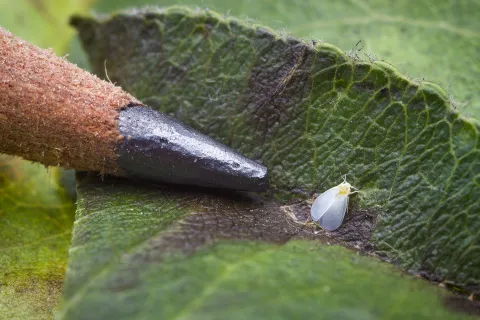
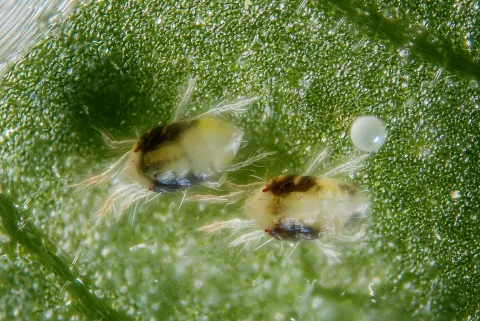
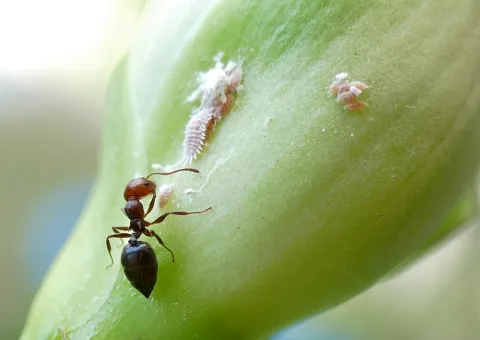
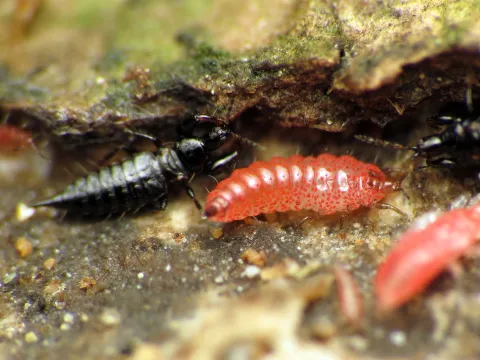
Diseases / Threats
Information
- Lifecycle
- Perennial
- Foliage
- Evergreen
- Exposures
- SunHalf-shade
- Substrates
- Clay soilHumus soilSandy soil
- Planting method
- In pots
- Tags
- BeginnerSmall potToxic
- Origin
- Central America
- Hardiness (USDA)
- 10a (-1.1°C ≤ T° < 1.7°C)
- Leaf color
- Dark green
- Flower color
- Light green
- Fruit color
- Light green
Discover plants from the same family
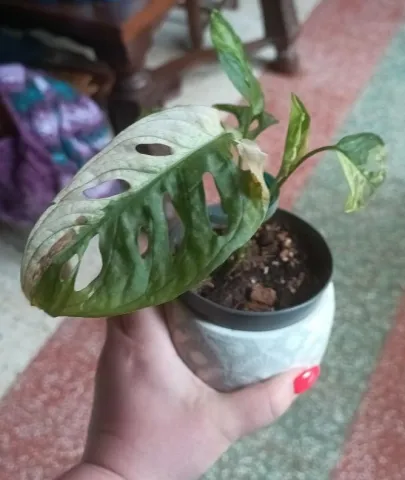

Monstera 'Frozen Freckles
Monstera adansonii 'Frozen Freckles'


Monstera variegata
Monstera deliciosa variegata
Find all our tips in the Monstera application








