Melaleuca linearis, a little bottle-washer
Melaleuca linearis
- Exposure
- Sun
- Hardiness (USDA)
- 10a (-1.1°C ≤ T° < 1.7°C)
- Lifecycle
- Perennial
- Foliage
- Evergreen
- Family
- Myrtaceae
- Genus
- Bottle rinser Melaleuca
- Species
- Melaleuca linearis
Other names:Callistemon rigidus, Metrosideros aspera, Metrosideros calyculatus, Metrosideros glandulosa, Metrosideros linearis, Metrosideros linifolia, Metrosideros rigida, Metrosideros rigidifolia
Bottlewash, tea tree or Callistemon rigidus: there are many names for Melaleuca linearis var. Linearis. Native to Australia, this shrub is distinguished by its compact size and original, intensely colored blossoms.
How to recognize Melaleuca linearis var. Linearis bottlebrush?
Smaller than bottle Rinse (Melaleuca citrina) and melaleuca glauca, Melaleuca linearis reaches an average height of 2.5 meters and a spread of around 1.5 meters. It has an upright, slightly flared habit and erect branches.
The narrow, leathery evergreen leaves resemble fine conifer needles. Dark green, they can measure up to eleven centimetres long and just three millimetres wide. When crumpled, they give off a lemon or eucalyptus scent.
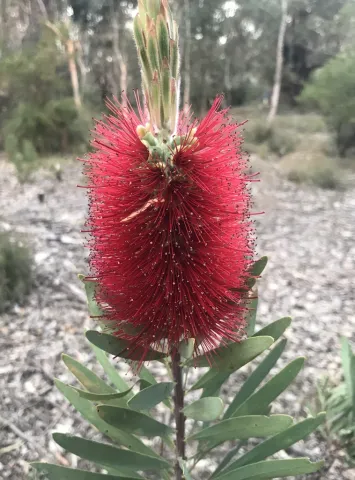
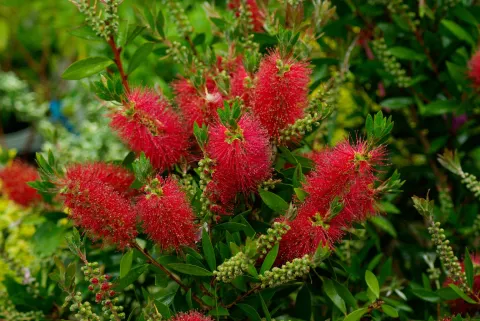
Melaleuca linearis is not cultivated for its foliage or its gray bark. Its main asset is its flowering. The flowers are borne in cylindrical spikes at the tips of the branches. Each inflorescence can have from 20 to 90 flowers. The petals drop rapidly, revealing long red stamens with dark anthers, which give the plant its bottle-bottle appearance.
After flowering, the shrub produces hardy woody capsules. These fruits are adapted to fires: they open under the effect of heat, releasing hundreds of tiny seeds that are then dispersed by smoke-related air currents.
Is Melaleuca linearis var. Linearis toxic?
Melaleuca linearis is a melliferous and nectar-bearing plant, much appreciated by insect pollinators. It is totally non-toxic and harmless to children, pets and adults, even in the event of accidental contact or ingestion.
Our care tips
Melaleuca linearis resistant to disease and drought. On the other hand, the plant fears the cold, especially when the soil is damp.
 Watering
Water your Melaleuca linearis before the substrate dries on the surface. You can use rainwater or mains water.
Melaleuca linearis are water-hungry plants, especially in summer. Mulch the base to limit evaporation and reduce watering frequency.
 Repotting
Get a perforated pot. You can place a bed of clay balls or gravel at the bottom to improve drainage.
Mix a few handfuls of sand with universal potting soil. Pour a layer of this mixture into your pot and plant your Melaleuca linearis. Add substrate and pack lightly.
Water to help roots take root and expel air bubbles.
 Fertilization
You can stimulate the development of your plant during its growth phase, in spring and summer, with fertilizer.
Apply a liquid fertilizer for flowering plants to promote the appearance of flower buds.
 Planting
Once the last spring frosts have passed, you can plant.
Find a sunny spot protected from the wind.
Dig a hole three times the size of the root ball. Meanwhile, soak your Melaleuca linearis to rehydrate it.
Add clay balls or gravel to your garden soil to improve drainage. Line the bottom of the hole with compost, followed by a layer of substrate. Plant your shrub in the center. The root ball should reach ground level. Fill in with your mixture and tamp down.
Water copiously to eliminate air bubbles and encourage rooting.
 Taking cuttings
Cutting is carried out during the strong growth phase, generally in spring and early summer.
In a pierced pot, pour gravel or clay balls for drainage. Add a rich substrate, such as special cuttings soil or horticultural compost. Dig a hole using a pen or stake. Plant your young Melaleuca linearis and tamp lightly.
Water to encourage rooting.
Water to encourage rooting.
Disease / Threat
Information
- Lifecycle
- Perennial
- Foliage
- Evergreen
- Exposure
- Sun
- Substrates
- Calcareous earthHumus soilSandy soil
- Planting methods
- Open groundIn potsIn tubs
- Tag
- Flowery
- Origin
- Australia
- Hardiness (USDA)
- 10a (-1.1°C ≤ T° < 1.7°C)
- Leaf color
- Dark green
- Flower color
- Red
- Fruit color
- Brown
Discover plants from the same family
Bottle rinse
Melaleuca citrina
Find out more
Find all our tips in the Monstera application